
The complete guide
How To Choose A Camping Cookware Set That Actually Gets Used
The problem with most camp cooking gear
Plenty of people buy camping gear once, use it twice, then leave it in the shed. Cookware is the worst offender. The usual story goes like this. You grab a pot from the kitchen, a frying pan that is too heavy, a random assortment of bowls, and you throw it all in a crate. At camp, nothing fits on the burner properly. The pan sticks. You burn your hand on a bare metal handle. Washing up in cold water takes half an hour. By the second night you are eating straight from a packet.
A proper camping cookware set fixes most of that before you leave home. The pieces are sized to work together, they nest so you are carrying one bundle instead of eight loose items, and the surfaces are chosen so food comes off without a fight. That sounds minor until you are cooking in the dark with a head torch and a cold breeze.
How a nesting cook set works
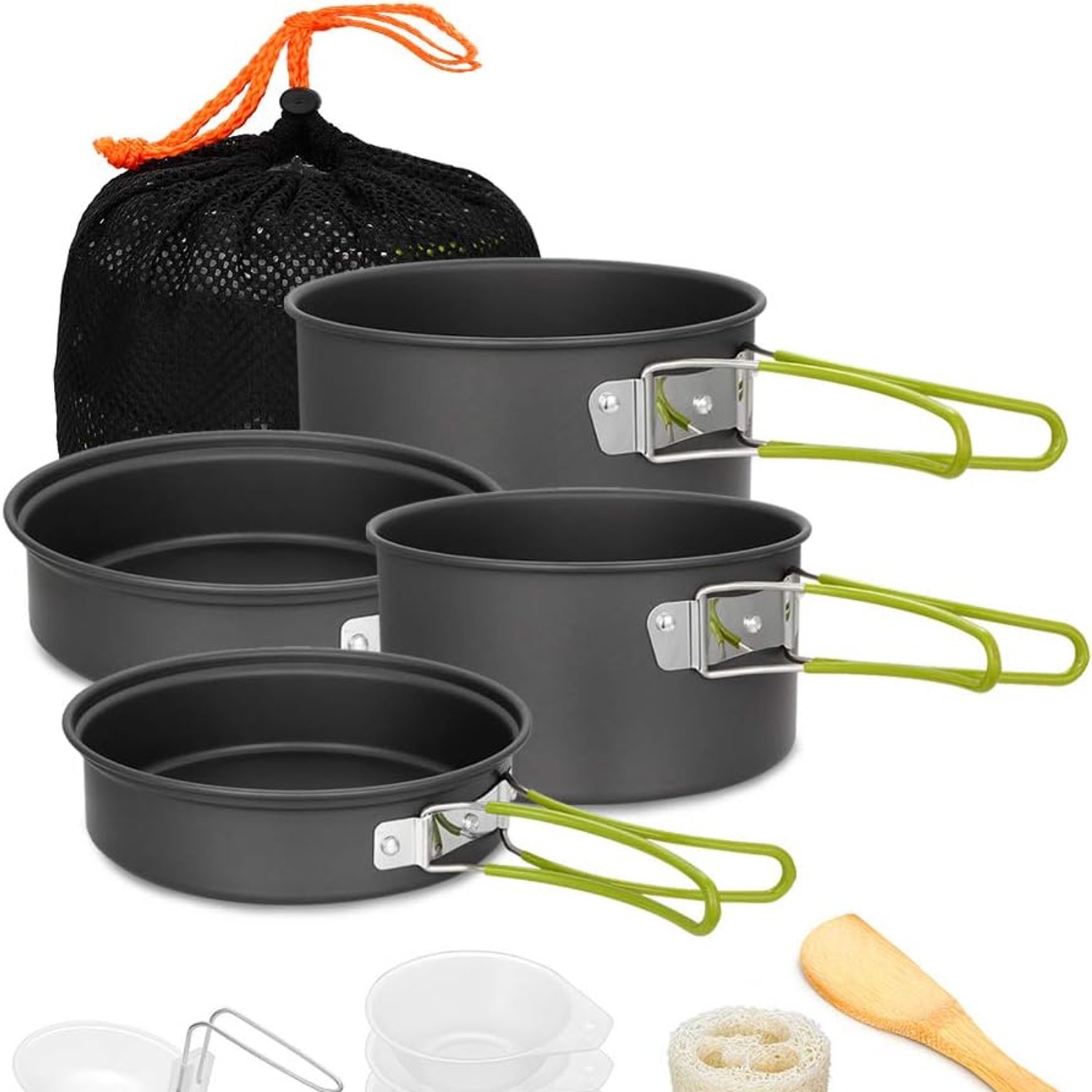
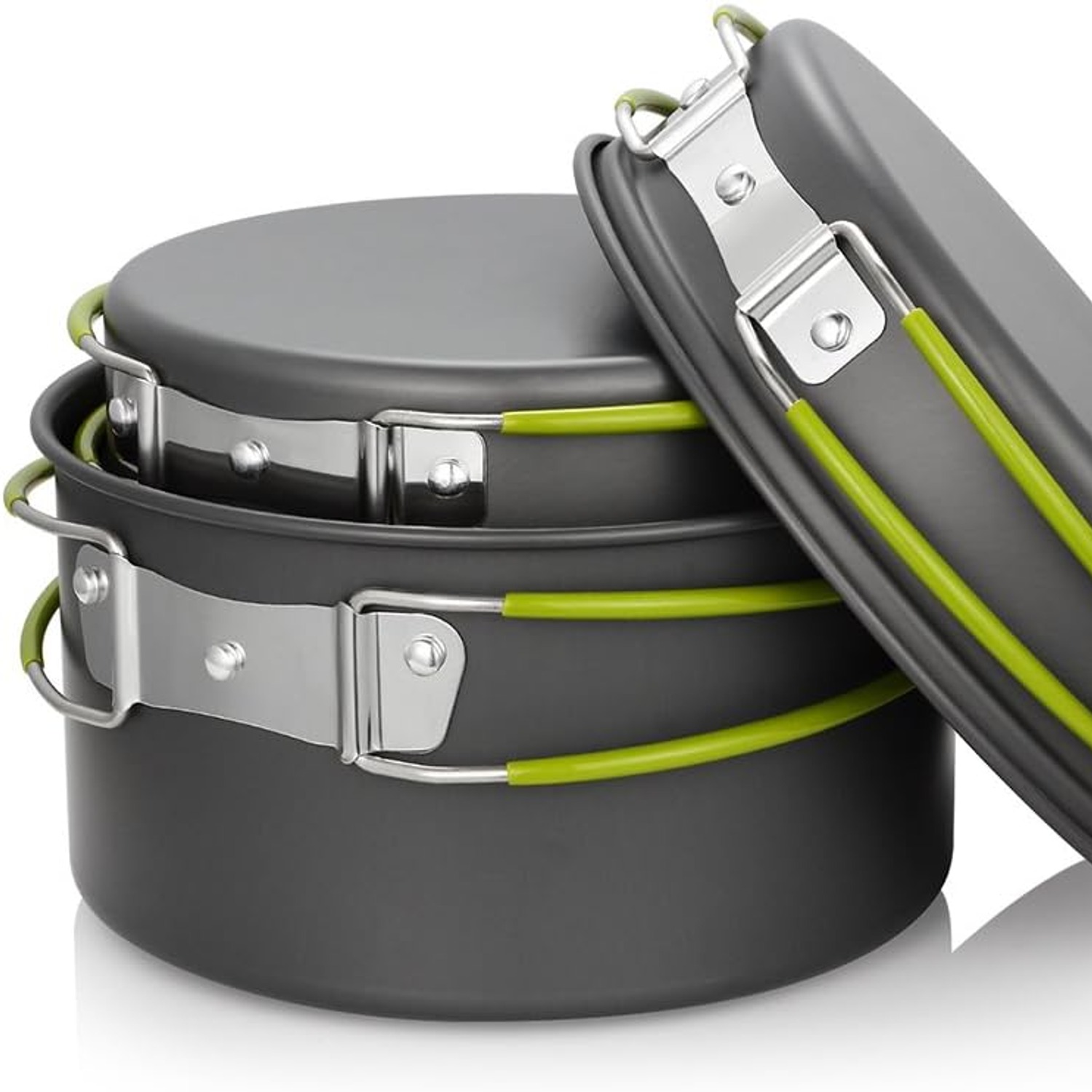
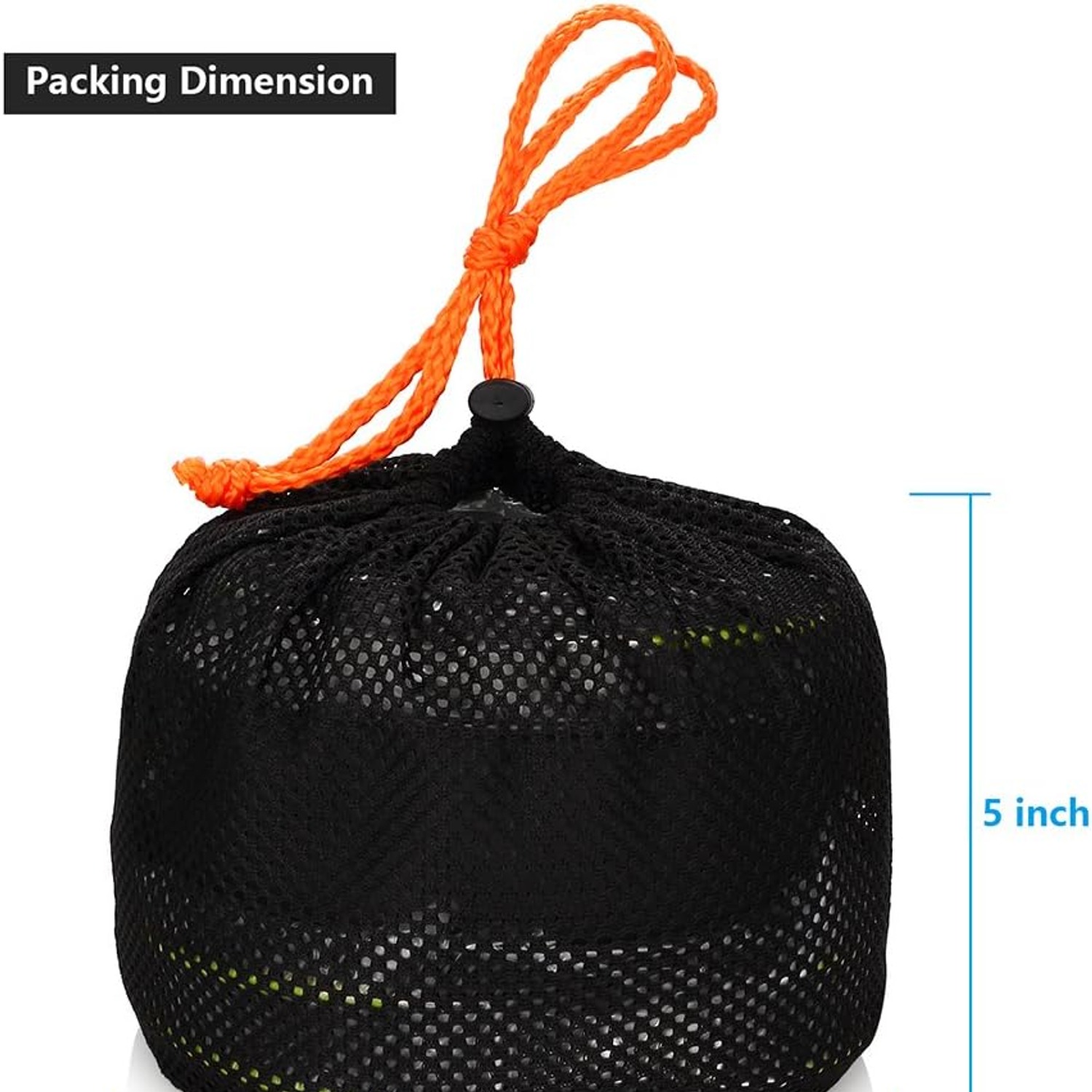
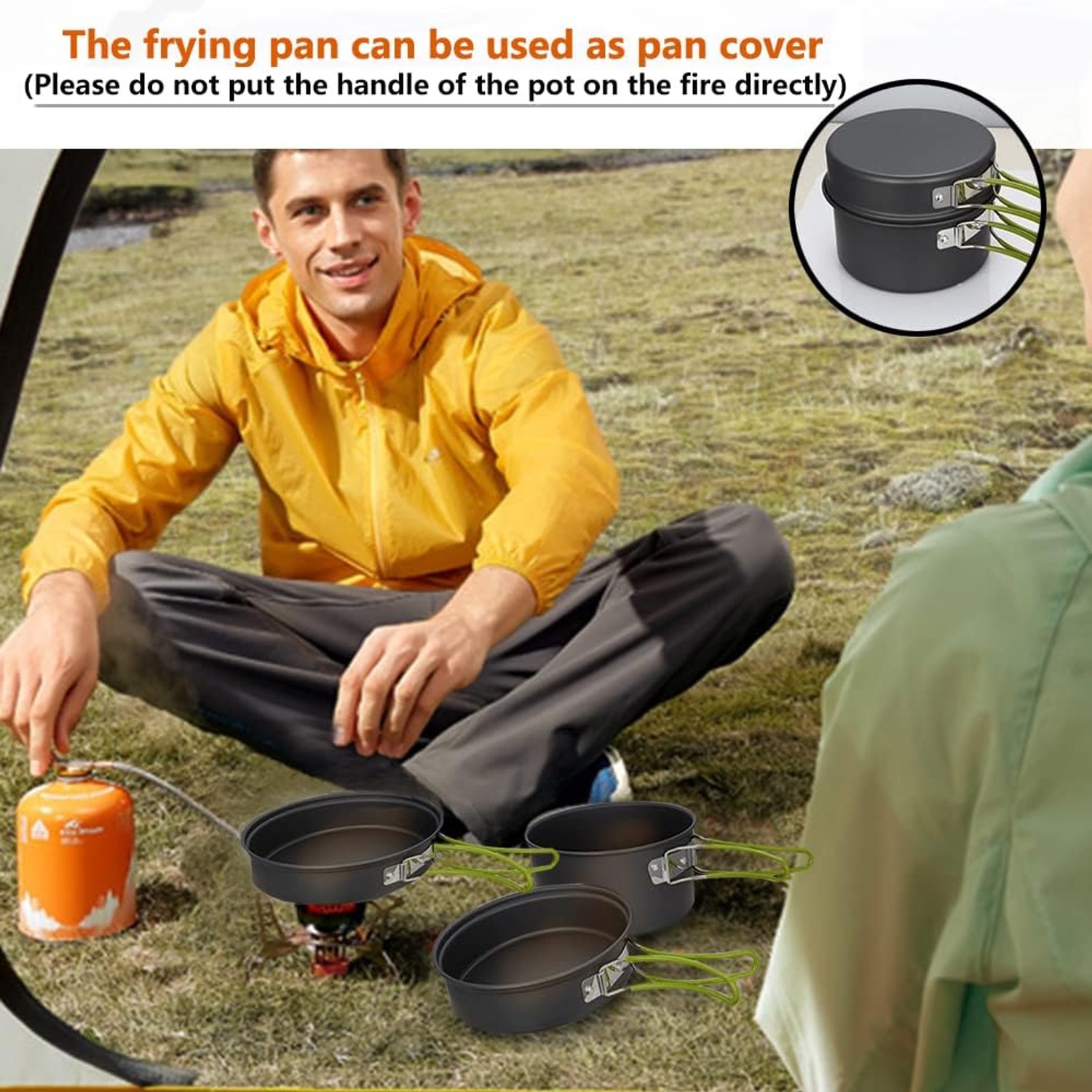
The idea behind this 2 person camp cook set is simple. Every piece is sized to sit inside the next one up. The small pot drops into the large pot. The pans sit over the top and double as lids. The bowls and spoons tuck into the gaps. Fold the handles in and the whole stack goes into a mesh bag.
That packing method does two jobs. It shrinks the footprint, which matters in a pack or a tightly loaded boot. It also stops the pieces moving around, which is what causes the rattling and scratching you get when loose cookware is thrown in a box.
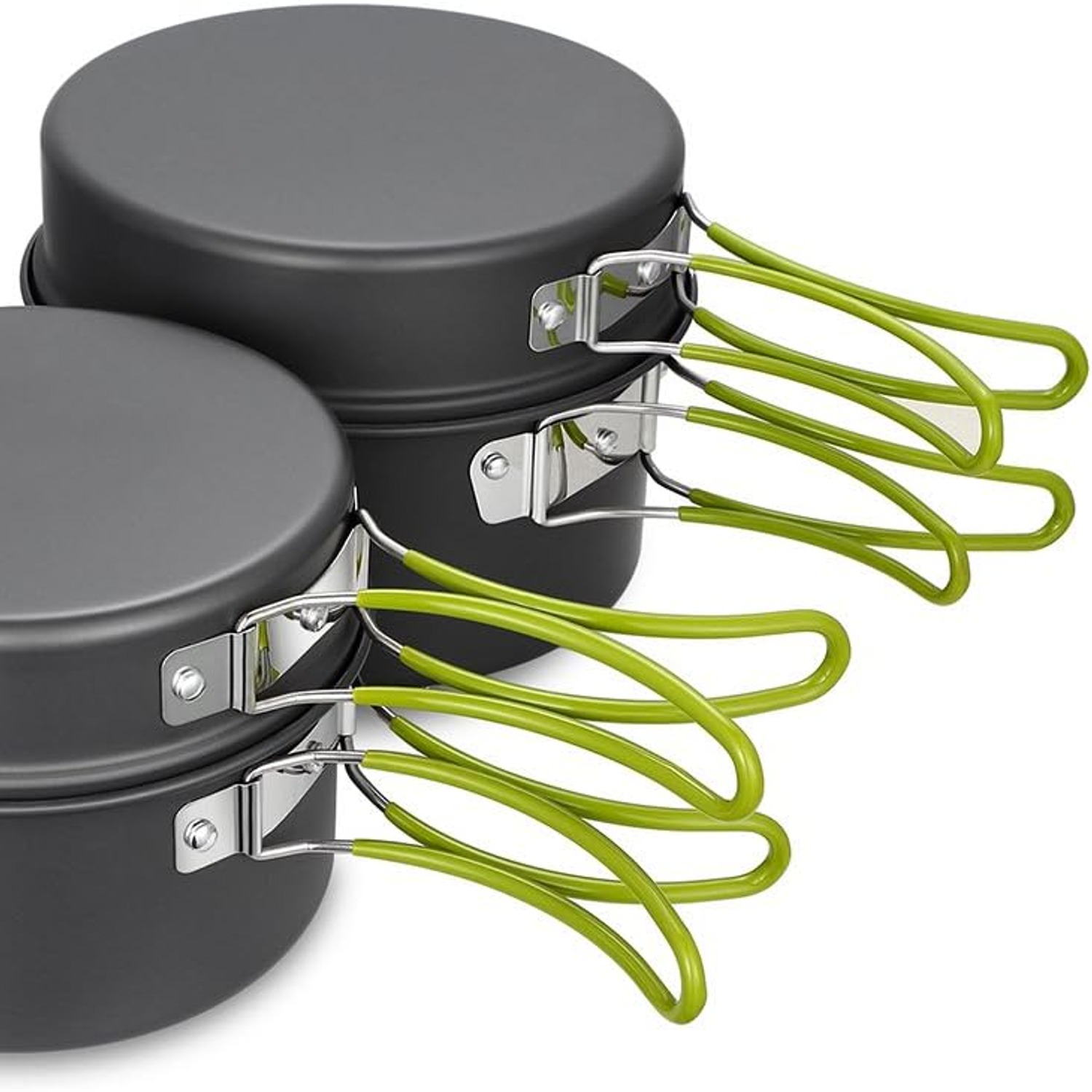
The handles are the other clever part. They pivot in against the body of the pot rather than sticking out, so there is nothing to snag. Silicone tube covers on the handles give you a better grip and sit nicer in the hand than raw metal. Just keep them off direct flame. Prolonged fire on the handle can damage the covering, and that is true of nearly every folding handle camping pot on the market.
Why aluminium
Aluminium is the default material for lightweight camping pots and pans for good reason. It conducts heat quickly, which means less time waiting and less fuel burned. On a weekend trip with a small gas canister, that difference adds up. It is also light, which is the whole point if you are walking in.
The trade off with aluminium is that it can scuff. Hard anodising toughens the outer surface so it stands up to stove grates, gravel and the general knocking about that camp gear takes. Inside, the non stick coating does the work that matters at dinner time. Eggs, pancakes, noodles and anything with a sauce release cleanly instead of bonding to the base.
A quick word on heat. Non stick surfaces are happiest at low to moderate temperatures. Running a dry pan on a roaring flame is the fastest way to ruin any non stick camping pots, no matter the brand. Get in the habit of adding oil and starting gentle.
Who this kit suits
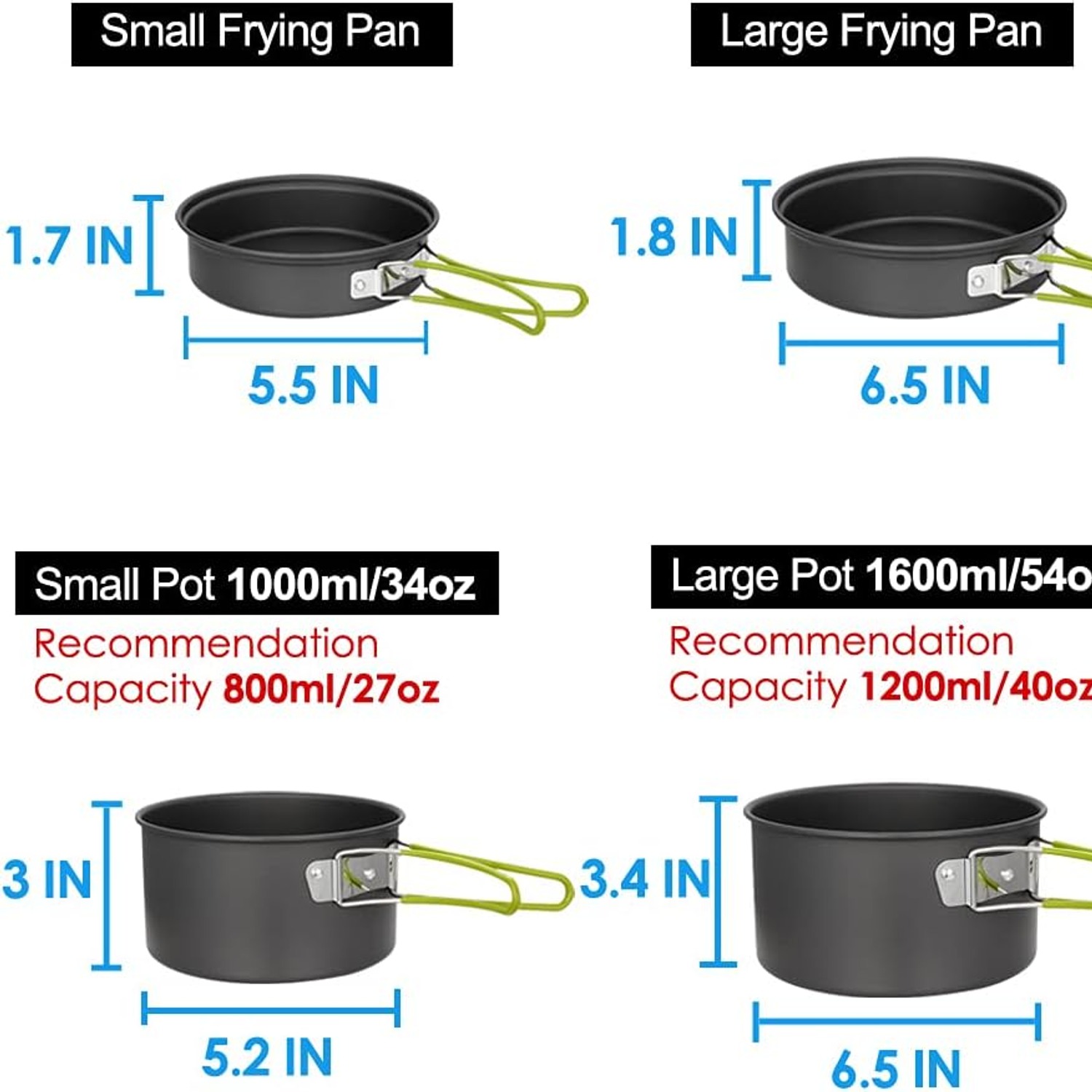
Two people is the sweet spot. One large pot, one small pot, two pans and three bowls covers a main meal plus a side, with enough serving ware that nobody waits. Think pasta in the big pot, sauce in the small one, bowls out, done.
Backpackers and hikers will like the weight and the way it collapses. The listed item weight is 1 kilogram for the set, and the nesting design means it takes up a fraction of the space loose cookware would.
Car campers and van travellers get a different benefit. You could carry heavier gear, but you probably do not want to. A compact camp kitchen set that lives in one bag means setup and pack down take minutes rather than a fiddly half hour.
It also works as an emergency kit at home. Paired with a small gas burner, it gives you a way to cook when the power is out. Plenty of people keep a camping mess kit in the boot year round for exactly that reason.
For larger groups, be honest with yourself. Four or more hungry people will outgrow 1.8 litres fast. Look at a bigger set or carry two.
Choosing the right set for your trips
Start with headcount, not features. A camping pot and pan set for two is a different thing to one for a family of five. Capacity is the limit, and you cannot work around it.
Then think about how you travel. Walking in rewards every gram and every centimetre saved, so nesting cookware with folding handles is worth paying for. Driving in means you can be more relaxed, though compact still beats bulky when the car is loaded.
Next, consider what you actually cook. If your camp meals are mostly boiling water for pasta and dehydrated meals, a pot focused kit is fine. If you want eggs in the morning and something fried at night, you need a real pan with a good non stick surface. This set gives you both pots and both pans, which is why it works for people who like a proper cooked breakfast.
Finally, check what comes included. Some kits are pots only, which means buying bowls, spoons and a bag separately. A set that arrives with three bowls, a soup spoon, a bamboo spoon, a cleaning sponge and a carry bag is ready to use on the first trip.
Looking after it
Non stick cookware lasts a long time if you follow a few habits.
Use soft utensils. Wooden, silicone or smooth plastic only. The bamboo spoon in the kit is there for a reason. Metal forks and knives belong in your hand at the table, not in the pan.
Cook at low to moderate heat. High heat is not needed for most camp food and it shortens the life of the coating.
Wash by hand with warm water, a mild detergent and a soft sponge or cloth. The included sponge does the job. Skip metal scourers and abrasive powders entirely, and skip the dishwasher.
Dry everything before packing. Moisture trapped between nested pieces in a closed bag leads to smells and marks. Give each piece a wipe, let them air for a few minutes, then stack.
Store with a tea towel between layers if the rattling bothers you. It doubles as a drying cloth and a pot holder at camp.
A few camp cooking habits worth adopting
Prep at home. Chopping onions at a picnic table with a blunt knife is nobody's idea of a holiday. Cut, portion and bag ingredients before you leave.
Boil only what you need. Water takes fuel and fuel takes weight. The 1 litre pot is often all you need for drinks and a single serve.
Cook in order. Start what takes longest, use the pan as a lid to hold heat, and serve into the bowls as things finish. With two pots and two burners, or two pots and a bit of timing on one burner, you can get a two part meal on the table hot.
Clean while the pan is still warm. Residue lifts far easier at that point than it does an hour later when it has set hard.
The short version
A camping cookware set earns its place by being easy to carry, easy to cook with and easy to clean. This 11 piece kit covers all three. Aluminium construction keeps the weight at a listed 1 kilogram, the non stick surface means food comes off without scraping, and the nesting design with folding handles turns eight separate items into one small bundle in a mesh bag.
Two pots, two pans, three bowls, two spoons, a sponge and the bag mean you are ready to cook the moment you arrive. Keep the heat moderate, use soft utensils, hand wash and dry before packing, and it will come on a lot of trips with you.