

The complete guide
How to Choose a Camp Cook Set That You Will Actually Use
The problem with most camp cooking
Camping food usually fails in one of two ways. Either you bring nothing and end up eating cold things out of packets, or you bring your kitchen pans from home and spend the whole trip wrestling with items that do not pack, do not fit the stove and come back greasy and bent.
Both outcomes come from the same root cause. A camp kitchen has to work in a space you did not choose, on heat you cannot fully control, with a washing-up setup that might be a tap and a bucket. Normal cookware was never designed for that.
A purpose-built camp cook set solves it by changing the shape of the problem. Instead of separate items that take up separate space, you get pieces that nest. Instead of a long fixed handle that snags on everything in the boot, you get one that folds. Instead of a coating that flakes when it hits a campfire, you get bare metal that does not care.
How a nesting cook set actually works
The idea is simple. Each piece is sized so the next one drops inside it, and the lid closes over the top. The handle, which is the awkward part of any pan, folds back over the lid instead of sticking out. What you end up carrying is one compact bundle rather than nine loose things.
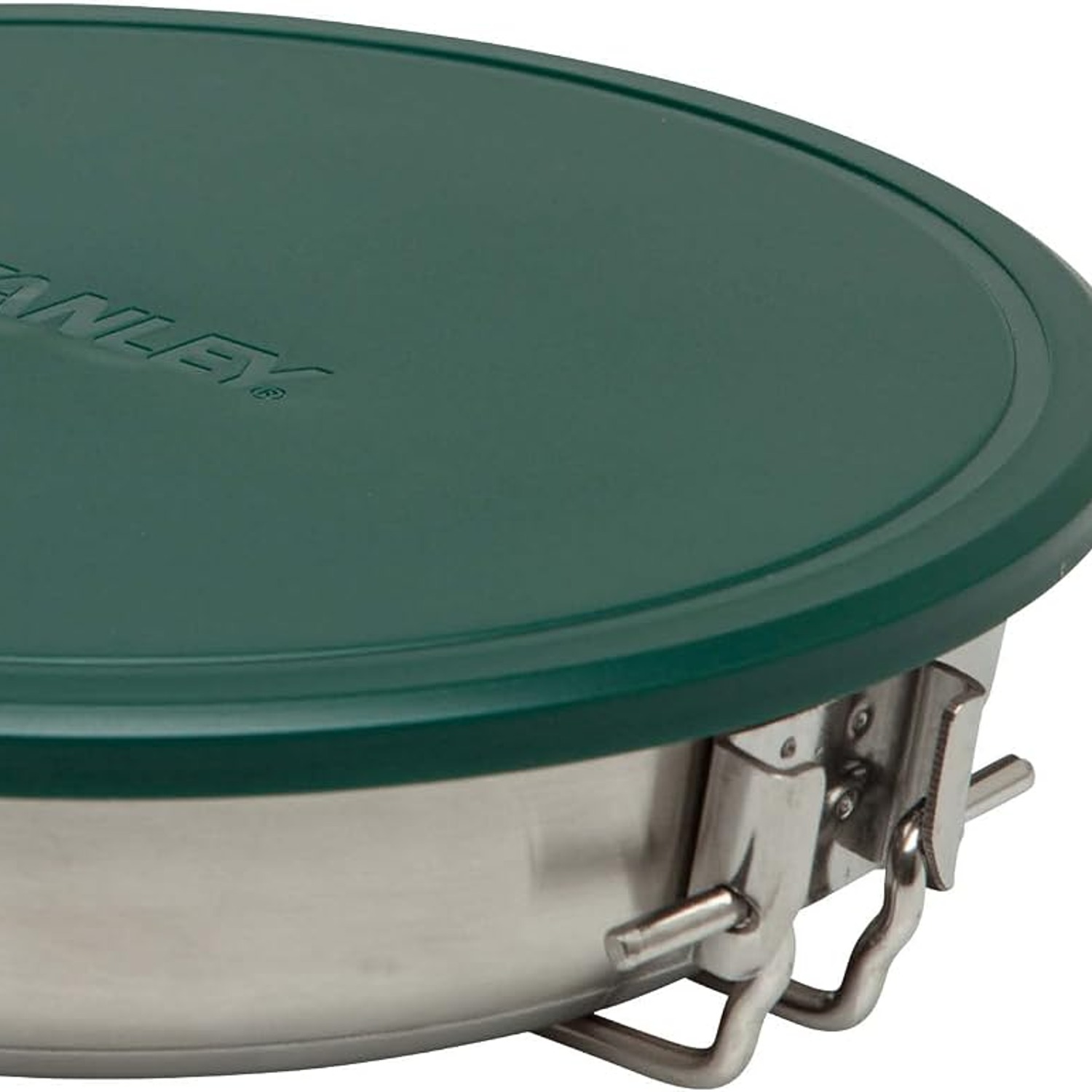
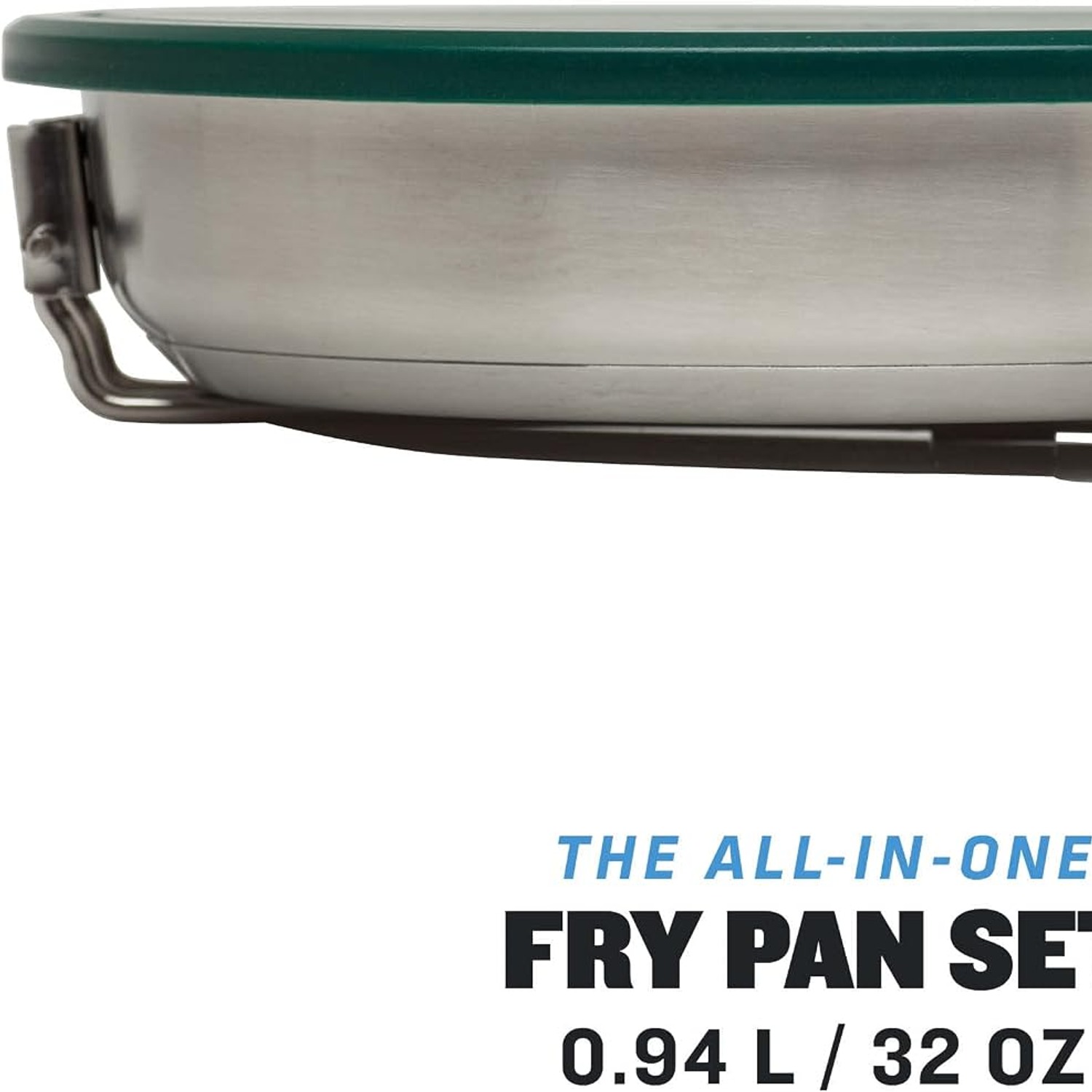
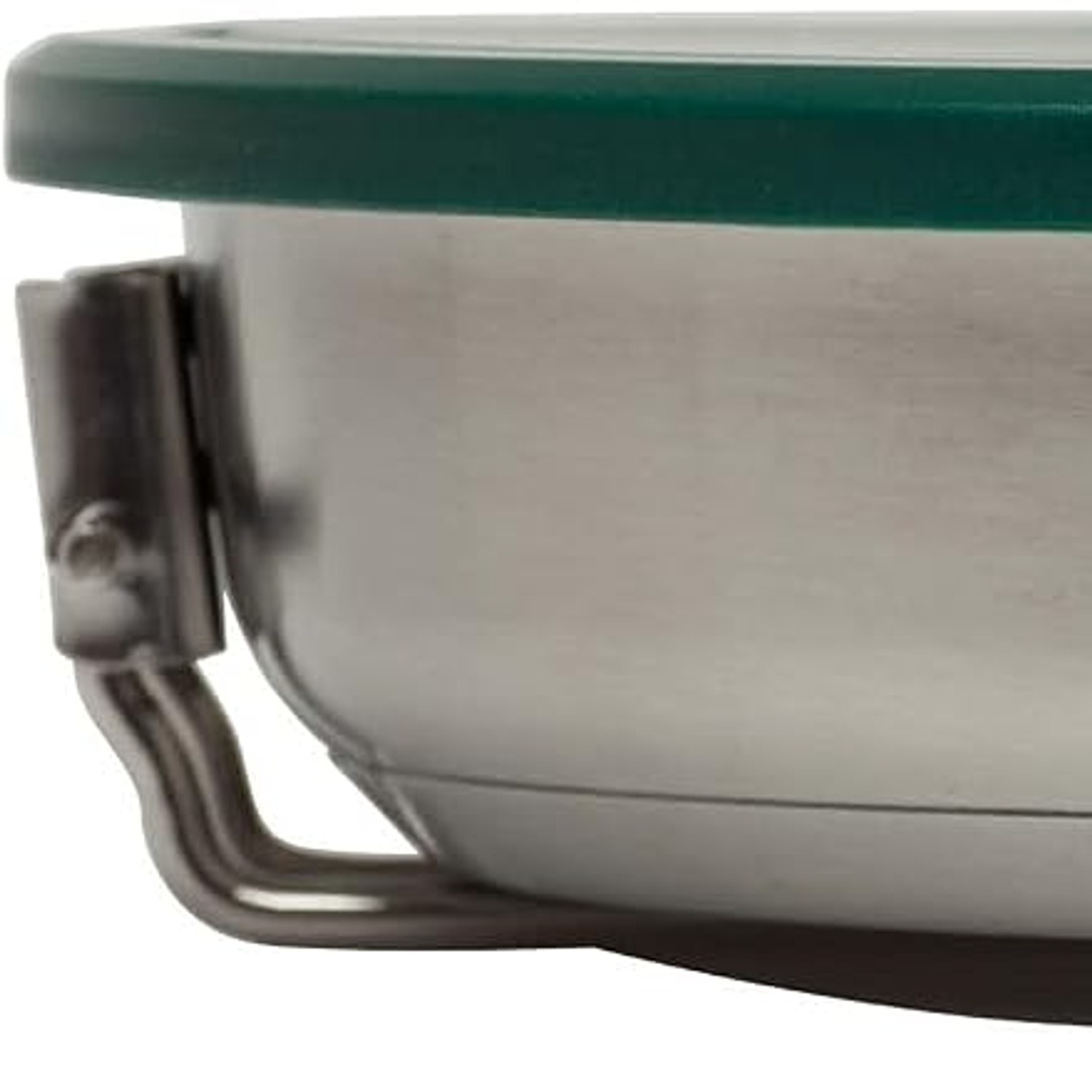
This Stanley fry pan set is nine pieces built around a frying pan, in 18/8 food-grade stainless steel, and the whole thing weighs 0.95 kg. The handle extends and locks so the pan stays steady while you cook, then releases to fold flat for packing.
That locking detail matters more than people expect. Camp stoves sit on uneven ground, and a pan that twists when you stir it is how dinner ends up in the dirt. A handle that locks solid gives you something to hold against while you work.
Why stainless steel for camp cooking
There are three common materials in this space, and they each suit different trips.
Aluminium is light and heats fast but dents easily and often comes with a coating that will not survive a real fire. Titanium is the lightest and is the usual pick for serious hiking, but it is expensive and it creates hot spots, so food scorches in one patch while the rest sits raw.
Stainless steel sits in the middle. It is heavier, and there is no getting around that. What you get in return is a pan you can throw on coals, scrape with a metal spatula, drop on a rock and still use for the next ten years. The 18/8 grade used here is standard food-grade cookware steel. It resists rust, holds no flavour from the last meal, and has no coating to peel into your food.
For car camping, 4WD touring, van setups, boats and base camps, stainless is usually the right call. It is also why this works as one of the better car camping cook sets to leave permanently in the vehicle. There is nothing to baby.
Who this suits
This set is a good match if you cook for one or two people, you travel with a vehicle, and you want gear that stays in the kit rather than getting replaced each season. It also makes a sensible emergency kit item, since stainless works over any heat source you can improvise and there is no coating to worry about after years in storage.
It is less of a match if you are counting grams on a multi-day hike. At 0.95 kg this is heavier than a dedicated ultralight setup, and if every gram matters, titanium is worth the extra money. It is also not a family-of-five solution on its own. You would cook in rounds or pair it with a bigger pot.
How to choose between sets
Start with headcount, because that drives everything else. Solo and couple trips are well served by a compact cookware set like this one. Groups of four or more need a larger pot as well, or you will spend the evening cooking in shifts while the first serve goes cold.
Then look at how you travel. If the kit lives in a car, boat or van, pack size matters more than weight, and stainless is the easy choice. If you carry it on your back for days, weight wins and you should be looking at titanium.
Check how the pieces lock together. A set that nests but rattles loose will drive you mad on a corrugated road. A folding handle that clamps over the lid holds the bundle together, which is half the point of the design.
Then consider the heat sources you actually use. Gas burners, electric coils, campfires and coals all work fine with stainless. Induction depends on the magnetic properties of the specific steel, which is not specified for this product, so test with a magnet if your home cooktop is induction.
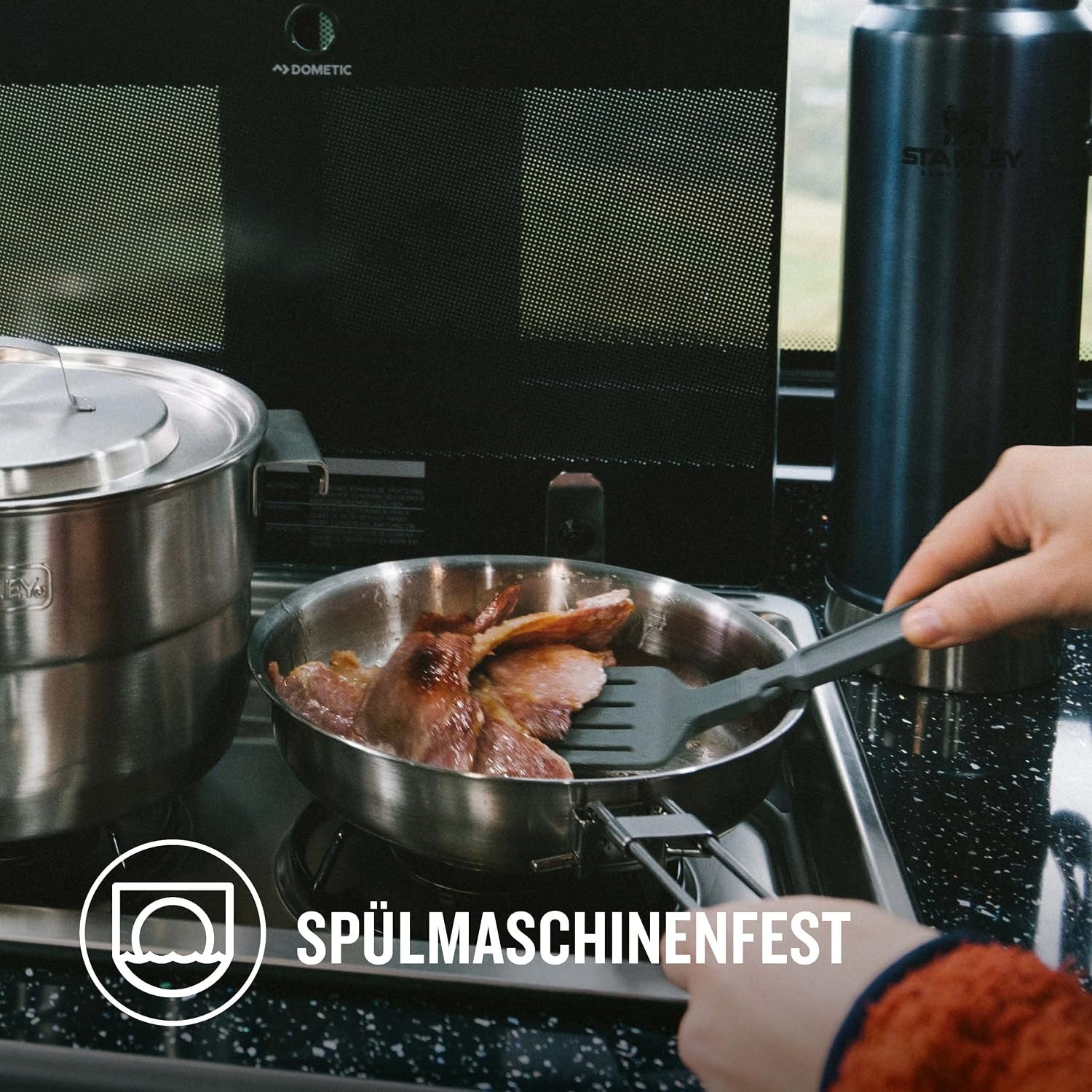
Finally, check cleanup. Dishwasher safe on the top rack sounds like a small thing until you get home from four days away with a bag of greasy gear. Being able to load the whole set into the machine is the difference between unpacking the car properly and leaving it in the boot for a week.
Getting good results from stainless
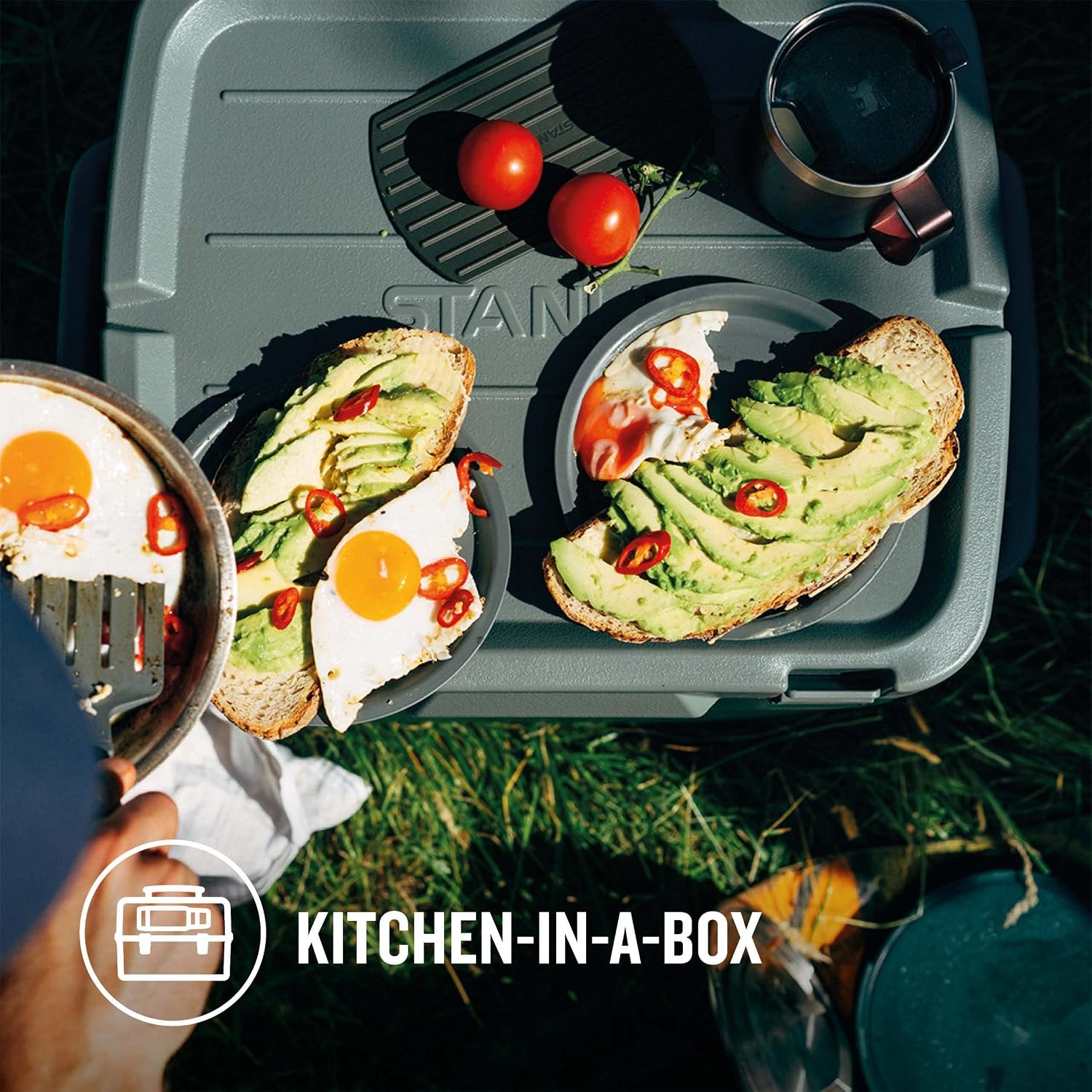
Stainless is not non-stick, and people who struggle with it are almost always skipping the heating step. Put the pan on the heat first and let it come up to temperature. Then add your oil or butter. Then add the food. Give it a moment before you try to move anything, because food releases on its own once a crust forms. Poke it too early and it tears.
Eggs and fish are the two things that test a stainless pan. Be generous with the fat for those, and keep the heat moderate rather than blasting.
On a campfire, cook over coals rather than flames. Flames are inconsistent and will blacken the base while barely warming the middle. Coals give you steady, even heat that is far closer to a stove.
Care and storage
Let the pan cool before washing, which protects the surface and saves you from steam burns. Warm soapy water with a soft sponge or a nylon brush handles most meals. For stuck food, pour in a little water and warm the pan briefly, then wipe it out.
Skip steel wool and harsh abrasive powders. They scratch the finish and give food more to grip next time. Cloudy white marks after washing are hard-water mineral spots, not damage, and a wipe of white vinegar followed by a rinse clears them.
The one real rule is drying. Nesting damp pieces together and sealing them in a bag is the only reliable way to make stainless spot. Dry everything fully, then nest and pack. Keep the handle lock clean of grit so it keeps folding smoothly.
What the warranty tells you
Stanley has been making outdoor food and drink gear since 1913, and this set carries a lifetime warranty against manufacturing defects. That does not cover scratches, discolouration or dropping it off a cliff. What it does tell you is how long the product is intended to last, and brands do not offer lifetime cover on things they expect to come back.
The model and manufacturer part number is 10-02658-013, made by Pacific Market International. Keep that number somewhere if you ever need support.
The short version
If you cook for one or two, travel with a vehicle, and want a camp kitchen that packs into one hand, this nine-piece stainless set covers it. You get a real frying pan rather than a shallow dish, a handle that locks for cooking and folds for packing, metal that survives coals and metal utensils, and top-rack dishwasher cleanup when you get home.
It is heavier than ultralight gear, and it is not big enough to feed a crowd on its own. Outside of those two cases, it is the kind of kit you buy once and stop thinking about.