
The complete guide
Choosing a Head Torch That Earns Its Place in Your Pack
The problem with holding a torch in your teeth
Everyone has done it. You are crouched at the back of the car at dusk, one hand on a tent pole, the other holding a phone with the flashlight on, and the light is pointing at your own shoes. Or you are trying to clip a lead onto a dog while gripping a torch under your chin. Handheld light is fine until you need both hands, and the moment you need both hands is usually the moment the light matters most.
A head torch solves that in the simplest way possible. The light goes where you look. You do not think about it. You pitch the tent, you cook, you read the map, you find the thing you dropped in the grass, and at no point do you put the light down and lose it.
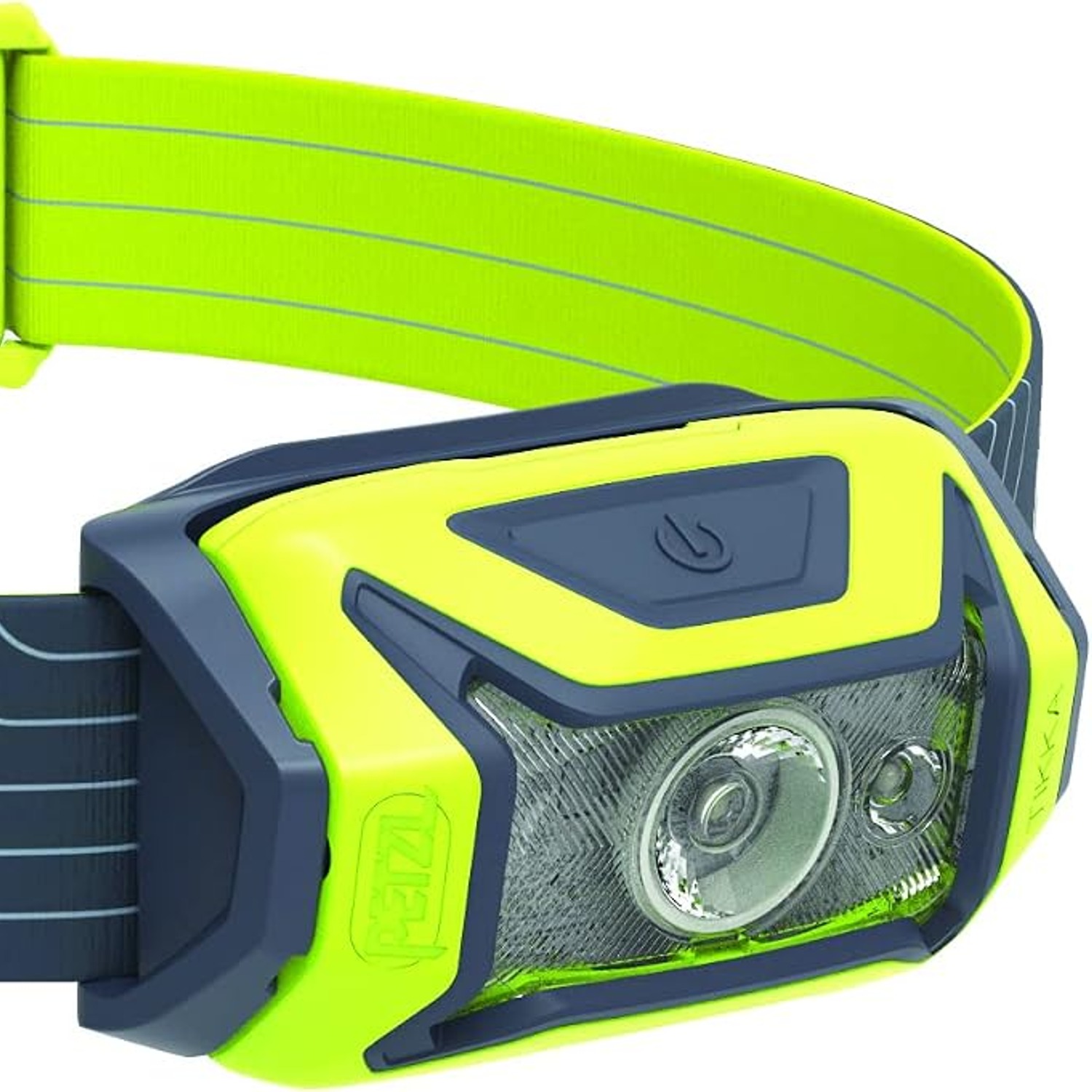
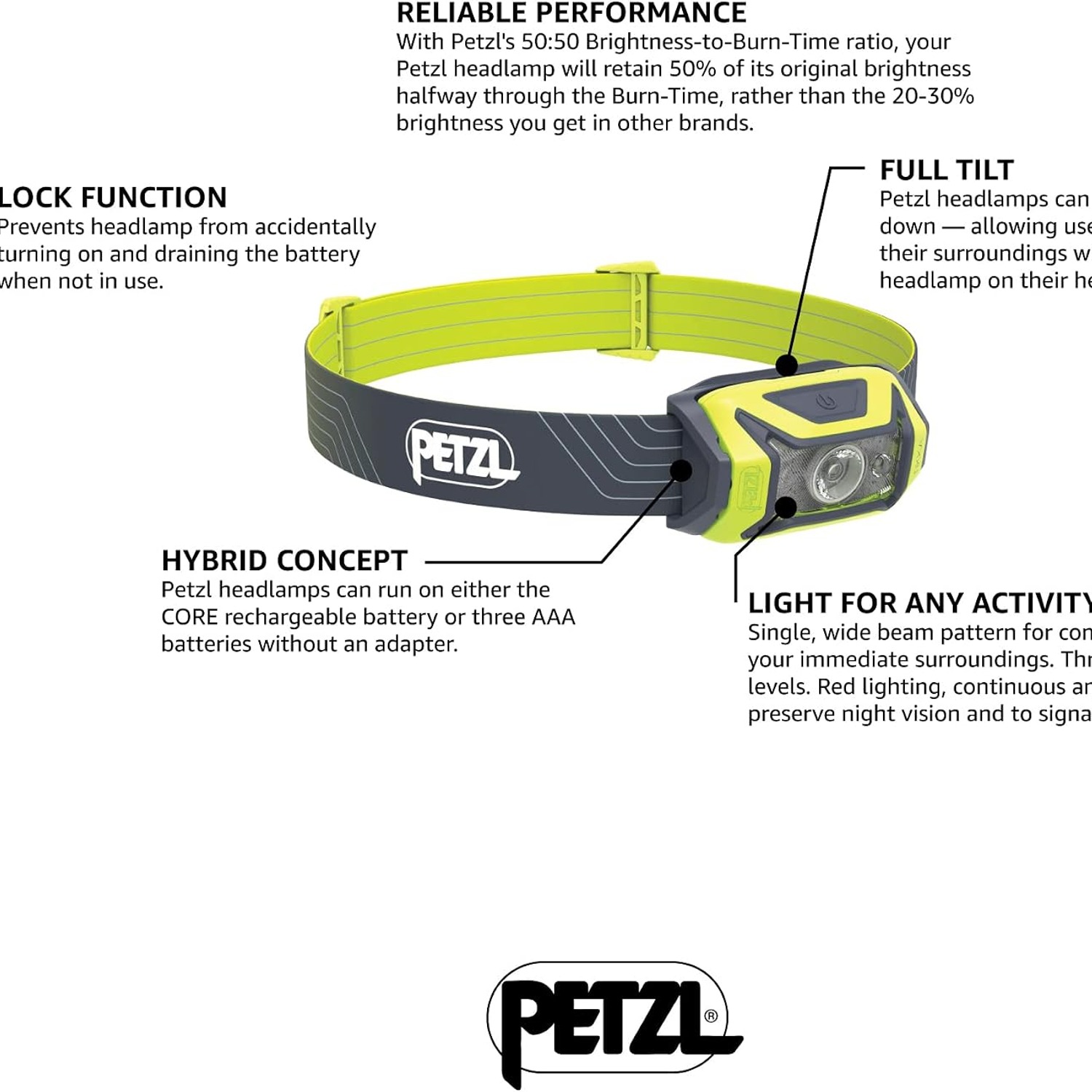
The Petzl TIKKA is built around that idea rather than around a spec sheet. It is 94 g, it gives 350 lumens, it has one button, and it ships with the batteries already in the box. That is close to the whole story, and for most people that is exactly enough.
How a headlamp like this actually works
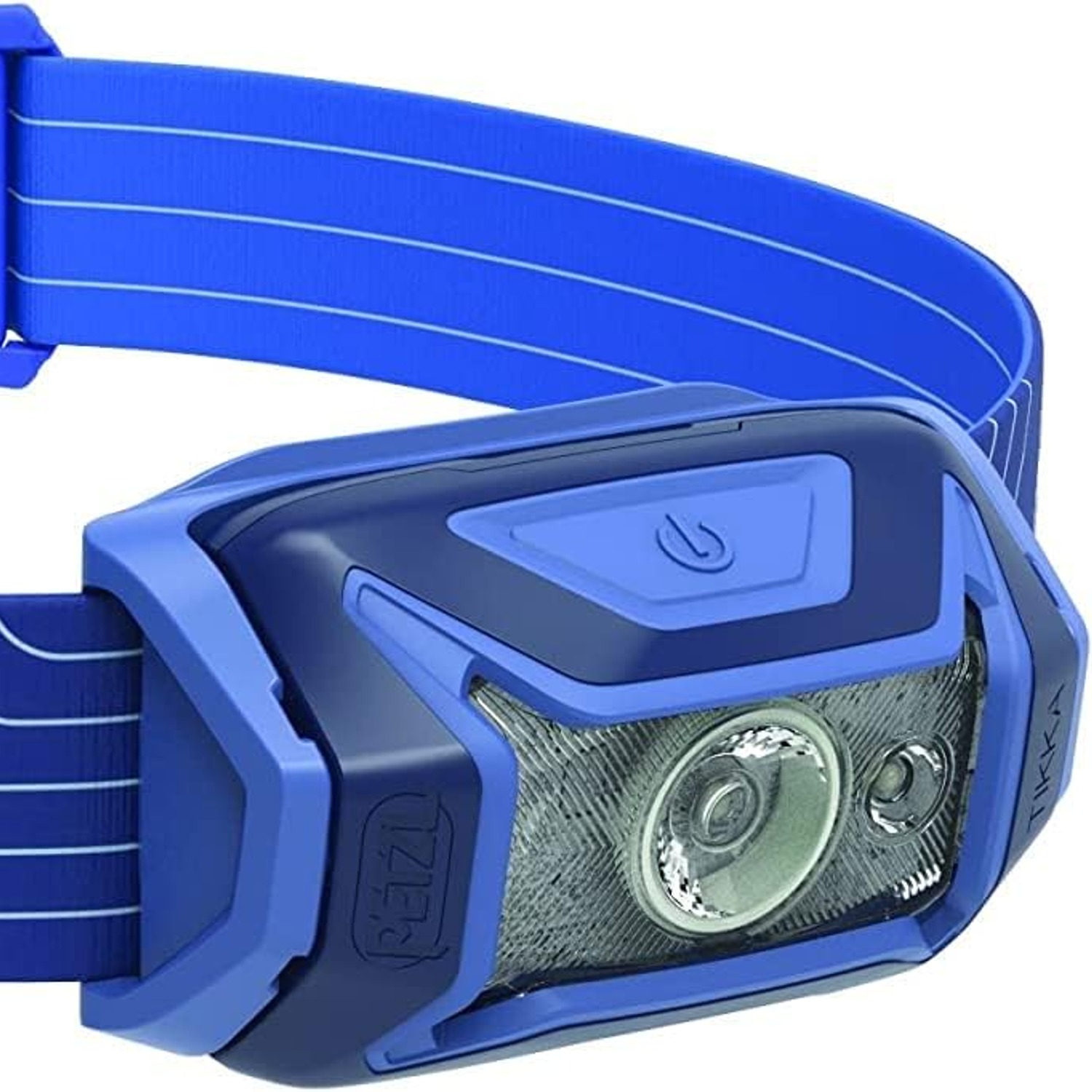
Inside the housing is a single LED behind a wide-pattern reflector. Wide pattern is the key phrase. Some head torches are built to throw a narrow, long-distance beam, which is useful if you are route-finding across open country at speed. Most of the time, though, you are looking at things within a few metres of your face, and a narrow beam gives you a bright circle surrounded by darkness. That is tiring to use and it makes uneven ground harder to read, not easier.
A wide beam fills your field of view evenly. Your eyes relax. You can see the rock you are about to step on and the branch at head height at the same time. The TIKKA still has reach, with a rated beam distance of 45 metres, but the pattern is tuned for proximity work and walking rather than long-range spotting.
Three white levels let you trade brightness for runtime. The lowest setting is for close tasks where 350 lumens would be overkill and would just bounce back at you off the page or the pot. The middle setting is the everyday one, and the top setting is there when you want to see as far as the lamp can reach. Quoted runtime is 6 hours.
Then there is red. Red light does not reset your eyes the way white light does, so after twenty minutes of red you can switch off and still see reasonably well by starlight. It also keeps you from blinding the person opposite you in a tent. The flashing red mode is a signal, useful for being seen on a road verge or marking where you are if something goes wrong.
Weight is the spec that decides whether you carry it
Here is the thing nobody tells you about head torches. The best camping headlamp is not the brightest one. It is the one you have on you.
A heavy lamp with a battery pack at the back of your skull is impressive on paper and annoying in practice. It presses, it slides when you sweat, and it sits in the bottom of the pack because you could not be bothered digging it out. A 94 g lamp goes in a jacket pocket and stays there all season. You forget it is on your head within a couple of minutes.
The body here measures 30 by 40 by 40 mm, which is roughly a matchbox. It is made from plastic and anodised aluminium, and it is rated IPX4, meaning it shrugs off rain and splashes from any direction. That covers almost every real situation short of dropping it in water.
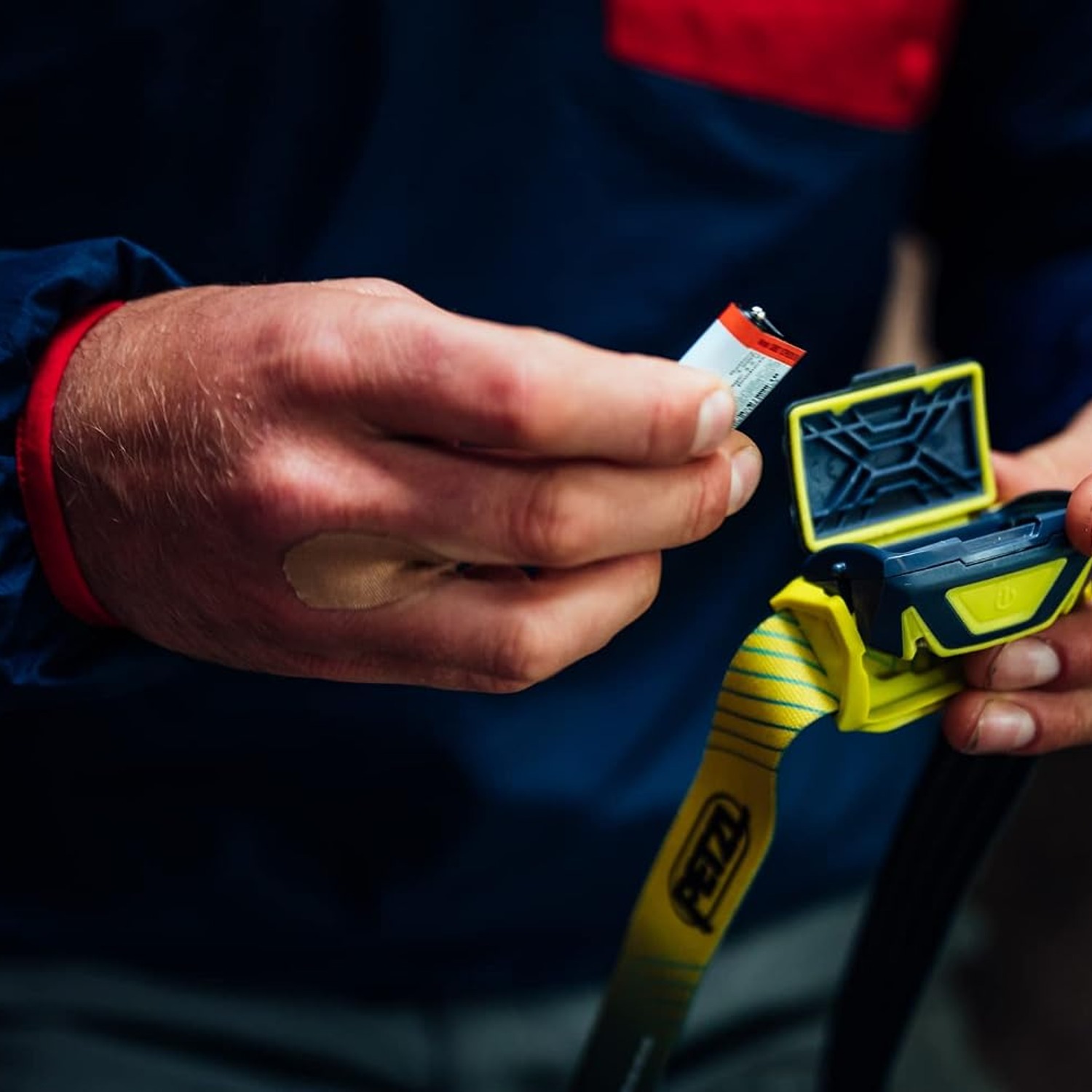
Three AAA batteries supply the power, and the charge indicator shows you the remaining level each time you switch the lamp on or off. That small feature prevents the classic mistake of setting off at 4am on cells you half remember replacing last winter.
Who this suits
If you camp a few times a year, walk the dog after dark, fish at dawn, ride a bike home from work, or just want something in the kitchen drawer for the next power cut, this is a sensible choice. It covers all of those without fuss.
It also works well for anyone doing hands-on work in poor light. The listing names industrial and professional use alongside outdoor activities, and the reasoning is the same: two free hands and light aimed where you are looking.
Who might want something else? If you run technical trails at pace in the dark, you may want a lamp with more throw so you can read the ground further ahead at speed. If you dive or work in heavy sustained rain, you will want a higher ingress rating than IPX4. And if you need to run a lamp continuously through long shifts, plan around the 6 hour figure and carry spares.
For everyone else, the best head torch for hiking is usually one in exactly this category. Light, simple, bright enough, with a red mode.
How to choose between head torches
A few questions sort most of it out.
First, how far do you need to see? If the answer is "the ground in front of me and the inside of a tent", a wide beam at 350 lumens is plenty. If the answer is "the other side of a valley", look at a spot-beam model instead.
Second, how long will you use it in one go? Match the quoted runtime to your longest realistic session and add margin. A lamp that dies at hour five on an eight hour night is worse than useless because you stopped carrying a backup.
Third, how will you power it? AAA cells have a real advantage: you can buy them anywhere in the world, and a dead lamp becomes a live one in thirty seconds. Rechargeable systems are tidier day to day but leave you stuck when there is no power.
Fourth, will you actually carry it? Pick up the lamp, or at least look hard at the weight figure. Anything under about 100 g disappears. Anything over 200 g you will notice.
Fifth, does it have a red mode? If you share tents, camp with others, or want to keep your night vision, this matters far more than the last fifty lumens of white output.
Looking after it
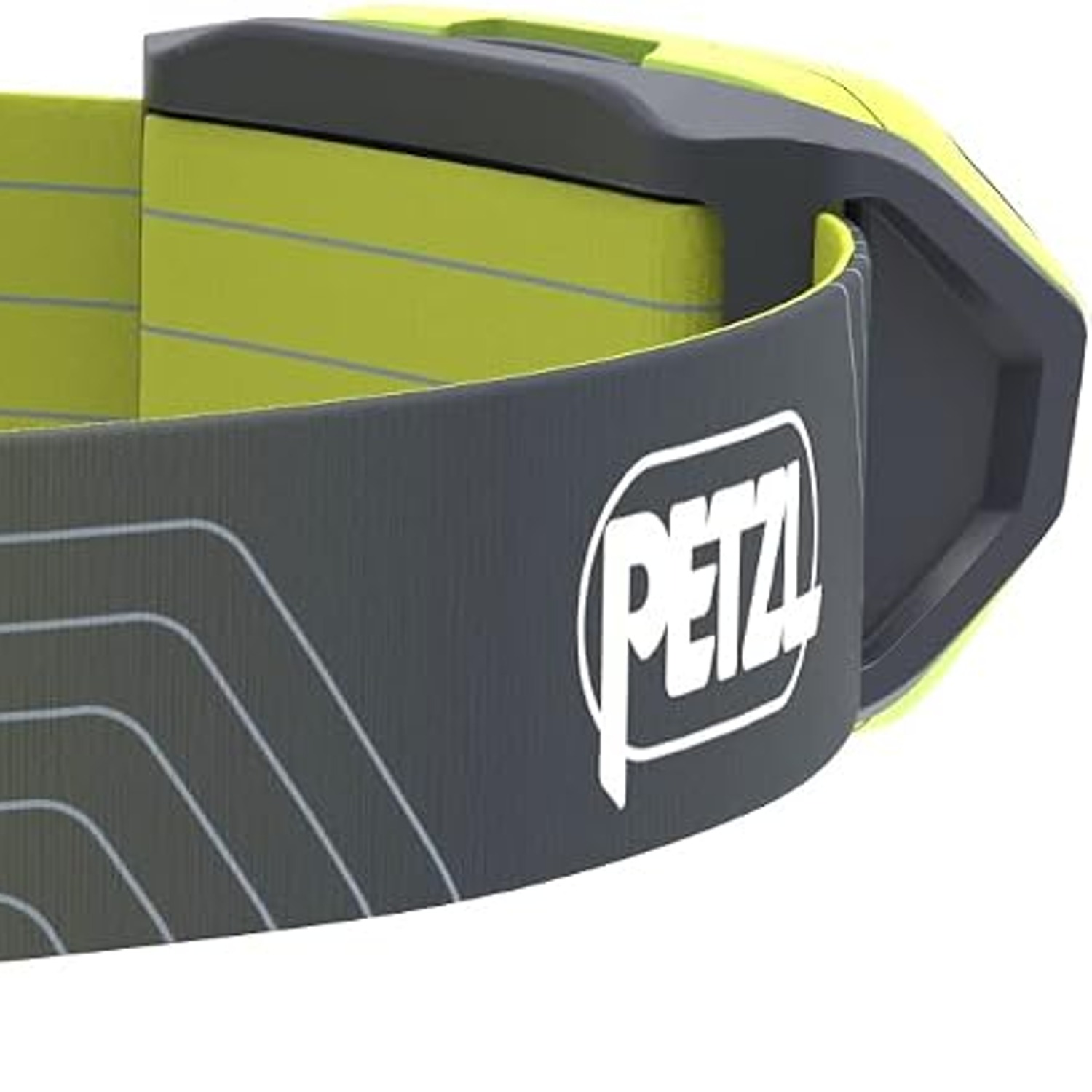
Head torches live hard lives and still last for years if you treat them reasonably. Wipe the body with a damp cloth after dusty or salty trips and let it dry fully before it goes back in the pack. The elastic band is removable and washable by hand in cool water. Air dry it rather than putting it near a heater, which degrades elastic.
The single biggest thing you can do is pull the batteries out before long storage. Alkaline cells leak eventually, and a leak inside a battery compartment is corrosive and hard to clean. Thirty seconds of effort in autumn saves you a lamp in spring.
Keep the lens clean. Grit scratches the plastic and a scratched lens scatters light in ways that make the beam look weak. A soft cloth is all you need.
The short version
The Petzl TIKKA is a 94 g head torch that gives 350 lumens across three white levels, reaches 45 metres, adds a steady and flashing red mode, and runs for a quoted 6 hours on three AAA batteries that come in the box. It is IPX4 water resistant, it tilts, it tells you how much battery is left, and the reflector glows in the dark so you can find it.
It is not trying to be the most powerful lamp available. It is trying to be the one you grab without thinking, and it does that well. If you want hands-free light for camping, walking, work or the odd blackout, this is a straightforward answer.