
The complete guide
How To Choose A Folding Camping Chair That You Will Actually Carry
The problem with camp seating
Almost everyone starts with the cheap folding chair from the supermarket. It is fine for the first season. Then the armrest snaps, the fabric sags, and you discover it weighs four kilos and takes up half the boot. So you leave it at home, and you spend the next trip sitting on a log with your back aching by nine o'clock.
The gap most people fall into is choosing between a big comfortable chair that never leaves the garage and a tiny stool that makes you want to stand up after ten minutes. A good folding camping chair sits in the middle. It is light enough that bringing it is automatic, and supportive enough that you want to stay in it after dinner.
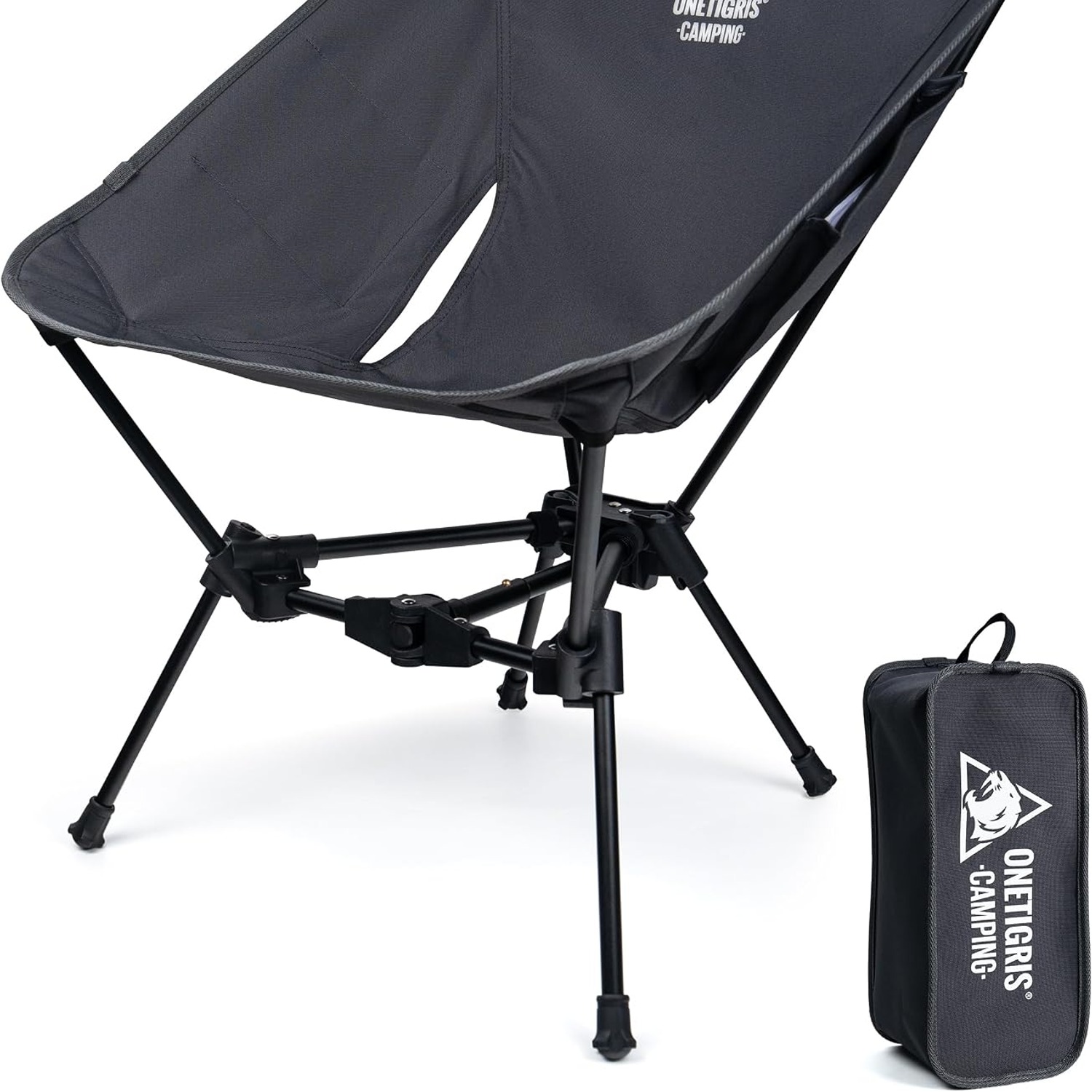
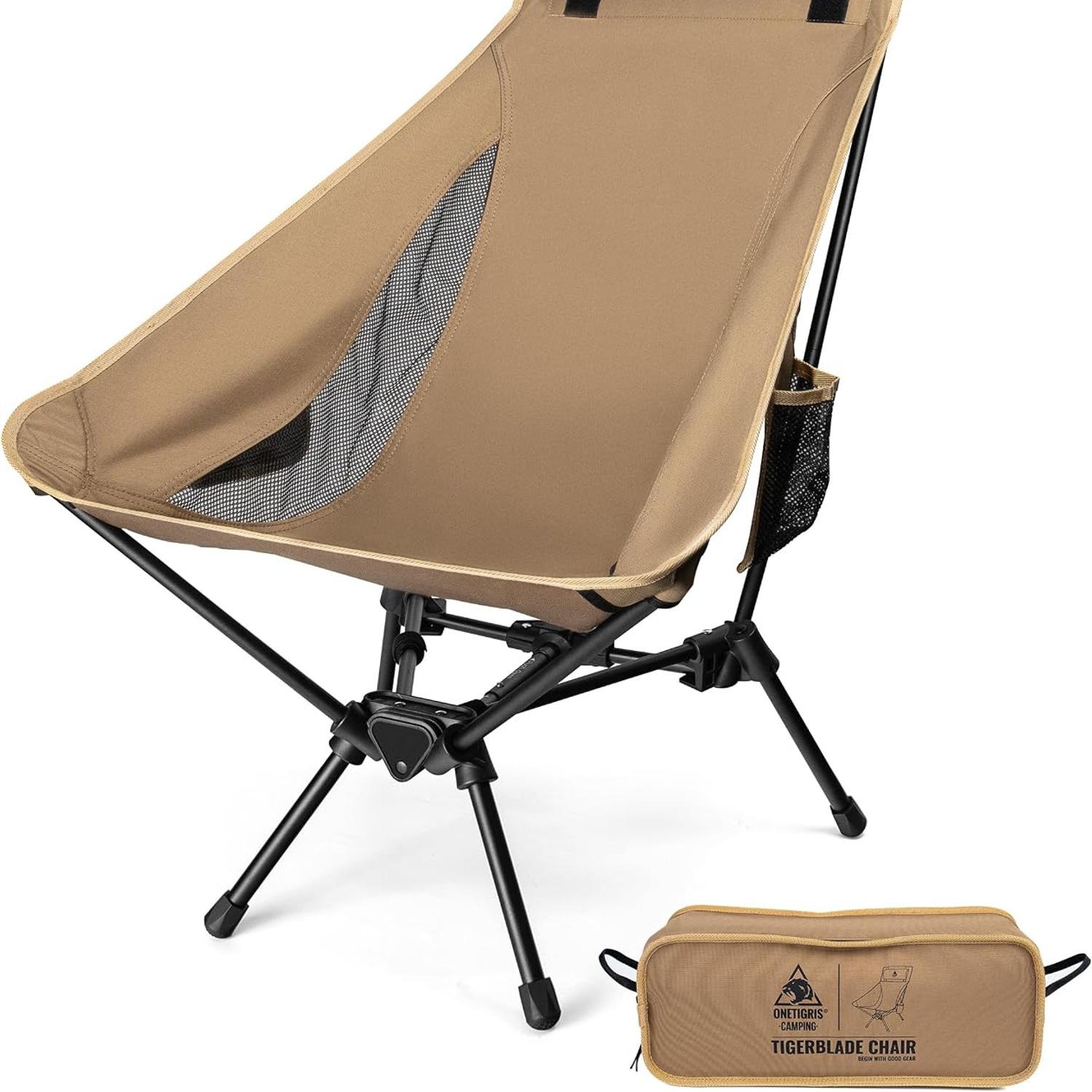
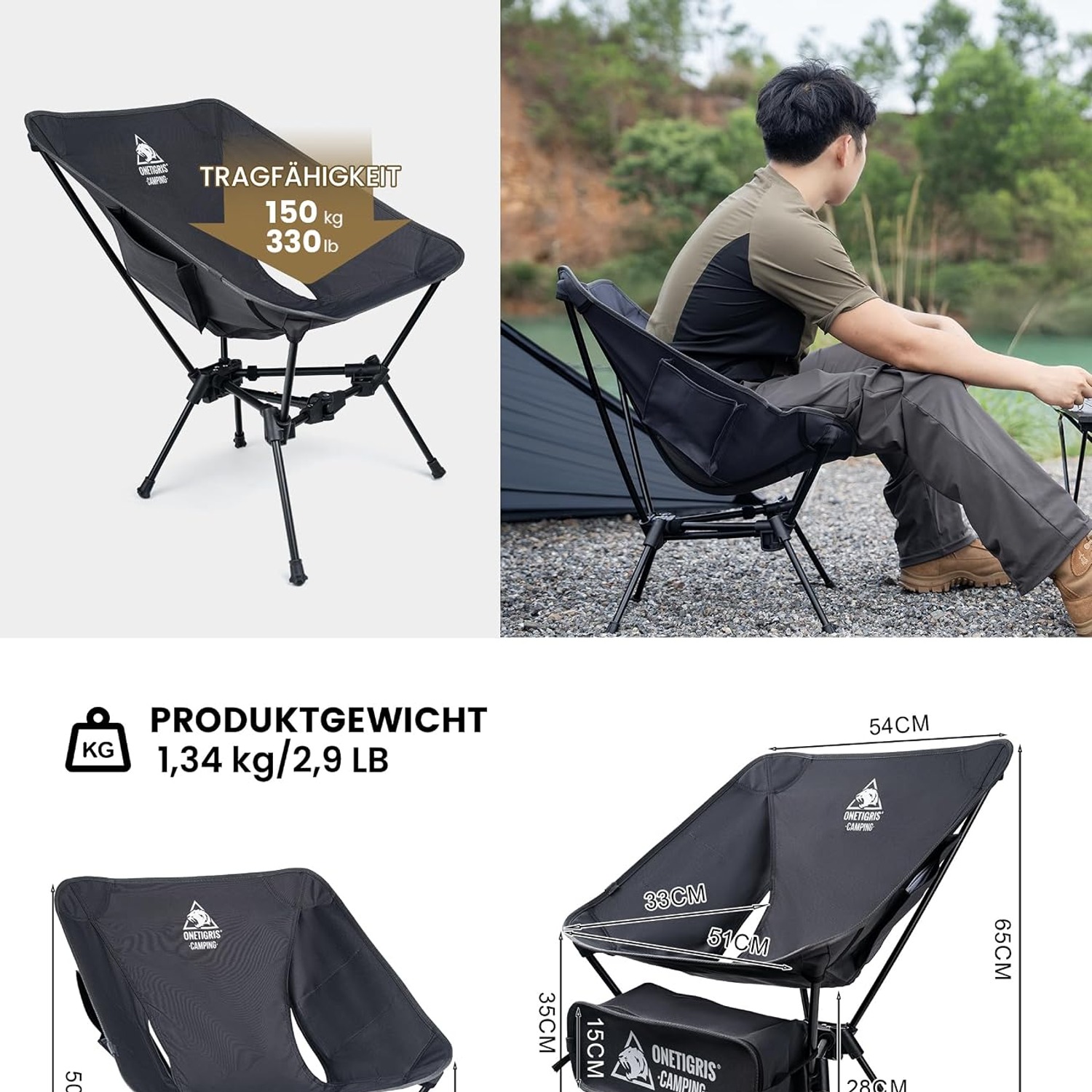
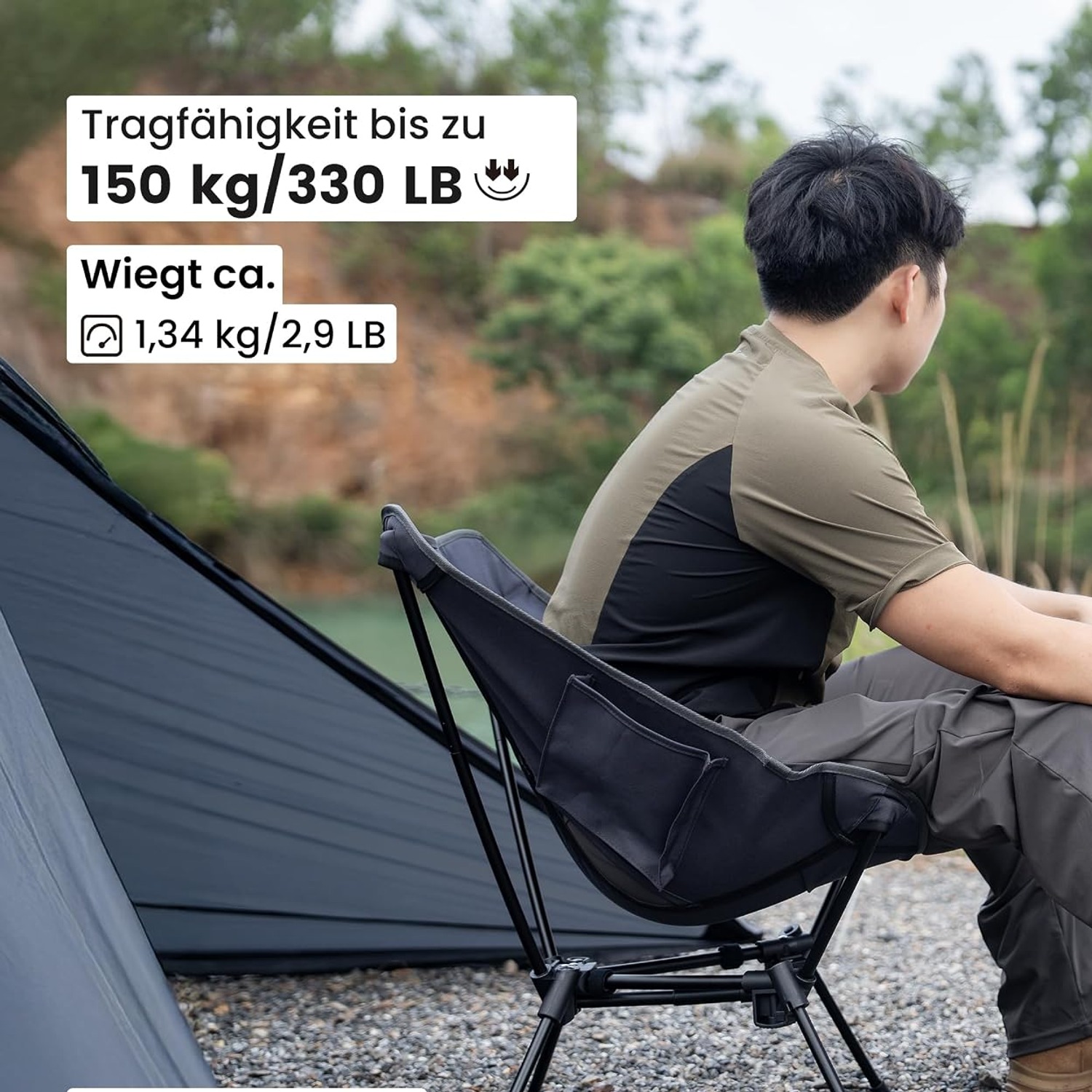
That is the space this OneTigris chair is aiming at. It weighs 1.4 kg with its bag, takes up to 150 kg, and uses an aluminium frame with polyester fabric. No arms, one seating angle, two side pockets.
How a packable chair actually works
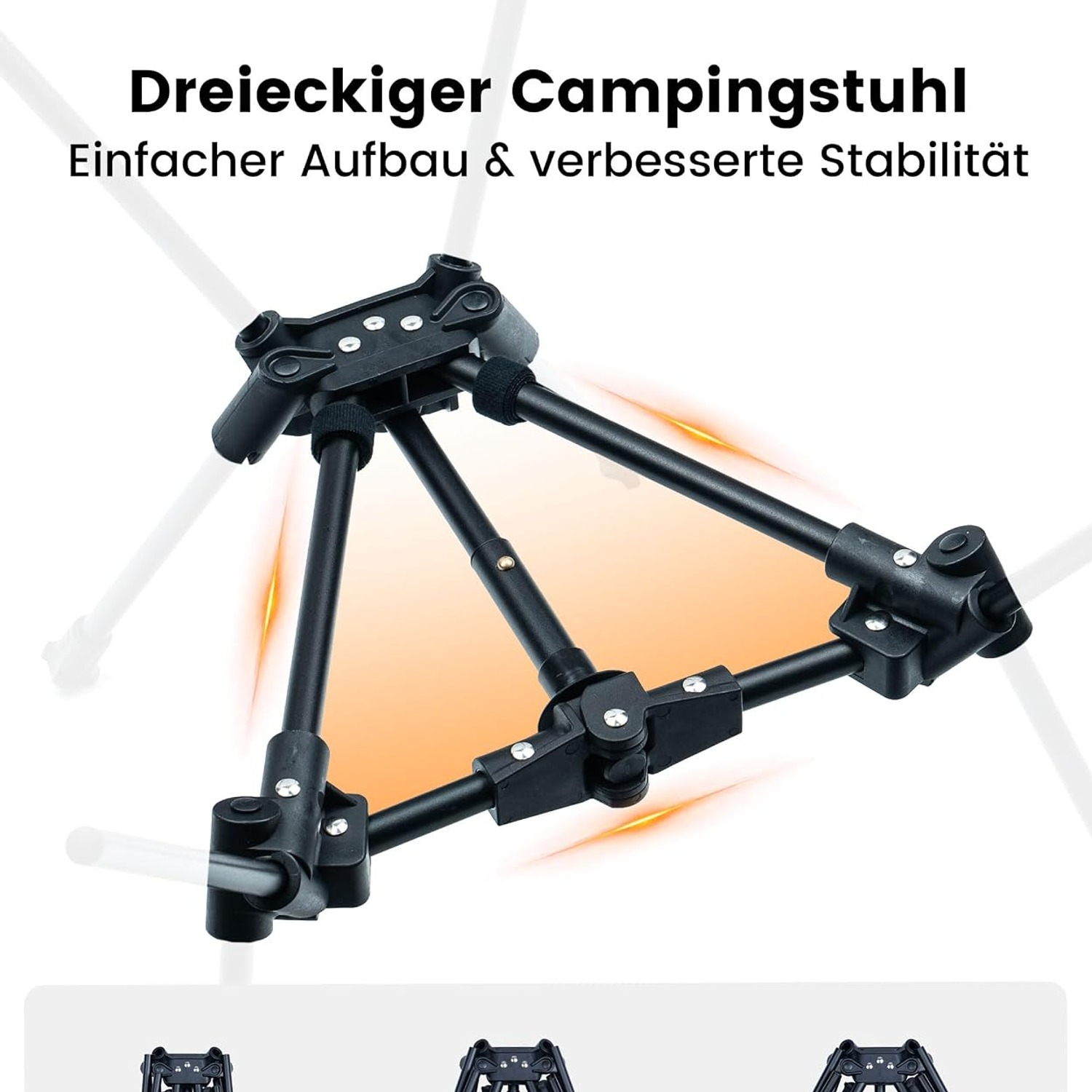
The design is simple once you have seen it. A set of aluminium poles clip or slot together into a frame, and a fabric seat slides over the ends of that frame. Your weight pulls the fabric tight, and the tension is what holds the whole thing rigid. That is why these chairs feel wobbly until you sit down and solid once you do.
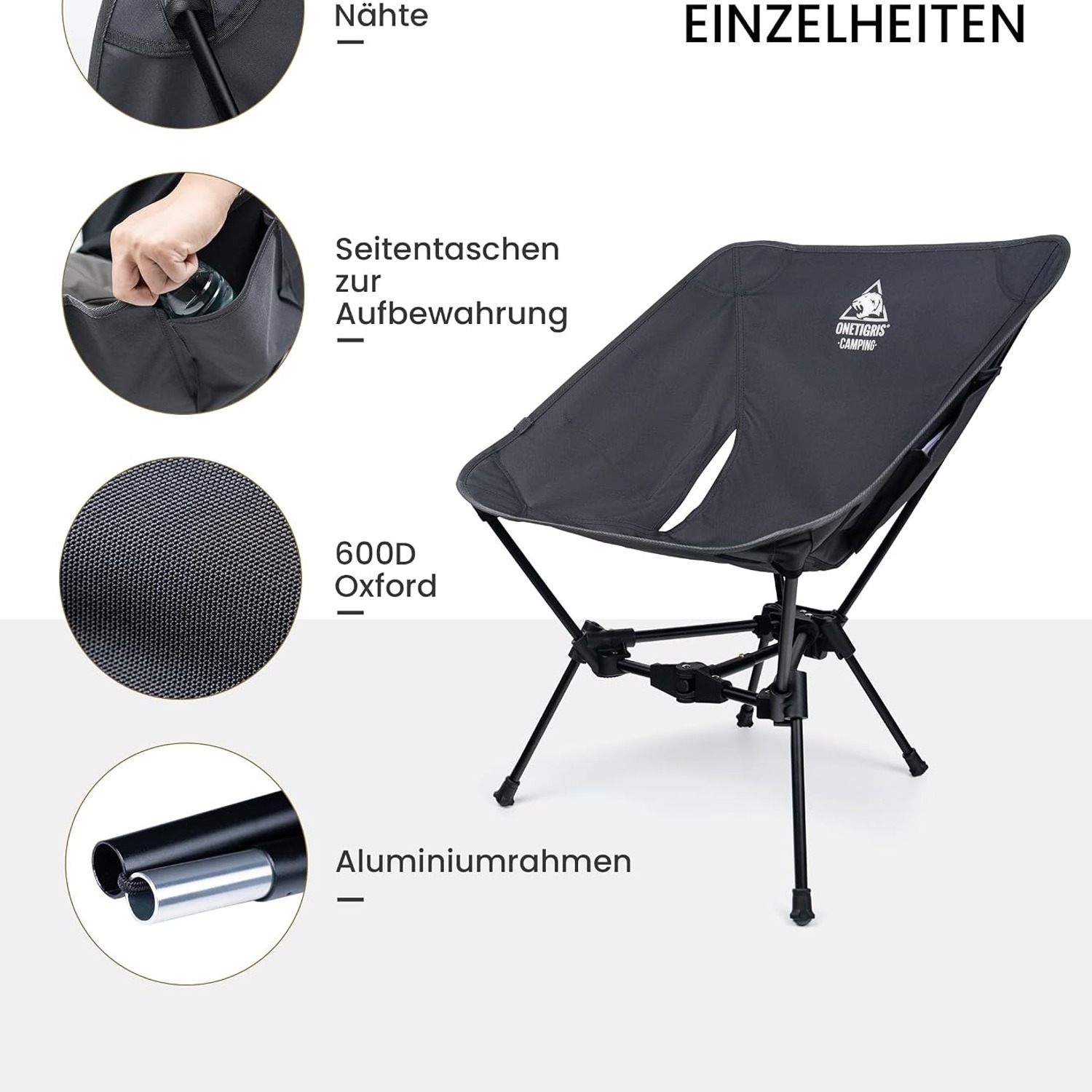
The frame here is aluminium, which is the standard choice for anything you carry. It is light, it does not rust the way untreated steel does, and it has enough give to absorb a bit of movement without cracking. The polyester seat, back and fill are the other half of the equation. Polyester sheds water reasonably well, dries quickly, and shrugs off grass stains and dust better than cotton canvas.
The legs are flattened rather than finished with narrow round tips. That small change makes a real difference on soft ground, because a flat foot spreads your weight over more surface and sinks less than a point does.
Assembly is required, which puts some people off. In practice it means slotting poles together and stretching fabric over them. The first time takes a minute or two while you work out which end is which. By the third time you do it without thinking.
Who this suits
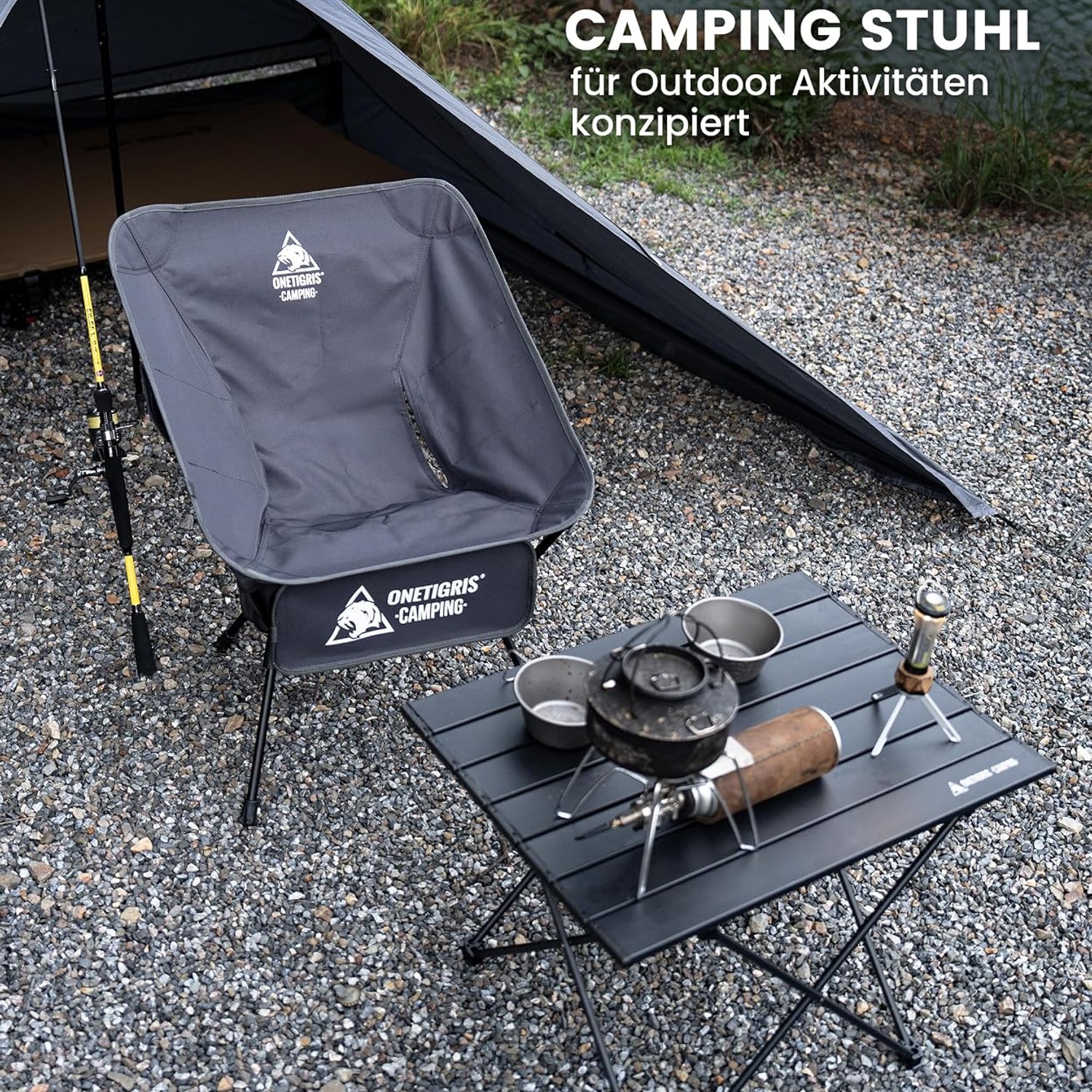
If you walk in to your camping spot, carry gear to a fishing swim, or fly somewhere and want a seat at the other end, low weight is the whole point. At 1.4 kg this is in that bracket. It is also a sensible pick if you drive to a campsite but hate the amount of room rigid chairs eat in the boot.
It suits festivals, where you are carrying everything from a car park half a kilometre away. It suits beach days, garden overflow seating, touchline mornings at kids' sport, and sitting outside the van with a coffee. The best compact outdoor chair for you is usually the one that does five jobs rather than one.
It is less of a fit if you want to recline and doze. There is one seating position, so the back angle is fixed. It is also armless, which some people love for freedom of movement and others miss when they want somewhere to rest their elbows. If you spend six hours a day in a chair at a static campsite, a bigger padded recliner is honestly the better buy. Keep this one for everything else.
Anyone near the top of the 150 kg rating should use it gently and avoid dropping into the seat. That figure is a maximum, not a target.
How to choose between camp chairs
Start with weight, because it drives everything else. Under 2 kg means you will carry it without complaining. Between 2 and 4 kg means it lives in the car. Over 4 kg and it stays home more often than it comes out. Be honest about which category your trips fall into.
Then look at the load rating. A rating well above your own weight gives you margin for the times you drop into the seat rather than lower yourself, or when the ground is uneven and the load lands on two legs instead of four.
Next, seat height. Low seats are cosy by a fire and harder to stand up from. Higher seats are easier on knees and better for eating at a table. This chair is listed at 65 cm tall overall, with assembled dimensions of 33 D x 51 W x 65 H cm. Measure a dining chair at home for comparison and you will have a decent sense of how it will feel.
Then frame material. Aluminium for carrying, steel for cheap static seating. Aluminium costs a bit more and saves a lot of weight.
Finally, the small stuff. Side pockets sound like a gimmick until the first time your phone slides off your lap into wet grass in the dark. Two pockets, as this chair has, is enough for a phone and a snack. A storage bag matters more than people expect, because it stops the poles going missing between trips. Anyone hunting for the best camping chair with side pockets usually ends up there for exactly that reason.
Setting it up well
Pick your ground before you set up. Firm and level is ideal. If you are on a slope, point the chair across the hill rather than down it, and settle into the seat slowly so the legs find their position.
On sand, dig the legs in slightly rather than balancing them on the surface. On very soft mud, a flat stone or offcut of board under each foot makes the chair far steadier. These are the same habits that make any best beach camping chair behave itself.
When you pack up, get in the habit of checking the ground for dropped items from the side pockets. A head torch left in long grass is almost never found again.
Looking after it
Care here is not complicated. Wipe the polyester with a damp cloth and a little mild soap when it needs it, then let it dry fully in the air before folding. Packing a damp chair into a closed bag is the fastest way to end up with a musty smell and marks on the fabric.
Shake out sand and grit after beach trips, including from inside the pole sleeves where it likes to hide. Grit in a joint is what makes poles stick and wear.
Keep the frame dry when storing. Do not machine wash the seat, do not tumble dry it, and keep bleach well away. Store the chair in its bag somewhere out of direct sun, because sun does more damage to outdoor fabric over a season than rain ever will.
If a pole joint gets stiff, a quick clean with a dry cloth usually sorts it. Resist the urge to force anything.
The short version
This is a folding camping chair built around being carried rather than being enormous. It weighs 1.4 kg, holds up to 150 kg, uses an aluminium frame with a polyester seat, and comes with a storage bag. It is armless with one seating position and two side pockets.
Buy it if you want a real seat on trips where you have been going without one, and if you would rather have a chair you always bring than a bigger one you leave behind. Choose something heavier and padded if you plan to spend whole days in it at a fixed camp.
For walking, driving, flying, fishing, festivals and the garden, this covers the ground well.