
The complete guide
How to Choose a Cotton Flannel Sleeping Bag
The problem with most sleeping bags
Ask someone why they slept badly in a tent and they rarely say they were cold. More often they say the bag felt clammy, or their feet were pinned, or the lining squeaked against their skin every time they rolled over. Warmth is only half the job. Comfort is the other half, and plenty of bags get it wrong.
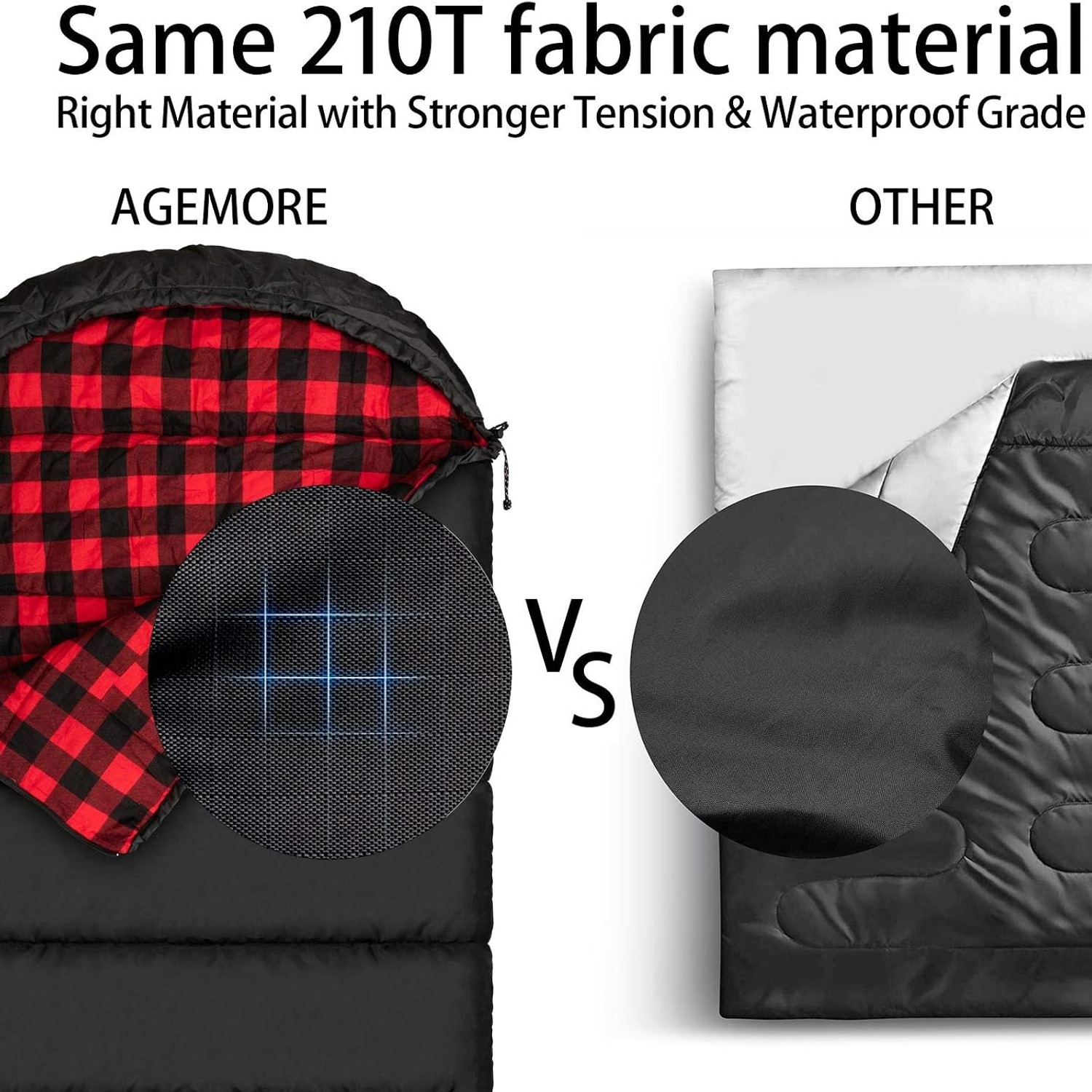
A standard budget sleeping bag is lined with smooth polyester taffeta. It is cheap, it dries fast, and it feels like sleeping inside a raincoat. If you wear full thermals it is fine. If you sleep in a t-shirt and shorts, like most people do in mild weather, that lining is the first thing you notice and the last thing you forgive.
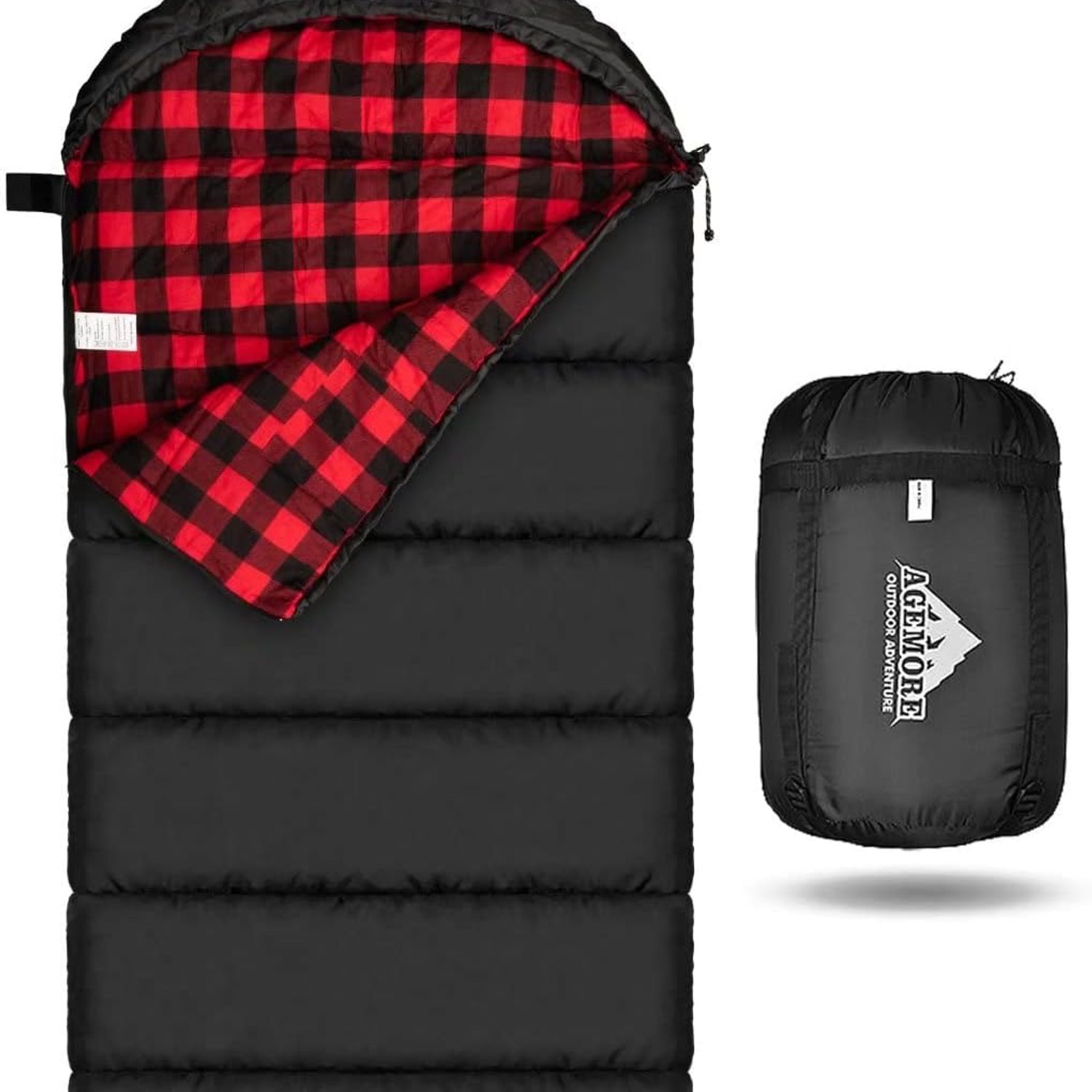
That is the gap a cotton flannel sleeping bag fills. The lining is brushed cotton, the same fabric people put on their beds in winter, so the surface against your skin is soft and dry-feeling rather than slick. You stop thinking about the bag and start thinking about sleeping.
How this bag is built
There are three layers doing three different jobs here.
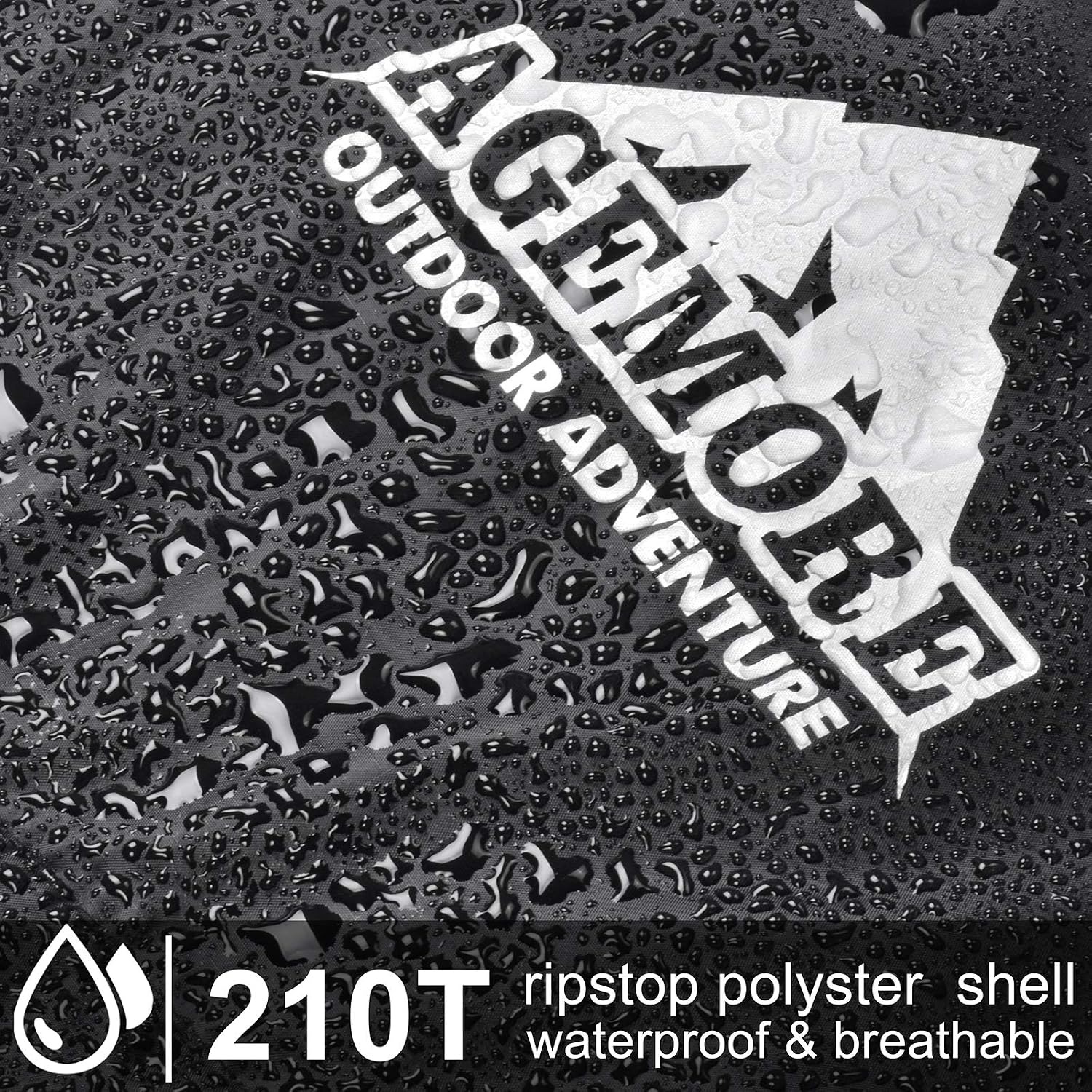
The outside is polyester. That is the layer that takes the abuse from tent floors, gravel, car boots and the back of the ute. Polyester shrugs off scuffs and handles the bit of condensation that forms inside most tents overnight. It is not a waterproof layer and should not be treated as one, but it is far more forgiving than a bare cotton outer would be.
The middle is cotton fill. This is the insulation, the part that traps air and holds your body heat around you. The fill is what the all-seasons rating and the listed temperature rating to 40 degrees refer to.
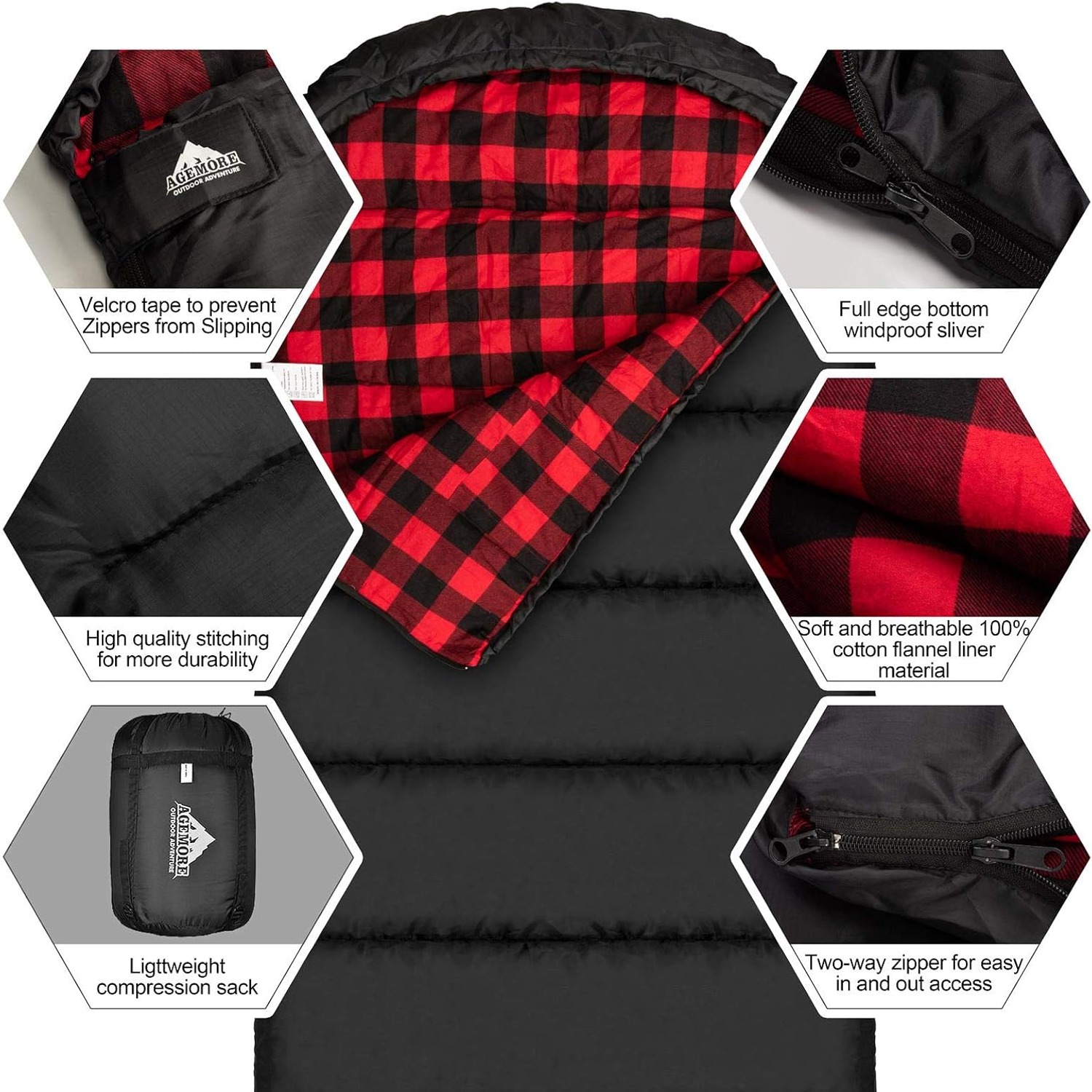
The inside is cotton flannel. This is the comfort layer, and it is the reason to pick this bag over a plain synthetic one.
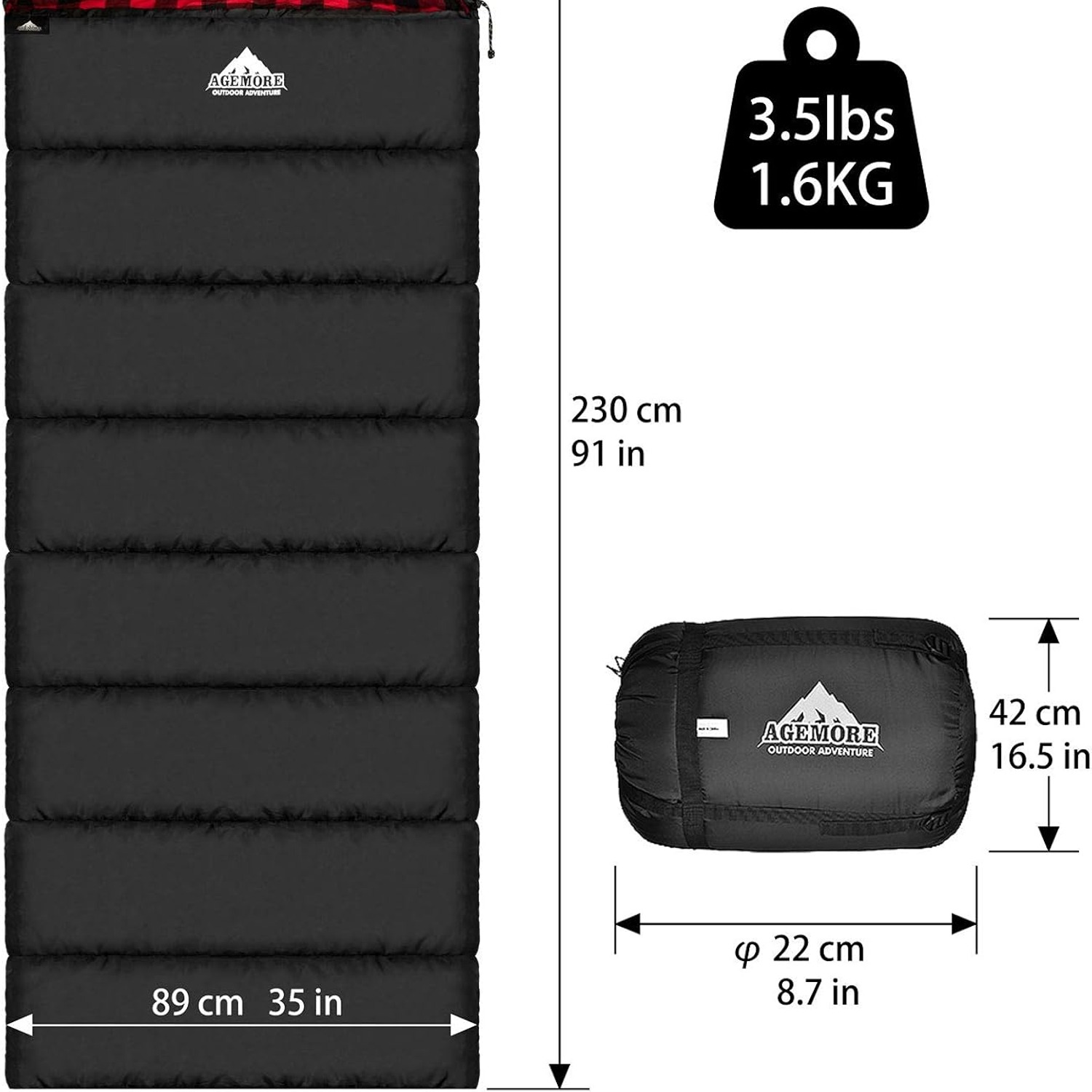
On top of that you get a built-in hood, a two-way zipper, and a compression sack for packing. The bag weighs 1.59 kg.
Why rectangular matters
The shape is listed as rectangular, and that single detail changes how the bag sleeps.
Mummy bags taper from the shoulders down to the feet. That shape is efficient, because there is less air inside for your body to warm, which is why serious cold-weather and ultralight bags are nearly always mummy cut. The problem is that it locks you into roughly one position. Roll onto your side and the whole bag rolls with you. Bend your knees and the fabric pulls tight across your shins.
A rectangular bag is just a big padded envelope. You can lie on your side, draw your knees up, stretch out diagonally, or throw one leg out of the zip. If you sleep like a normal human rather than a log, this is the shape you want.
The cost is a little warmth. More internal space means more air to heat. For mild and cool-weather camping, most people happily pay that price for being able to move.
Sizing and who it suits
This one is cut X-Large at 2.31 metres long and 0.89 metres wide, with a maximum height recommendation of 6 feet. If you are tall, you already know the feeling of your feet pressed into the end seam all night, compressing the fill right where you need it most. Compressed fill does not insulate, which is why tall people in standard bags often report cold feet.
The extra length solves that. The extra width helps if you are broad through the shoulders or you simply like a bit of room.
Who it suits well:
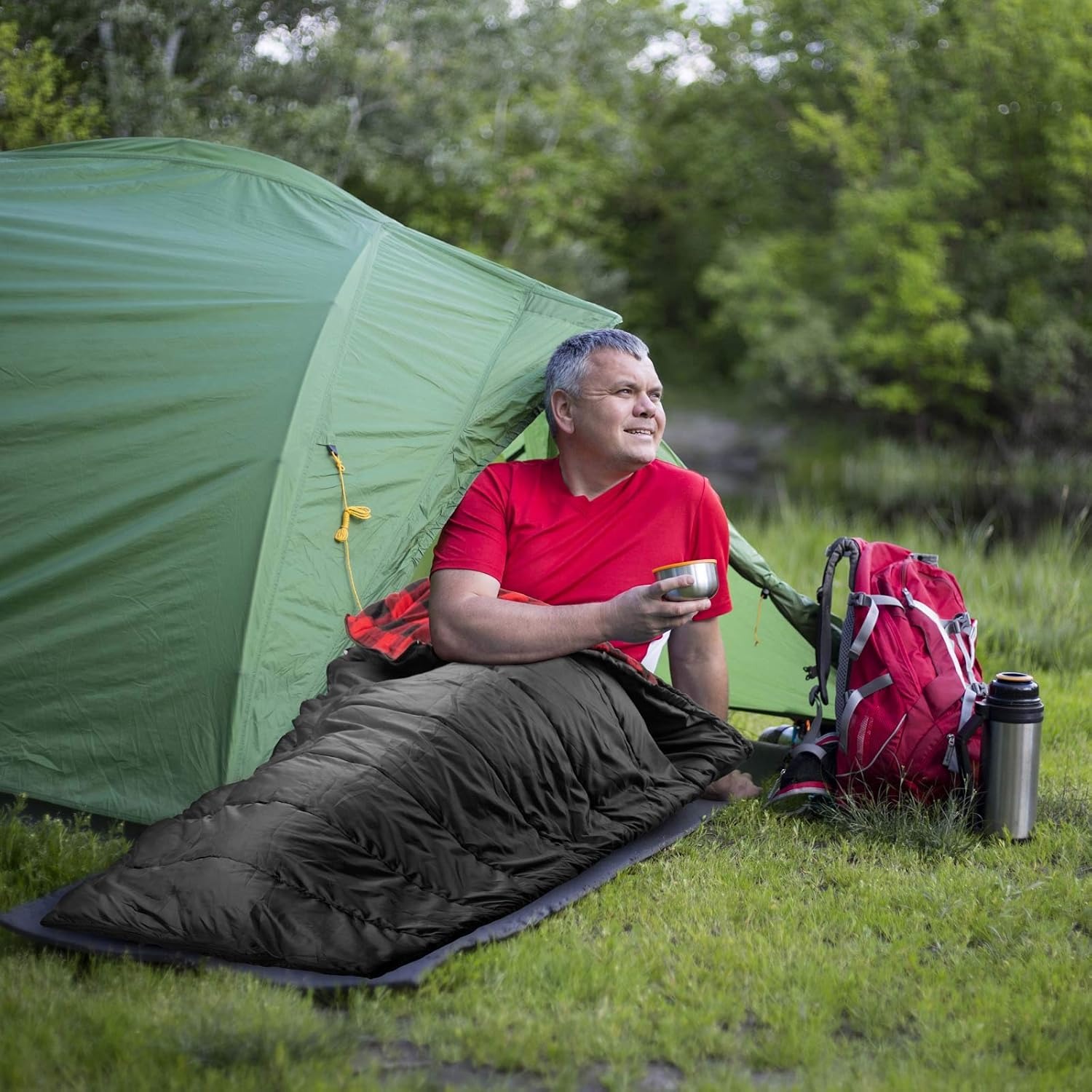
- Car campers and weekend campers who want comfort over grams
- Taller adults who have outgrown standard bags
- Side sleepers and restless sleepers
- Households that need good guest bedding that stores small
- Caravan, swag and roof-tent users
Who should look elsewhere: ultralight through-hikers counting every gram, people camping in genuinely freezing alpine conditions, and children, since the adult X-Large size leaves too much cold space around a small body.
Reading temperature ratings honestly
The listing gives an all-seasons description and a rating to 40 degrees. Here is how to think about any rating number on any bag.
Ratings are tested in controlled conditions with a dressed mannequin on an insulated mat. You are not a mannequin. Your warmth at night depends on what you ate, how tired you are, how hydrated you are, your body size, whether you are male or female, what you are wearing, and most of all what is underneath you.
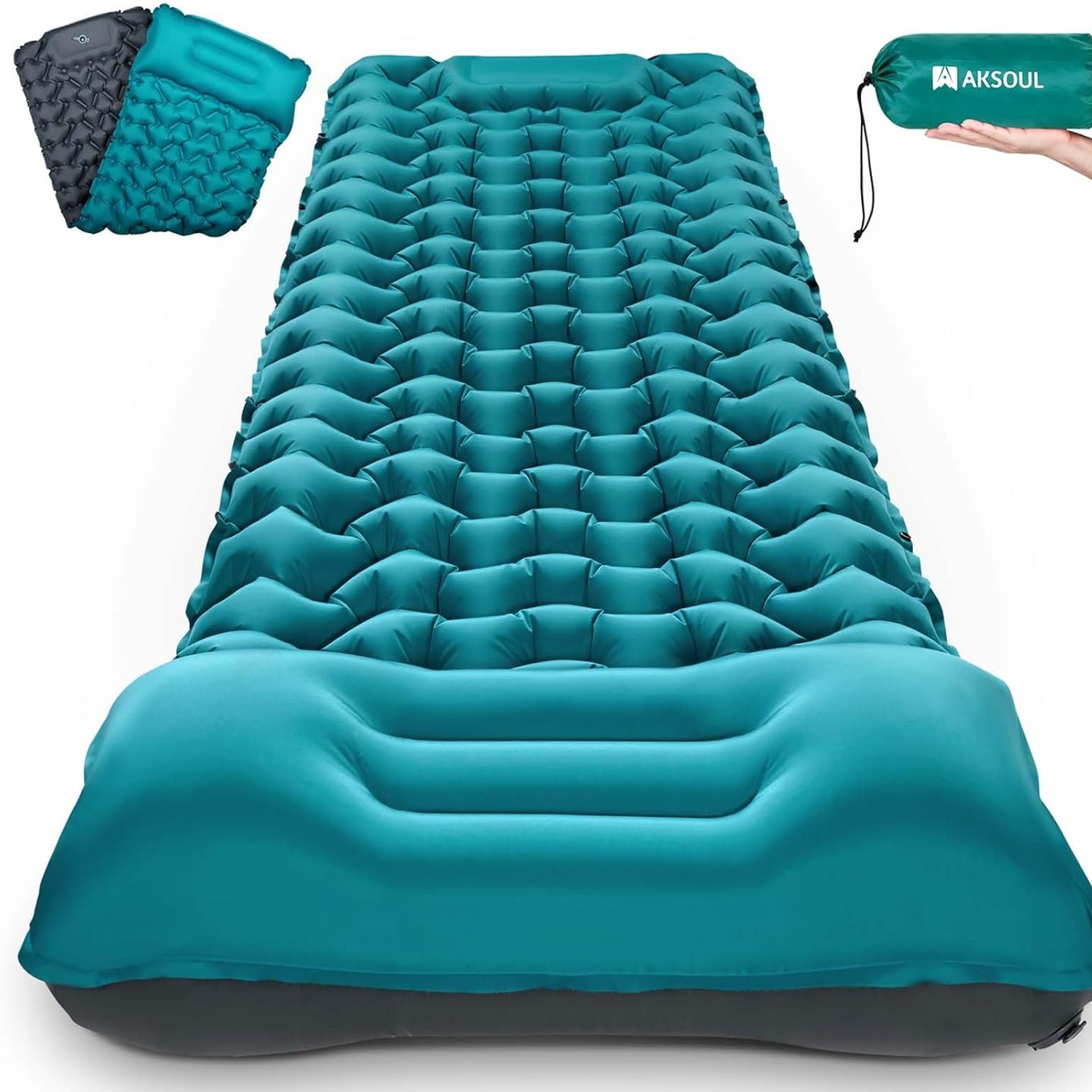
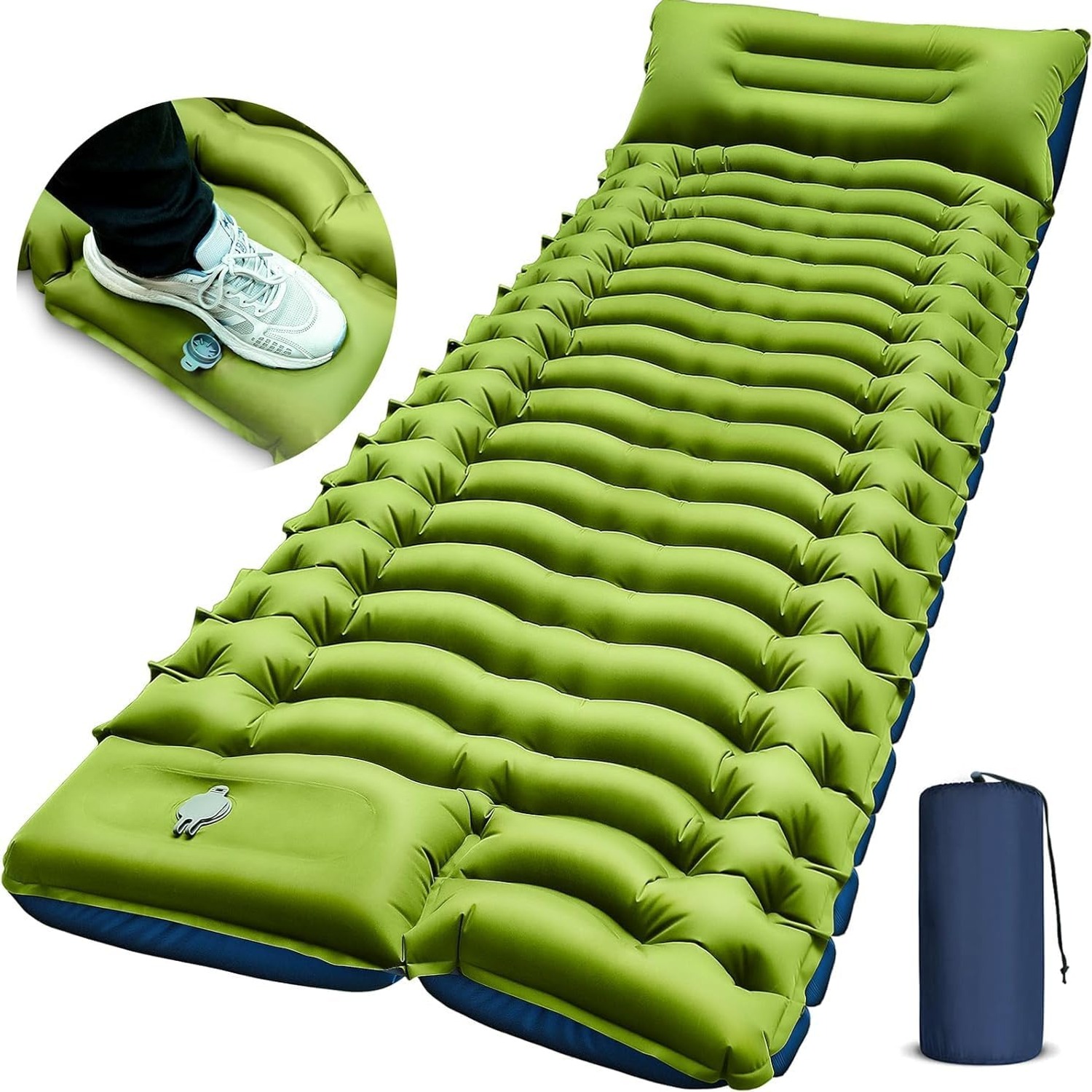
That last point is the one people skip. Most of the cold you feel at night comes up through the ground, not down through the air. Lying on a bag compresses the fill underneath you to nothing, so it insulates almost nothing. A sleeping mat with real insulation value is not an optional extra. It is half your sleep system, and a good mat under an average bag beats a great bag on bare ground every time.
Treat the rating as a comparison tool between bags, not a guarantee about your night.
Making the most of the two-way zip
The two-way zipper looks like a minor spec and turns out to be one of the most used features.
Warm night? Unzip from the bottom and let your feet breathe while your shoulders stay covered. Feet are a great temperature control valve, and venting them often means you can stay in the bag instead of throwing it off entirely.
Very warm night? Open it all the way and use the bag as a flat quilt over the top of you.
Cold night? Zip right up, pull the hood over, and let the flannel do its work.
Because the zip can be worked from inside, you are not reaching around the outside of the bag in the dark trying to find a pull tab. Small thing, nice thing.
Looking after it
Sleeping bags last for years when treated well and die young when treated badly. The rules are simple.
Air it out after every trip. Drape it over a chair, a tent line or a railing for a few hours before it goes away. This handles the moisture your body puts into it overnight, which is more than most people realise.
Spot clean rather than full wash wherever you can. A damp cloth and a little mild detergent on a mark is kinder to the bag than a full cycle in the machine. Save the proper wash for once or twice a season, and always follow the care label stitched into the bag.
Dry it completely. Fill that goes away damp develops a smell and loses loft. Give it longer than you think it needs.
Store it loose. The compression sack is for travel, not for the cupboard. Months of compression flattens the fill and takes warmth with it. Hang it up or keep it loose in a big breathable bag.
Use a liner. A simple cotton or silk liner catches body oils and dirt, washes easily, and adds a bit of warmth. It is the cheapest way to extend the life of any sleeping bag.
Getting a better night in it
A few habits that cost nothing:
Put on dry clothes before bed. The clothes you hiked in hold moisture even when they feel dry, and moisture steals heat all night.
Eat something before you sleep. Your body generates heat digesting it.
Go to the toilet before you get in. Holding it burns energy that could be keeping you warm.
Fluff the bag before you climb in. Shake it out so the fill opens up and traps air. Straight out of the compression sack it is flat, and flat fill does not insulate.
The short version
This is a one-person rectangular sleeping bag with a cotton flannel lining, cotton fill and a polyester shell. It is cut X-Large at 2.31 by 0.89 metres for adults up to around 6 feet, weighs 1.59 kg, and comes with a compression sack, a hood and a two-way zip. The supplier rates it as all-seasons to 40 degrees.
Buy it if you want a bag that feels like bedding, you have room in the pack or the car, and you are tired of bags that pin your feet. Pair it with a proper insulated mat, store it loose between trips, and it should give you a lot of comfortable nights.