


The complete guide
How to Choose a Camping Air Mattress That Actually Lets You Sleep
The real reason camping sleep is bad
Most people blame the tent, the noise or the temperature. Usually it is the ground. A patch of earth that looked flat at 5pm turns out to have a root under your hip, a slight slope towards your feet, and about as much give as a footpath. You end up rolling over every twenty minutes trying to find a position that does not hurt.
A thin foam roll does not fix this. It softens the very top of the ground and nothing more. What you need is enough air under you that the lumps stop mattering. Ten centimetres of air, built into cells so the pressure spreads evenly, is the point where most people stop noticing what is underneath them.
That is the whole argument for an inflatable camping mat. It is not luxury. It is the difference between waking up ready to walk and waking up with a sore back and a bad attitude.
How a foot pump mat works
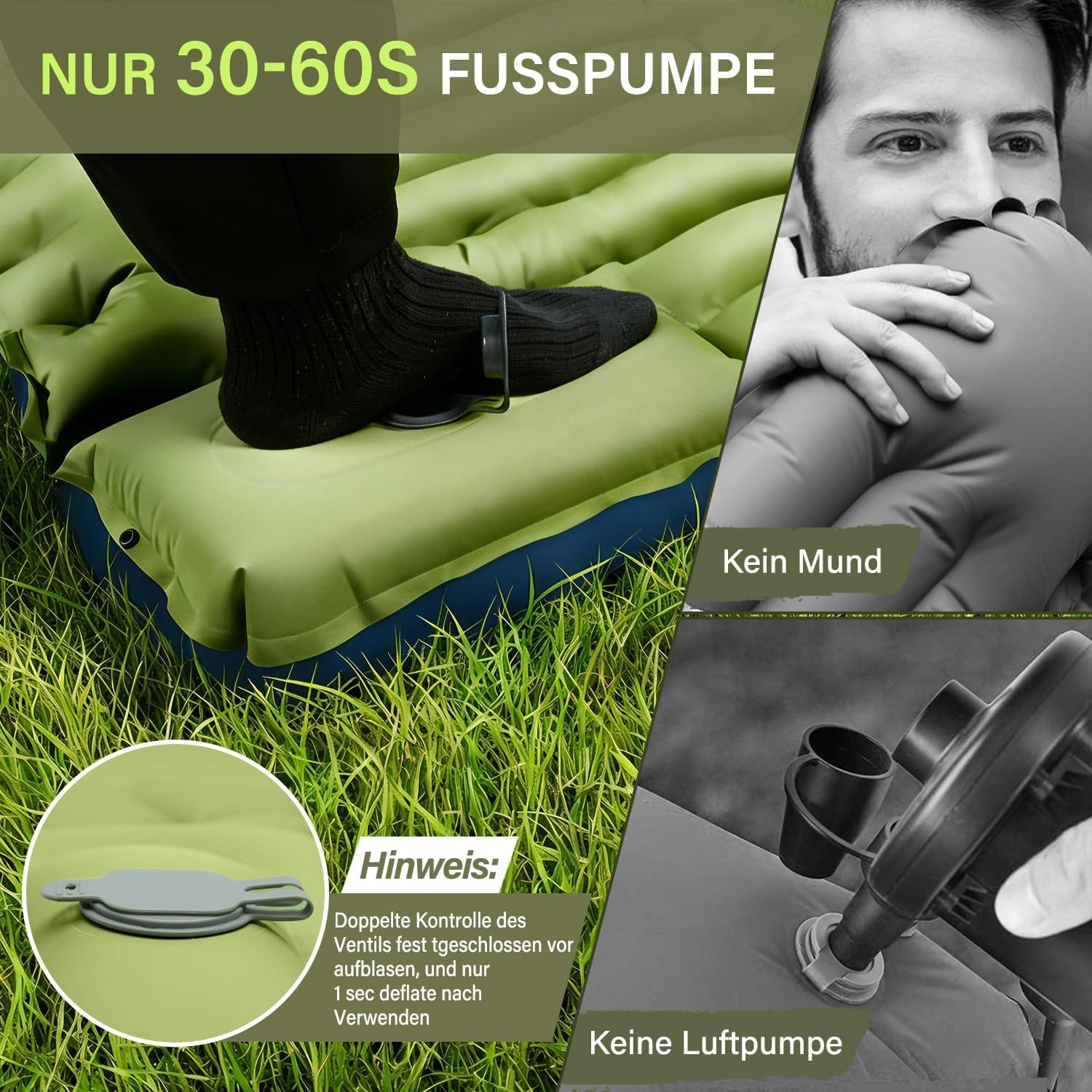
The old method was to blow a mat up by mouth. It takes ages, it leaves you dizzy, and the moisture from your breath ends up inside the mat where it slowly causes mould. The next step up was a separate hand pump or pump sack, which works but adds another item to pack and another item to lose.
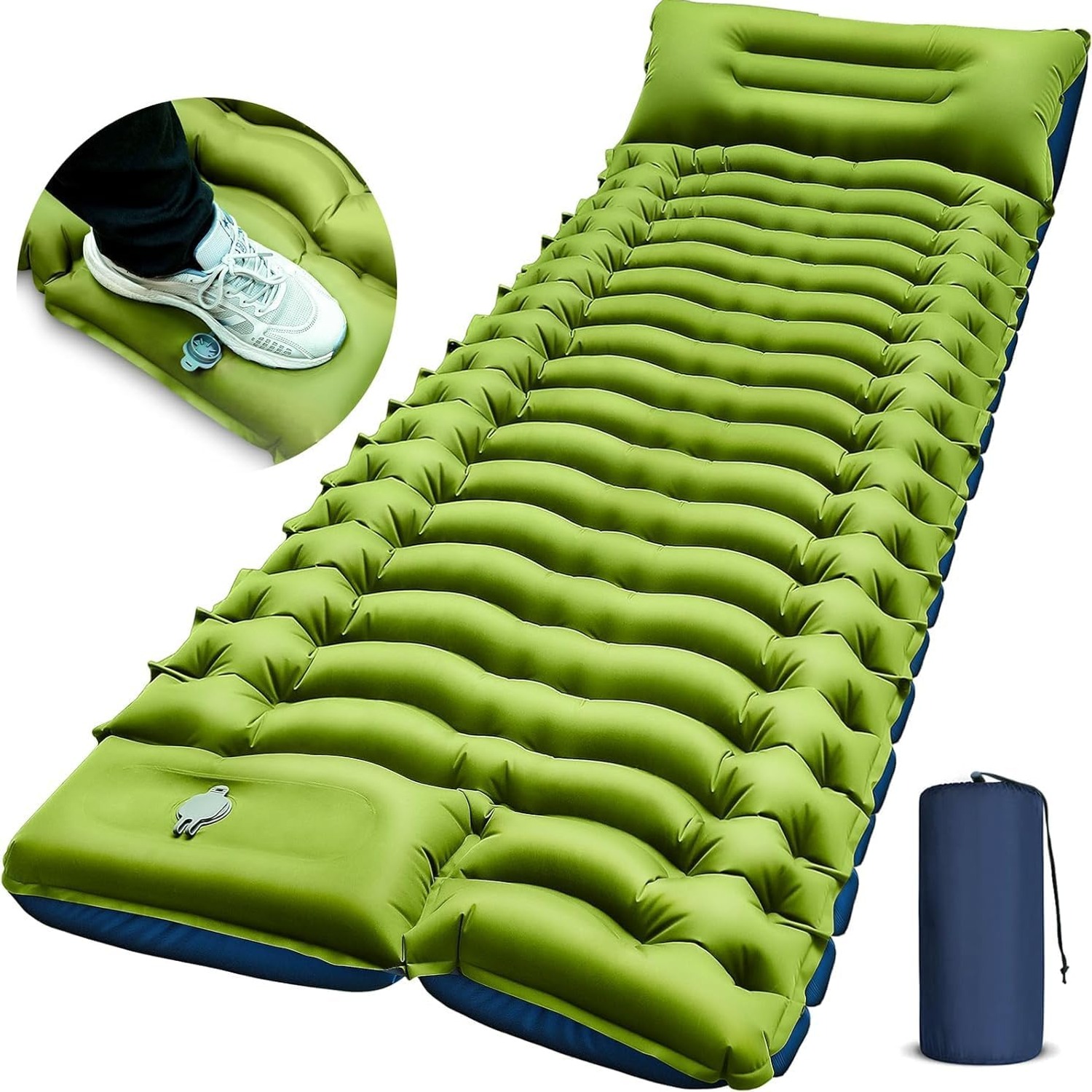
A foot pump built into the mat removes all of that. You unroll the mat, open the valve, and press the pump pad with your foot. Each press pushes a slug of air through a one-way valve. Thirty to sixty seconds of steady pedalling and the mat is up. You can do it while standing, which is handy inside a small tent where kneeling is awkward.
Deflation is the part that surprises people. Open the valve and the air leaves in about a second. From there you fold the mat lengthways and roll from the foot end towards the valve, which squeezes the last air out as you go. Pack-up is a one-minute job rather than a ten-minute struggle.
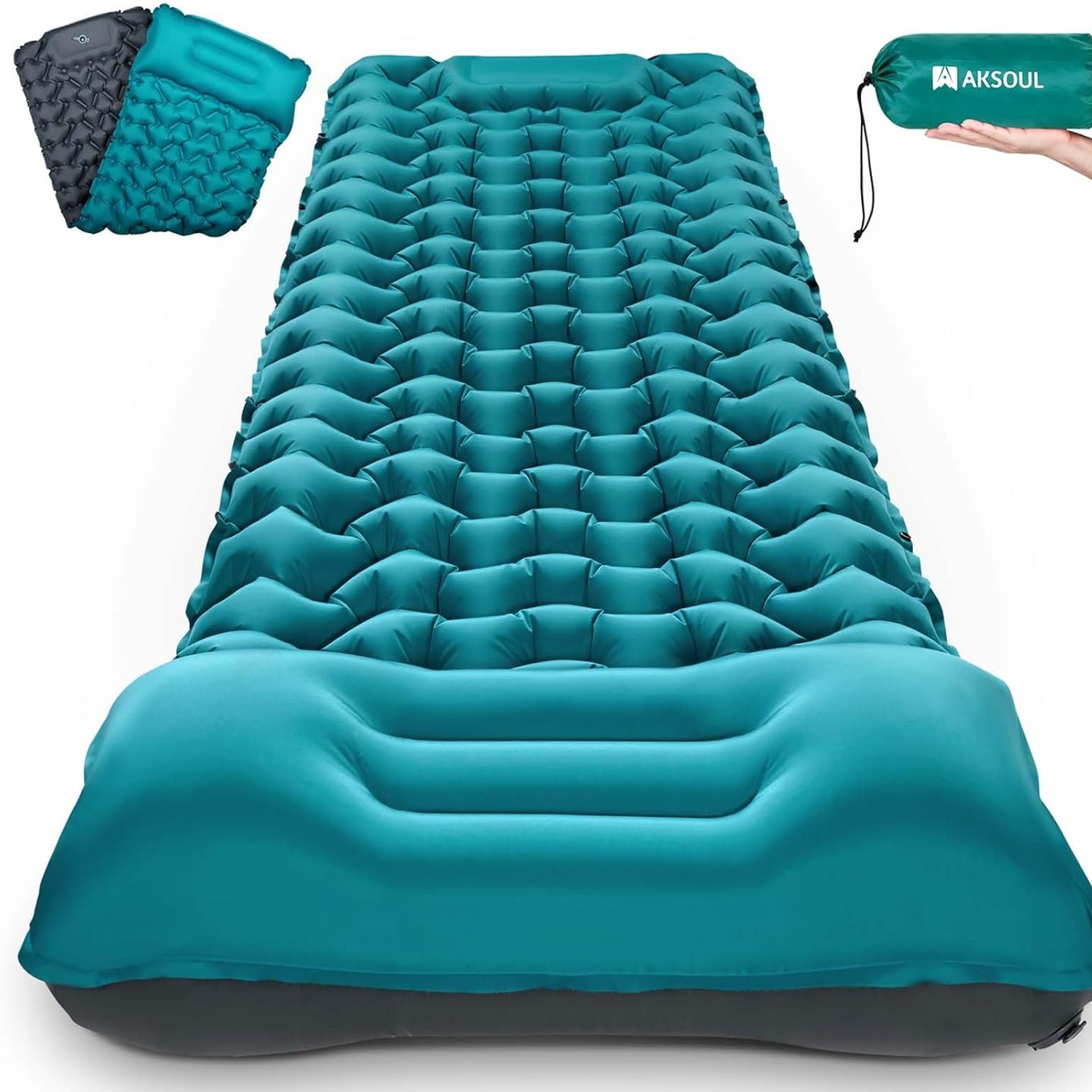
The internal structure matters too. This mat uses an air cell layout rather than one big chamber. In a single-chamber mat, every time you move, the air sloshes to the other end and you sink. Cells slow that down, so the surface under your hips stays supported while your shoulder still gets some give.
Who this suits
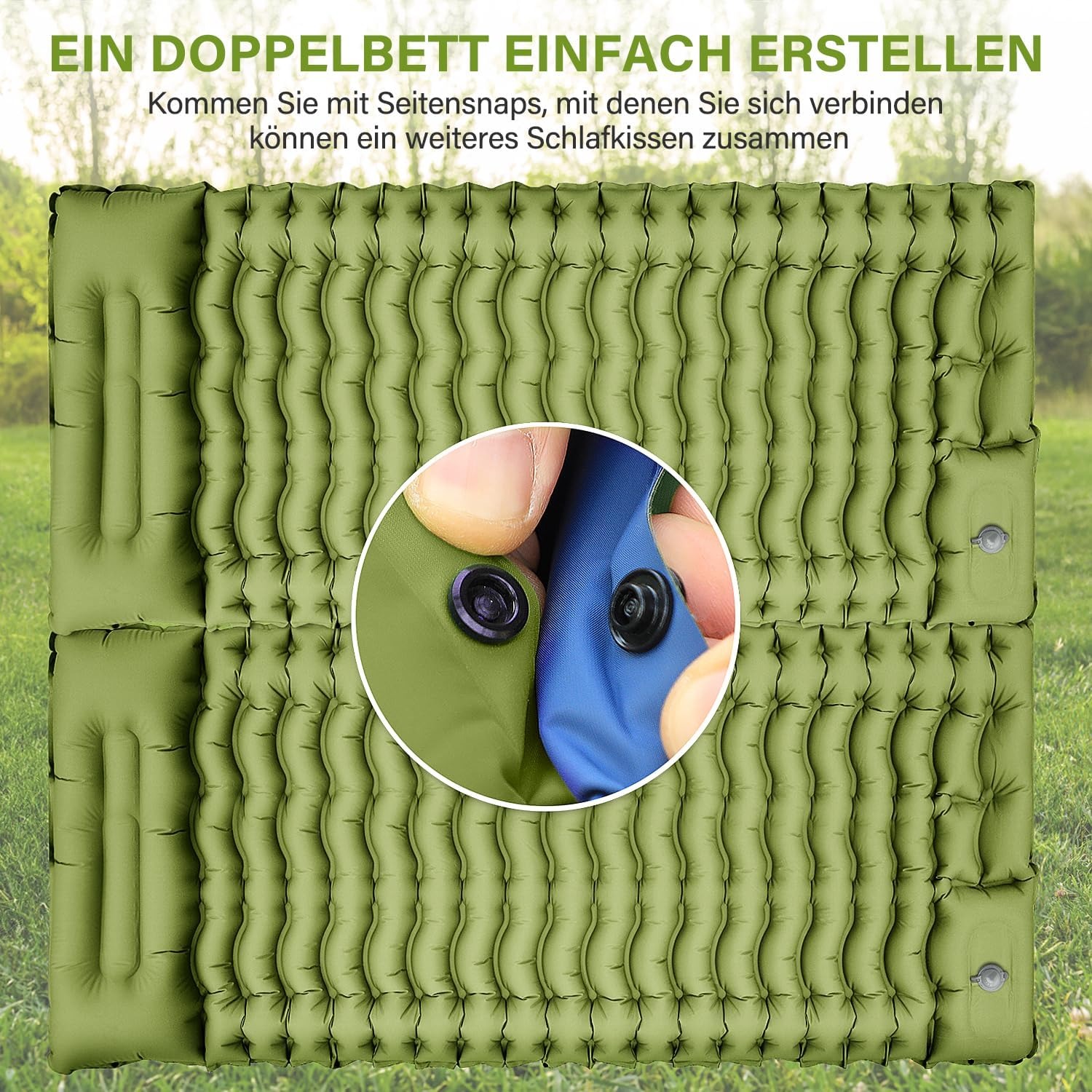
Car campers and family trips. Weight is irrelevant when the car does the carrying, so you get all the comfort with none of the compromise. The side buttons that join two mats into a double are genuinely useful here. Anyone who has slept in a tent with a partner knows about the cold gap between two separate pads, and this removes it.
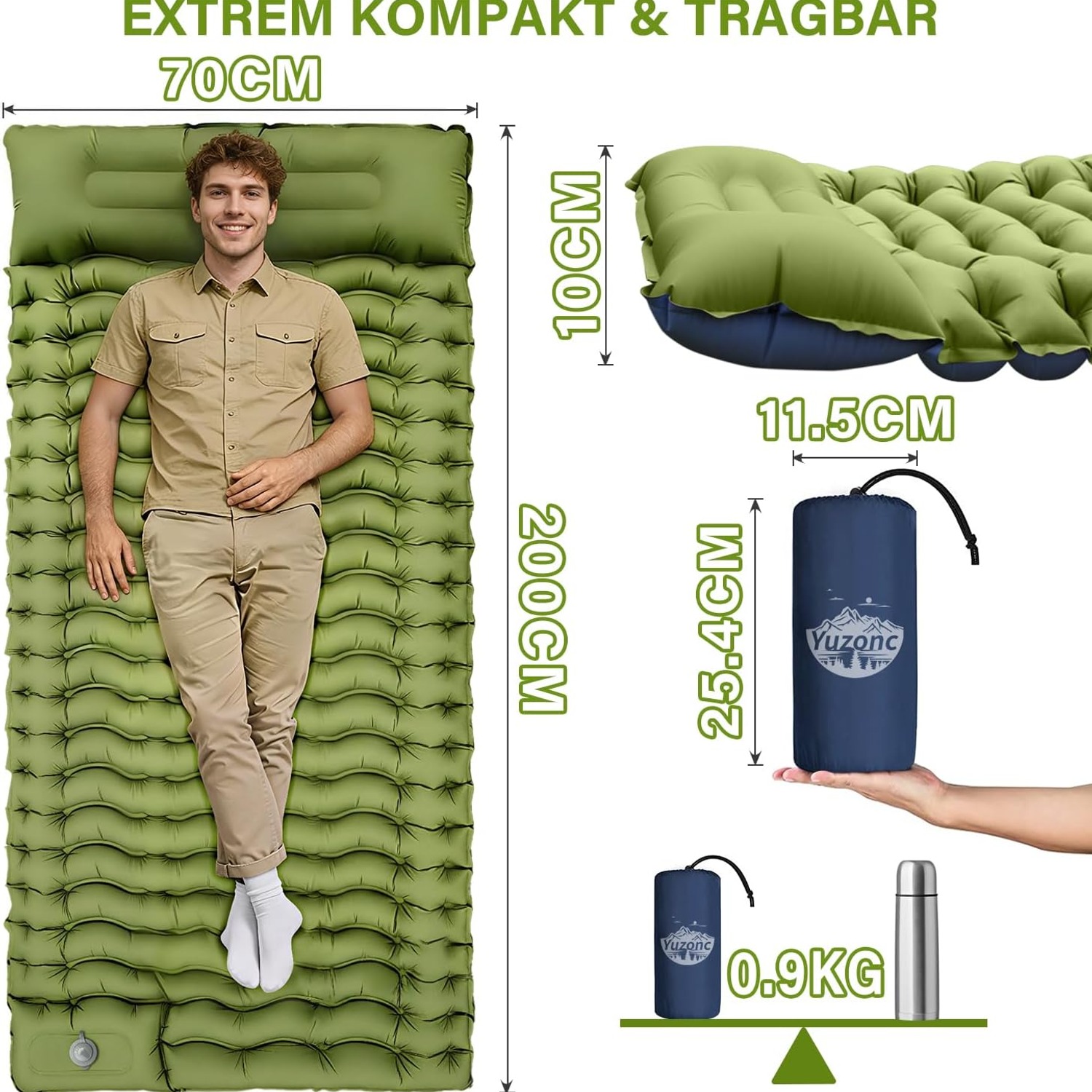
Hikers and backpackers. The mat rolls to roughly the size of a water bottle, which is the size that fits in a pack rather than strapped to the outside where it snags on branches. If you are chasing the best lightweight hiking mat for a multi-day route, compare the packed size against your pack volume first, then the comfort second. A mat you leave behind because it does not fit is no mat at all.
Travellers and festival goers. Hostel floors, festival tents, a friend's lounge room, the back of a wagon. A compact sleeping mat covers all of it, and because it has the pillow built in you are not carrying a second item for your head.
Guest beds at home. Not everybody has a spare room. A mat like this lives in a cupboard and comes out twice a year, and it is more comfortable than most fold-out couches.
Side sleepers. This group benefits most from thickness. On a thin mat, a side sleeper's shoulder and hip bottom out against the ground within minutes. Ten centimetres gives those pressure points somewhere to go.
How to choose
Start with thickness. Under 5 cm is a summer-only, young-body, flat-ground option. Around 10 cm handles rough sites and most adult sleepers. More than that starts to get heavy and bulky for anything beyond car camping.
Then look at the width. Many budget mats are 50 to 55 cm wide, which is fine if you sleep like a plank and never move. At 68 cm there is room to shift. If you have ever woken with one arm dangling onto a cold tent floor, you understand why the extra centimetres matter.
Length is simple. Check your own height and add a little. At 195 cm this mat covers most adults.
Inflation method is next, and it is where the daily experience is decided. A built-in foot pump means no separate gear, no batteries, and no mouth moisture inside the mat. If you are comparing options for the best self inflating camping mat, check whether "self inflating" means foam that expands on its own or a pump built into the product. They behave quite differently.
Then consider the surface material. Nylon is the standard outdoor choice because it is light for its strength and resists tearing better than cheap PVC. It still does not like sharp rocks, so a groundsheet underneath is always worth the few seconds it takes.
Finally, think about whether you need to join mats. If you camp as a couple, the connector buttons turn two singles into a double. If you camp solo, it costs you nothing to have the feature sitting there unused.
Getting the firmness right
Firmness on an air mat is not fixed, and that is the quiet advantage over foam. You set it yourself with how much air you put in.
Back sleepers generally want it firmer. A firm mat keeps your spine roughly level and stops your hips dropping into a hollow. Side sleepers want slightly less air, so the shoulder and hip can sink in while the waist stays supported. Stomach sleepers usually want it firmer again, otherwise the hips sag.
Here is a practical test. Inflate the mat fully, lie down, and slide a hand under the small of your back. If there is a big gap, let a little air out. If your hand will not fit at all, add some. Two or three nights of adjusting and you will know your setting by feel.
One more thing worth knowing. Air contracts when it cools, so a mat that felt perfect at 8pm can feel soft at 3am. That is physics, not a leak. A few extra pumps before you turn in usually covers it.
Looking after it
Care is simple and mostly about habits rather than products. Clear the ground before you lay the mat down. Sticks, pine cones and small sharp stones cause almost every puncture you will ever get. A cheap groundsheet or tent footprint removes the risk almost entirely.
For cleaning, spot clean and wipe with a damp cloth. Mild soap handles mud and sap. Never put it in a washing machine, never tumble dry it, and keep it well away from the fire. Nylon and embers are a very short relationship.
Dry it properly before packing. If you roll a damp mat into its bag and leave it for three months, you will open a mat that smells like a pond. Air it in the open position until it is completely dry.
For storage, loose is better than tight. Long-term compression is harder on materials than the odd camping trip ever is. A cupboard shelf or the bottom of a wardrobe is fine.
If you do get a leak, find it with soapy water. Inflate the mat firmly, wipe soapy water across the fabric and around the valve, and watch for bubbles. Dry the area completely, then patch it with a repair kit suitable for nylon. Most punctures are tiny and fix in minutes.
The short version
Ten centimetres of air, a pump you work with your foot, a pillow that is already part of the mat, and a pack size that fits in a bag. It sets up in under a minute and packs away in about the same.
If you camp on anything rougher than a manicured lawn, thickness is the spec that matters most, and width is the one most people forget until they are lying on the ground at midnight. This mat covers both, and the side buttons mean two of them become a double when you need one.
Choose your firmness, use a groundsheet, dry it before you pack it. Do those three things and it will see you through a lot of trips.