
The complete guide
Pop Up Beach Tent Buyer's Guide - Shade, Setup And Staying Put
The problem with a day in the sun
Most beach days do not end because people get bored. They end because there is nowhere to get out of the sun. An umbrella covers one person properly and two people badly, and it tips the moment the breeze changes direction. Shade cloth strung between poles needs anchors you do not have. So the group squints through midday, the kids get pink shoulders, and by two o'clock someone suggests heading home.
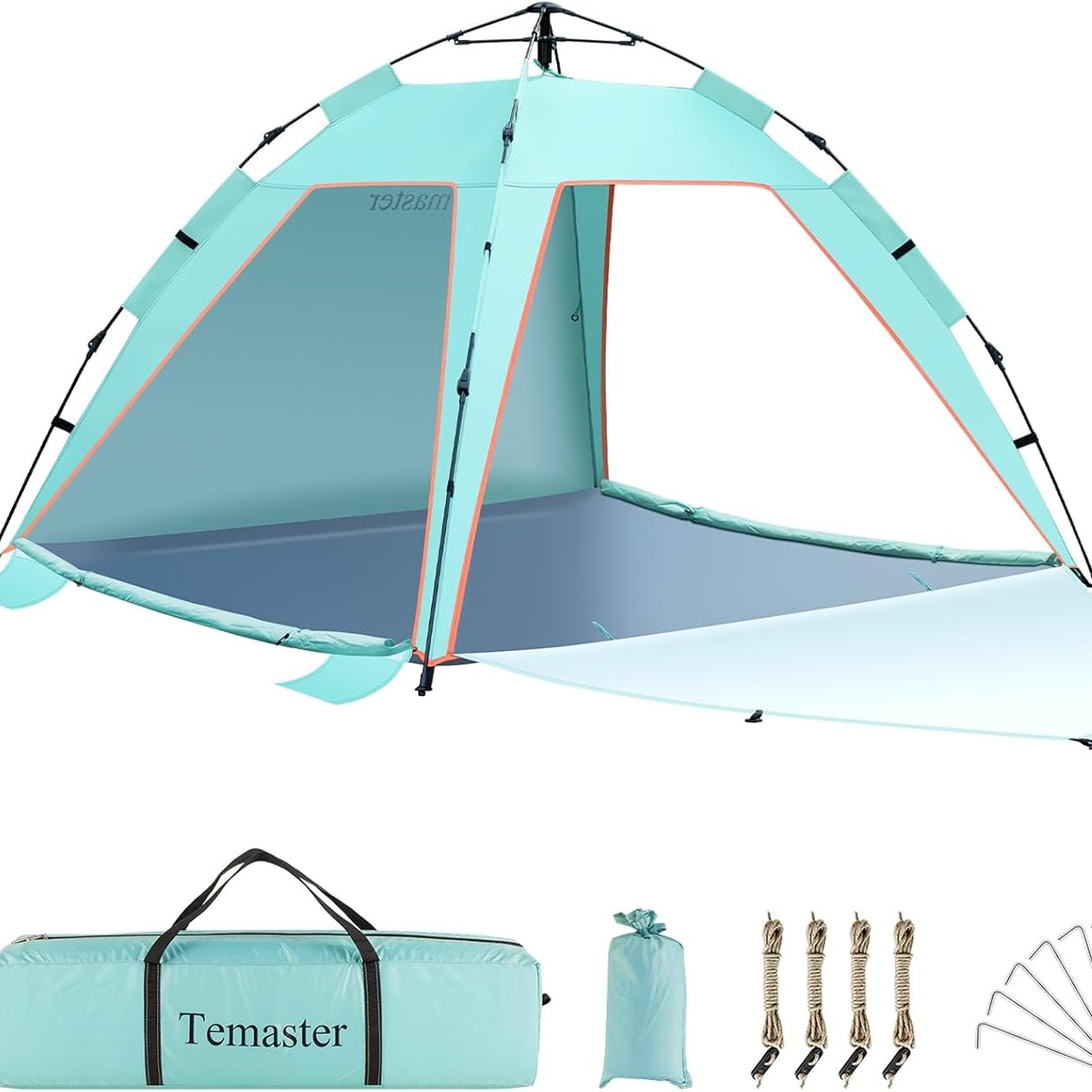
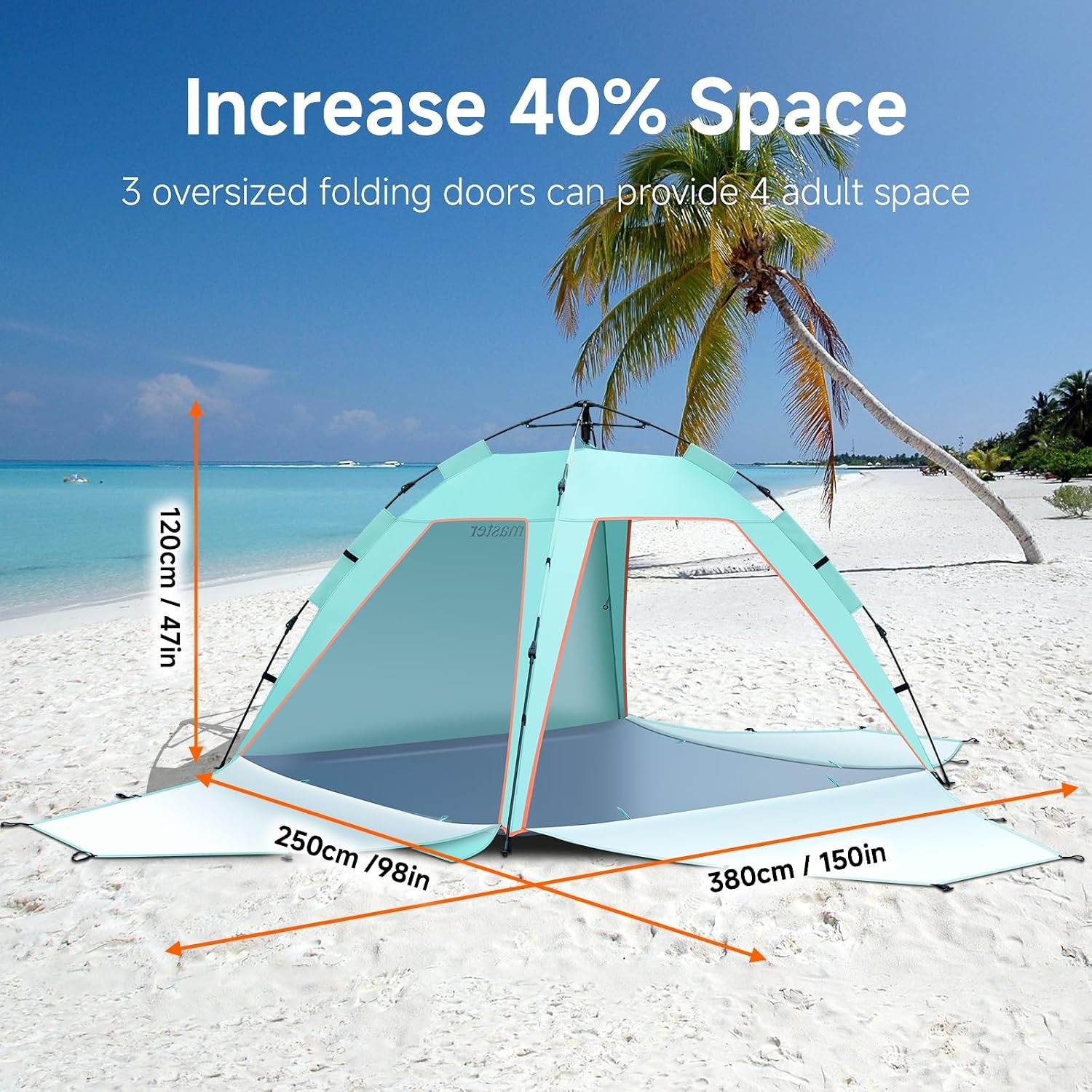
A pop up beach tent solves this by giving your group a fixed, portable patch of shade that is big enough to be useful. This one opens to 190 cm long, 170 cm wide and 120 cm high, which the supplier rates for four to five adults. That is room to sit upright, spread out a towel, park a cooler and still have space for someone to lie down. It turns a two-hour outing into a full day.
How the automatic frame works
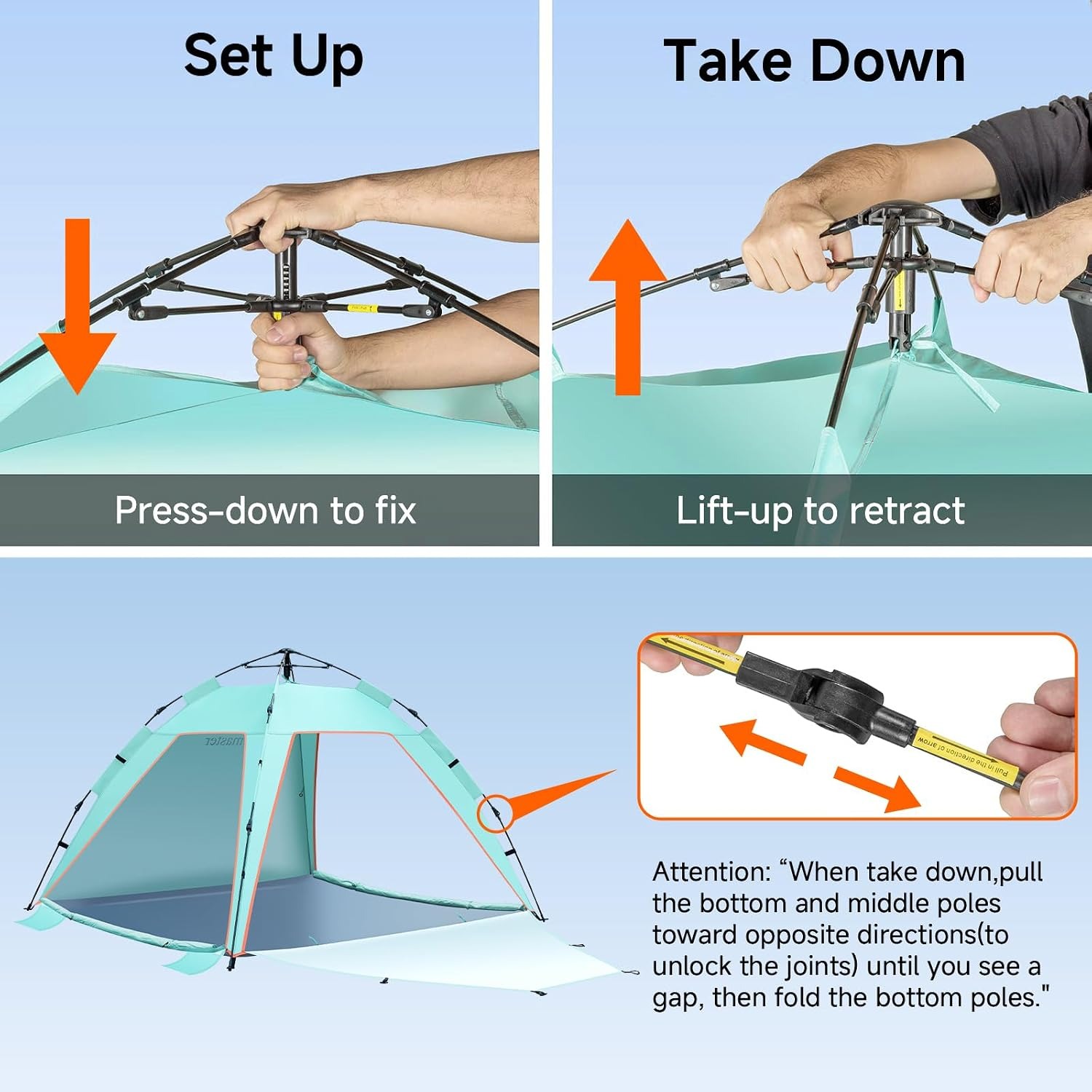
The thing that separates this shelter from older designs is the hydraulic fibreglass frame. Traditional tents arrive as a bag of poles, sleeves and clips. Twist-fold pop ups arrive as a coiled hoop that explodes out of the bag and then refuses to go back in. A hydraulic frame sits in between. The poles are already built into the shell and carry a spring load, so when you release the shelter the frame pushes the canopy into shape on its own.
In practice that means setup is a single movement rather than a project. No assembly is required, which is listed in the product details, and one person can manage the whole thing. If you have ever stood on hot sand holding one corner of a tent while someone reads a diagram, you already understand why this matters.
Folding takes a little more attention than opening, as it does with any sprung frame. The hoop twists back on itself into a smaller circle and slides into the carry bag. Do it once in the backyard before your first trip. Five minutes of practice at home saves ten minutes of frustration at the beach with everyone waiting in the car.
Shade that actually protects
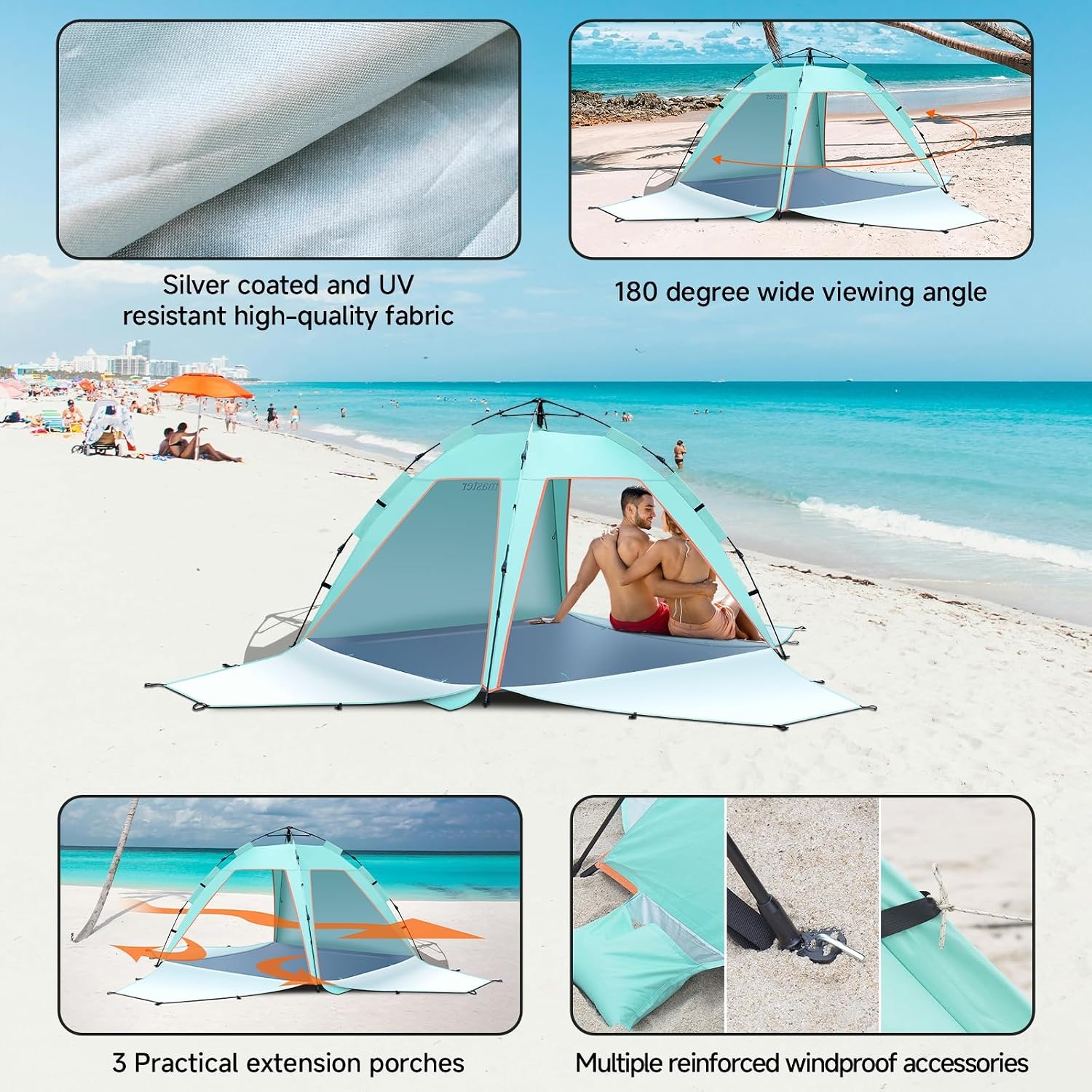
Shade is not all equal. A thin sheet of fabric cuts glare but lets a surprising amount of ultraviolet light through. This canopy is polyester with a UPF 50+ rating, which is the top band used for sun-protective textiles. It describes how much UV the fabric itself blocks.
Two things are worth remembering. First, the shade moves. The sun travels, so the useful shadow shifts through the afternoon and you may want to reposition the shelter once or twice. Second, UV bounces. Sand, water and pale concrete all reflect light up and sideways under a canopy, so sunscreen and hats still matter even when everyone is sitting inside. Think of the tent as the biggest part of your sun plan, not the whole plan.
One more thing to set expectations correctly. The specification lists this shelter as not water resistant. It is a sun and wind shelter for day use, not a camping tent. If the weather turns properly wet, pack it down rather than hoping the canopy holds.
Airflow, privacy and the three doors
Shade without airflow turns into an oven. This design uses three expandable porch doors, which is the main reason it stays comfortable through the middle of the day. Open all three and air moves straight through, which keeps the inside temperature closer to the breeze outside than to the bare sand. You also keep a clear view of children in the water, which is often the real reason parents want an open front.
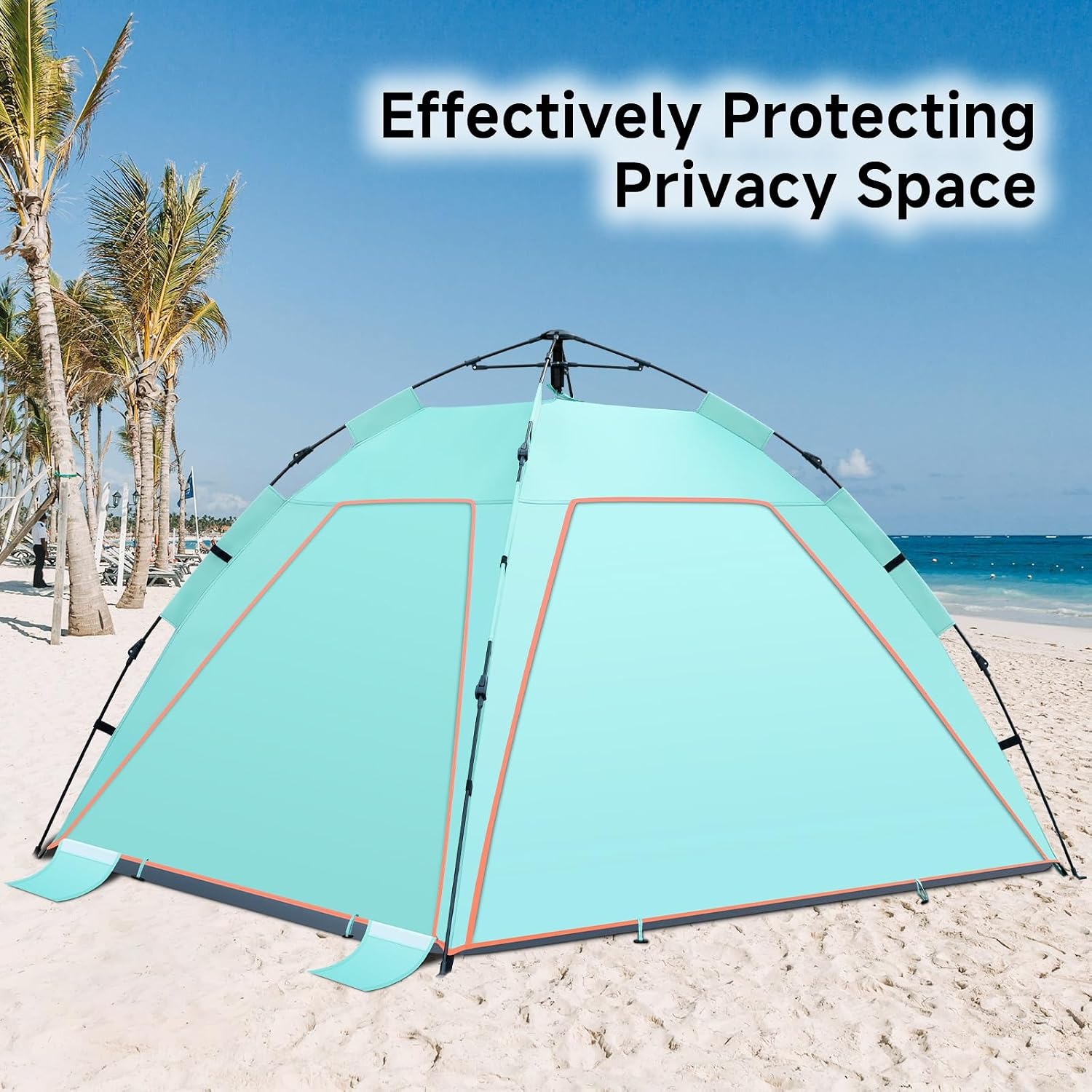
Close all three and you have a screened room. That turns the shelter into a changing space, a spot to feed a baby, a place for a toddler nap, or just somewhere to escape the stares on a packed beach. On windy days you can close the upwind side and leave the others open, which cuts sand blowing through without killing the airflow.
That flexibility is what people mean when they talk about the best beach sun shelter for family use. One tent that handles bright and still conditions as well as breezy and crowded ones is worth more than two specialised ones.
Keeping it on the ground
Every lightweight shelter shares the same weakness. It catches wind. This one comes with four guylines and reinforced wind strips built into the shell, which give you proper attachment points rather than just hoping the weight of your bags holds it.
Anchor it properly every time, even when the air seems still. Sea breezes build through the afternoon almost everywhere, and the shelter that was fine at ten in the morning is the one chasing down the beach at three. Peg or weight each guyline. On soft sand, standard pegs pull out easily, so many people use sand bags or simply bury a filled bag at each corner. Buried weight holds far better than surface weight.
Point the closed side into the wind if there is a steady direction. And use judgement. In genuinely strong gusts the right answer is to take the shelter down rather than test it. A folded tent is a tent you still own.
Who it suits
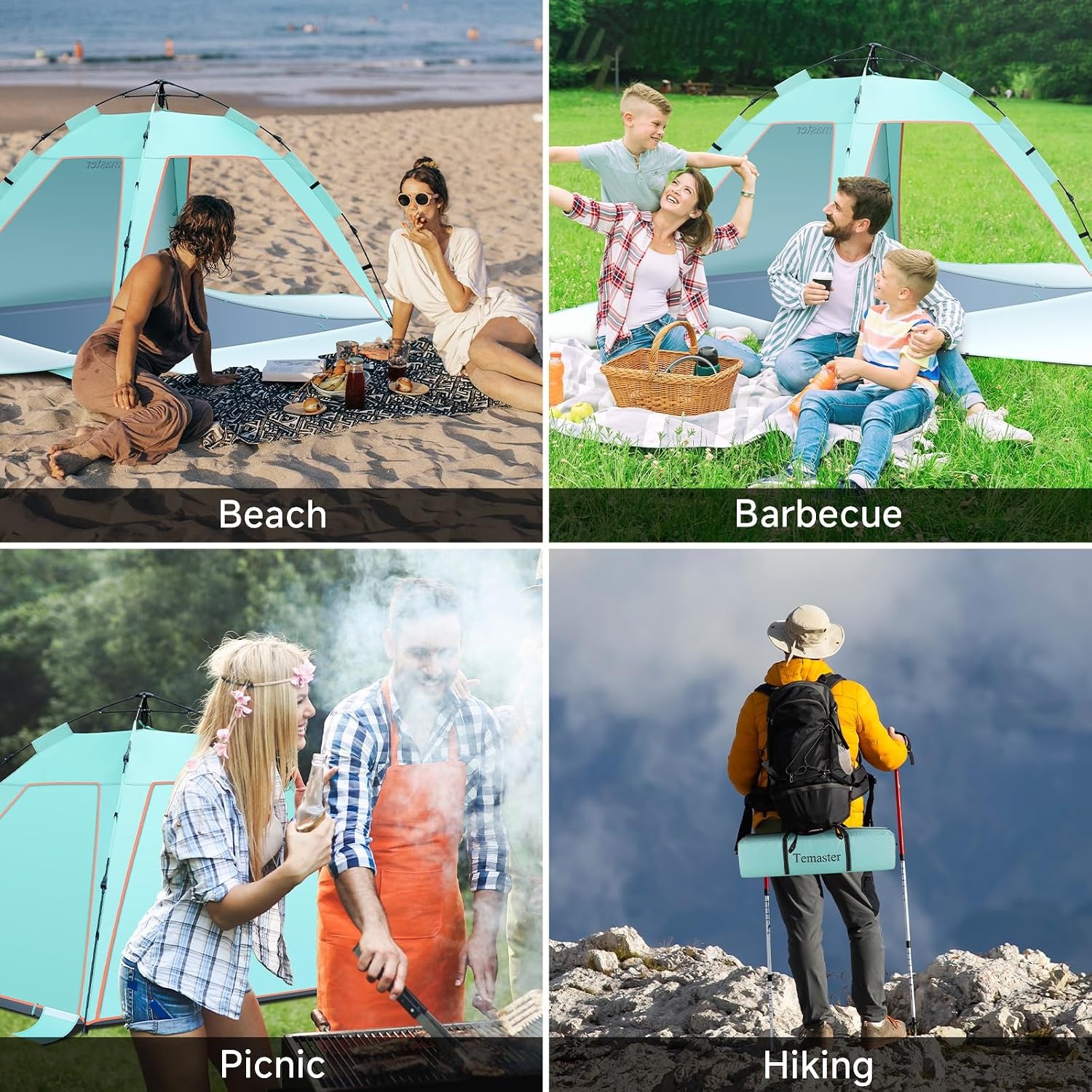
Families with young kids get the most out of it, because the automatic setup fits the window between arriving and the first demand for snacks. Groups of friends like the footprint, since four or five adults can sit together rather than clustering under two umbrellas. Parents on sports sidelines use them for shade during long Saturday mornings. People who kayak, fish or swim appreciate having somewhere dry and shaded to change afterwards.
It is less suited to anyone who wants a single tent for both beach days and overnight camping. There is no rain protection, so that job belongs to a different product. It is also more shelter than one person usually needs, though plenty of solo beachgoers happily use the extra space for gear and a nap.
Care that makes it last
Sand and salt are what wear out beach gear, not sunlight. Before you fold, shake the shelter out hard and brush grit away from the hinge points on the frame. Sand that lives in a hinge grinds away at it on every trip.
At home, wipe the fabric with a damp cloth and mild soap, rinse the soap off, and let the whole thing dry in the shade before it goes back in the bag. Packing damp or sandy is the single biggest cause of musty smells and fabric marks. Store it somewhere dry and out of the sun, since long-term UV exposure in storage fades fabric just as fast as it does at the beach.
Avoid dragging the open shelter across gravel or rough ground when you reposition it. Lift it instead, or at least lift the downhill edge. Fibreglass poles handle flex well but do not love sharp impacts.
Choosing the right size for your group
If you regularly take four or more people, this footprint is sensible. Smaller shelters rated for two adults are fine for a couple but get tight the moment you add bags, a cooler and a towel each. People consistently underestimate how much room gear takes up, and the shelter that looked generous in the photo feels cramped in real life.
Also think about where you will be. If you set up on wide open sand, the taller 120 cm height is comfortable and the wind strips earn their place. If you are mostly using parks and backyards, the same size works fine with less anchoring effort. If your usual spot is a narrow strip of beach at high tide, measure what you realistically get before you commit to a 190 cm length.
The short version
This is a fast, large, well-shaded day shelter. The hydraulic fibreglass frame means it opens in seconds with no assembly. The polyester canopy is rated UPF 50+, three expandable porch doors let you dial in airflow or privacy, and four guylines with reinforced wind strips give you real anchor points.
It is not water resistant and it is not a camping tent, so set your expectations around sun and wind rather than rain. Anchor it every time, shake the sand out before folding, and store it dry. Do those three things and it will cover a lot of summer weekends.