
The complete guide
How to Choose a Portable Camping Table That Earns Its Space
The problem with eating off your lap
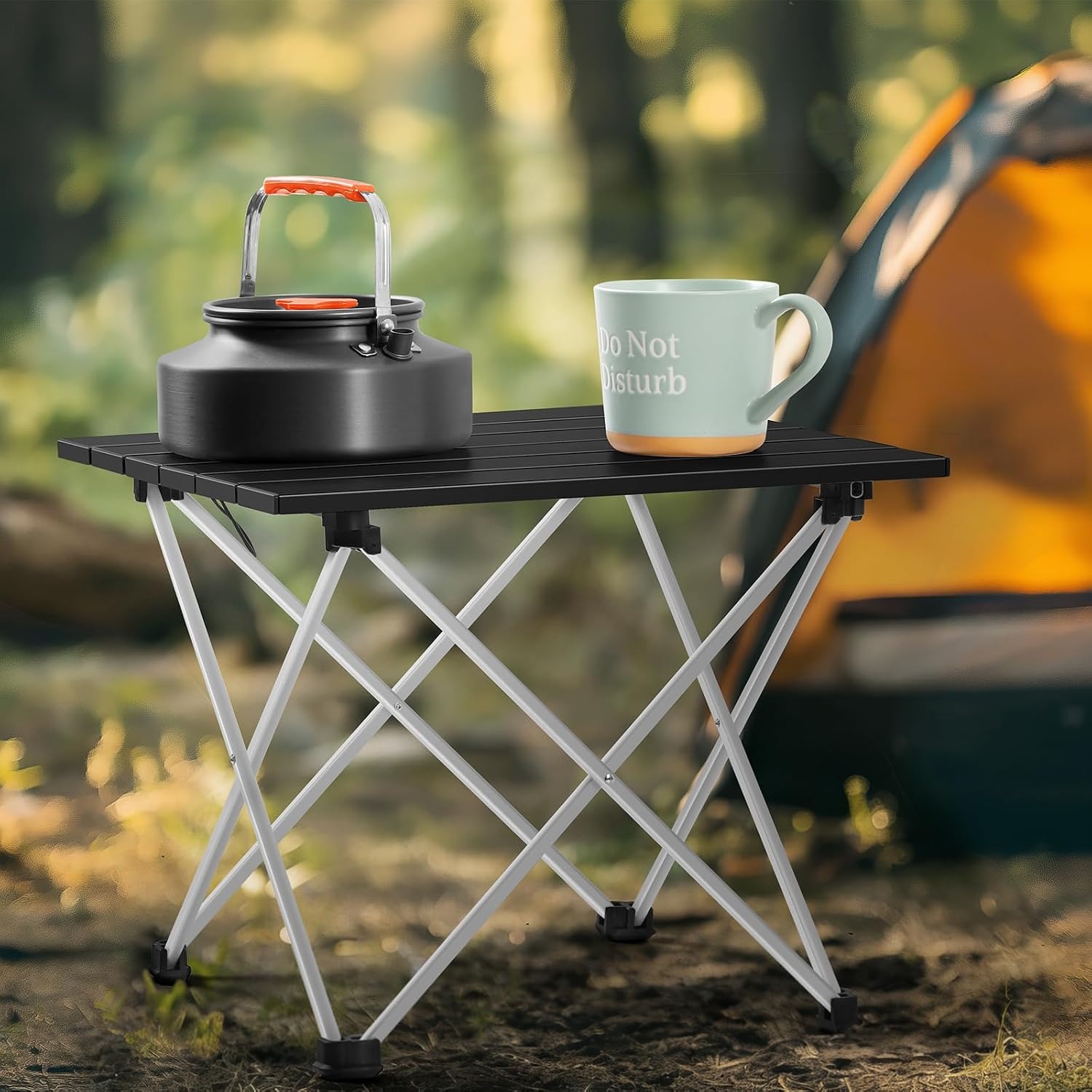
Anyone who has camped more than a couple of times knows the routine. You boil water balanced on a rock. You cut onions on a chopping board held against your knee. The coffee goes on the ground where it eventually gets kicked over, usually by you. None of it ruins a trip, but all of it quietly makes the trip less pleasant than it needed to be.
A flat, level surface at a sensible height solves a surprising number of small annoyances at once. It gives the stove somewhere safe to sit. It gives food prep somewhere clean. It keeps drinks upright and off the dirt. And when the weather turns, it gives you a dry place to put a phone, a torch or a book instead of stuffing them back into a bag.
The catch has always been that tables are bulky. That is the trade-off a portable camping table is designed to solve, and it is why the folded size and the weight matter more than almost anything else on the spec sheet.
How a folding camp table actually works
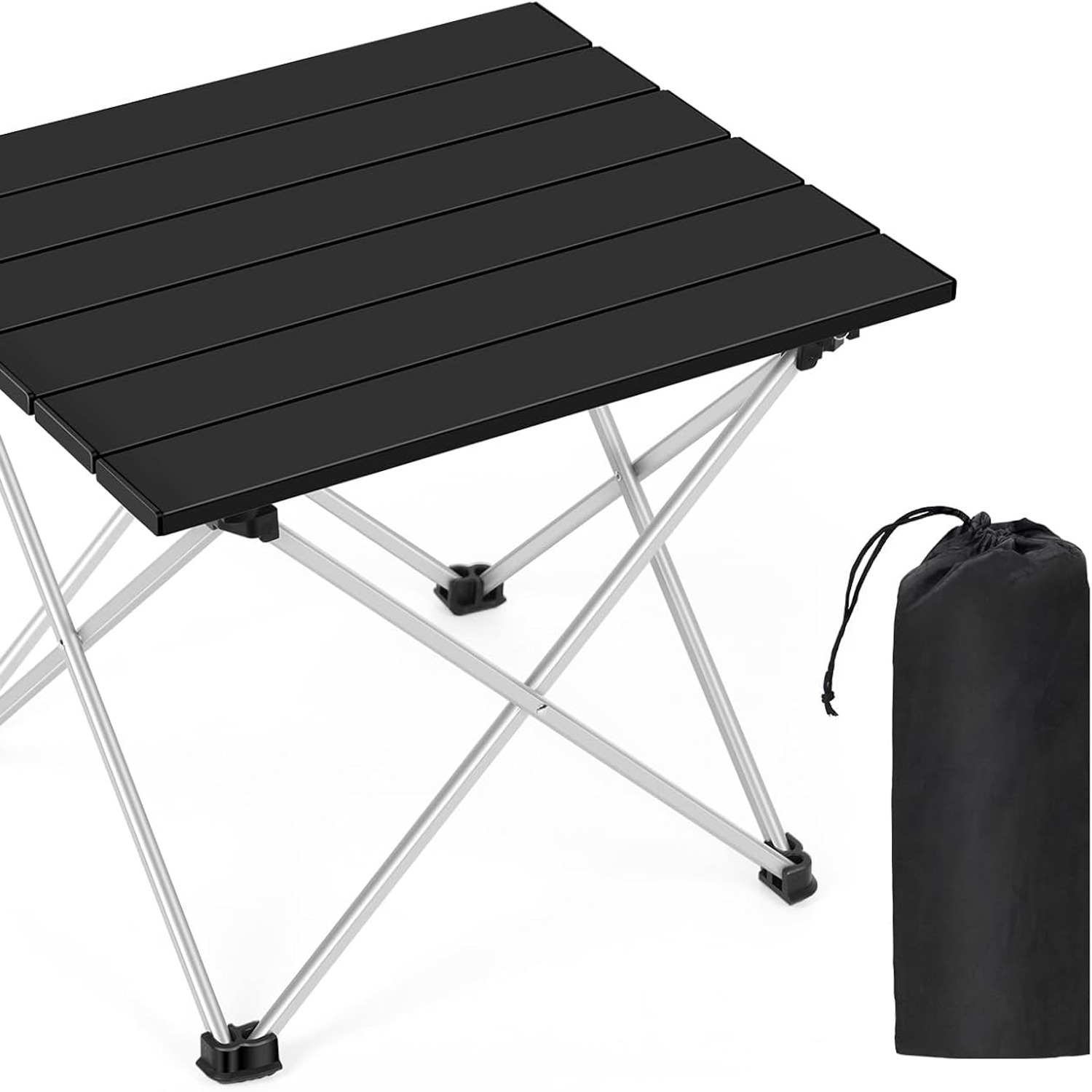
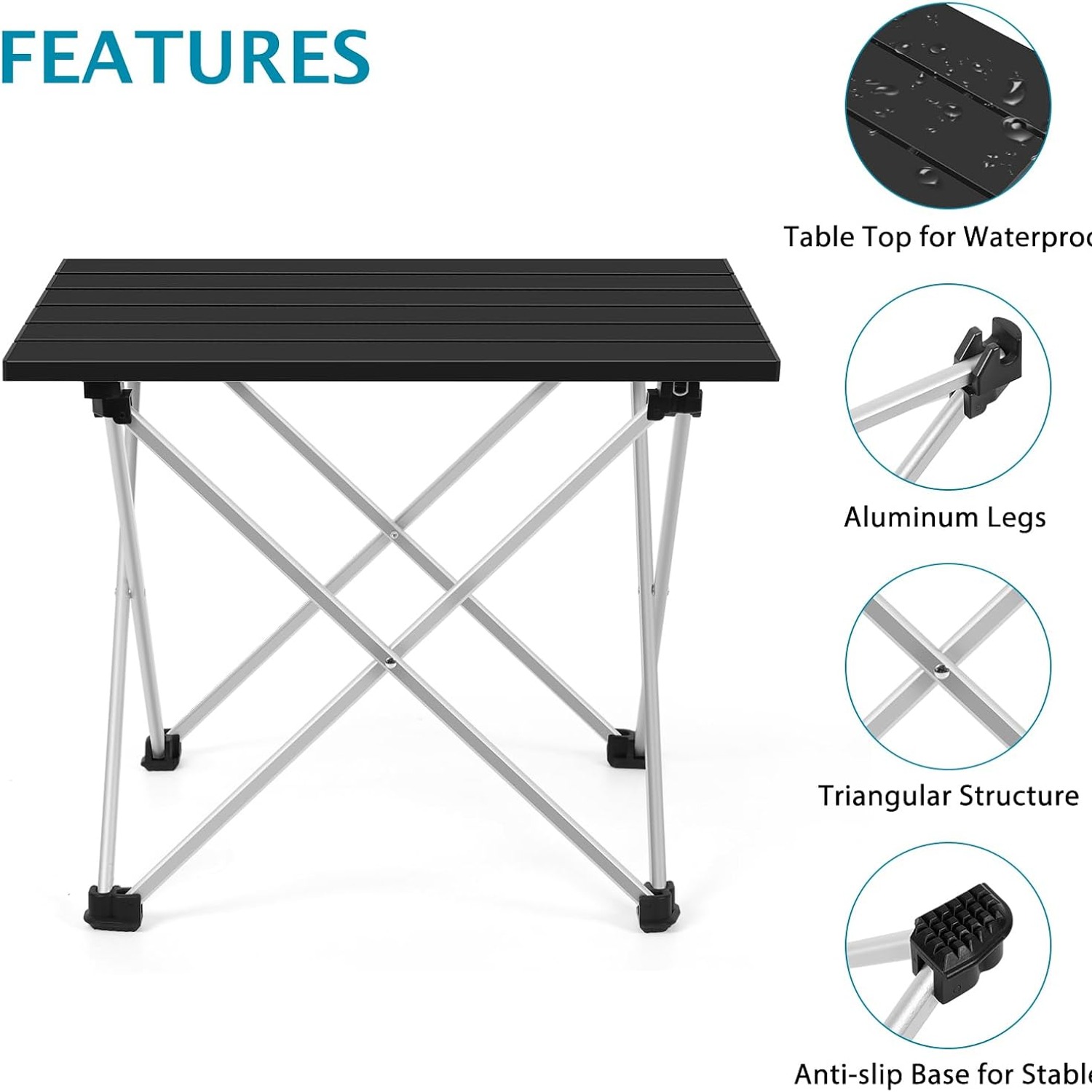
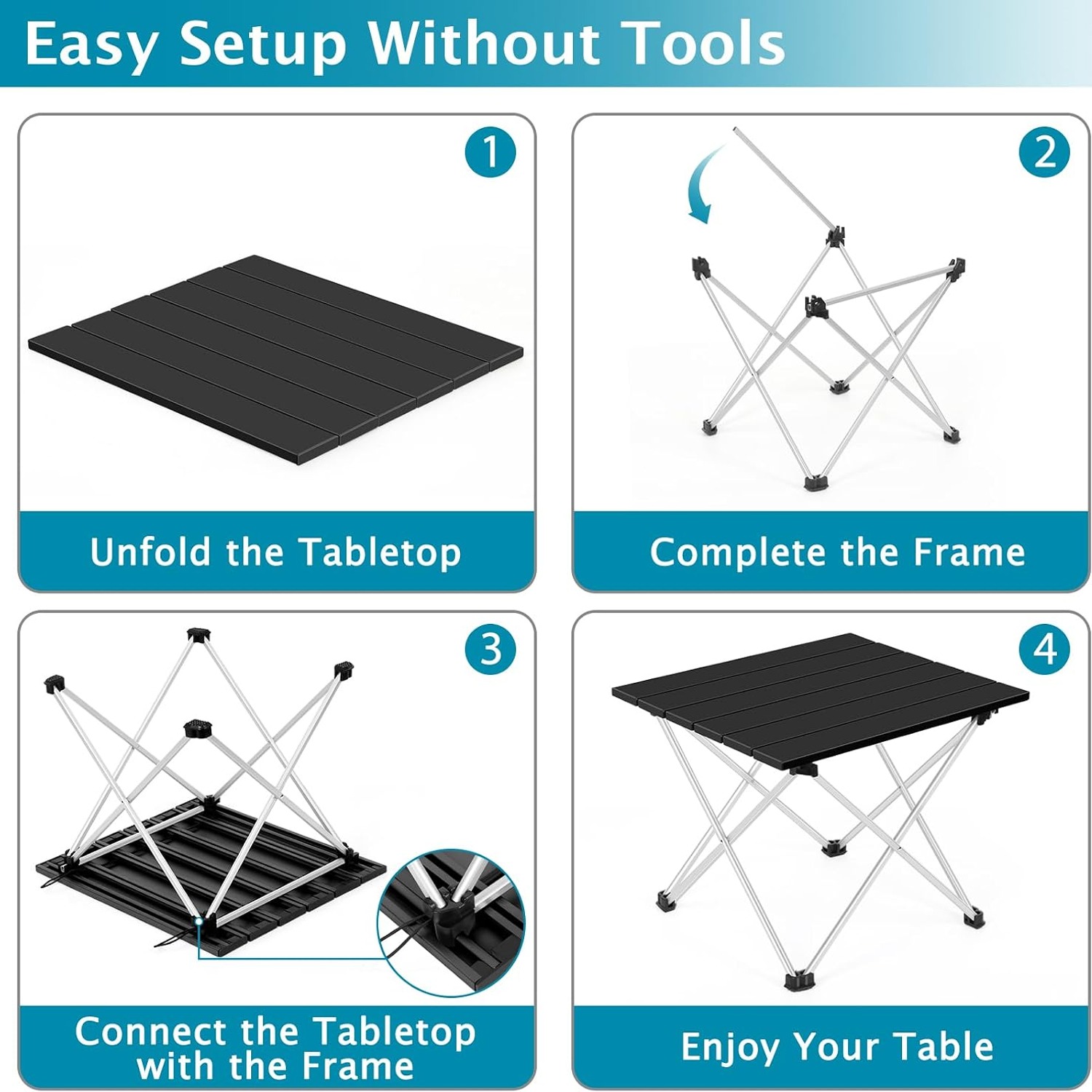
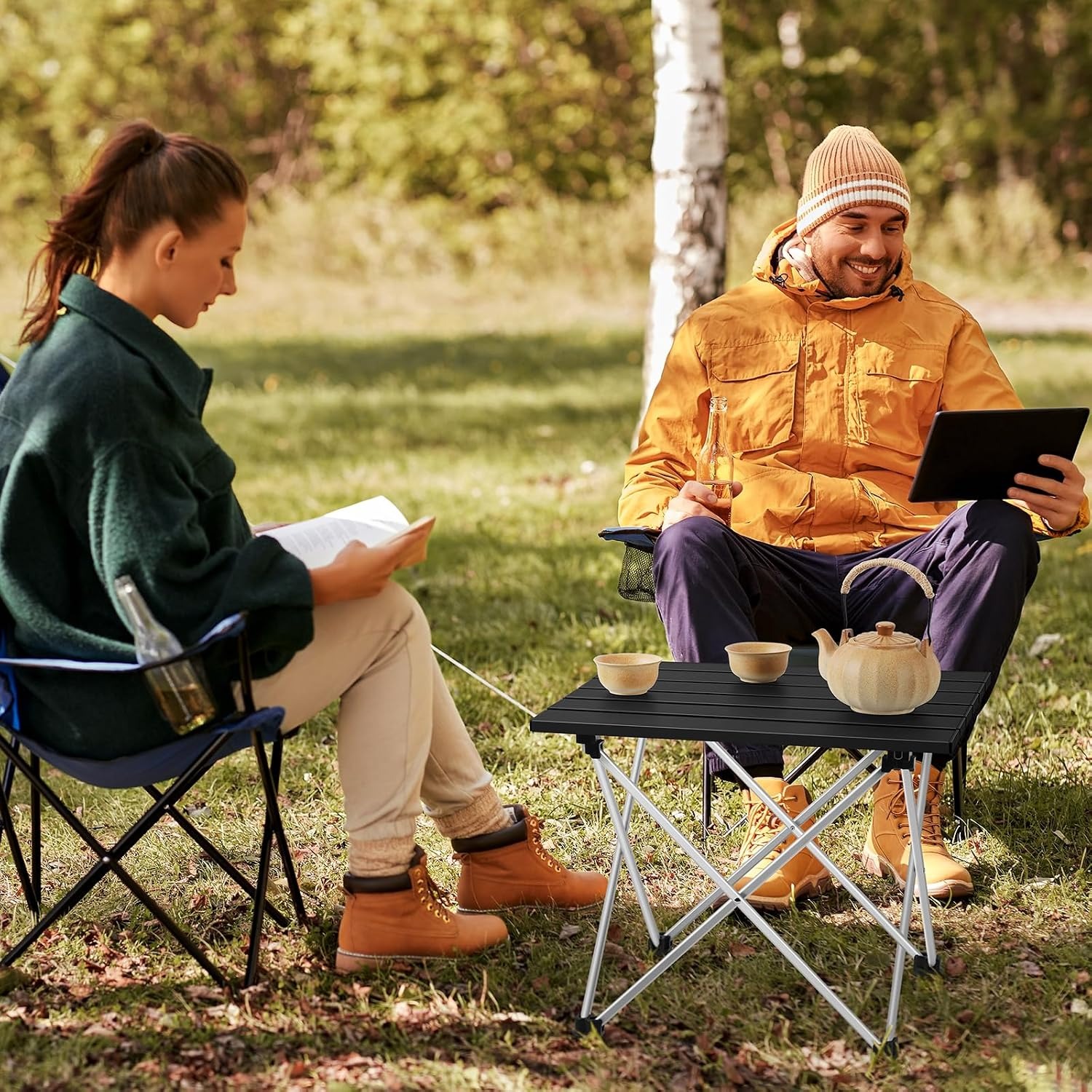
The design here is straightforward. An aluminium frame with straight legs and a cross-shaped base folds out on hinge joints. A slatted plastic tabletop locates across it. Nothing screws together, nothing clips with a tool, and the assembly guide in the box is really only needed the first time.
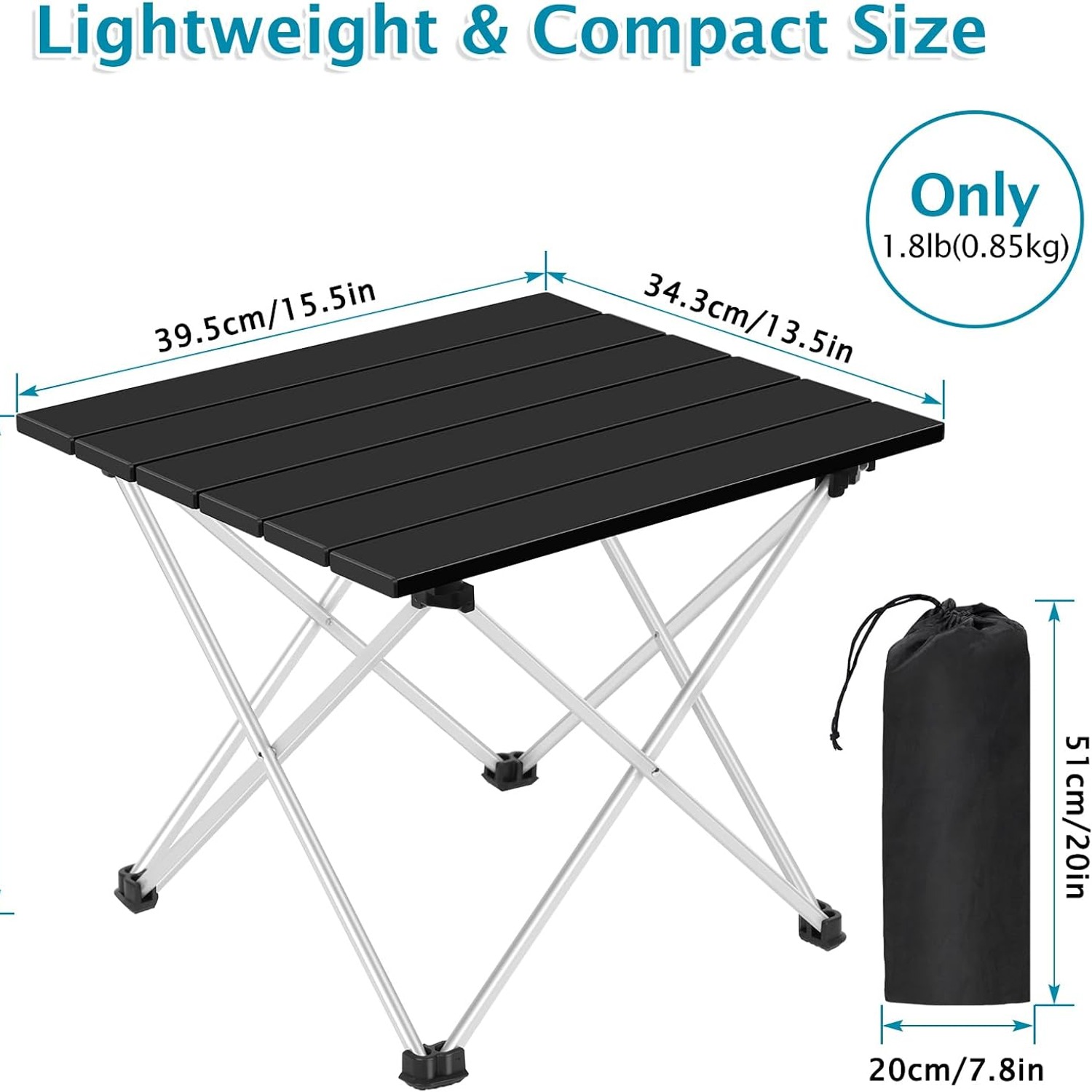
Set up, you get a surface 39.6 cm wide and 34.5 cm deep, sitting 32.5 cm off the ground. Folded, the whole thing comes down to a collapsed length of 44 cm and weighs 780 g. That collapsed figure is the one worth remembering, because 44 cm is short enough to lie across the floor of a boot, slot down the side of a caravan locker, or sit upright in a cupboard without being wrestled into place.
The slatted top is the other part worth understanding. Slats keep the weight down and let water run off instead of pooling. The plastic surface is waterproof and stain resistant, so it handles cooking mess, fish, sunscreen and spilled wine without staining or holding a smell. A damp cloth is genuinely all it needs.
Maximum recommended load is 22.68 kg. For a table this size that is generous. A loaded stove, a full kettle, a stack of plates and a bottle of something cold all together will not come close to it.
Who this size suits
The honest answer is that a compact camping table is a side table, not a dining table. Seating capacity is listed as three, and that is about right for drinks and snacks rather than a roast dinner for the family.
It suits a few groups particularly well.
Solo campers and couples get the most out of it. One table beside the chairs handles cooking, eating and everything else, and it takes up almost no room in the car.
Caravanners and camper trailer owners tend to want something that lives permanently in a locker without eating into space. At 44 cm folded, this qualifies.
Day-trippers and beach-goers benefit from the wipe-clean top. Sand brushes off, salt water does nothing to it, and it does not need drying time before it goes back in the car.
Anglers use a table like this constantly, mostly for rigging and bait. The waterproof surface is the whole point.
Families with small children often find the low 32.5 cm height is close to ideal for kids, both at camp and at home in a playroom.
Where it is less suited is a group of four or more sitting down to a cooked meal, or anyone who wants to stand and work at the table. For that you want a taller, wider folding picnic table, and you accept the extra bulk that comes with it.
How to choose between camping tables
A few things separate a table you keep using from one you leave at home.
Folded size first. This is the number that decides whether the table comes with you. A table that packs to 44 cm goes everywhere. A table that packs to a metre goes only when you consciously plan for it. Measure the space you actually have, in the boot or the locker, before anything else.
Weight second. 780 g is light. For comparison, that is less than a litre of water. It means carrying the table from the car to the site is not a separate trip.
Then the top material. Fabric tops are the lightest but they sag, they absorb, and they take time to dry. Rigid plastic slats like these stay flat, wipe clean and tolerate being packed away slightly damp. Timber looks lovely and weighs a lot. For most outdoor use, the wipe-clean option wins.
Then the frame. Aluminium keeps the weight down and does not rust. The powder-coated finish here protects it further. Steel frames are stronger but heavier, and once the coating chips they start to mark.
Finally, the base. A cross base spreads the footprint wider than four separate feet would, which helps on soft ground. No folding table is perfectly stable on a lumpy site, so give yourself the best chance by picking a flat patch and pressing the legs in slightly.
One more thing worth thinking about: how often you will actually use it. Gear that packs small gets used. Gear that is a hassle to retrieve stays in the shed. A small camping table is one of the few items that genuinely gets taken on every trip, which changes the value calculation considerably.
Looking after it
Care is simple, and doing it takes about a minute.
Wipe the top with a damp cloth after use. If there is grease, warm water with a drop of mild detergent handles it. Avoid solvents and abrasive scourers, which will dull the powder-coated frame finish over time.
Shake the grit out of the hinges before folding. Sand in a hinge joint is the main thing that makes a folding frame stiff or noisy down the track, and it takes two seconds to prevent.
Let it dry before it goes in the bag. The materials themselves cope with damp, but a bag stored wet in a hot boot is how gear starts to smell.
Store it somewhere dry. A cupboard, a boot, a locker, anywhere out of standing water.
If you use it as a camp kitchen table, always put a trivet or heat-proof board under a stove or a hot pan. The top is plastic. Direct heat will mark it, and that damage cannot be undone.
A few uses people do not expect
Most of these tables get bought for camping and then end up doing other jobs. A drinks table on a small balcony where a full-size table will not fit. A bedside surface when guests sleep on a sofa bed. A craft table for kids. A stand for a projector or a speaker in the backyard on a summer evening. A boot-of-the-car surface at sport on Saturday morning.
None of that is what it was designed for, but it is where a lot of the real value turns up.
The short version
This is a small, light folding table that does one job properly. It gives you a flat, clean, waterproof surface wherever you are, and it does not cost you much space or weight to bring along.
Key numbers: 39.6 cm by 34.5 cm top, 32.5 cm high, 44 cm folded, 780 g, 22.68 kg maximum load, aluminium frame, plastic wipe-clean top, no tools needed.
Pick it if you camp solo or as a couple, if you need something that lives permanently in the car or caravan, or if you want a side table for the beach, the riverbank or the backyard. Look at something larger if you need to seat four for a proper meal or want to work standing up.
For most people, the table that comes on every trip beats the bigger table that stays home.