

The complete guide
Choosing a Head Torch That Actually Gets Used
The problem with holding a torch
Most of us already own a torch. It lives in a drawer, it works fine, and it is completely useless the moment you need both hands. Try pitching a tent while gripping a torch in your teeth. Try changing a fuse, untangling a fishing line or carrying a sleeping child down a dark hallway.
That is the gap a head torch fills. It is not brighter than a big hand torch and it is not meant to be. It is simply pointed at whatever you are looking at, and that one difference changes how often you actually use it.
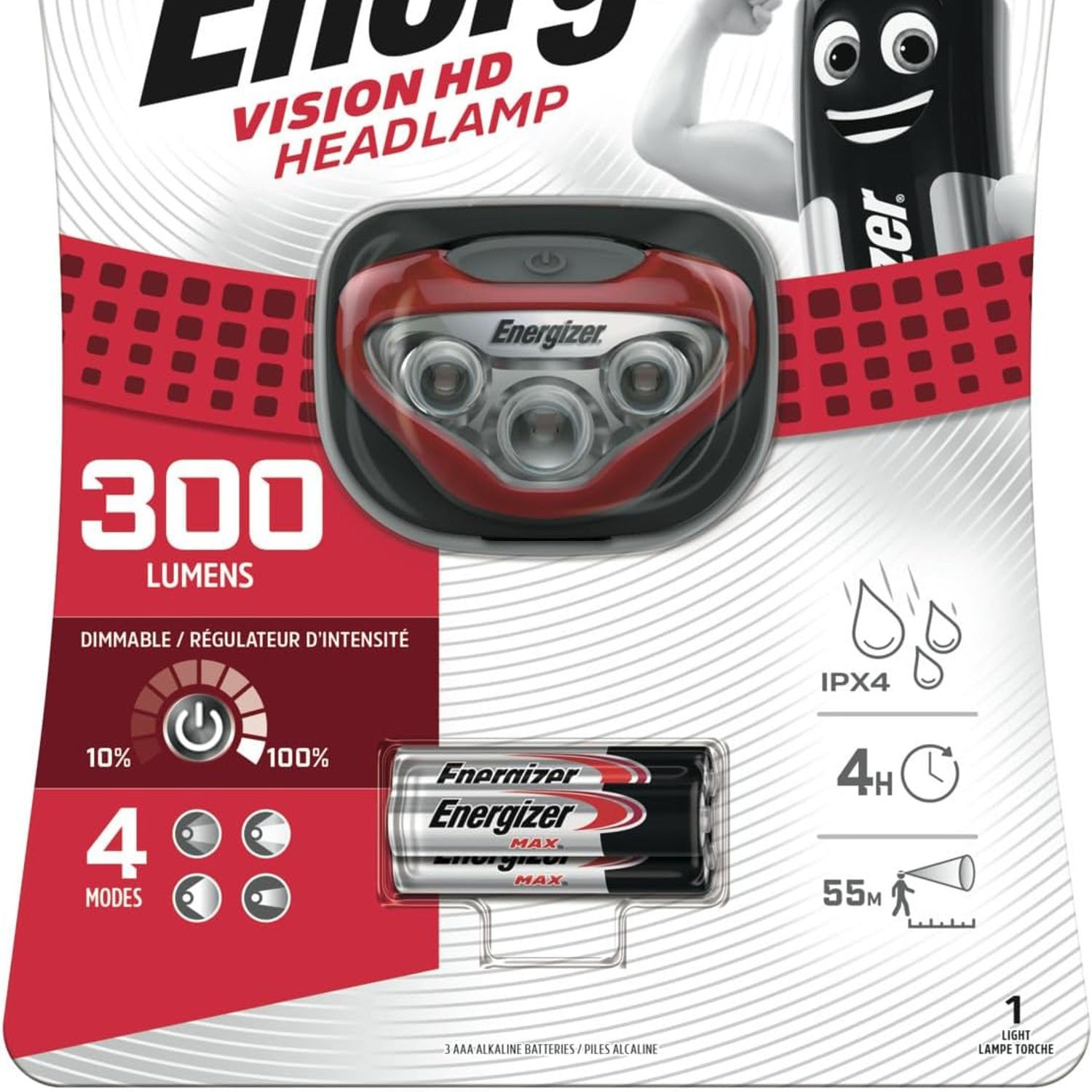
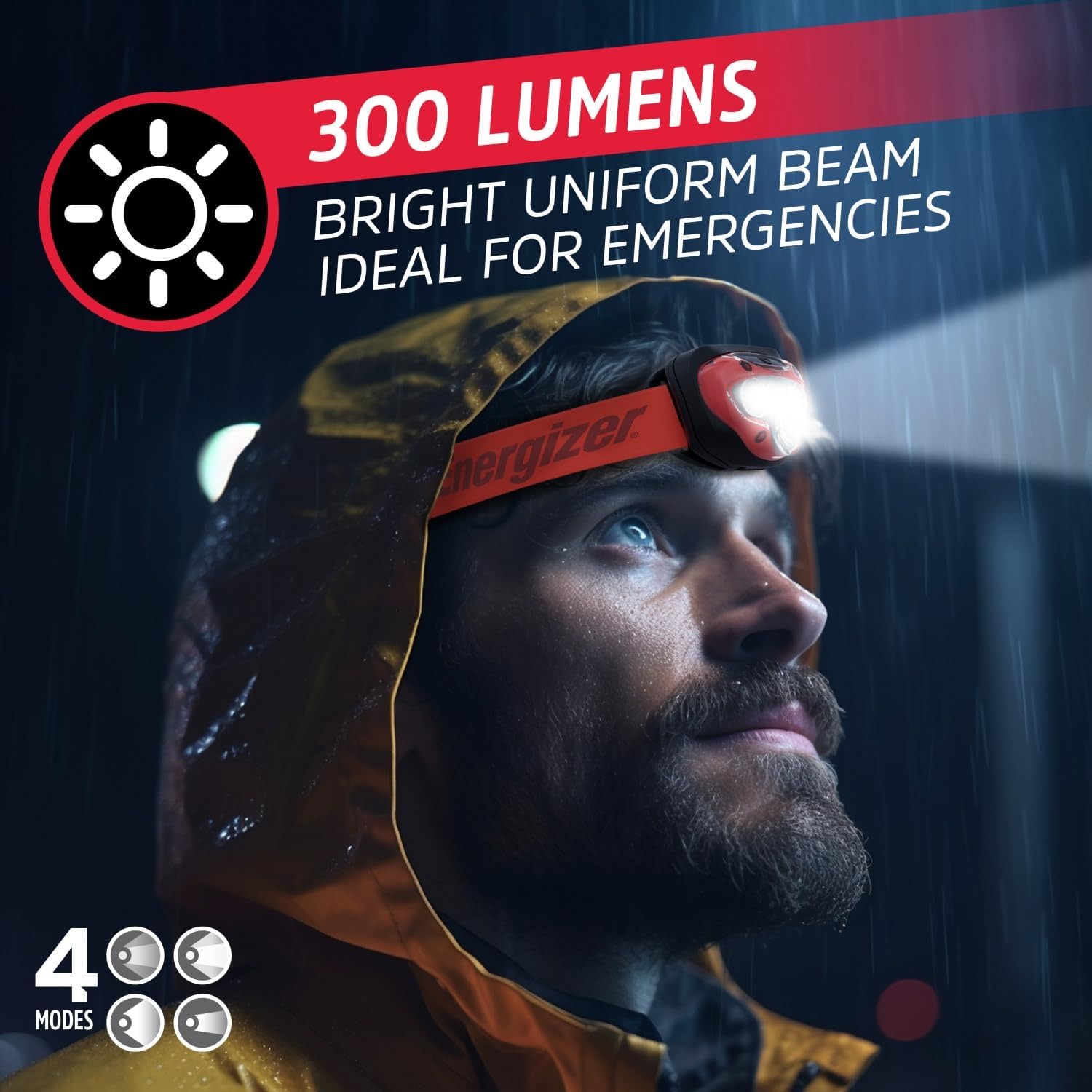
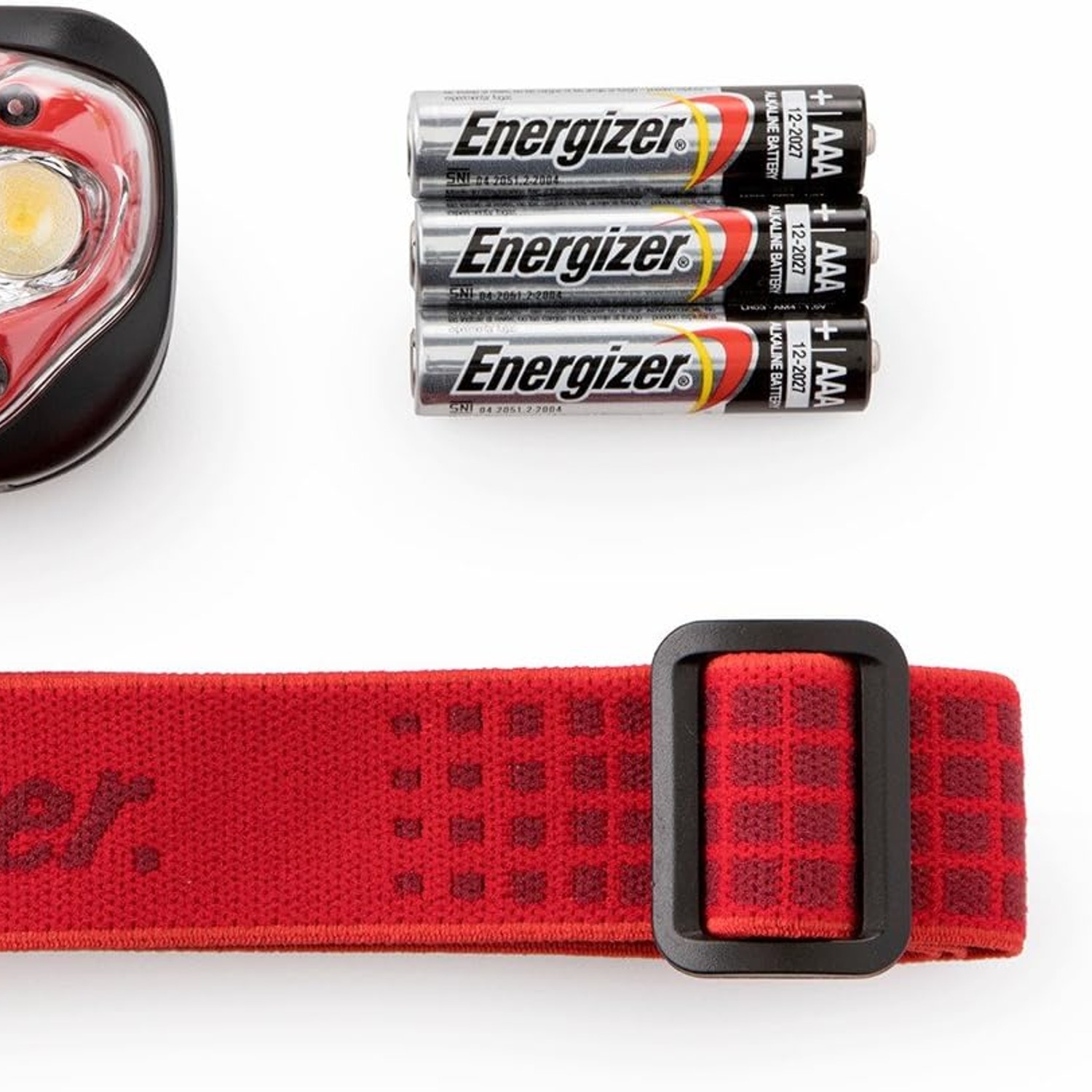
The Energizer Vision HD is a straightforward version of that idea. It mounts on your head, puts out 150 lumens from four LED light sources, reaches around 18 metres, and runs on three AAA alkaline batteries that come in the box. It weighs 0.06 kg. There is nothing to charge and nothing complicated to learn.
How a head torch works
The light sits in a small plastic housing on an adjustable strap. You tilt the housing to set the beam angle, then forget about it. Inside, LEDs convert battery power into light far more efficiently than the old filament bulbs did, which is why a unit this small can run for hours on three AAA cells.
Brightness is measured in lumens, which is total light output. Reach is measured in metres, and that figure tells you how far useful light carries before it fades out. This torch is rated at 150 lumens with an 18 metre light path. Those two numbers together describe a working light rather than a search light.
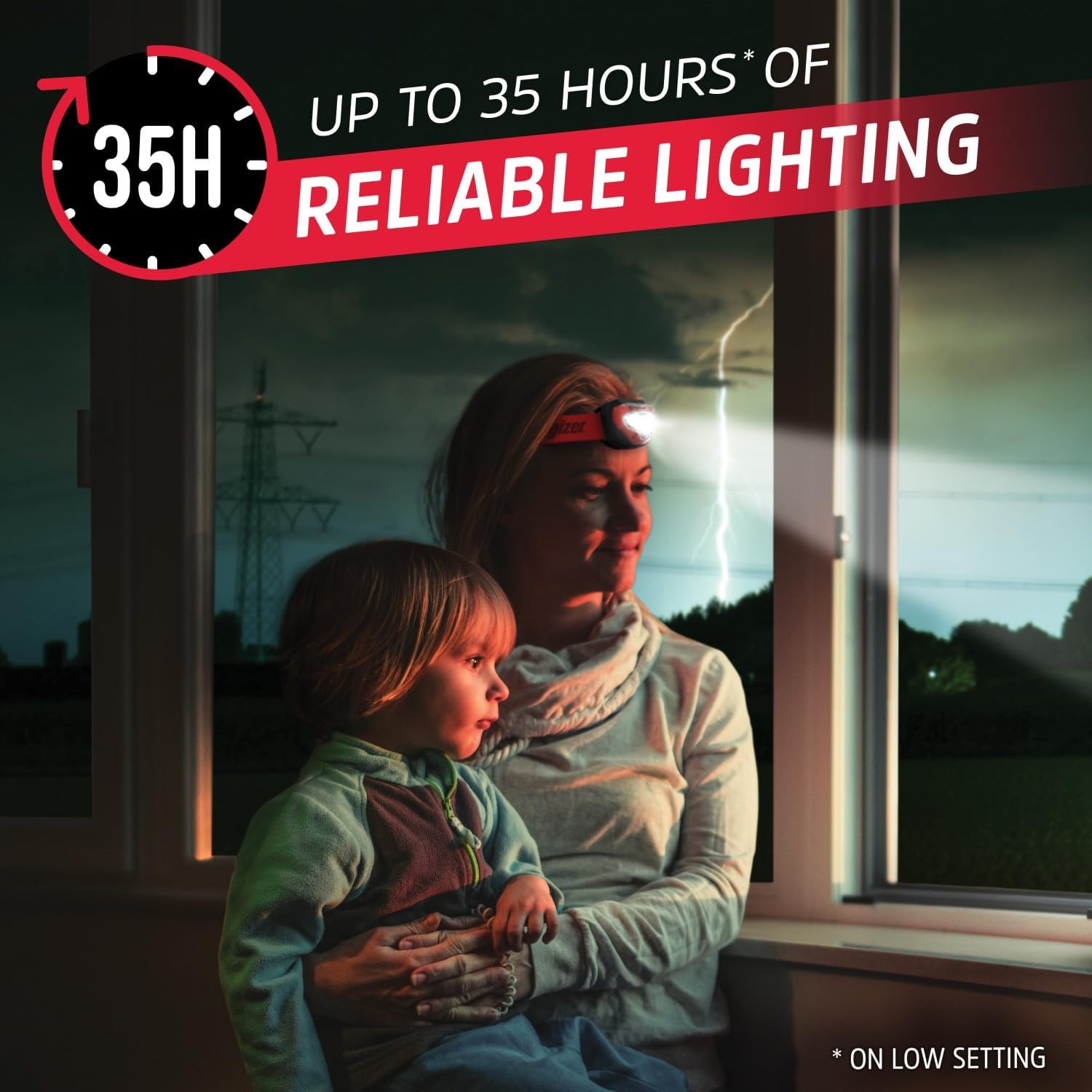
Runtime here is rated at 4 hours. Alkaline batteries do not switch off suddenly, they taper. So expect strong light early and a gentler output as the cells age. That taper is actually handy, because it gives you warning before you are left in the dark.
Who it suits
Energizer lists this one for indoor and outdoor activities, camping, hiking, running, biking and emergency situations. That is a fair spread, and it reflects what a light, simple torch is good at.
Campers get the most obvious benefit. Setting up after dark, cooking, finding a dropped tent peg and walking to the toilet block all go faster when the light follows your eyes. If you are shopping for the best head torch for camping, the practical test is whether it is light enough that you leave it on your head all evening. At 60 grams, this one passes.
Walkers on formed tracks will find the 18 metre reach plenty for footing and trail markers. Cyclists use a head torch as a backup or as a way to see a chain and a map while a bar light handles the road.
At home, it is a tool. A head torch for DIY is worth more than most people expect once you have used one inside a kitchen cupboard or behind a washing machine. Keep one near the fuse box and a dark house stops being a problem.
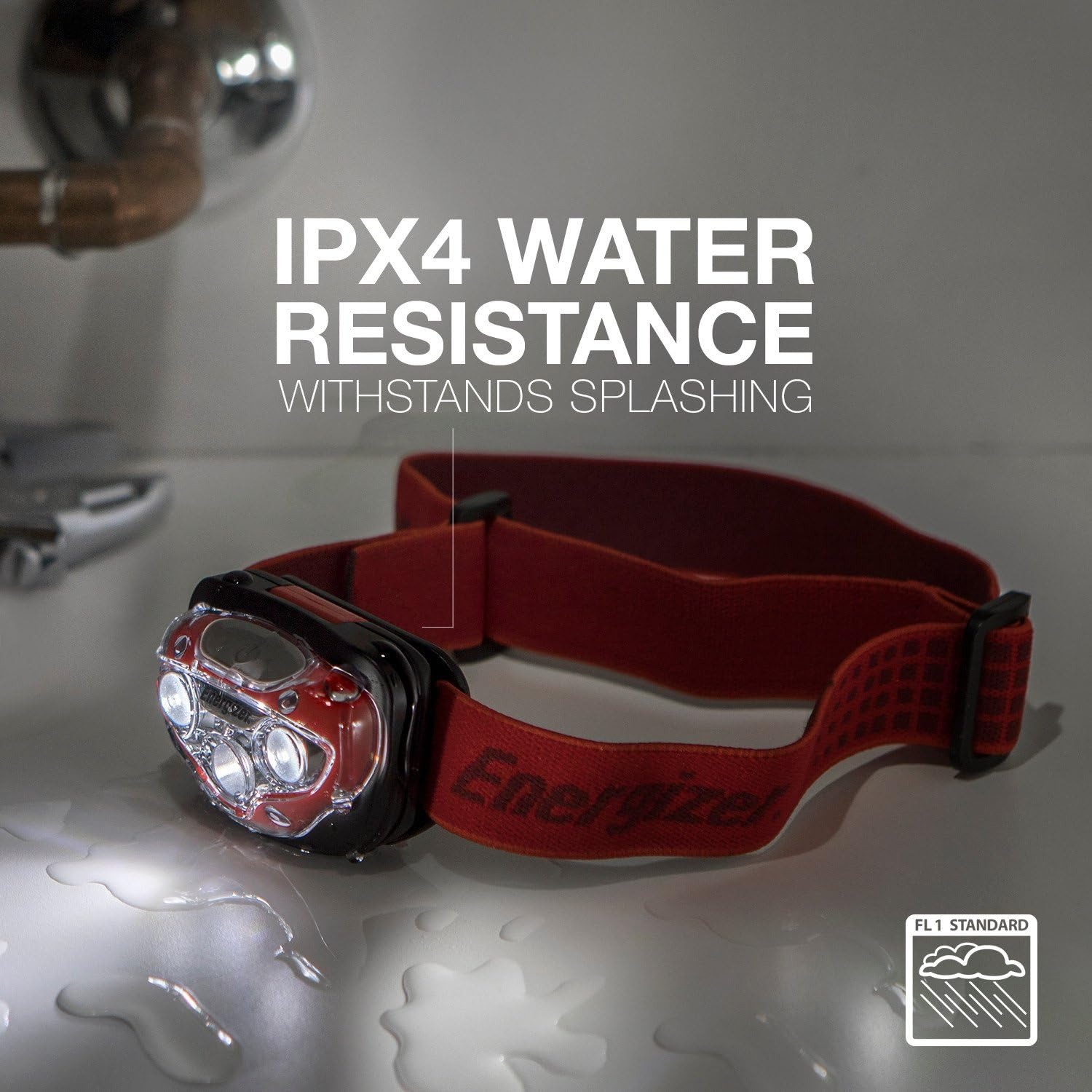
Who should look elsewhere? Anyone who needs long range spotting, anyone who runs technical trails at speed, and anyone who wants to work in steady rain. The supplier record for this item gives conflicting water resistance information, so we do not claim a rating. Keep it sheltered and check the box for the manufacturer's own statement.
How to choose between head torches
Four things really matter, and brightness is only one of them.
Weight and fit. A torch you resent wearing stays in the bag. Under 100 grams is comfortable for most people for hours. This one is well under that.
Power type. Rechargeable models are tidy, but they need planning. A battery headlamp has a different advantage. When the light fades, you swap three AAA cells and you are back at full power in under a minute, anywhere in the world. For a camp box, a car or an emergency kit, that reliability is worth a lot. AAA cells also last for years in a sealed pack.
Reach versus spread. A tight spot beam throws far but shows you a narrow circle. A wider beam shows more of what is around you at shorter range. With four light sources and an 18 metre path, this sits on the useful, spread out end, which is what most camp and home tasks need.
Runtime. Match it honestly to your night. Four hours covers an evening in camp. It does not cover a dusk to dawn shift, so carry spares if that is your plan.
Getting the most out of it
Fit matters. Set the strap so the housing sits just above your eyebrows and stays put when you nod. Too loose and it slides, too tight and you get a headache in twenty minutes.
Angle the beam before you start. Point it down at your hands for close work, or further ahead for walking. Constantly reaching up to adjust it is a sign the angle was wrong from the start.
Be considerate at a camp site. Looking straight at someone across a table while wearing a head torch is the quickest way to annoy your friends. Drop your chin, or turn the torch off when you are chatting.
Carry a spare set of AAA batteries. They are small, cheap and weigh almost nothing. Cold nights pull more out of alkaline cells than mild ones, so if you camp in winter, keep the spares in an inside pocket where your body heat helps.
Care and storage
Care is simple with a torch like this. Wipe the lens and body with a soft, slightly damp cloth and dry it before it goes away. A clean lens makes a real difference to how the beam looks, since grit and fingerprints scatter the light.
Do not submerge it or rinse it under a tap. The head strap can be hand washed in cool water and left to air dry.
If the torch is going into storage for months, take the batteries out. A leaking alkaline cell can ruin the contacts, and that is the most common way a perfectly good torch dies. Store the cells in their own pack and drop them back in before the next trip.
Keep it where you will find it in the dark. A drawer by the back door, a glovebox, the lid pocket of a pack. A compact headlamp is only useful if you can grab it without a search.
The short version
The Energizer Vision HD is a small, light, battery powered head torch. It gives 150 lumens from four LED sources, reaches about 18 metres, runs for a rated 4 hours and weighs 0.06 kg. Three AAA alkaline batteries are included, so it works the moment you unwrap it.
It is a good fit for camping, walking, cycling, home repairs and power cuts. It is not a long range spotlight and it is not a wet weather specialist, since the supplier record does not give us a clear ingress rating.
If what you want is a cheap to feed, easy to carry light that puts the beam exactly where you are looking, this is a sensible choice. Buy a spare pack of AAA batteries at the same time and you are set for a long while.