
The complete guide
How to Choose a Tent Footprint or Ground Sheet Tarp
The problem with pitching straight on the ground
Most people discover the need for a footprint the hard way. You pitch on what looks like soft grass, sleep well enough, and in the morning the bottom of the tent is dark with moisture and flecked with bits of bark. A season or two later there is a weepy patch near the door where someone knelt on a sharp stone, and the floor seam has started letting water in.
Tent floors take more abuse than any other panel. They are flat against the earth all night, they carry your body weight, and they drag across the ground every time you shift the tent to find a flatter spot. Manufacturers build them tough, but they also build them light, because floor fabric is heavy and nobody wants to carry more than they have to. That trade-off is exactly what a tent footprint fixes.
A ground sheet tarp is a sacrificial layer. It is cheaper than a tent, easier to replace, and made from fabric chosen for toughness rather than packed weight. It takes the scuffing and the damp, and your tent stays in good shape for years longer.
How a tent footprint actually works
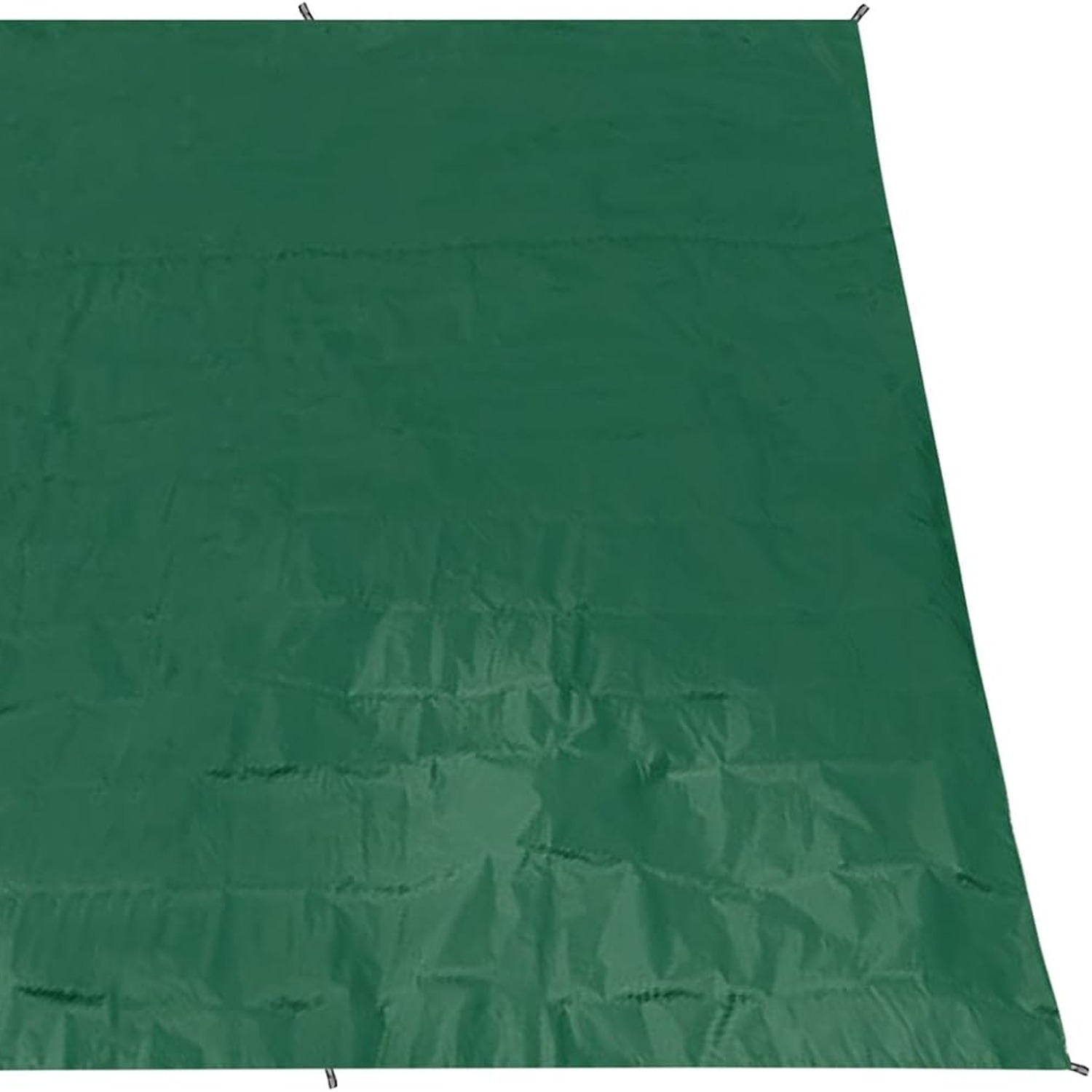
Two things are going on. The first is abrasion. Every stone, twig and bit of gravel under your tent acts like sandpaper as the fabric flexes under you. Oxford cloth is a tightly woven synthetic with a dense weave, and it shrugs off that kind of wear far better than thin ripstop floor fabric. This tarp is listed as 420D Oxford with a waterproof treatment, which puts it in the solid mid-weight bracket.
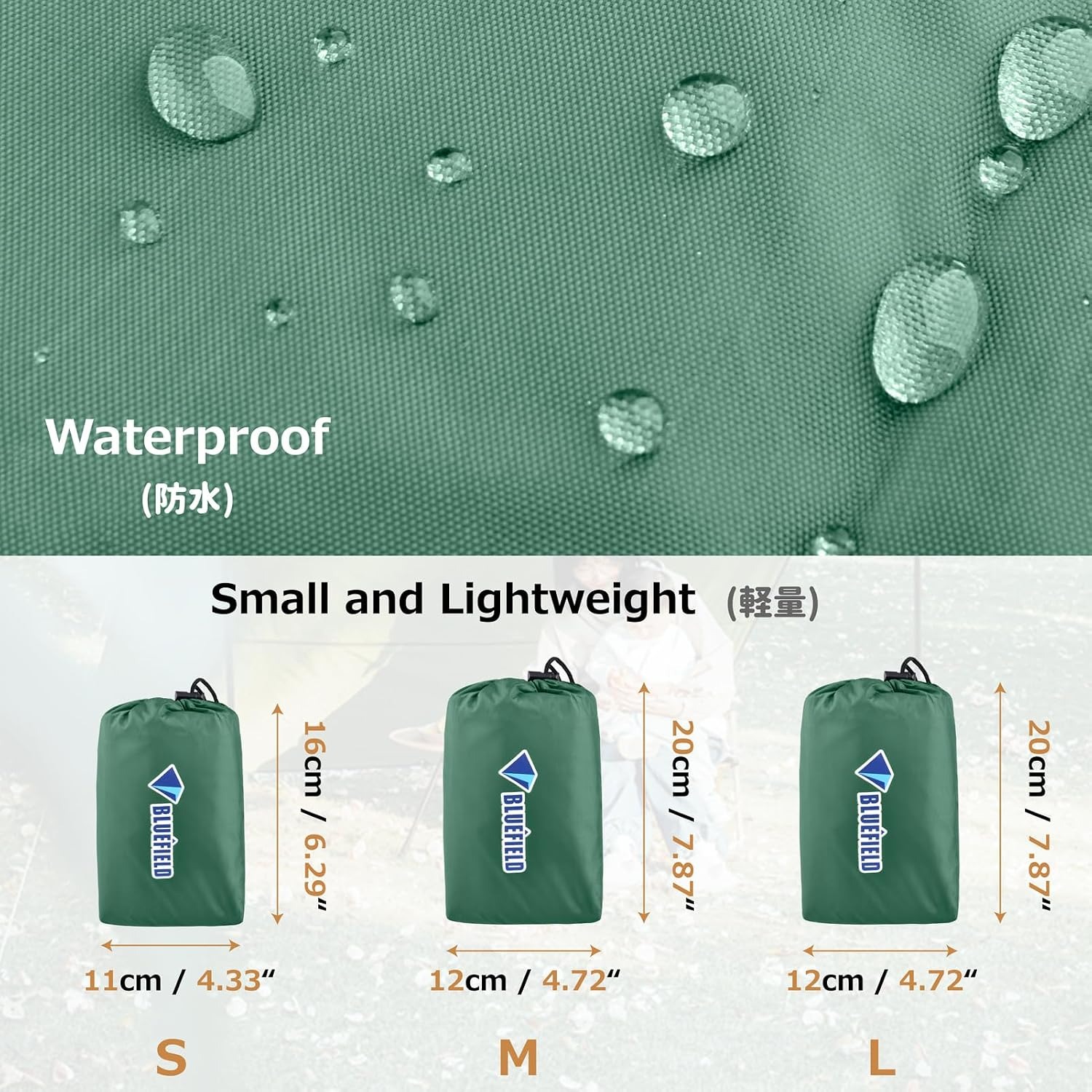
The second is moisture. Soil holds water, and that water moves upward through grass and leaf litter. Even on a night without rain, the ground under your tent is usually damp by dawn. A waterproof camping tarp between the two stops that transfer. Your tent floor stays dry, your sleeping mat feels warmer, and when you pack up you are folding dry fabric rather than mud.
There is a packing benefit people underrate. A dirty footprint rolls up on its own and goes in a separate pouch. A dirty tent floor means the whole tent goes home filthy and needs setting up in the backyard to dry out. Over a season that saves a lot of tedious work.
Where the eyelets come in
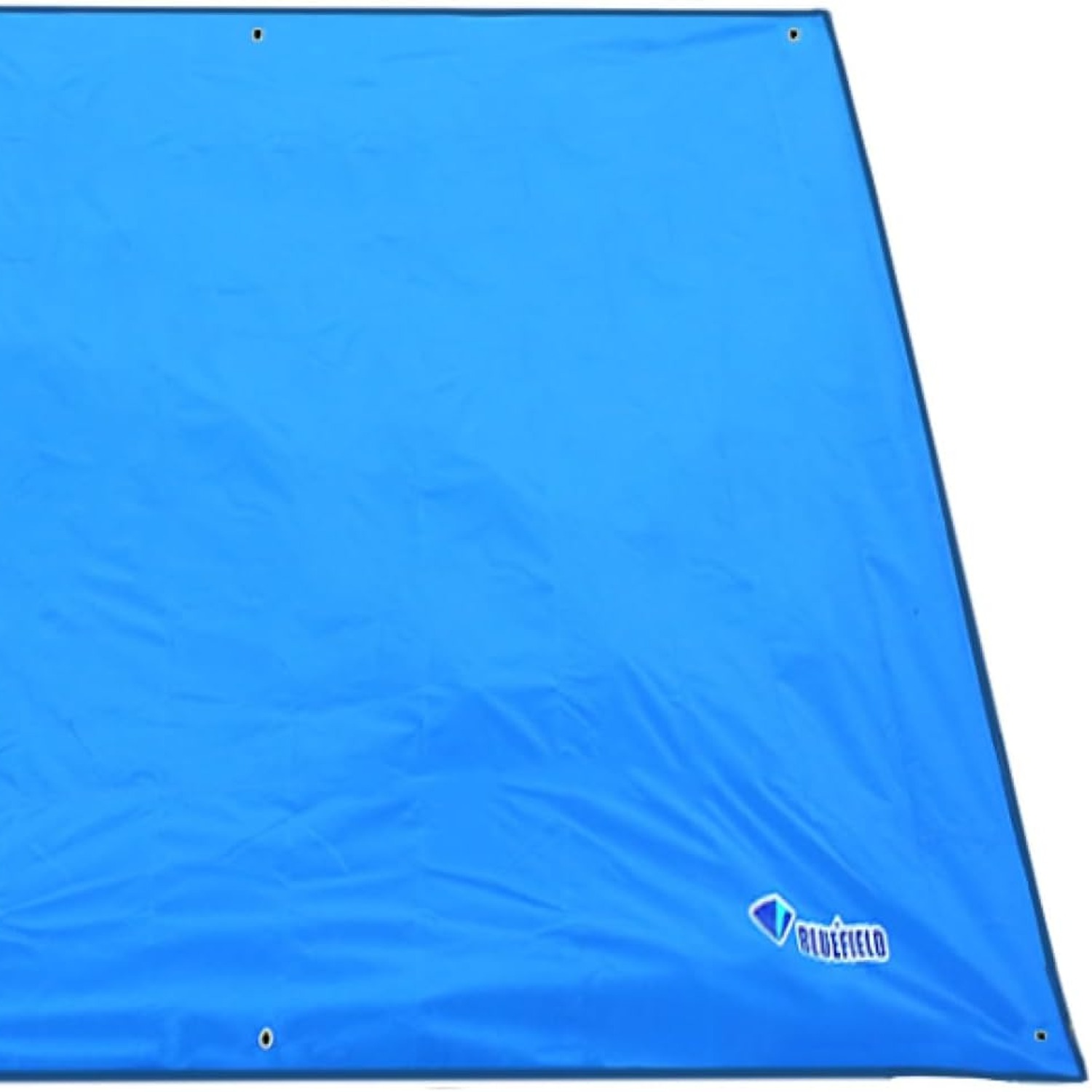
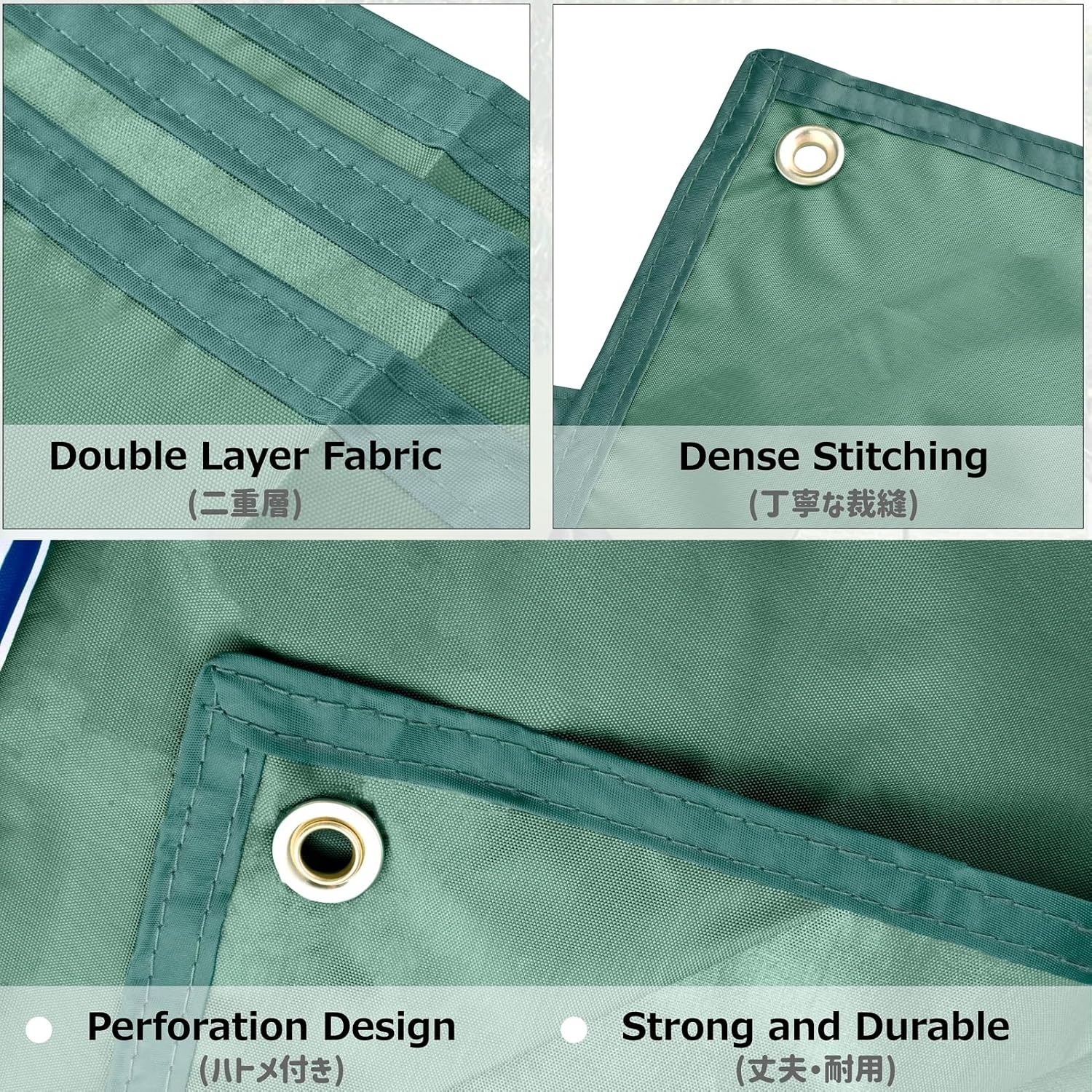
The metal grommets around the edge turn this from a single-use item into something more flexible. Pegged flat, they stop the tarp sliding out from under the tent when the wind picks up, which matters more than you would think on exposed sites.
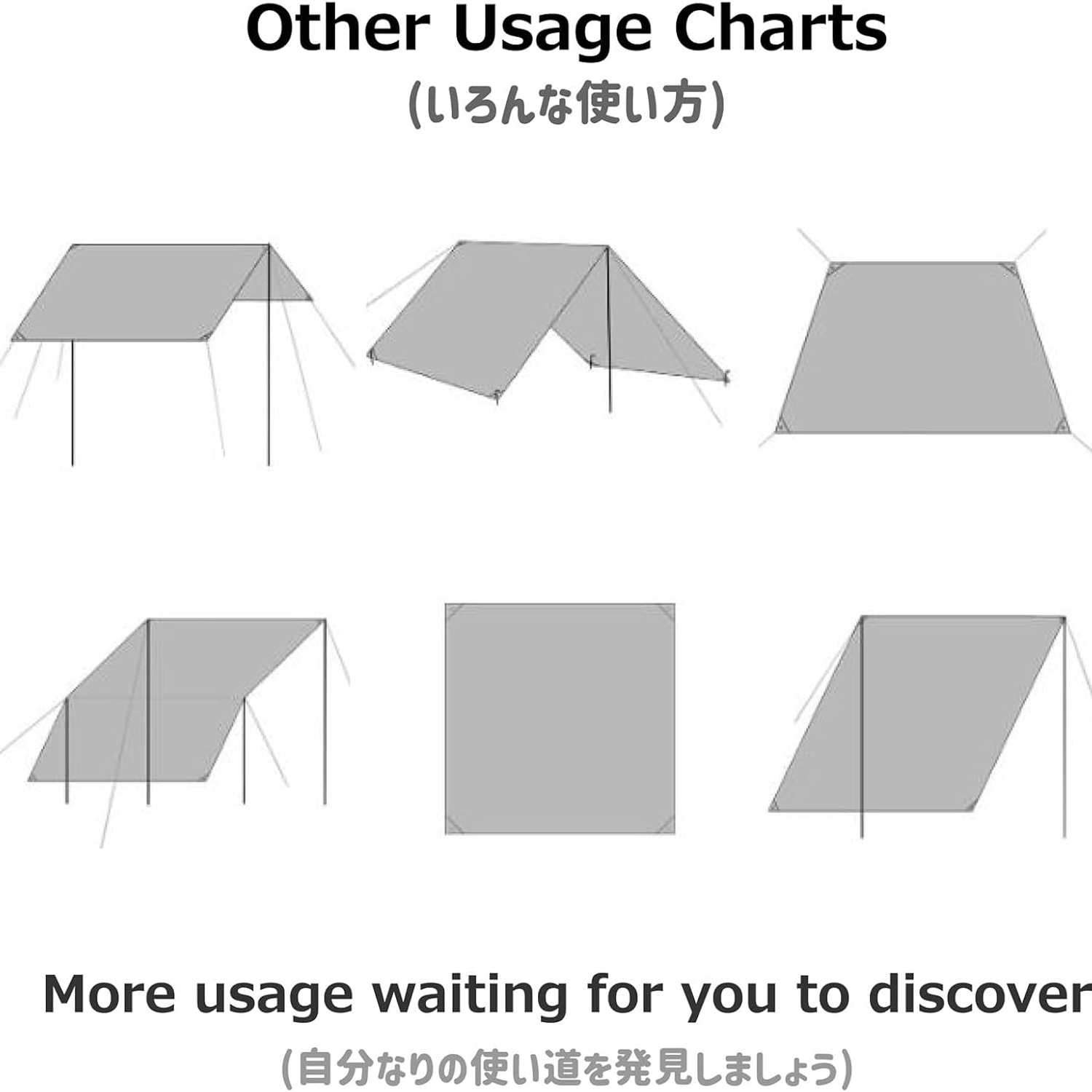
Rigged upright with guylines and a couple of poles, the same sheet becomes a basic awning. That might be shade over the camp kitchen, cover for a woodpile, or a dry spot to take your boots off in the rain. It will never replace a proper tarp shelter with a ridgeline and reinforced tie-outs, but for a casual setup over a picnic table it does the job.
A tip on rigging. Always peg or tie through the grommets rather than knotting the fabric itself. Knotted fabric concentrates load in one spot and that is where tears start.
Who it suits
Campers with a tent they want to keep are the obvious group. If you have spent real money on a shelter, a footprint is the cheapest insurance you can buy for it.
Hikers who count grams will want to weigh up the 367 g against their total load. Many take it anyway, because a torn floor in the backcountry is a much bigger problem than carrying an extra few hundred grams.
Then there is the group who barely camp at all. Beach days, sports carnivals, music festivals, car boot clean-outs, kneeling mats for mechanical work: a tough waterproof sheet with grommets gets used constantly once you own one. Several people who bought a best ground sheet tarp for camping report using it far more often around town.
How to pick the right size
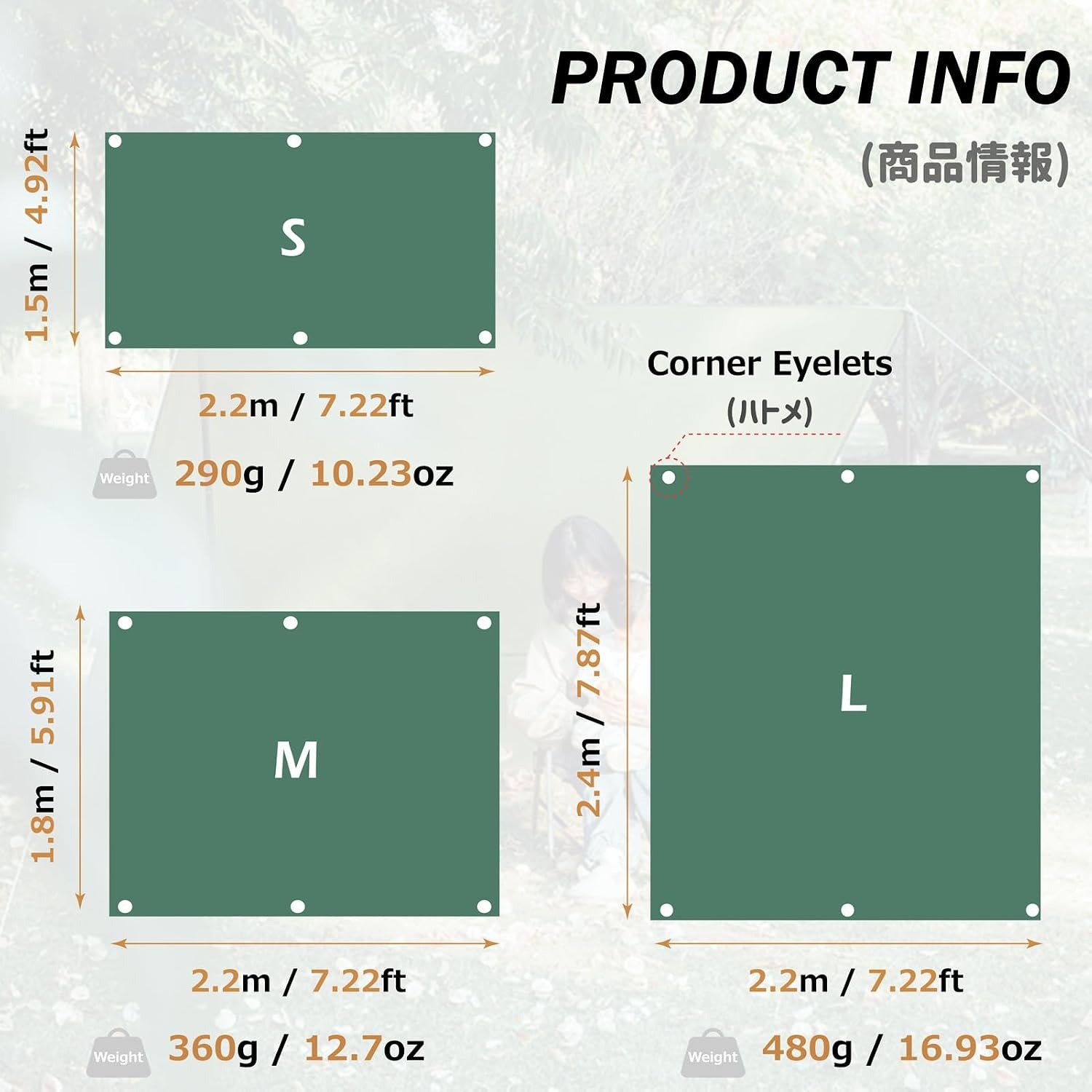
Measure your tent floor first, length and width, from the outside of the seams. Then compare.
The rule most experienced campers follow is that a footprint should be the same size or slightly smaller than the tent base. Never larger. If the tarp sticks out past the tent edge, rain running off the fly lands on the exposed section and runs underneath, which puts a puddle directly beneath your floor. That is the opposite of what you want.
This medium tarp measures 1.8 x 2.2 m, which suits a lot of two and three person tents. If yours is smaller, fold the extra under along the long edge. A folded edge is tidy, it sheds water outward, and it adds a double layer where the tent floor usually takes the most pressure.
If you are mainly after a picnic or beach sheet, go by the number of people sitting on it rather than any tent dimension. Two adults with a cooler are comfortable on this size.
Looking after it
Care is simple and mostly about drying.
Shake off the loose stuff before you fold it. Sand, dry leaves and bark do no harm on the trip home, but grit left in the folds grinds at the coating over time. If it is genuinely dirty, sponge it with cool water and a little mild soap, rinse the soap off, and hang it up.
Keep it out of the washing machine and the dryer. Detergents and heat are rough on waterproof finishes, and machine agitation can bend grommets. Bleach and solvents will strip the treatment entirely.
Dry it completely before it goes away. This is the one rule worth being strict about, because a tarp packed damp develops a musty smell within days and mildew stains within weeks. If you have to pack it wet on the trail, hang it out the moment you are home.
Store it loosely folded in the pouch, somewhere dry and away from direct sunlight. Note that this product does not carry a UV protection rating, so prolonged sun exposure is not something to plan around. Varying where you crease it each time also helps, since repeated folding on the same lines is where coatings eventually crack.
Small repairs
Outdoor fabric repair tape handles most damage. Clean the area, let it dry, and press a patch over the hole, ideally on both faces. Done properly, a patched footprint keeps working for years, and that is the whole point: it is the layer you are happy to repair so your tent is not.
The short version
A tent footprint is one of the least glamorous pieces of camping gear and one of the most useful. It stops ground moisture, takes the abrasion your tent floor would otherwise absorb, and it packs down to almost nothing.
This one is 1.8 x 2.2 m of Oxford fabric with a waterproof finish, weighs 367 grams, has metal grommet eyelets, comes in army green and ships in its own pouch. Size it to your tent or slightly smaller, peg it through the eyelets, dry it before storage, and it will quietly do its job trip after trip.