
The complete guide
The Ultralight Camp Chair Buyer's Guide
The problem with sitting down outdoors
Every trip has the same small failure point. You walk, paddle or ride all day, you get to camp, and then you discover there is nowhere decent to sit. A damp log. A rock at the wrong angle. The cold ground, which is fine for ten minutes and miserable for an hour. So you end up crouching over the stove, eating standing up, or retreating into the tent earlier than you wanted to.
Most people solve this by bringing a normal folding camp chair. That works beautifully if the car is parked twenty steps away. It works not at all if you are carrying everything on your back. A standard camp chair is heavy, awkward and the size of a small log itself. So hikers stopped bringing chairs, and accepted the rock.
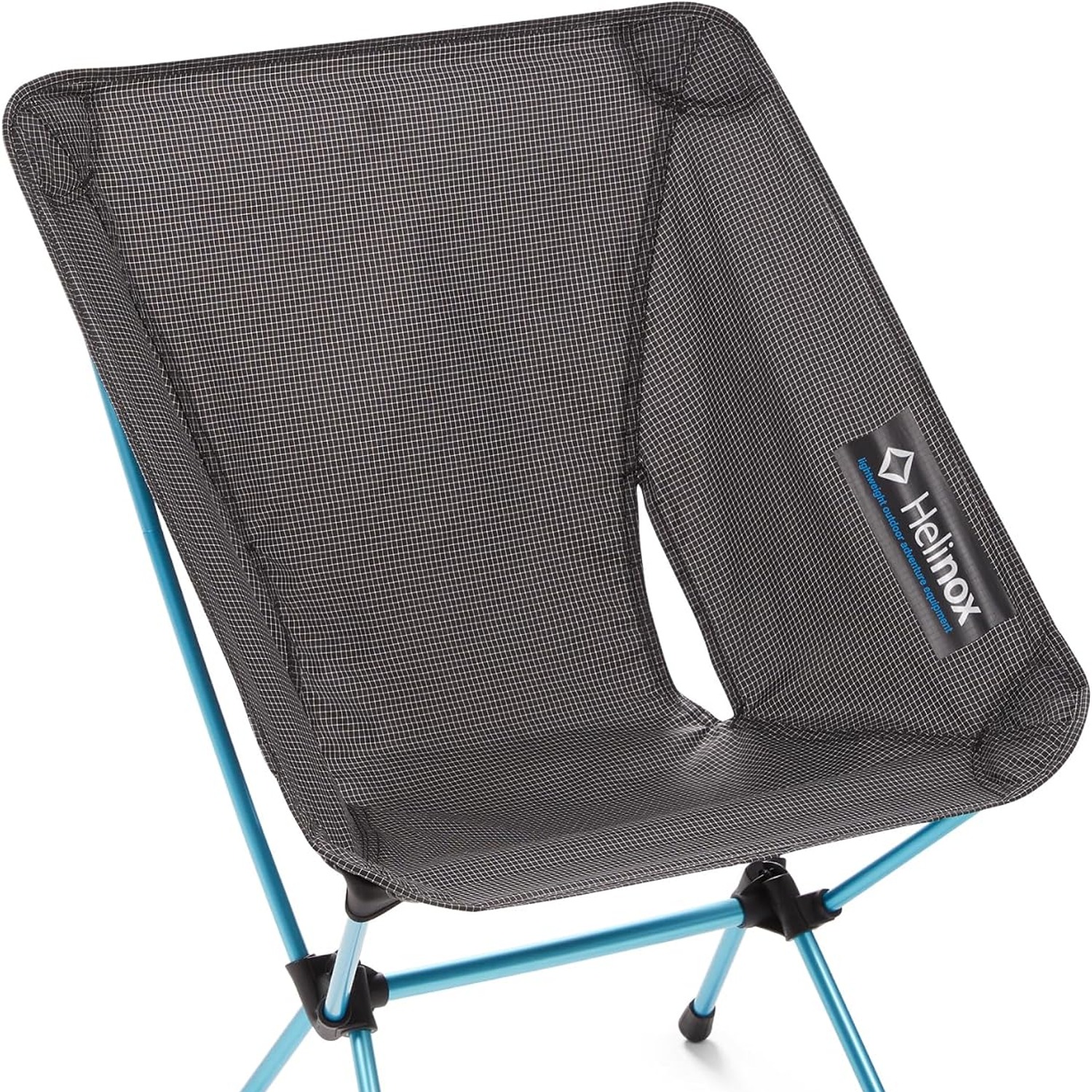
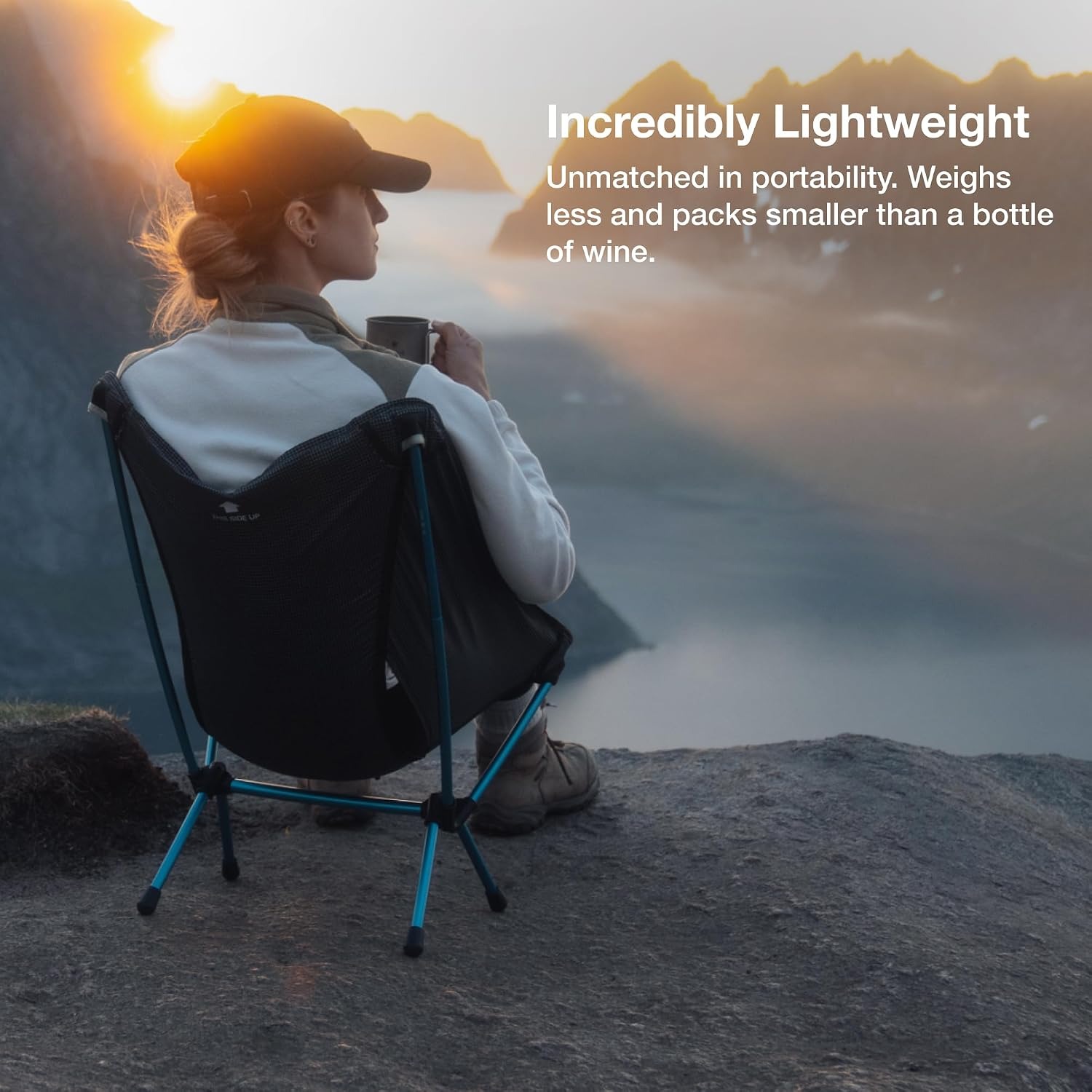
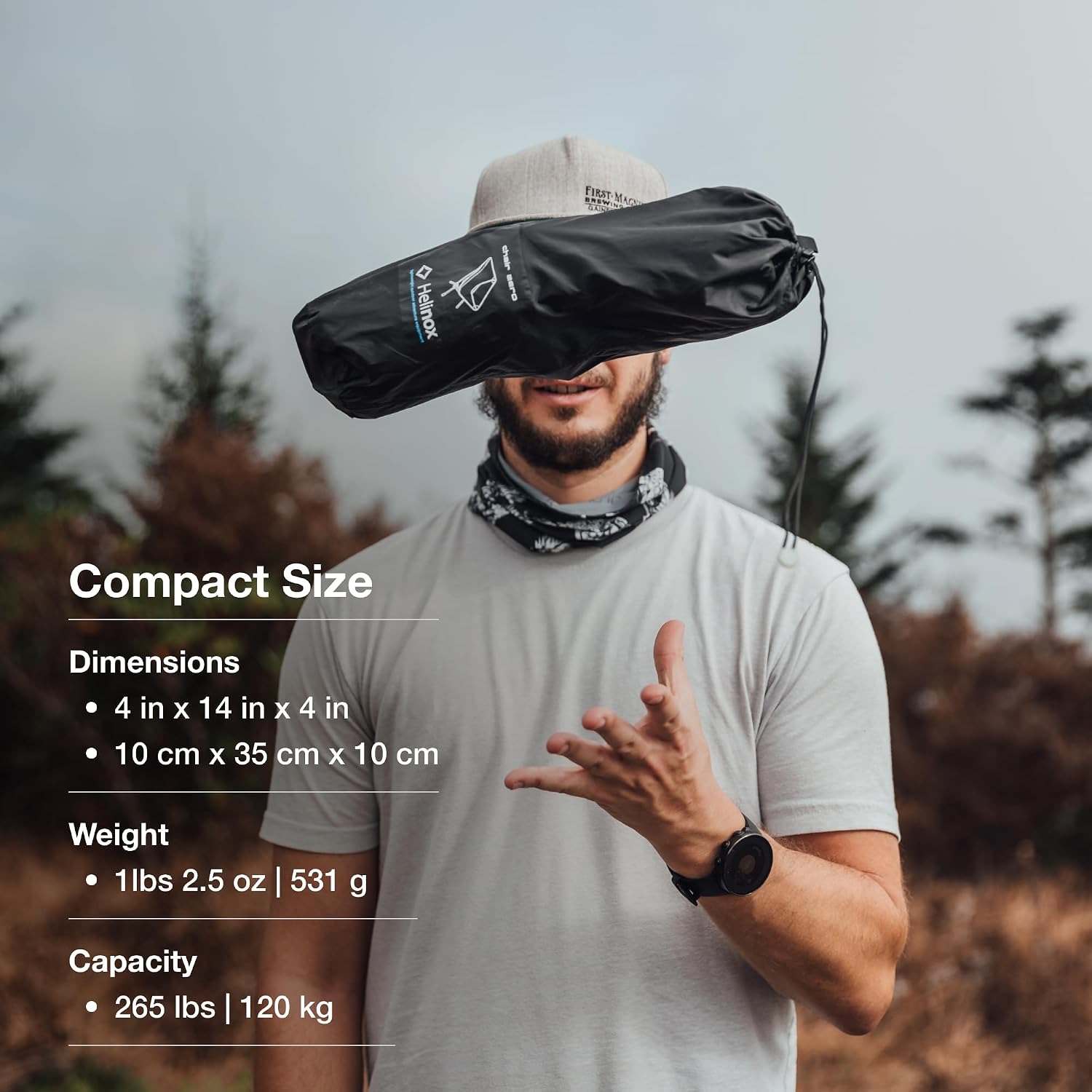
The Helinox Chair Zero is the answer to that compromise. It weighs 510 grams packed, which is roughly a half-litre water bottle, and it holds up to 120.2 kg. That combination is what makes it one of the most talked-about pieces of camp furniture going.
How an ultralight backpacking chair actually works
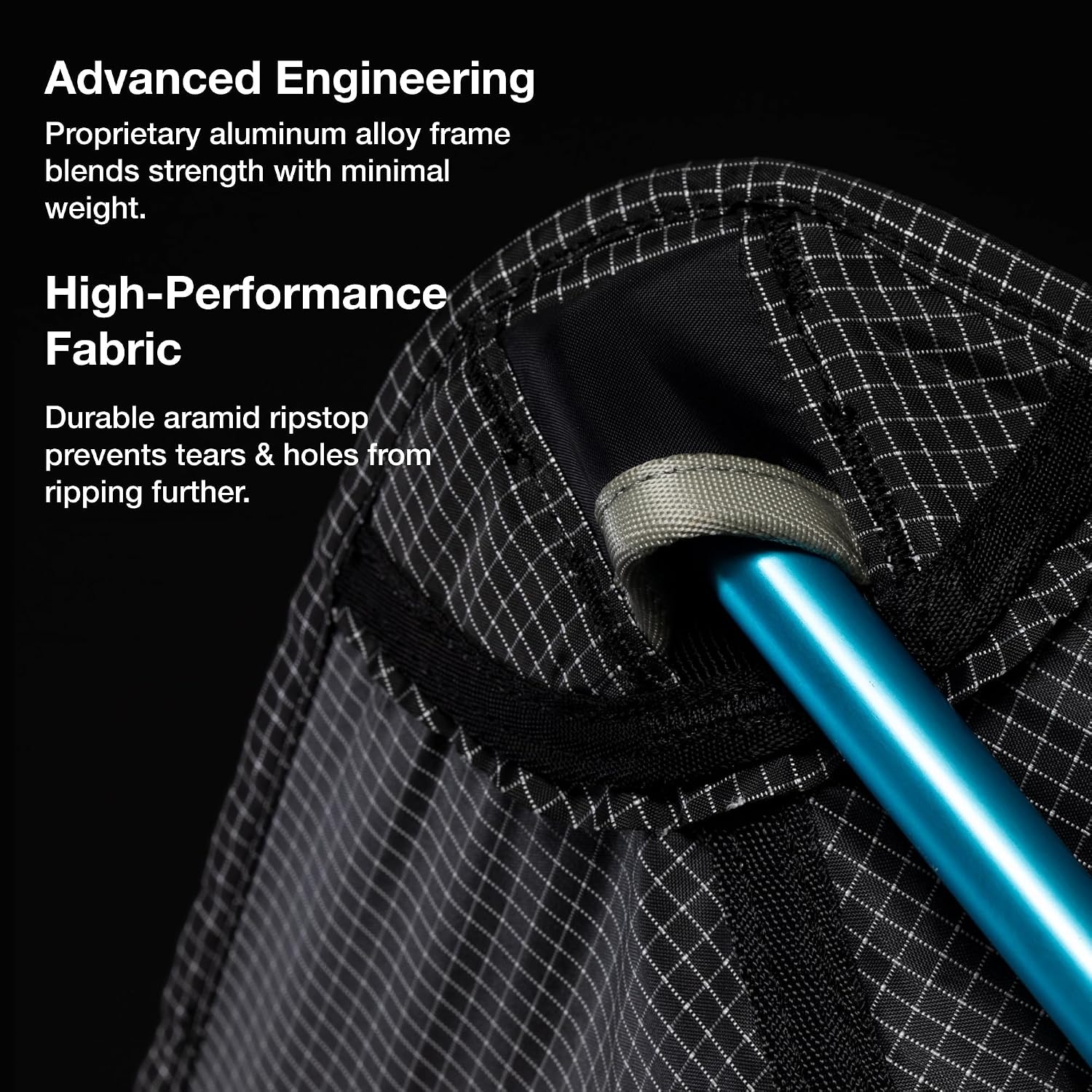
Open the carry case and you get two things. A bundle of aluminium poles threaded on an internal bungee cord, and a folded ripstop polyester seat.
The poles work exactly like tent poles. Shake them out and the shock cord pulls each section into its neighbour. In a few seconds you have an H-shaped frame with four upright corners. Then you take the fabric seat and push each corner pocket over a pole end. The fabric goes tight, the frame locks into tension, and the whole thing becomes rigid.
That is the trick. Neither part is strong on its own. The poles are thin and the fabric is light. Working against each other under tension, they make a structure that carries an adult comfortably. It is the same principle as a modern tent, and it is why the Chair Zero can be so small and still take real weight.
Packing down is the reverse. Lift the fabric off the corners, fold it, let the poles collapse, and everything goes back in the case. After two or three goes you will not think about the order anymore.
The numbers that matter
A few specs decide whether a compact camping chair will suit you.
Packed weight is 510 grams. That is the figure to compare against anything else you are considering, and it is low enough that most people stop treating the chair as a luxury item.
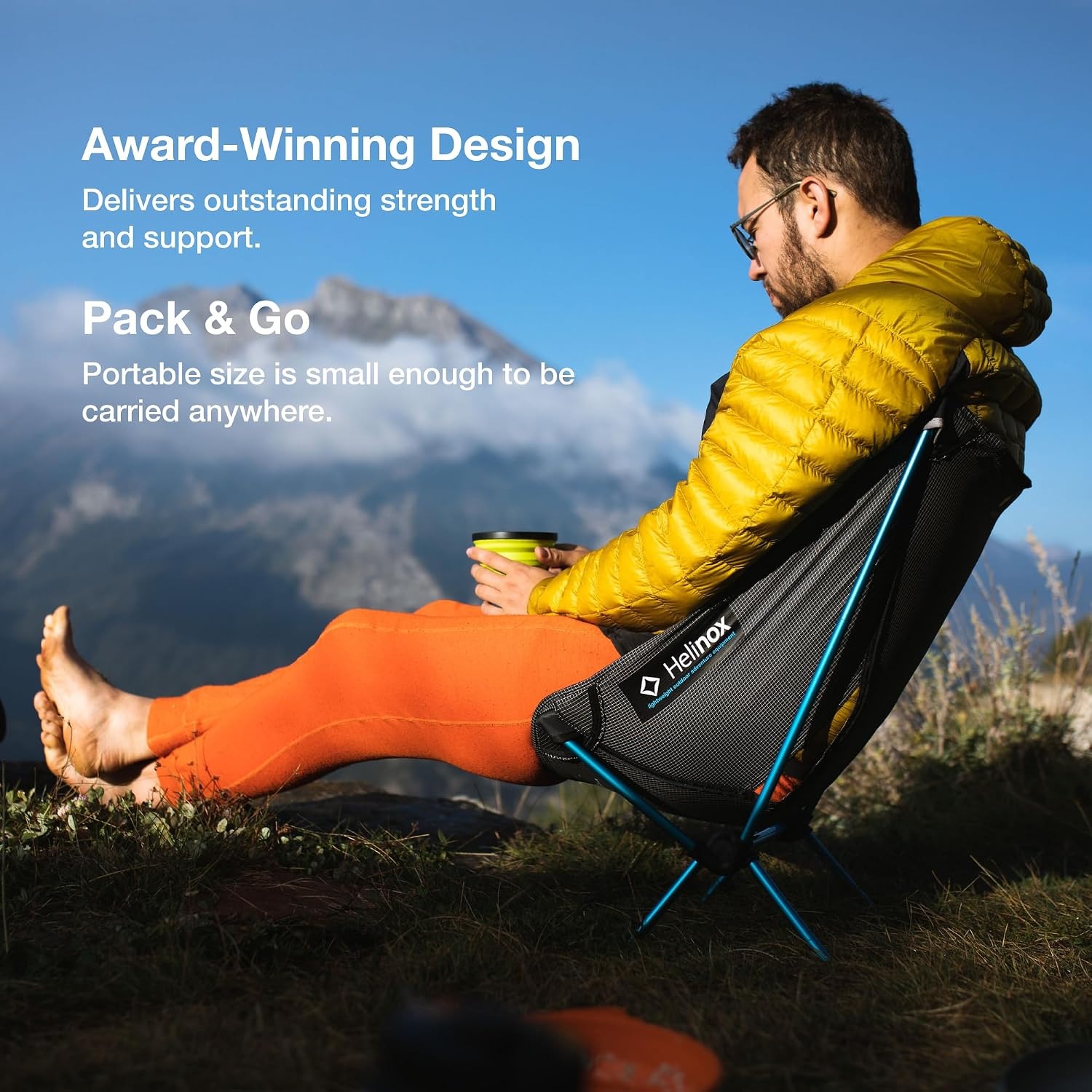
Seat height is 8.5 inches. This is a low chair. You sit close to the ground with your knees a little higher than your hips, which is relaxing once you settle but takes a small push on the arms to get out of. If you have knee or hip issues, this is the single spec worth thinking hardest about.
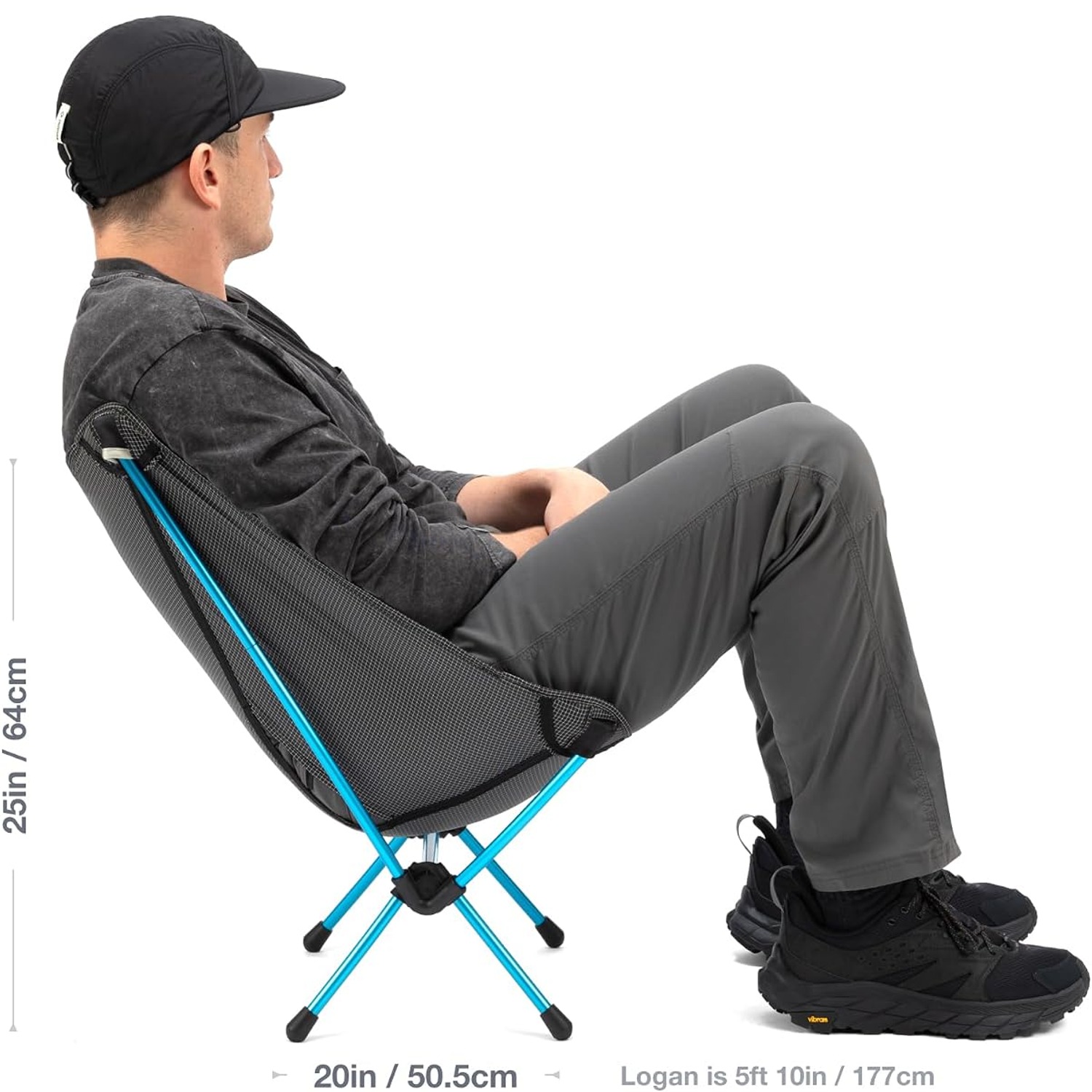
Assembled size is about 48 cm deep, 52 cm wide and 64 cm tall, with a 52 cm seat depth. That is a real seat, not a perch, and the solid back means you can lean rather than hold yourself upright.
Maximum weight recommendation is 120.2 kg. That is a genuine working figure for seated use on reasonable ground. Treat it as a limit rather than a target, and do not rock back on two legs.
Who it suits
Backpackers and thru-hikers are the obvious crowd. If you are counting grams, this is often the first comfort item that survives the cut.
Bikepackers and kayakers come next. The packed bundle slots into a handlebar roll or a kayak hatch where a conventional chair simply will not go. Rinse the frame after salt water and it will keep doing the job.
Photographers and anglers tend to love it for different reasons. Both spend long stretches waiting in one spot, often somewhere wet or uneven, and both already carry enough gear that a half-kilo chair is easy to justify.
Festival and event goers use it because it is the easiest chair to carry from a distant car park. The low seat height also makes you a better neighbour in a crowd.
Car campers can absolutely use it too, though if weight genuinely does not matter to you, a bigger chair will give you more room. The best backpacking chair is not automatically the best chair for a campsite you drive to.
How to choose between this and the alternatives
There are three broad options at this end of the market, and they suit different people.
A tripod stool is the lightest and cheapest, but it has no back. For a ten-minute rest it is fine. For a long evening it is not, because your back ends up doing the work your chair should be doing.
A foam sit pad weighs almost nothing and can double as part of your sleep system. If your trips are short and you are truly ruthless about weight, it may be all you need. You are still sitting on the ground, just a warmer version of it.
A frame-and-fabric chair like this one costs more and weighs more than either, and gives you a proper backrest, arms and clearance off cold or wet terrain. Whether that is worth 510 grams is a personal question, and the honest answer depends on how long your evenings are. People who stop early and sit around camp get more from it than people who walk until dark and go straight to sleep.
If you are torn, think about where you actually spend time. A lightweight folding chair pays for itself over long dinners, long waits and long conversations. It does very little for someone who treats camp as a place to lie down.
Looking after it
Care is simple, which is lucky, because this chair goes to grubby places.
Wipe the fabric and frame with a damp cloth and a little mild soap. Let it dry fully, in the shade rather than baking sun, before it goes back in the case. Packing a damp chair is how you end up with that musty smell nobody enjoys.
Pay attention to the pole ends. Sand and grit work their way into the ferrules, and that is what wears out a shock-corded pole set over time. A quick shake and a wipe after beach or desert trips makes a real difference.
Store it loose and dry rather than crammed under heavy gear. The bungee cord inside the poles lasts longer when it is not left stretched for months. If it ever does slacken, that is a repairable part rather than the end of the chair.
Avoid dragging the chair across rough ground while someone is in it, and avoid using it as a step stool. Those two habits account for most of the damage that small outdoor chairs ever see.
The short version
The Helinox Chair Zero does one thing, and does it with unusual focus. It gives you a seat with a back, off the ground, for 510 grams and a packed size that fits beside a water bottle.
It is a low chair at 8.5 inches, built from an aluminium shock-corded frame and a ripstop polyester seat, rated to 120.2 kg and covered by a five-year manufacturer's warranty. It wipes clean, folds into its own case in seconds, and comes in plain black.
If you walk, ride or paddle to where you camp, and you like to sit still once you get there, this is the piece of gear that makes the evening better. If you drive to your campsite and weight means nothing to you, spend the same money on something roomier. Either way, you now know exactly what the trade-off is.