
The complete guide
Choosing A Wheeled Cool Box That Actually Gets Used
The problem is not the cold, it is the carry
Most cool boxes work. Pack them with ice, close the lid, and your drinks will be cold when you get there. The part that goes wrong is everything before that.
A 26 litre box full of drinks and ice is heavy. Not impossible, but heavy enough that one person ends up doing an awkward waddle from the car to the campsite, swapping hands every twenty steps. Heavy enough that someone suggests leaving it in the boot and just running back for drinks when people get thirsty. That is how a perfectly good cool box ends up living in the garage.
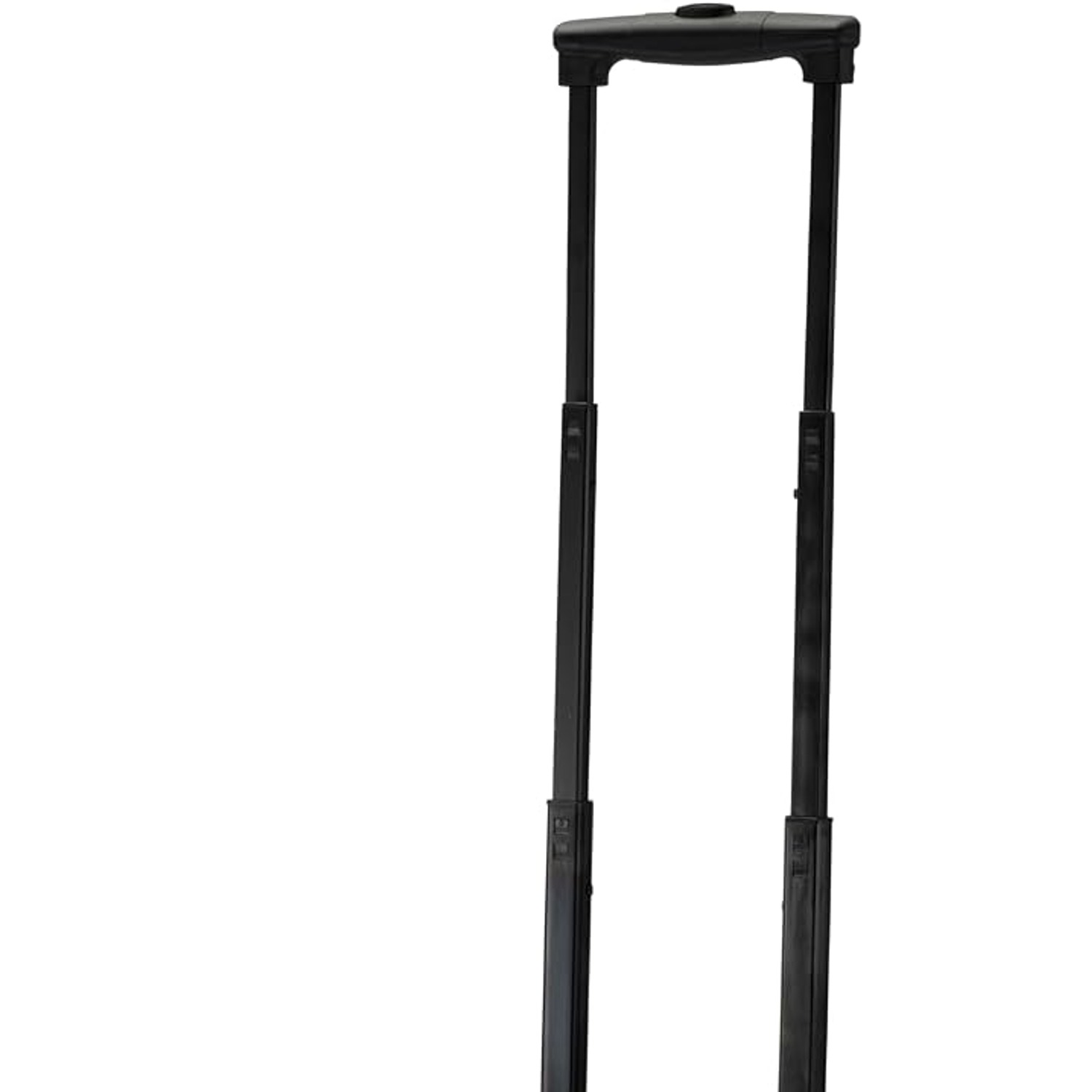
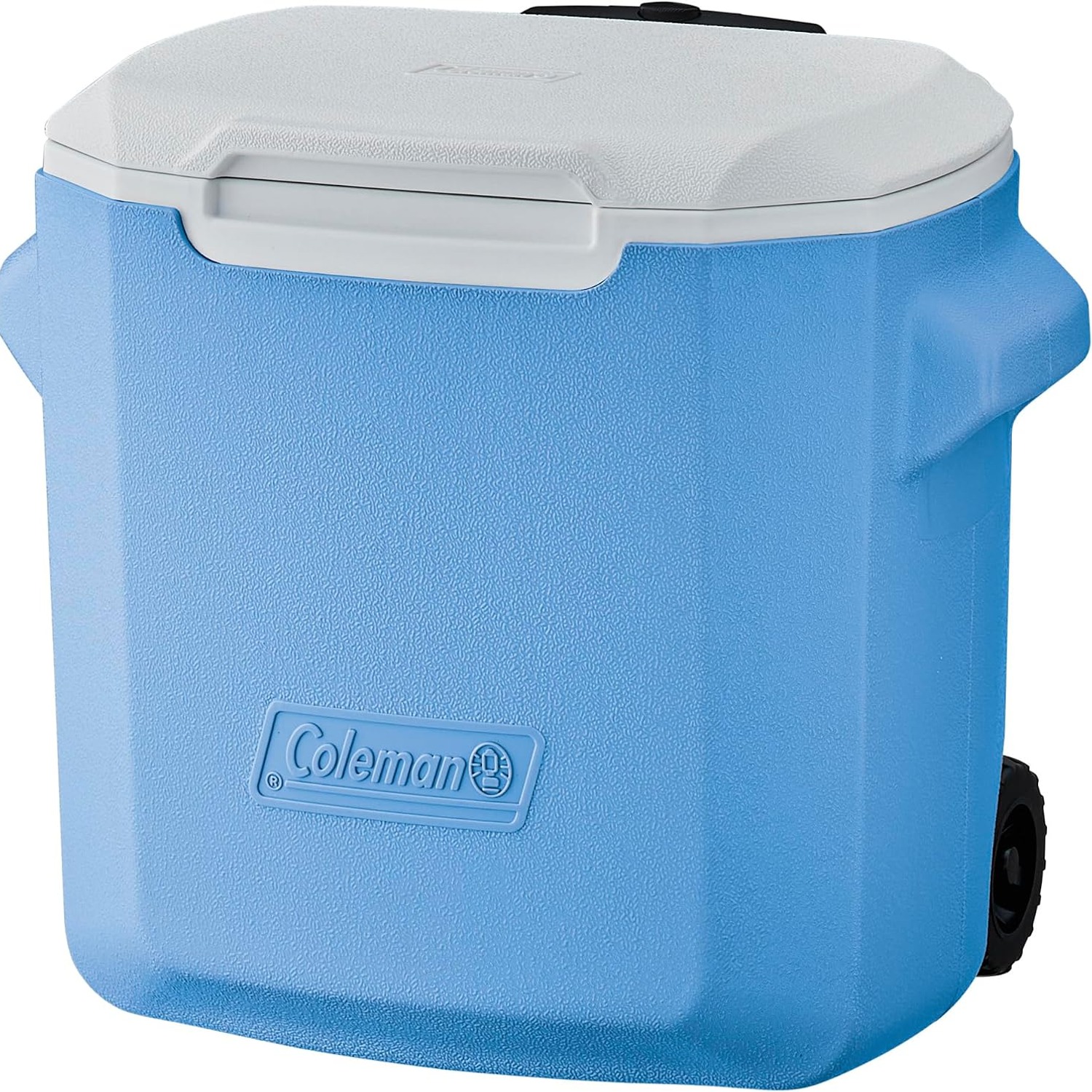
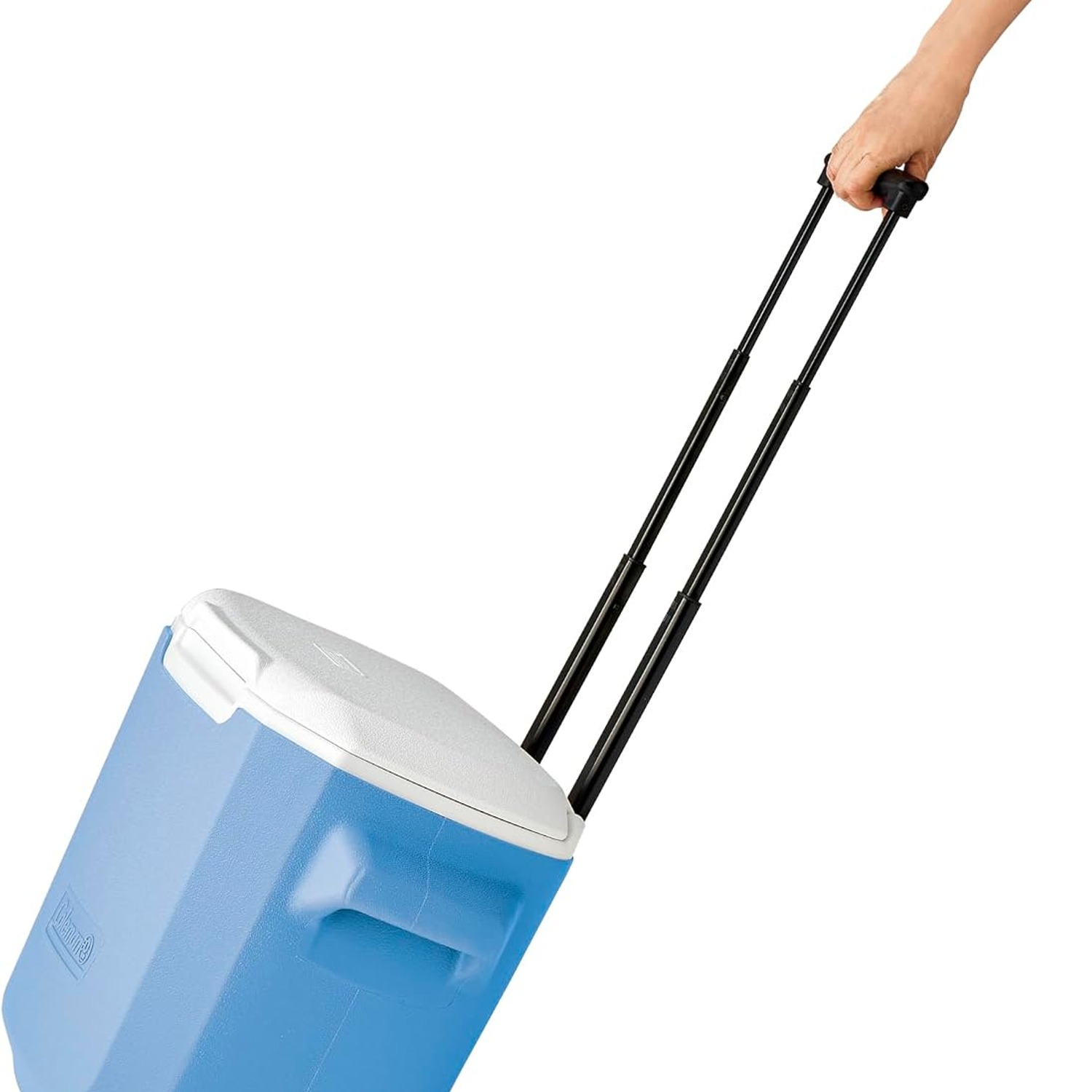
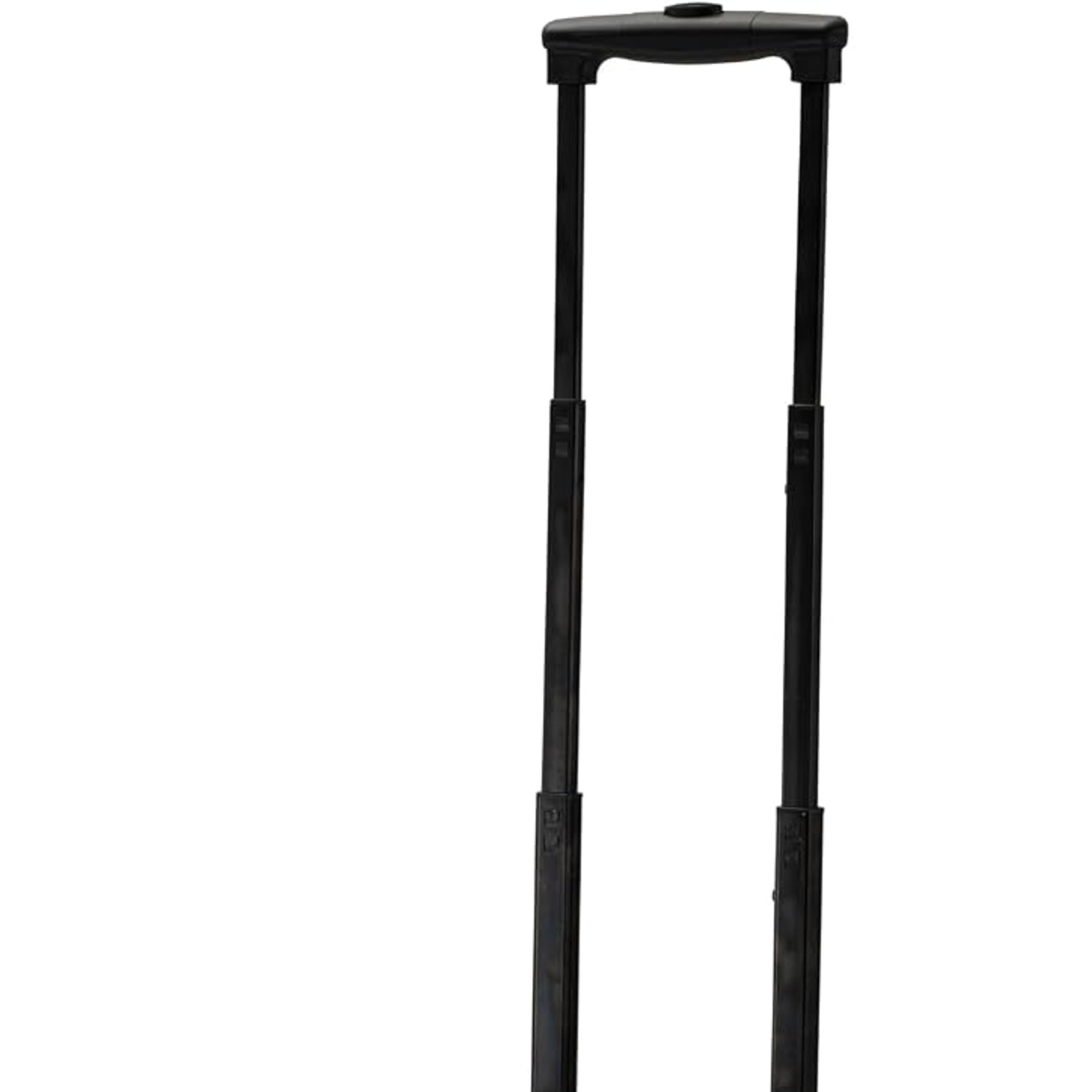
Wheels solve a problem that insulation never could. The Coleman 26L wheeled cool box is a hard-sided cooler with two wheels and a telescoping handle, so the walk from the car becomes a pull rather than a carry. It sounds like a small thing. It is the difference between taking the cool box every time and taking it once a summer.
How a hard cool box keeps things cold
A cool box does not make anything cold. It slows down how fast cold things warm up, and everything else follows from that.
The walls on this model use polyethylene insulation inside a polyethylene shell, with alloy steel and polyurethane components making up the rest of the build. Thicker walls and tighter lid seals slow heat transfer. Coleman states that cold is retained for around two days when the box is used properly.
That last phrase matters more than the number. Two days assumes a well-packed box. If you load four cans and one ice pack into a 26 litre space and open the lid every ten minutes in full sun, you will not get two days. You might not get one.
Here is what actually extends cold retention:
Start cold. Chill the box overnight if you can, and put already-cold drinks in rather than room temperature ones. Warm contents eat your ice budget in the first hour.
Fill the space. Air warms up far faster than liquid or ice. A full box stays cold longer than a half-empty one, so pack gaps with frozen bottles, ice packs or even a rolled towel.
Use enough ice. A rough rule is roughly a third of the volume given over to ice or ice packs for a day trip, and more for an overnighter.
Keep the lid shut. Every opening swaps cold air for warm. If you are running drinks for a group all day, a second small bag for the frequently grabbed items saves the main box.
Park it in shade. Direct sun on a dark plastic lid works against you constantly. A towel thrown over the top helps if there is no shade.
Coleman also advises putting contents into a bag or container before use, which is worth following. It keeps melt water off your food and makes cleaning out afterwards a two-minute job instead of a chore.
What 26 litres really means
Capacity numbers are hard to picture. Here is the practical version.
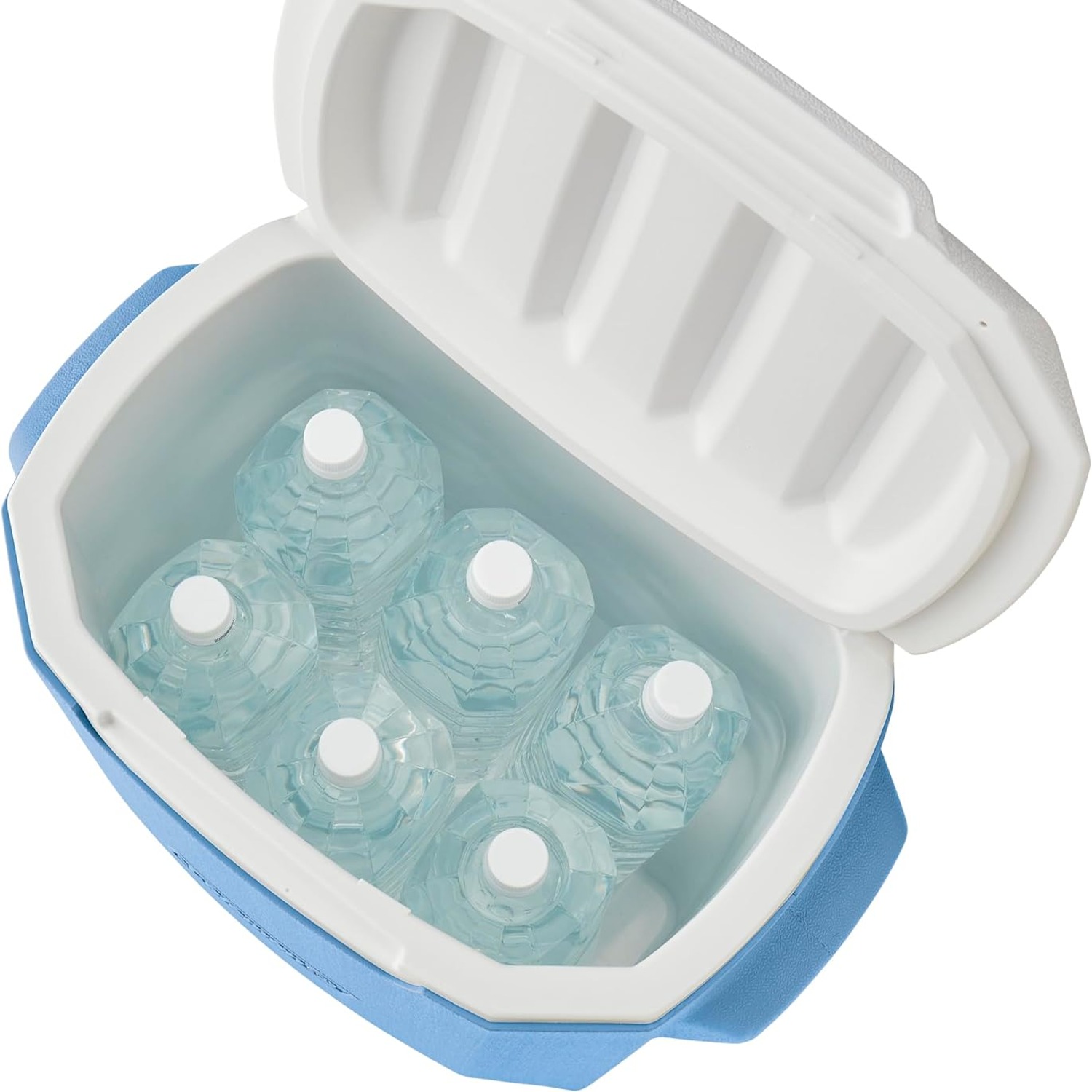
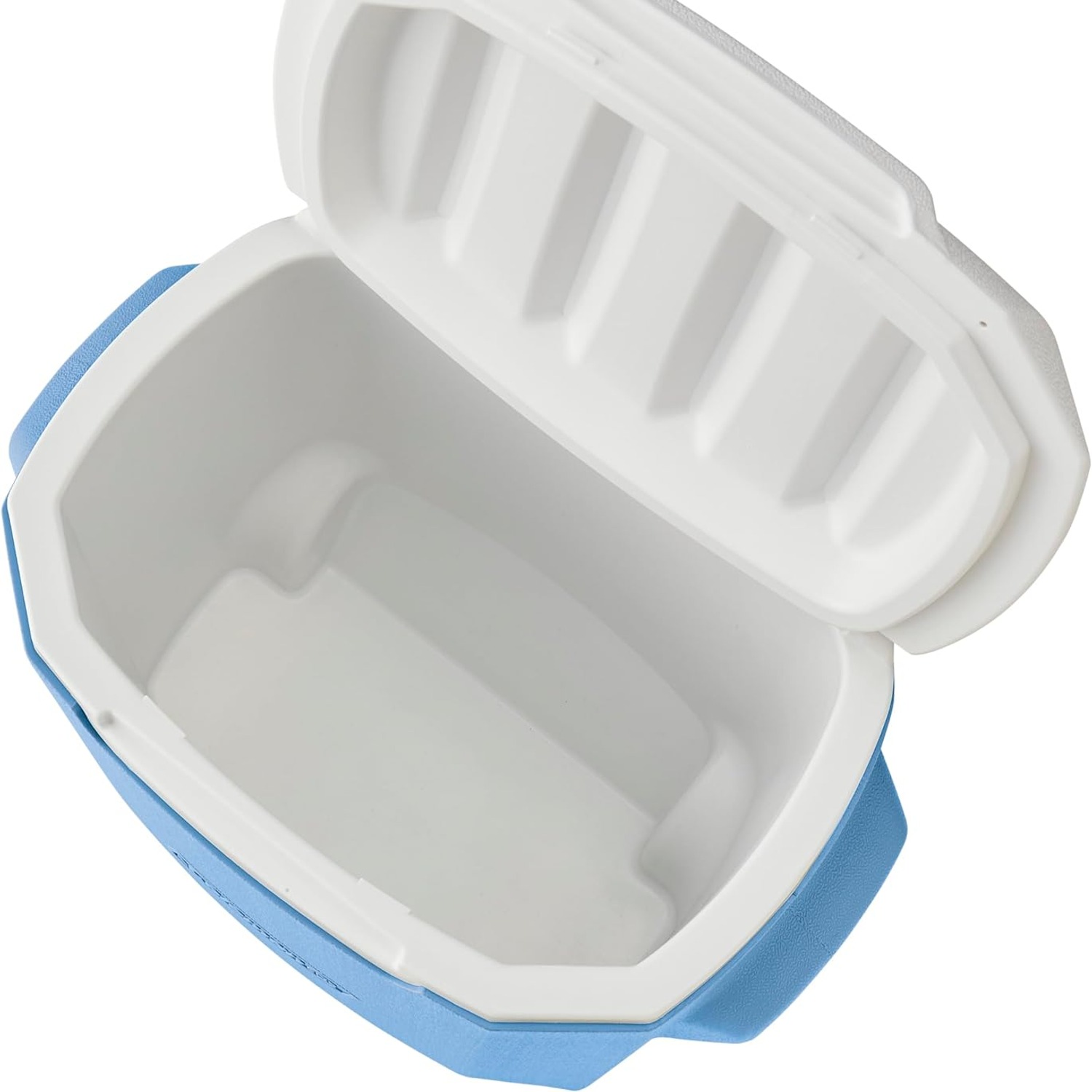
The chamber is 14 inches deep, which is enough for six 2 litre plastic bottles standing upright. Upright is the useful part. Bottles lying flat roll around, waste space and mean you have to lift three things to reach the one you want.
Swap those bottles for cans and the count goes up considerably, especially if you use solid ice bricks rather than loose ice. Add lunch boxes and the picture shifts again. For a family of four on a day out, 26 litres is comfortable. For a weekend with two adults and a couple of kids, it works if you shop sensibly and top up ice. For a week-long trip feeding six people, you want more volume or a second box.
The external dimensions are 42cm deep, 34cm wide and 42cm high. Measure your boot before you order. The telescoping handle retracts, so the stored size stays close to those numbers rather than sticking out at an awkward angle.
Who this suits
Campers who park a short walk from the pitch get the most out of it. That stretch between car and tent is exactly where wheels pay for themselves.
Beach families are the other obvious group. The walk across sand and up over the dune with a loaded box is nobody's favourite part of the day. Wheels will drag more in soft sand than on a path, but pulling still beats carrying.
Then there are the sports parents and club organisers. Coleman lists sports and competitions among the recommended uses, and a 26 litre box of cold drinks covers a team through a morning fixture. Pull it from the car park once and you are done.
It also earns its place at picnics, long days in the park, market trips and anywhere you need food to stay cold for longer than a bag of ice in a carrier would manage.
Who it suits less: people who only ever need to move a cool box three metres from kitchen to patio. For that, wheels add bulk you do not need. People who need serious multi-day cold retention in extreme heat should look at thicker-walled, higher-spec models instead.
How to choose between sizes and styles
Start with the carry distance, not the capacity. If you always carry a cool box more than about thirty metres, wheels should be high on your list. If you never do, a plain carry box is lighter and cheaper.
Then think about how many people and how many days. A rough starting point is around five to seven litres per person per day of drinks and food, which puts 26 litres at roughly a family day out or a two-person overnighter with care.
Check the chamber depth if tall bottles matter to you. Plenty of boxes have the volume but not the height, and you end up laying 2 litre bottles down and losing space.
Look at the handle. A fixed handle is one less thing to break but a nuisance in storage. A telescoping handle folds away and lets the box sit flush in a boot or against a shed wall.
Finally, consider what is included. This Coleman model ships without additional components, so budget for ice packs if you do not already have a few in the freezer. Two or three solid bricks will do more for your cold retention than any amount of loose ice.
Looking after it
Cool boxes fail from neglect more than from use. The routine is short.
Drain and empty it the same day you get home, not next weekend. Wash the inside with warm water and a mild detergent, rinse it, and wipe it dry. Then leave the lid open until the interior is properly dry, because trapped moisture is what creates that musty smell people blame on the box itself.
Rinse sand and grit off the wheels after beach trips so the bearings do not grind. Wipe the handle down too.
Store it somewhere out of direct sunlight with the lid slightly ajar. Long UV exposure is what fades and weakens plastic over years. Retract the handle so nothing is left under tension.
Avoid bleach, solvents and abrasive scourers on the shell. Warm soapy water handles almost everything. For stubborn odours, a wipe with a mild bicarbonate solution and a proper air-dry usually sorts it.
The short version
The Coleman 26L wheeled cool box is a hard cooler built around a sensible idea, which is that most people give up on cool boxes because of the carry rather than the cooling. Wheels and a telescoping handle fix that.
You get 26 litres of space, a 14 inch chamber that takes six 2 litre bottles standing up, polyethylene insulation, and cold retention of around two days when packed well and kept in shade. The outer dimensions are 42 by 34 by 42cm, and the colour is listed as Daydream.
Pack it full, pack it cold, keep the lid shut and keep it out of the sun. Do that and it will do what you bought it for, trip after trip, without anyone pretending they are not tired of carrying it.