
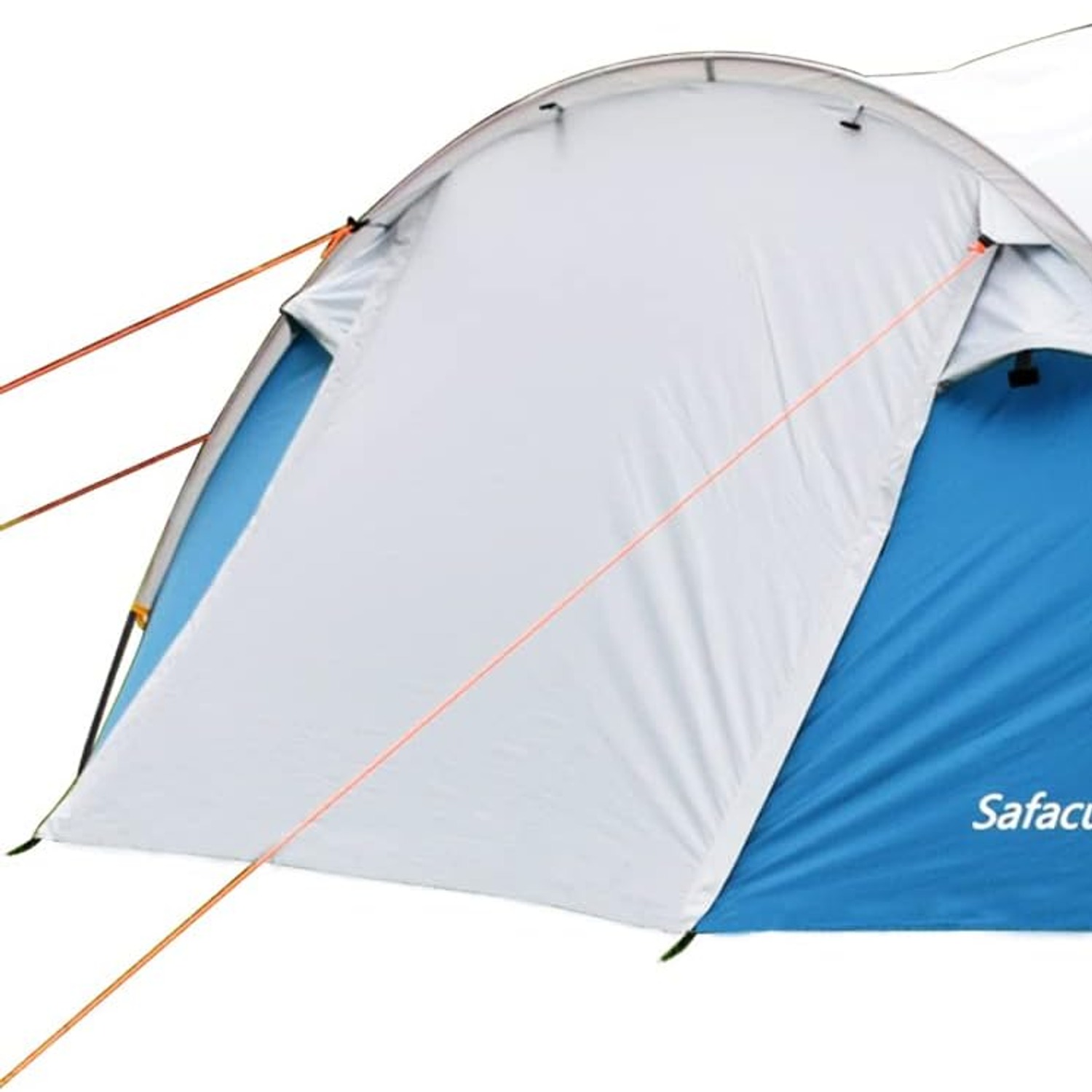
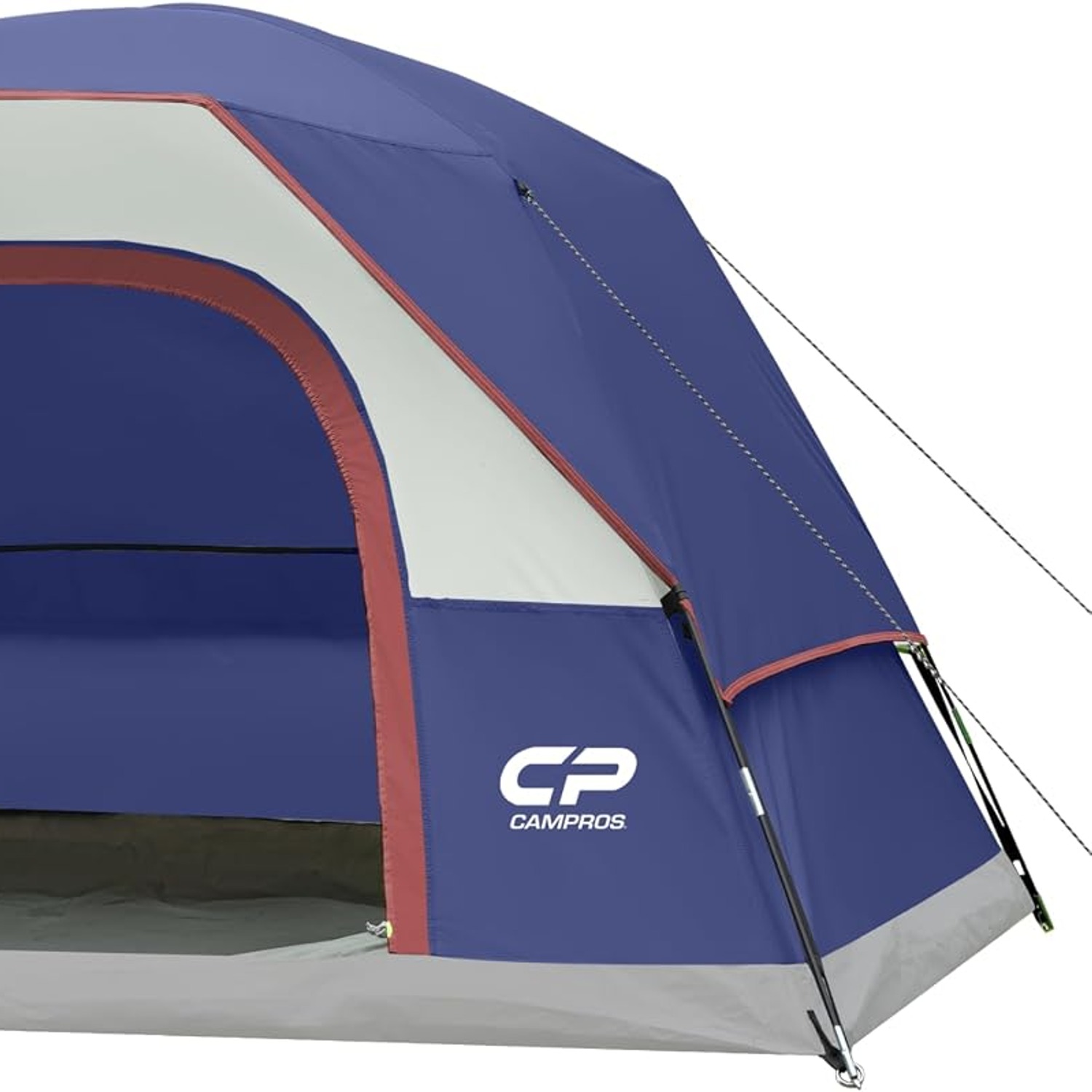
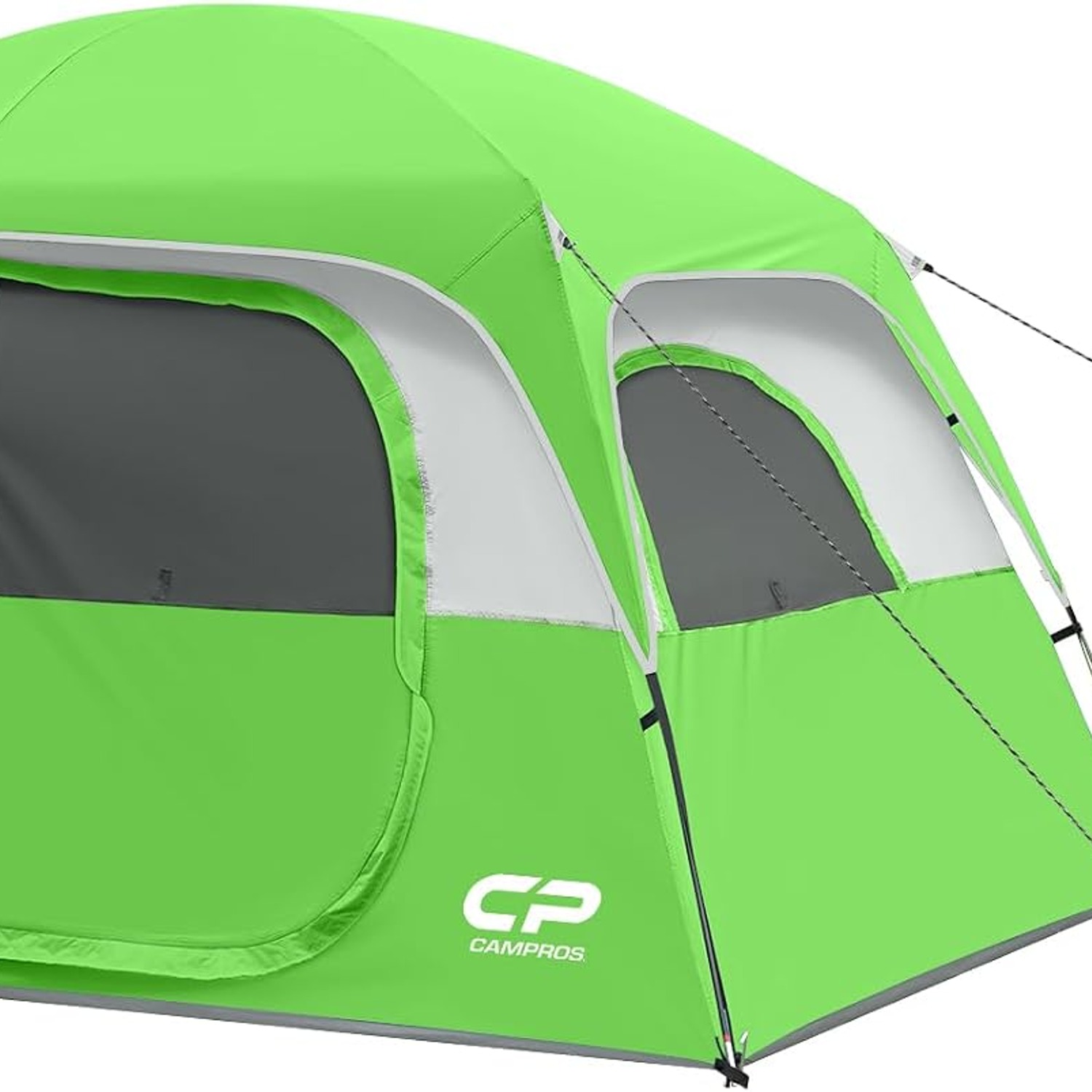
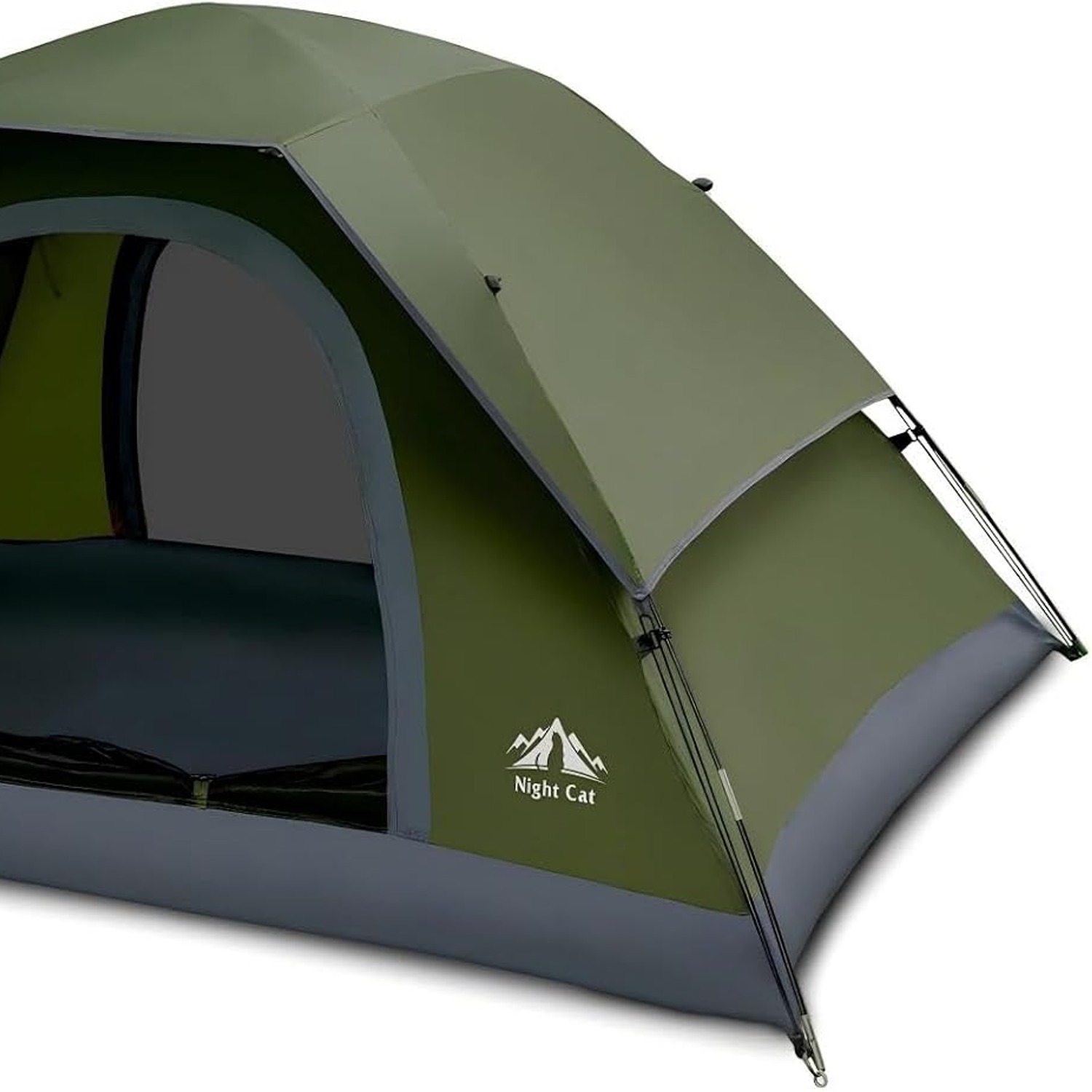
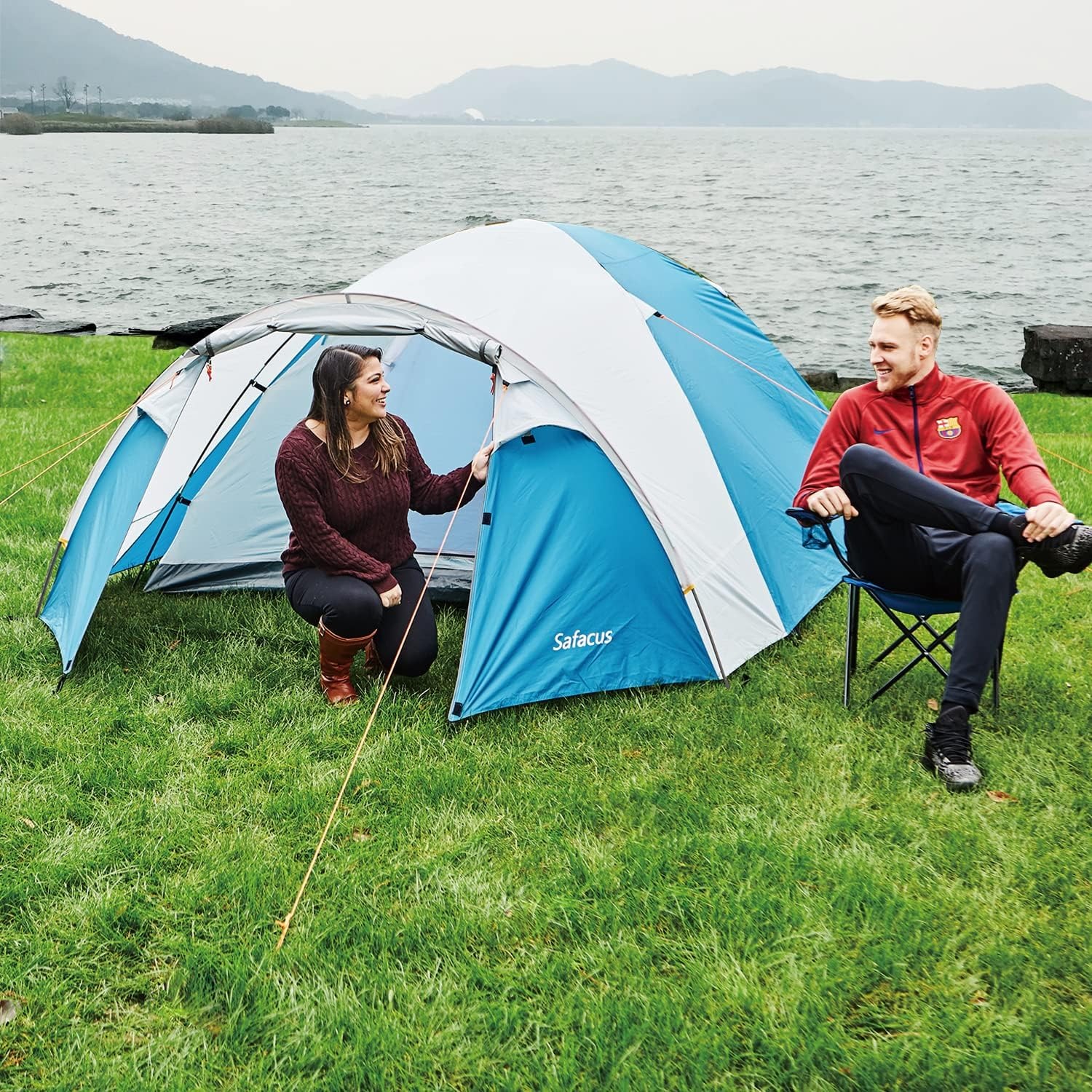
The complete guide
How To Choose A 4 Person Dome Tent That Actually Suits Your Trips
The problem with most first tents
Plenty of people buy a tent once, use it twice, and quietly leave it in the shed. Usually it is not because camping let them down. It is because the tent was the wrong shape for how they actually camp.
The two classic mistakes are buying too small and buying too complicated. Too small means four people wedged in with their bags outside in the rain. Too complicated means half an hour of pole threading in fading light while someone holds a torch and loses patience.
A simple four person dome fixes both. It gives you a floor long enough that nobody sleeps with their head in the door, and it goes up with two poles that clip into place instead of sliding through long fabric tunnels.
How a double layer dome works
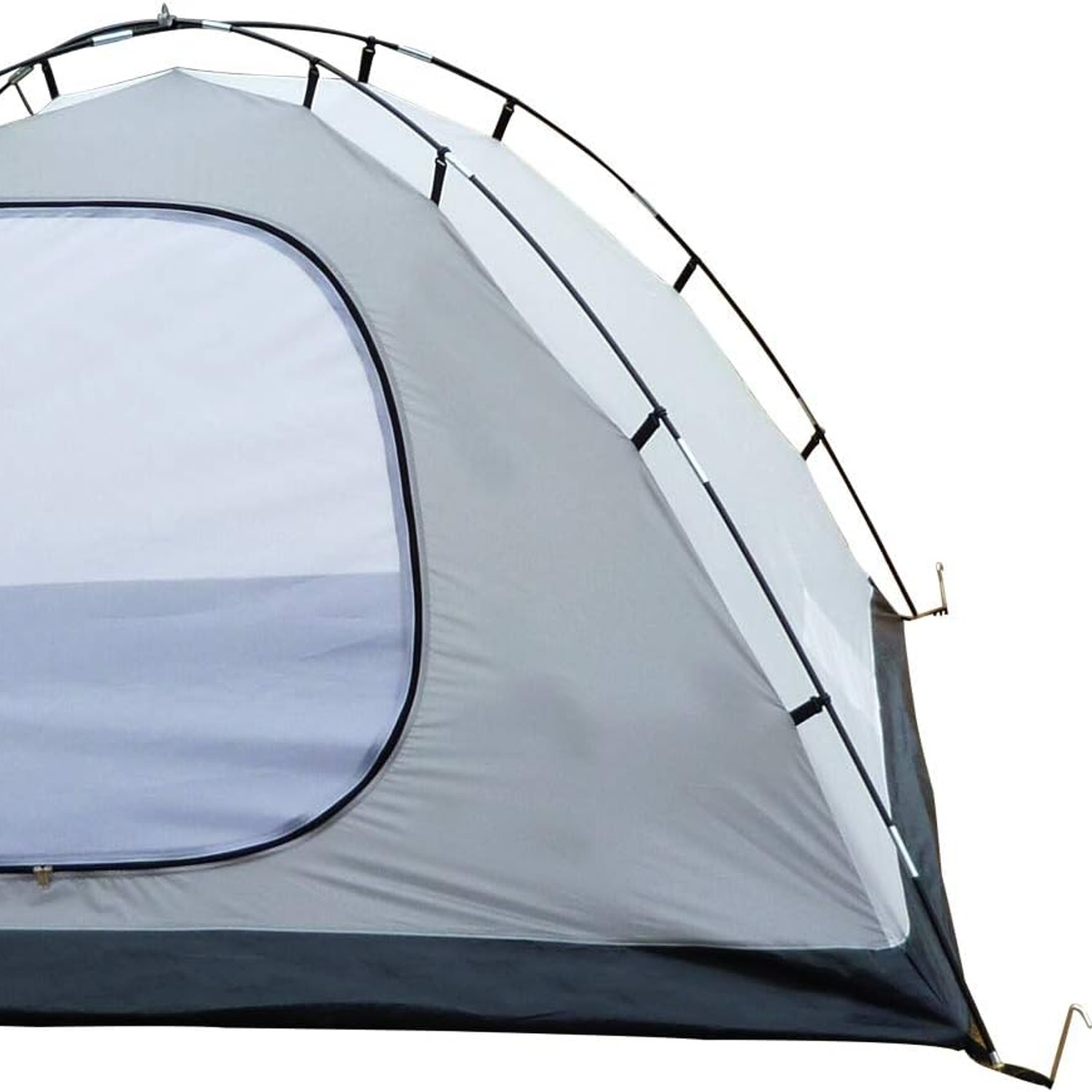
A dome tent is two poles crossing over the top in an arc. That arc holds the walls out and gives the tent its shape without needing anything tied to the ground first. That is why this one is listed as independent, or freestanding. You can build it, pick it up, and carry it two metres to flatter ground.
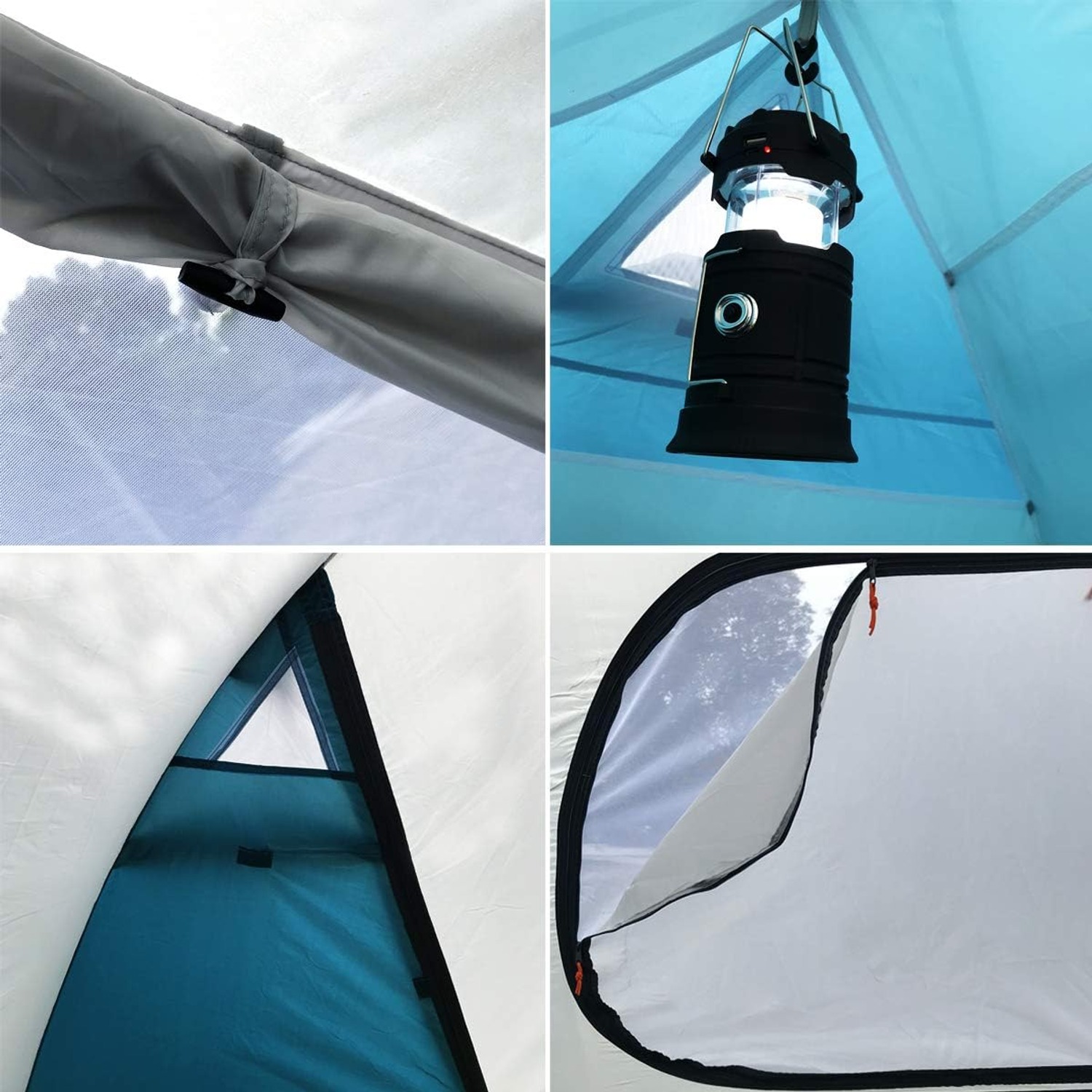
Double layer is the other half of the design. There is an inner tent, and over it sits a separate polyester flysheet with an air gap between them. Rain lands on the fly and runs down to the ground. Meanwhile the warm, moist air that four sleeping people breathe out all night passes through the inner fabric, hits the cooler fly, and condenses there.
That gap is the reason double layer tents feel dry in the morning when single skin shelters feel clammy. It also acts as a little insulation. Air trapped between two layers slows heat loss, which you notice at four in the morning.
The floor here is polyester with a polyurethane coating, and polyurethane is also listed as the water resistance technology. The specification lists the tent as waterproof. Treat that as protection from rain, not an invitation to pitch in a hollow where water pools.
Reading the real numbers
Tent capacity ratings are the most optimistic numbers in outdoor gear. A four person rating means four adult sleeping mats fit side by side, shoulder to shoulder, with nothing else on the floor.
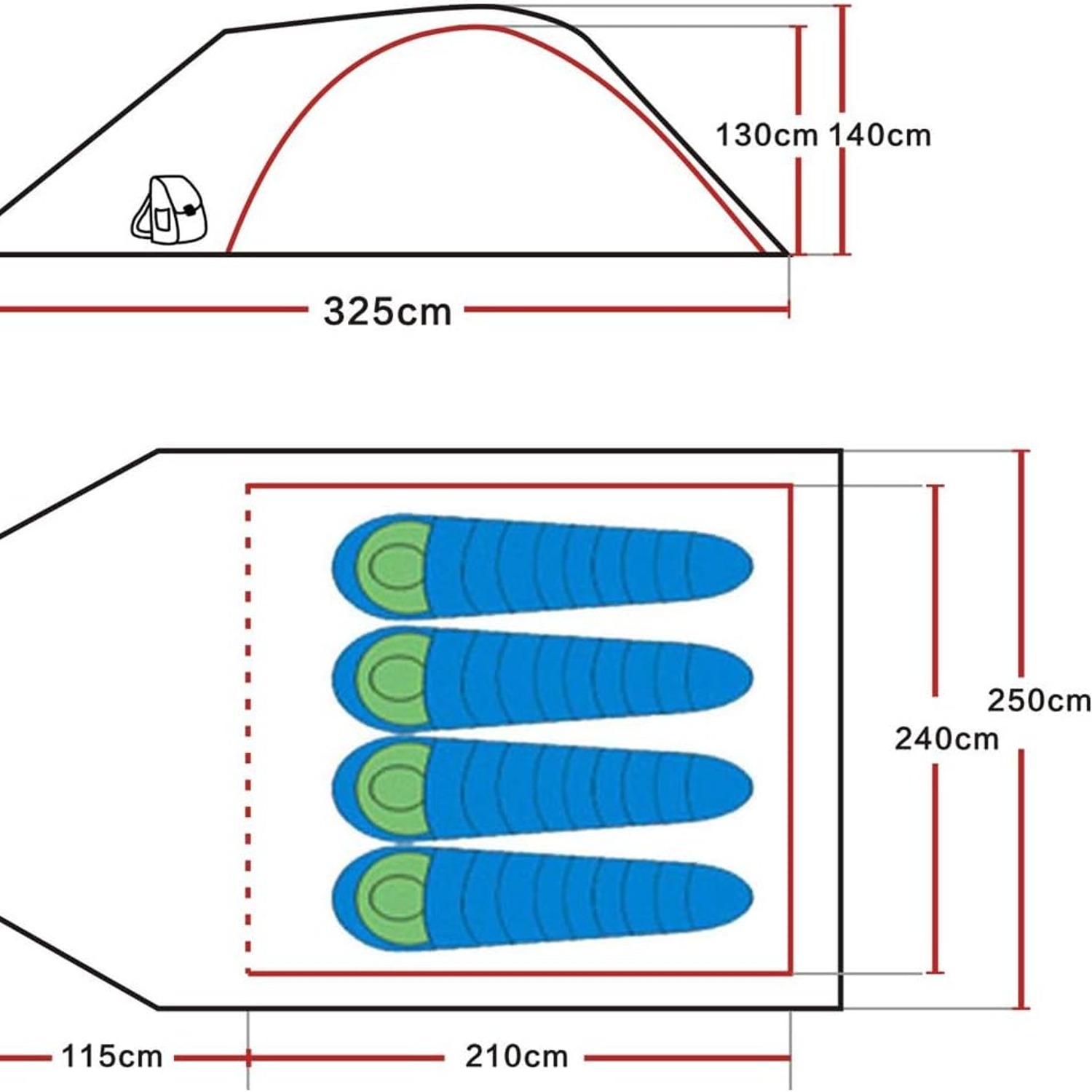
The useful numbers are the ones you can measure. Floor length is 325 cm. Floor area is 81,250 square centimetres. Maximum height is 140 cm.
Here is what that means in practice. Four people genuinely fit, and their bags go at their feet or stacked at the ends. Three people get comfortable, with proper room for a cooler and a lantern. Two people get something close to luxury, with space to sit out a wet afternoon and keep everything inside and dry.
The 140 cm height is sitting height, not standing height. You can sit upright, kneel to pull on a jumper, or lean on an elbow and read. You cannot stand to get dressed. For a dome this size that is completely normal, and the low profile is part of why domes handle wind well.
Setting it up without the argument
The poles are fibreglass, and there are two of them with a clip attachment system. Clips matter more than people expect. You lay the tent flat, build your poles, bend them into the arc, then walk around snapping clips on. Compare that to feeding a four metre pole through a narrow sleeve while it catches on every seam.
Listed assembly time is about 600 seconds, which is roughly ten minutes solo. Two people working together will beat that once they have done it before.
Do your first pitch in the garden, not at the campsite. Lay everything out, count the pegs, find out which pole goes where, and see how the fly lines up. Fifteen minutes at home saves you the frustrating version of that lesson in the dark.
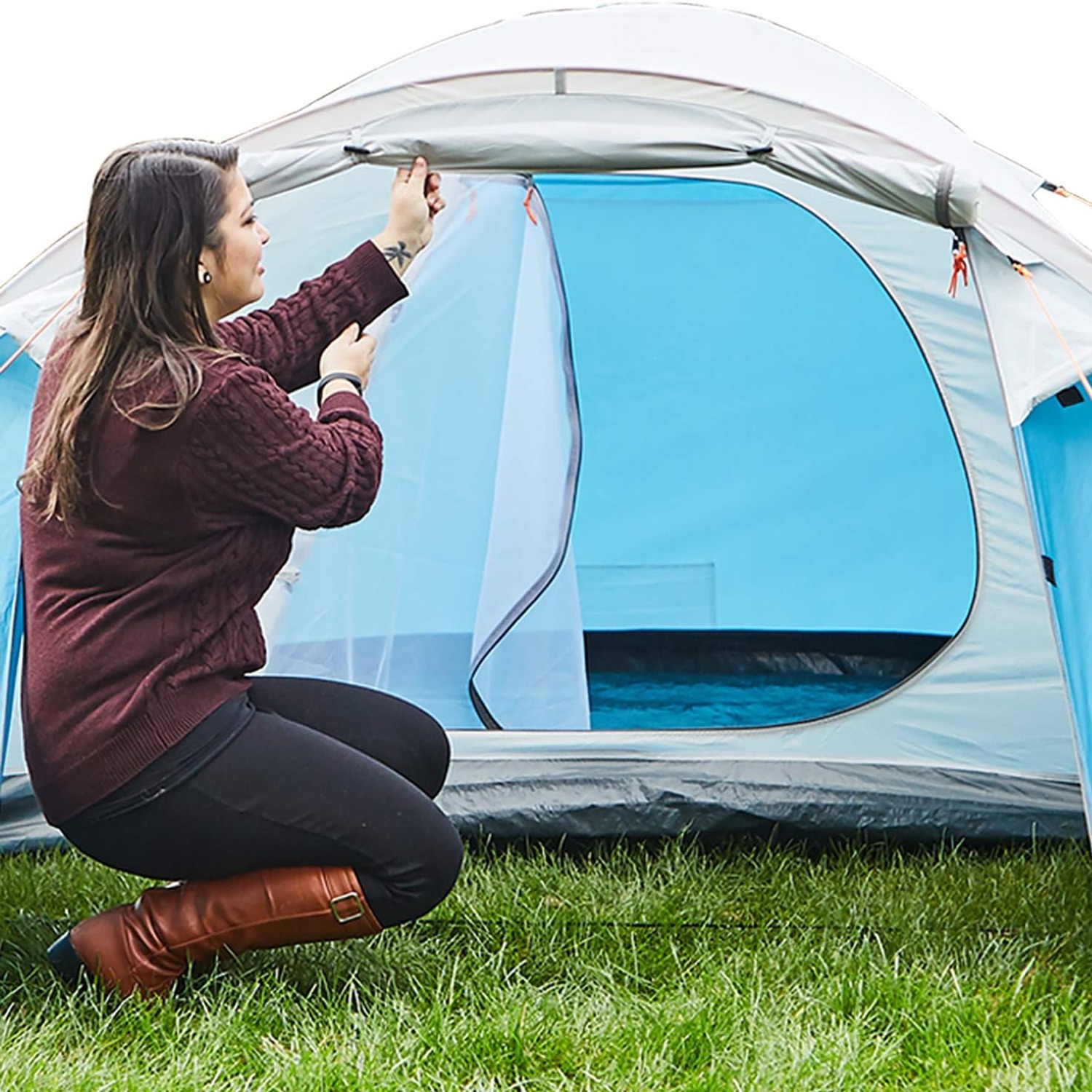
There is one door with a zip. With four sleepers, that means planning who sleeps nearest it. Light sleepers should take the far end.
Pegs, guylines and wind
There are four guylines. Use them. A freestanding tent that is not pegged is a very expensive kite, and the guylines are what stop the poles taking the full force of a gust.
Peg the four corners first and keep the floor taut, then run the guylines out at roughly a 45 degree angle and peg them firm. Stakes are listed as aluminium and plastic. On hard, stony ground plastic pegs bend easily, so carrying a few steel spares is cheap insurance. On soft sand, standard pegs pull straight out, so either bring sand pegs or bury filled bags as anchors.
Pick your pitch carefully too. Slightly raised ground beats a flat hollow every time, because hollows collect water. Point the low end of the dome into the prevailing wind if you can.
Who this tent suits
This is a car camping tent, a beach tent, a fishing trip tent and a festival tent. Recommended uses listed include beach, camping and hiking, fishing and travelling.
At 4.8 kg packed it carries easily from a boot to a pitch, which is what most people need. For multi day hiking where every gram counts, you would split the load across two packs or look at a lighter shelter.
It fits families with young kids especially well, because the floor is long enough that a parent and two small children have real room. Couples who want space for gear inside also do well here. Groups of four adults will fit, but should expect bags outside under the fly.
Looking after it
Tents almost never wear out. They get ruined in storage.
The single rule is dry before packing. If you have to pack up wet, pitch it again at home or hang the fly over a rail as soon as you can. Fabric left damp in a bag grows mildew within days, and mildew does not come out.
Brush off dirt and sand before rolling it. Sponge marks with cool water and a little mild soap. Keep it away from detergents, bleach, solvents, washing machines and dryers, all of which strip coatings. Rinse zips with fresh water after beach or coastal trips, since salt and sand together destroy a zip faster than anything else.
Store it loose rather than crushed tight, somewhere cool, dry and out of direct sun. Ultraviolet light is the other quiet killer of tent fabric, so avoid leaving it pitched in full sun for weeks at a time.
The short version
This is a 4.8 kg, four person double layer dome in blue, with two fibreglass poles, clip attachment, a polyester rainfly, a polyurethane coated polyester floor, one zippered door and four guylines. Floor length is 325 cm and peak height is 140 cm. It is freestanding, listed as waterproof and 4 season, and takes around ten minutes to pitch.
If you camp from a car with family or friends, want something you can put up without an argument, and value floor space over ultralight weight, this is the right shape of tent. Buy it as a four person tent if you need four. Buy it as a very comfortable two or three person tent if you would rather keep your gear inside and dry.