
The complete guide
How to Choose a Camping Kettle That Actually Earns Its Place in Your Pack
The problem with boiling water outdoors
Everyone who has camped more than once has the same story. You get to the site late, the light is going, and all you want is a hot drink. So you dig out a saucepan, balance it on the stove, and twenty minutes later you are pouring boiling water from a wide pan with no spout, over the side of a mug, onto your hand.
Boiling water in a pot works. It just works badly. The pot has no spout, so pouring is a two-handed, squinting, hope-for-the-best operation. It has no lid worth the name, so the wind steals the heat and ash lands in your water. And because nothing tells you when it is ready, you either stand over it or you come back to half the water gone.
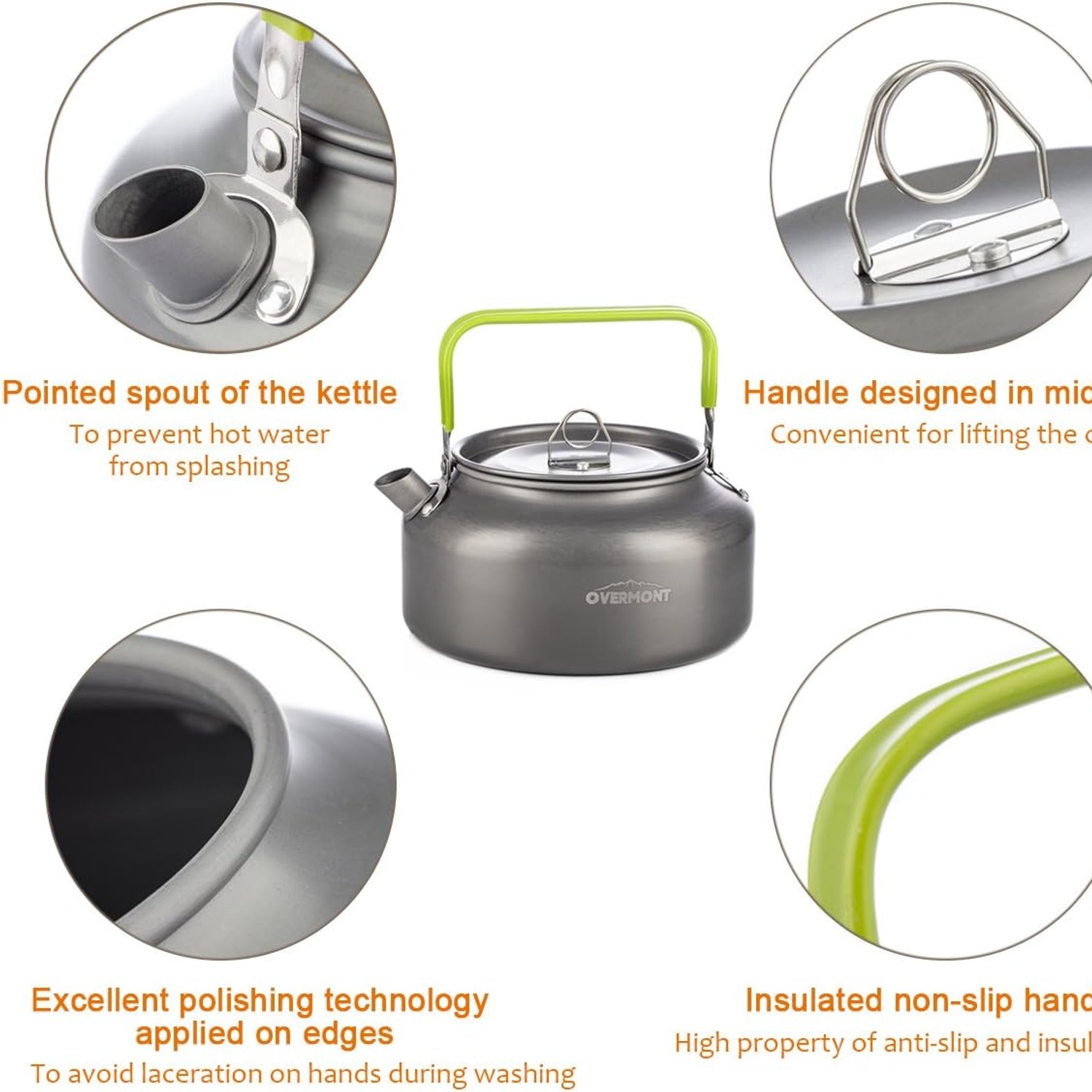
A kettle fixes all of that for a few hundred grams. That is the entire argument. A proper spout aims the water where you point it. A lid holds the heat in and the grit out. A whistle means you can go and do something useful while the stove does its job.
What a lightweight hiking kettle is actually doing
There is nothing complicated going on here. A kettle is a sealed vessel with a controlled opening. Heat goes in through the base, the water convects, and when it hits a rolling boil the steam has only one way out, through the narrow spout. Force enough steam through a small gap with a whistle fitted and you get a noise.
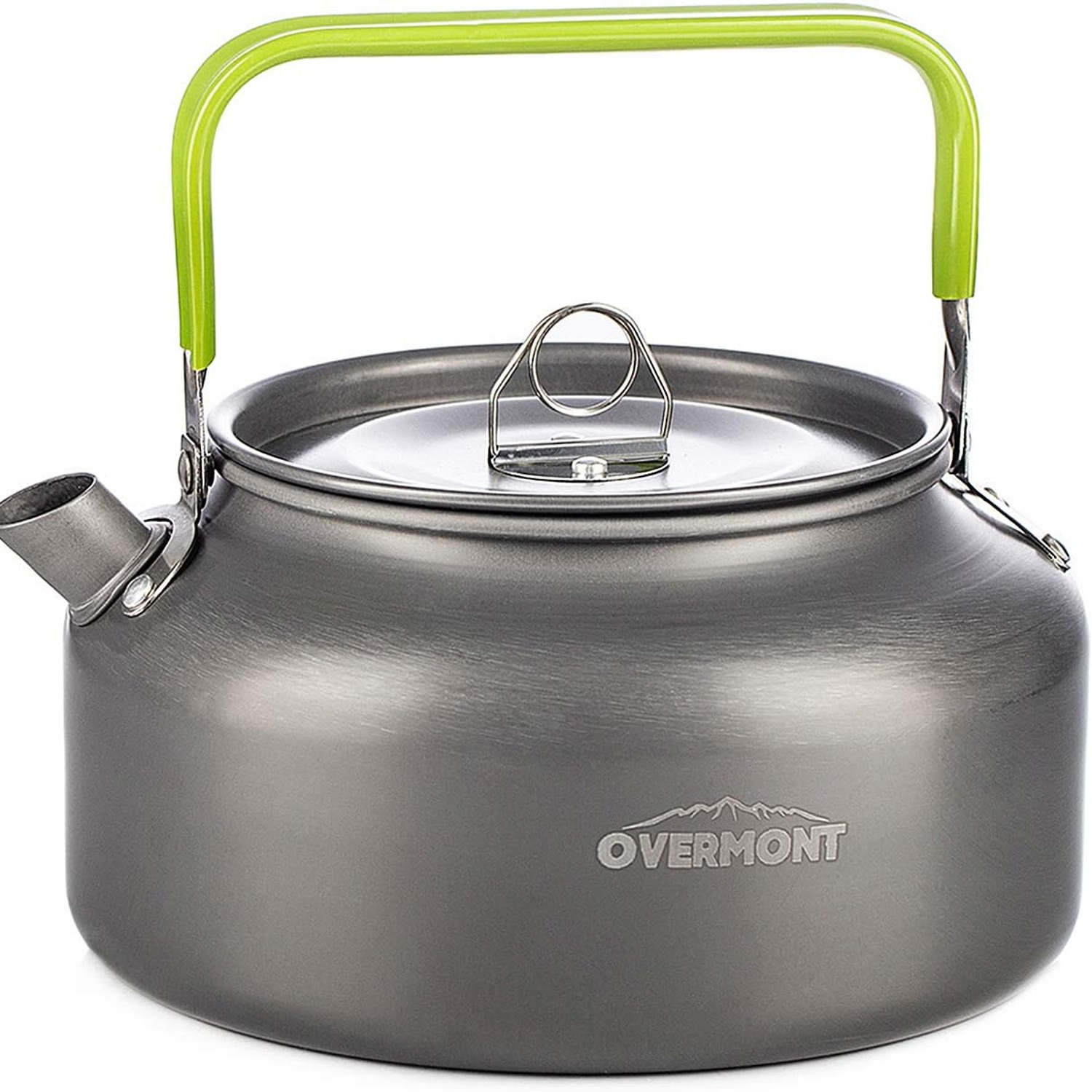
Material choice is where the thinking happens. Aluminium conducts heat quickly and weighs very little. That combination is why it has been the default for camp cookware for generations. This kettle uses aluminium for the body, which is how it gets to 318 grams for a 1.2 litre capacity. A stainless steel kettle of the same size would be noticeably heavier.
The trade-off is that aluminium is softer. It dents if you drop it on rock and it scratches if you attack it with steel wool. Neither affects whether it boils water. A dented camp kettle with a sooty base is a sign of use, not a sign of failure.
The lid on this one is stainless steel, which makes sense. The lid gets grabbed, dropped and rattled around in a pack more than any other part, so a harder metal there is sensible. The handle is wrapped in silicone, giving you a surface to hold that is not raw hot metal.
Who this suits
Think about how you actually camp before you buy anything.
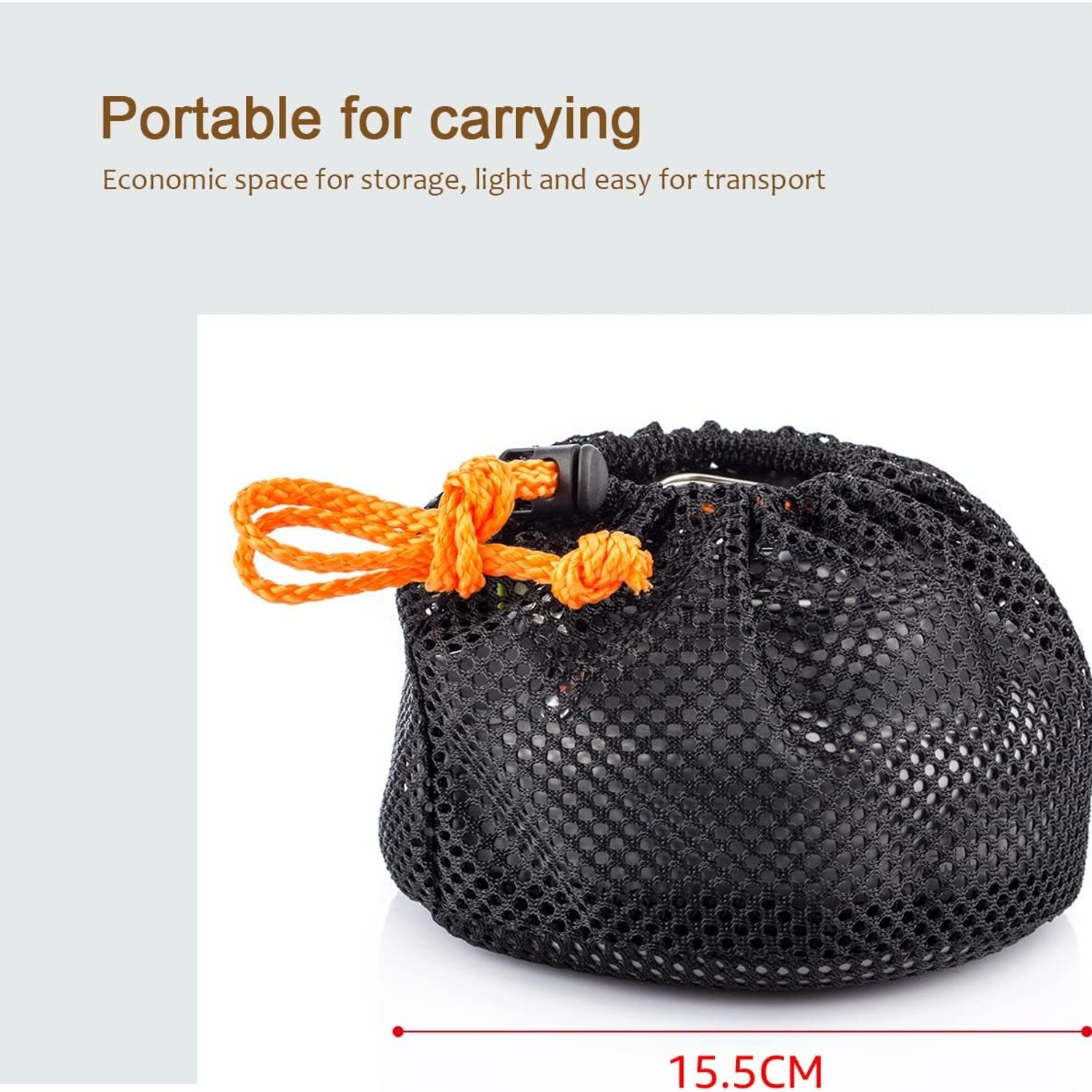
If you walk in with everything on your back, weight is the whole conversation. At 318 grams this sits in the range people are willing to carry for the convenience of a real spout. Some ultralight hikers skip a kettle entirely and boil in their mug, which is fine for solo trips and miserable for two people.
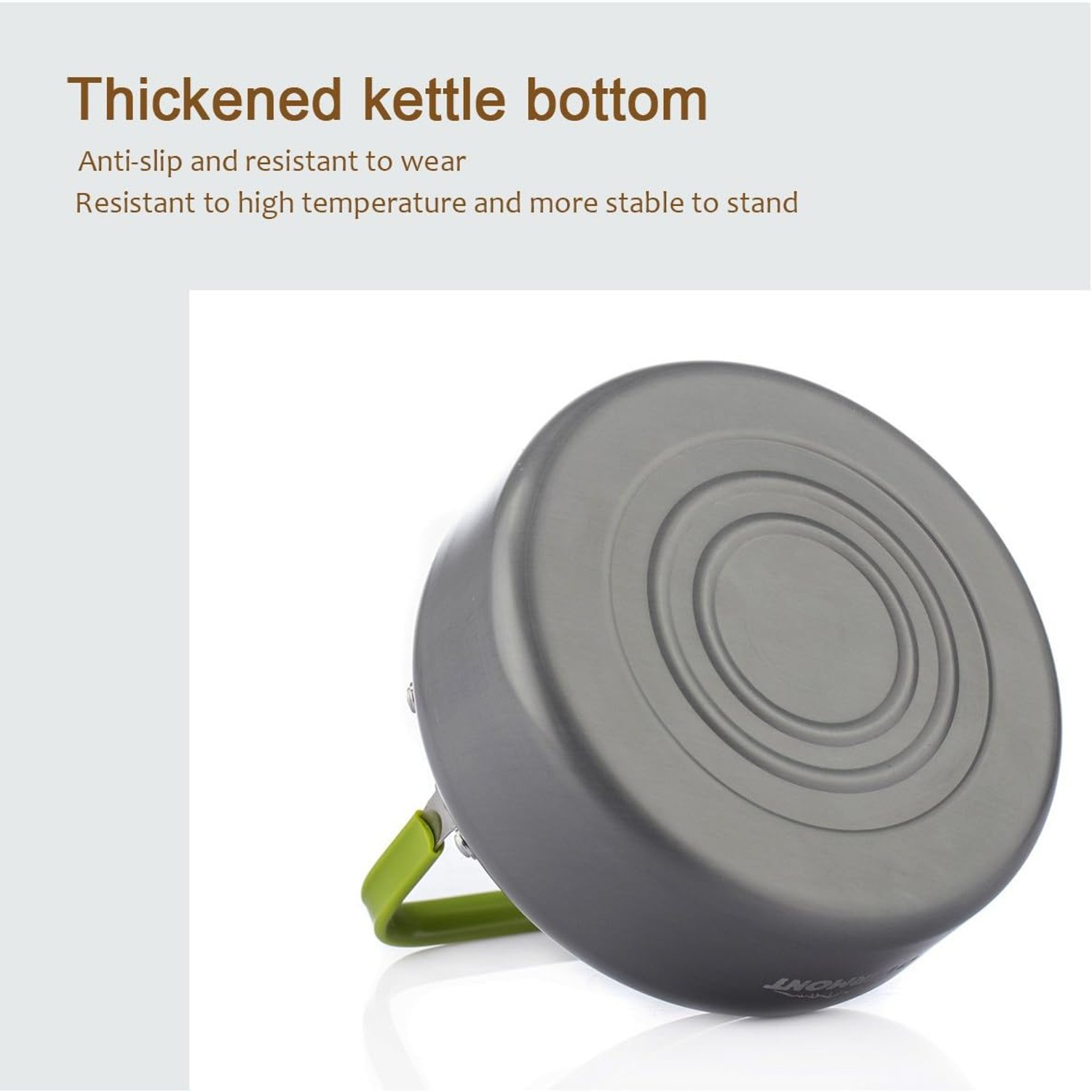
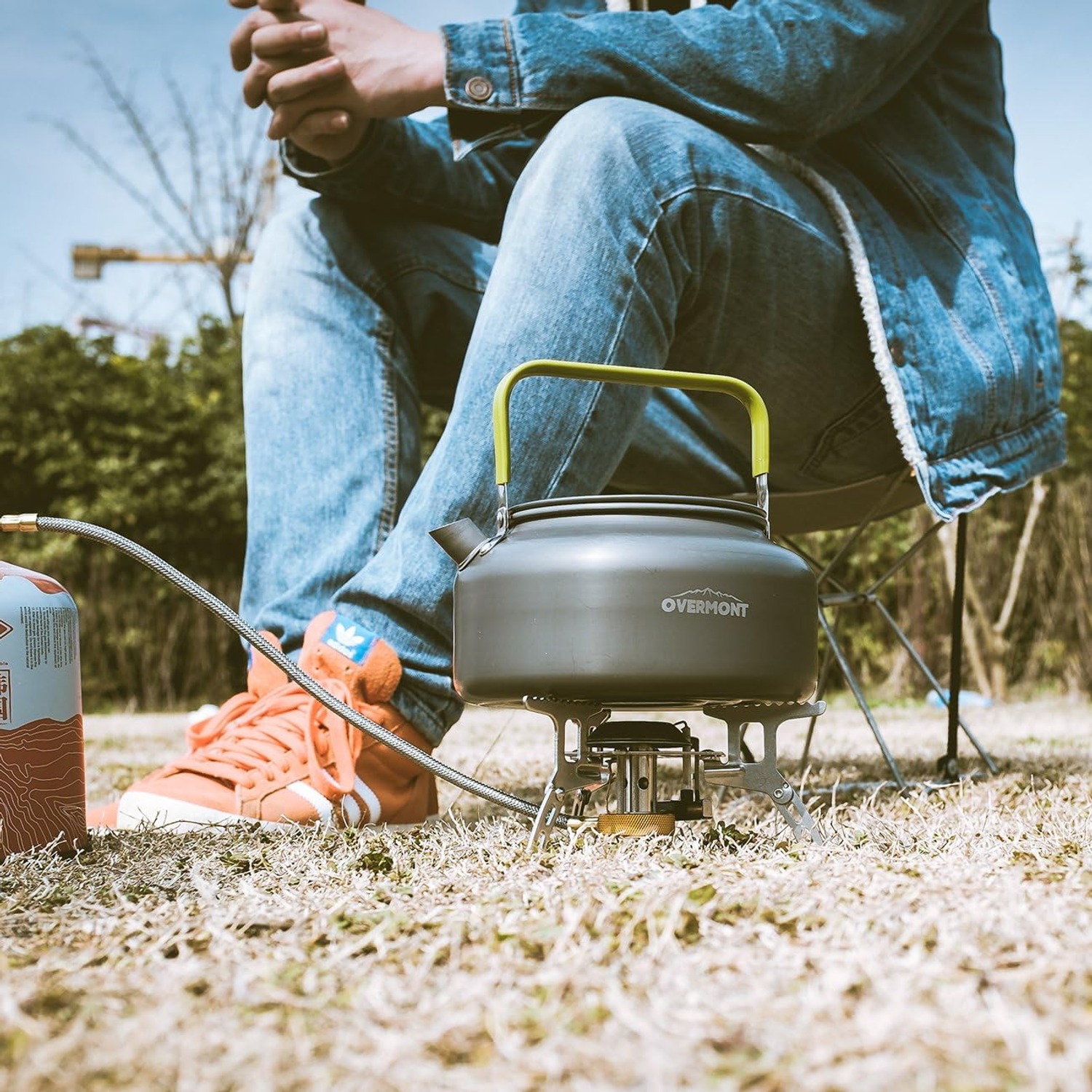
If you car camp or van camp, weight matters less but size and stability matter more. The 17 x 17 x 10 cm shape is low and wide, which is exactly what you want on a camp stove that is sitting on a slightly wobbly folding table. Tall narrow kettles tip. This one is harder to knock over.
If you are cooking for a group, 1.2 litres is a sensible single-serve round. Four mugs of tea, or two mugs plus water for a dehydrated meal. Beyond four or five people you will be refilling, which is fine but worth knowing.
And if you fish, hunt, do roadside picnics or live out of a vehicle part-time, this is the sort of kit that stays in the boot permanently. It costs you almost no space.
How to choose between the options
Capacity. Be honest about your group size. Undersized kettles mean constant refills. Oversized ones mean carrying metal you never fill. For one to three people, somewhere around a litre is the usual landing point, and 1.2 litres gives you a bit of headroom.
Weight. Compare like with like. A 318 g aluminium kettle versus a stainless one at twice that weight is a real difference on a long walk and no difference at all if you are twenty metres from the car.
Heat source. Aluminium works on gas stoves, over wood fires and on grill grates. It will not work on a home induction hob because aluminium is not magnetic. If you wanted one kettle for both the kitchen and the campsite, this is not it. If you want a dedicated outdoor kettle, that limitation does not matter.
The whistle. Some people find it indispensable and some find it annoying. Outdoors, in wind, with things to do, most people come round to it. It is genuinely useful when you are pitching a tent and cannot watch the stove.
Base shape. Wide and flat beats tall and narrow for both stability and heat transfer. More of the base sits in the flame, so less heat escapes up the sides.
Getting the most out of it
A few habits make a surprising difference.
Fill it below the brim. A kettle filled to the top spits boiling water out of the spout as it comes up to the boil, which is unpleasant and wasteful. Leave a couple of centimetres.
Match the flame to the base. A flame licking up the sides of the kettle is heat going into the air, not into the water. Turn it down until the flame sits under the base.
Shelter it. Wind steals an astonishing amount of heat. A simple windbreak, a rock, a pack, a proper screen, can cut your boil time significantly. This is the single biggest thing most people get wrong.
Boil only what you need. Heating 1.2 litres when you want one cup wastes fuel and time.
Use the included filter if you are brewing in the pot. If you are just boiling water for pour-over or instant sachets, leave it out and keep things simple.
Looking after it
This kettle is hand wash only, and that is the one care rule that genuinely matters. No dishwasher.
Let it cool first. Pouring cold water into a hot aluminium kettle is hard on the metal and can warp a thin base over time. Give it five minutes.
Wash with warm water, a small amount of mild detergent and a soft sponge or cloth. Avoid steel wool, scouring pads and abrasive powders. They scratch the surface and leave it dull and harder to clean next time.
Dry everything properly, body, lid and spout, before it goes back in your pack. A damp kettle in a stuff sack is how gear starts smelling.
Store it with the lid off or loosely resting rather than sealed tight, so air can move through. If it lives in a vehicle year-round, check it before each trip for anything that has crawled in.
Soot on the outside from campfire use is purely cosmetic. Scrub it off if it bothers you, bag it if it does not. Neither choice affects performance.
The short version
A 1.2 litre aluminium kettle at 318 grams is a small, specific tool that does one job properly. It boils water, pours it where you aim it, and whistles when it is ready. The stainless lid handles the knocks, the silicone handle keeps your fingers off hot metal, and the squat 17 cm footprint sits steady on a camp stove or a grill grate.
It is not dishwasher safe and it will not work on induction at home. Within those limits, it is exactly the kind of gear that ends up living in your pack or the back of the car for years, picking up dents and soot and getting used every single trip.
If hot drinks outdoors matter to you, and for most people they matter more than they expect at six in the morning in the cold, this earns its space.