
The complete guide
Survival Tarp Buyer's Guide - Choosing a Reflective All-Weather Tarp
The problem with being cold, wet and a long way from the car
Most uncomfortable nights outdoors come down to two things. Water got in, or heat got out. Often both, in that order.
Water is the sneaky one. You can pitch a perfectly good tent on damp ground and still wake up clammy, because moisture rises out of the soil all night and condenses on everything you own. Heat loss is the other half. Your body throws off warmth constantly, and most of it simply radiates away into cold air and cold ground. A sleeping bag slows that down. It does not stop it.
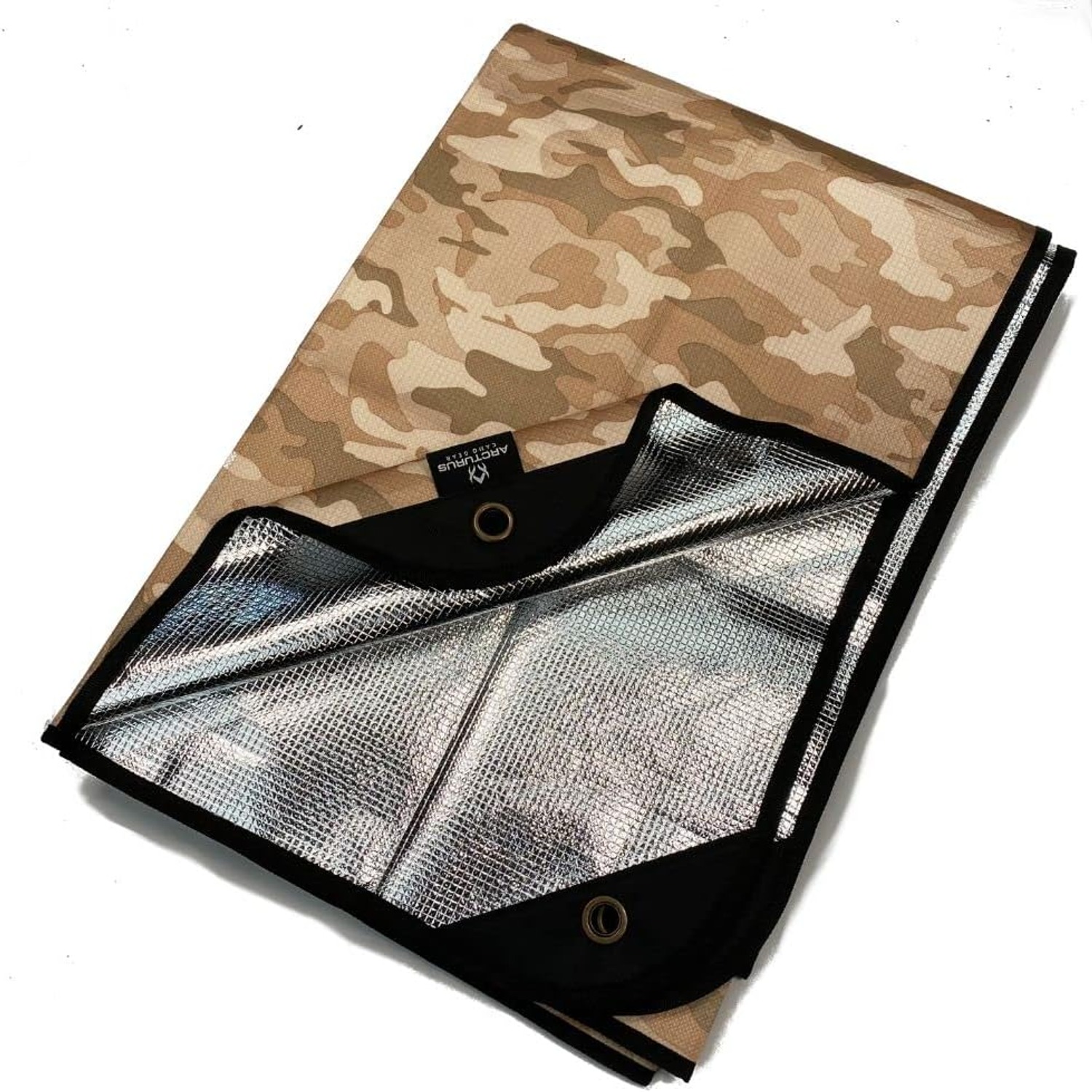
A reflective survival tarp attacks both problems with one piece of kit. Put the waterproof side against the ground and moisture stays below you. Put the reflective side toward your body and a good share of the radiant heat you are producing gets sent back. Neither is magic. Together they change the night from grim to manageable.
How a reflective thermal tarp actually works
There are three ways you lose heat outdoors. Conduction, which is cold ground pulling warmth out of you by direct contact. Convection, which is wind stripping warm air off your body. Radiation, which is heat leaving you as infrared, the same way a fire warms your face across a gap.
Most camping gear handles the first two. Mats block conduction. Tents and jackets block convection. Radiation is the one people forget, and it is the one a reflective face handles well. Aluminised Mylar bounces infrared back the way it came. Hold your hand near one on a cold night and you can feel your own warmth coming back at you.
The clever part is that the effect runs both ways. Turn the shiny face outward and you have a radiant barrier that keeps heat from getting in. That is why people throw these over a tent at midday in summer, or rig one as a sun shade on a boat. Same tarp, opposite job, decided entirely by which way you flip it.
On this one the reverse side is two layers of polypropylene. Polypropylene is worth knowing about because it does not absorb water. Cotton soaks. Nylon wets out and takes time to dry. Polypropylene just lets water sit on the surface and run off. That makes it a dependable ground sheet and a dependable roof, and it is also why the tarp dries quickly when you shake it out.
Who this suits
Campers who want fewer items doing more jobs. If you are already carrying a tent, a ground sheet and an emergency blanket, this replaces two of them and backs up the third.
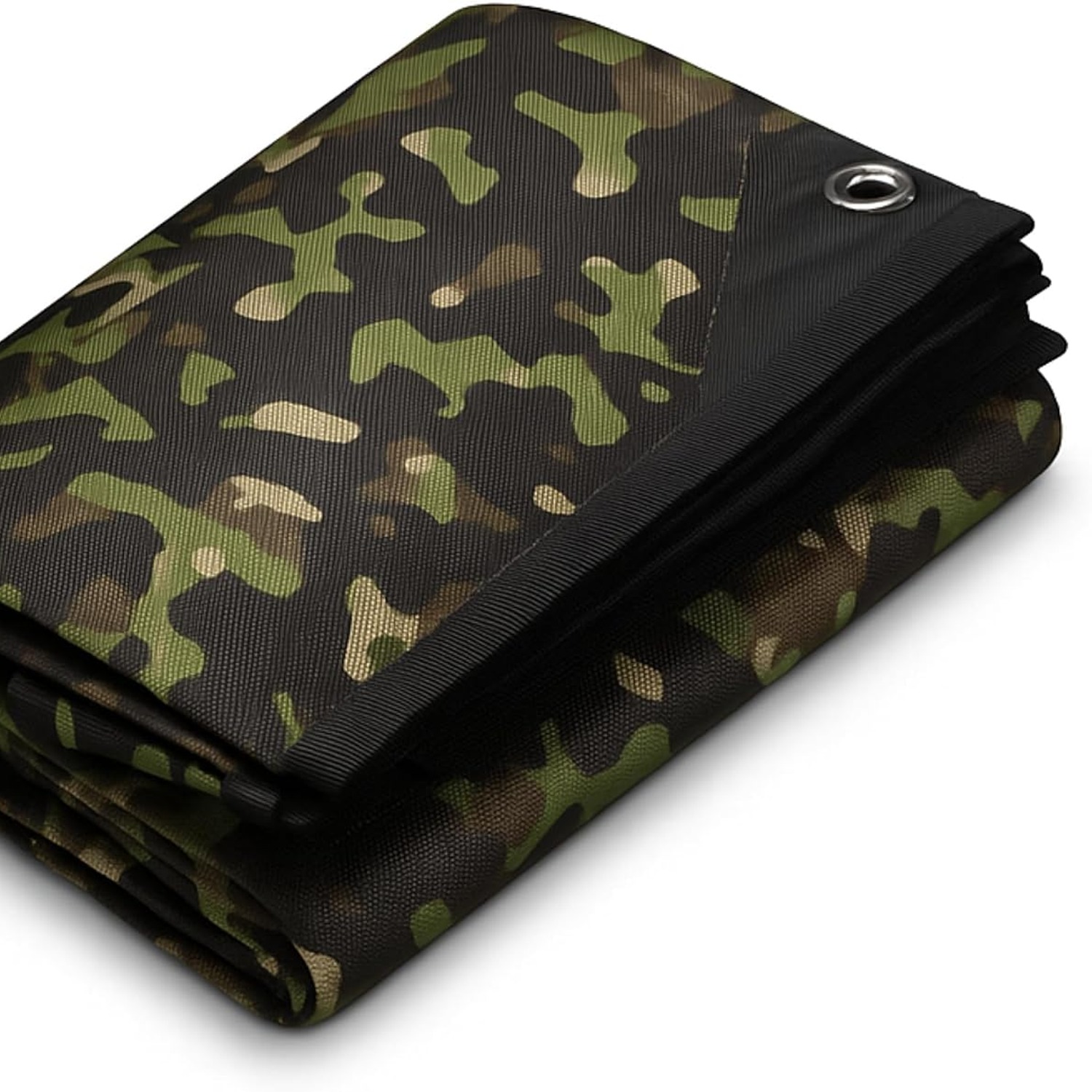
Hunters and anyone who wants to stay low key. The Woodland Camo face is quiet against bush and scrub. Flip it only when you want to be seen.
Four-wheel drivers, boaties and anyone who travels remote. This is the sort of thing that sits in a boot or a locker for two years doing nothing and then earns its price in a single afternoon. A breakdown on a cold road, an unexpected night out, a passenger who got soaked. Any of those is enough.
People building a preparedness kit. If you are assembling a bug out bag, a reusable tarp with grommets beats a stack of single-use foil sheets, and it holds up to being packed and repacked. Many kit builders rate it among the best mylar survival blanket options for exactly that reason.
Backpackers should think a little harder. At 1.63 kg it is not an ultralight shelter. If every gram matters on a multi-day walk, a dedicated silnylon tarp will be lighter. If you want something tough that will not shred on the first sharp rock, this is the stronger choice.
How to choose a survival tarp
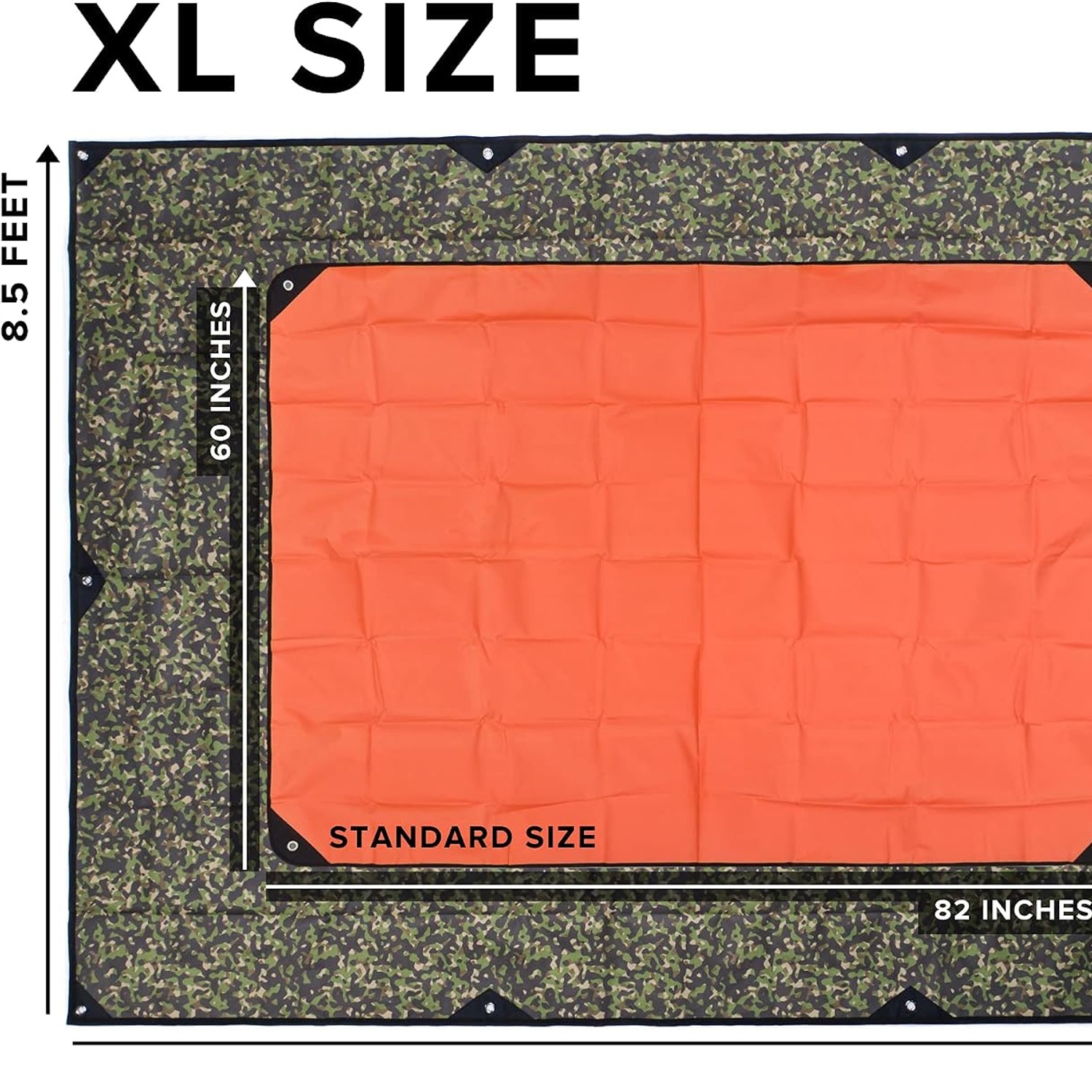
Start with size. This one is 2.59 m by 1.52 m. That is roomy enough for one person to wrap in with margin, or two people sitting out a squall, or a ground sheet under a small tent. Bigger tarps give more shelter options but take longer to rig and catch more wind. If you mostly want a blanket and a ground sheet, this size is the sweet spot.
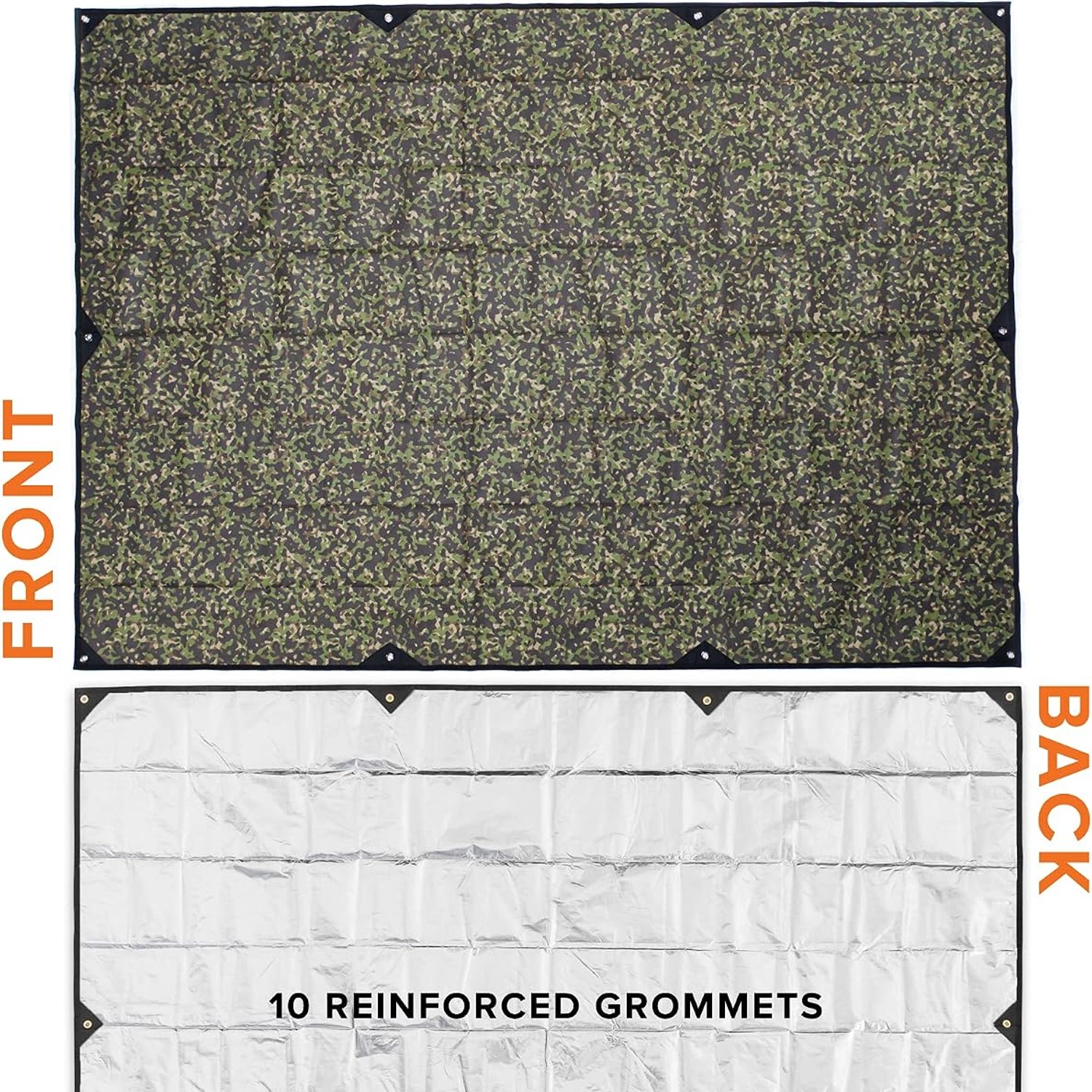
Then look at the anchor points. This is where budget tarps quietly fail. A grommet punched straight through thin sheeting will tear the first time a gust loads it. Ten reinforced grommets on nylon patches, with claw-style fittings that grab the patch rather than squeeze through it, give you something you can actually tension. Ten points also means you can rig a proper pitch, not just a flapping sheet with two corners tied off.
Think about weight honestly. There is always a trade between durability and grams. A disposable foil blanket weighs almost nothing and survives about one use. This weighs 1.63 kg and will go in and out of a pack for years. Decide which failure you would rather have.
Check what comes with it. A carry bag is included here, which matters more than it sounds. Tarps that live loose in a boot get shoved under jacks and toolboxes and come out creased and scratched. A bag keeps it folded and findable.
Consider visibility. One side camo, one side bright and reflective. That gives you a choice most single-colour tarps do not. Hide or be found, depending on the day.
Rigging it without overthinking it
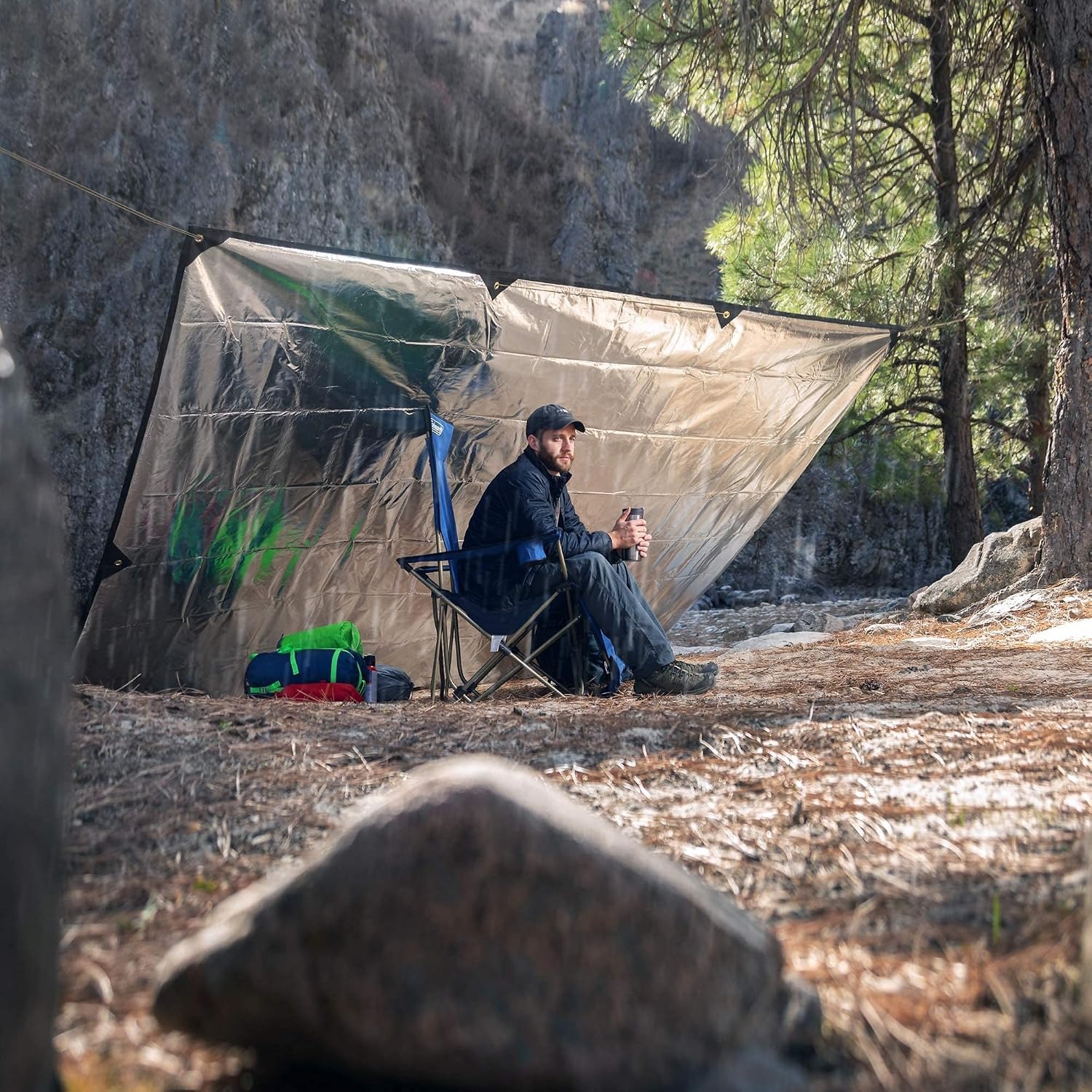
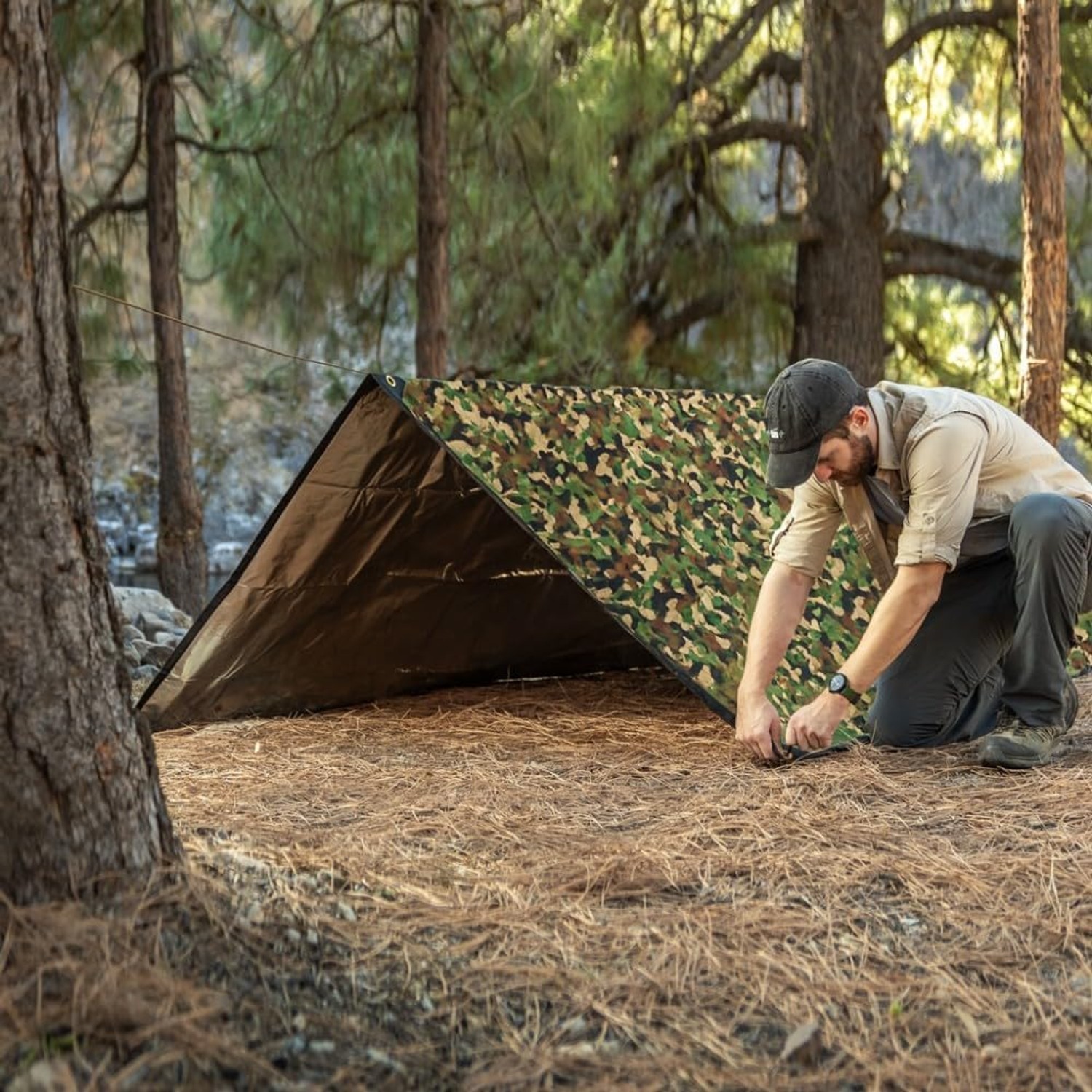
The simplest useful pitch is the lean-to. Tie the two long-edge grommets to a line between two trees at about chest height. Pull the opposite long edge down to the ground and peg it. You now have a roof, a back wall and an open front. Face the open side toward your fire with the reflective surface inward and the warmth bounces back at you instead of disappearing into the trees.
An A-frame is the next step. Run a ridge line between two anchors, drape the tarp over it, and peg both long edges out at an angle. That sheds rain from both sides and handles wind better, though you lose the open view.
For vehicle camping, tie two grommets to a roof rack and peg the other side out with poles or sticks. Instant awning.
Whatever you rig, spread the tension across several grommets rather than loading one. And leave a bit of slack in the fabric so wind can move it slightly instead of snapping it taut against a single point.
Looking after it
This is low-maintenance gear, but a few habits make it last.
Shake the dirt and leaves off before you fold it. Grit trapped in a fold slowly abrades the reflective layer.
If it needs cleaning, sponge it with cool water and a mild detergent. Skip the washing machine, the dryer and the iron. Heat and reflective coatings do not get along.
Dry it completely before packing. Folding a damp tarp into a bag is how you end up with a musty one next season.
Keep it clear of flames, coals and stove exhaust. You can use it as a heat reflector near a fire, but keep real distance, because sparks will put holes in it.
Store it loosely folded in the carry bag, somewhere out of direct sun. Years of UV will degrade almost any synthetic, even one with UV protection built in.
The short version
A reflective survival tarp is one of the few pieces of outdoor gear that genuinely does several jobs well. Waterproof polypropylene on one side, heat-reflecting Mylar on the other, ten reinforced grommets so you can actually pitch it, and a carry bag so it stays usable between trips.
At 2.59 m by 1.52 m and 1.63 kg it is built for durability rather than minimum weight. If you want the lightest possible shelter for a long thru-hike, look elsewhere. If you want something that will live in a boot, a boat or a pack and still work in five years, this is the kind of thing worth owning before you need it.
Buy it for the trip you planned. Be glad for it on the one you did not.