
The complete guide
Choosing a Rechargeable Camping Lantern - A Practical Buyer's Guide
The problem with darkness at camp
Anyone who has set up a tent at dusk knows the feeling. You are holding a torch in your teeth, trying to thread a pole, and the beam is pointing at exactly the wrong thing. Torches are built to throw light forward. Camp is a place where you need light everywhere at once.
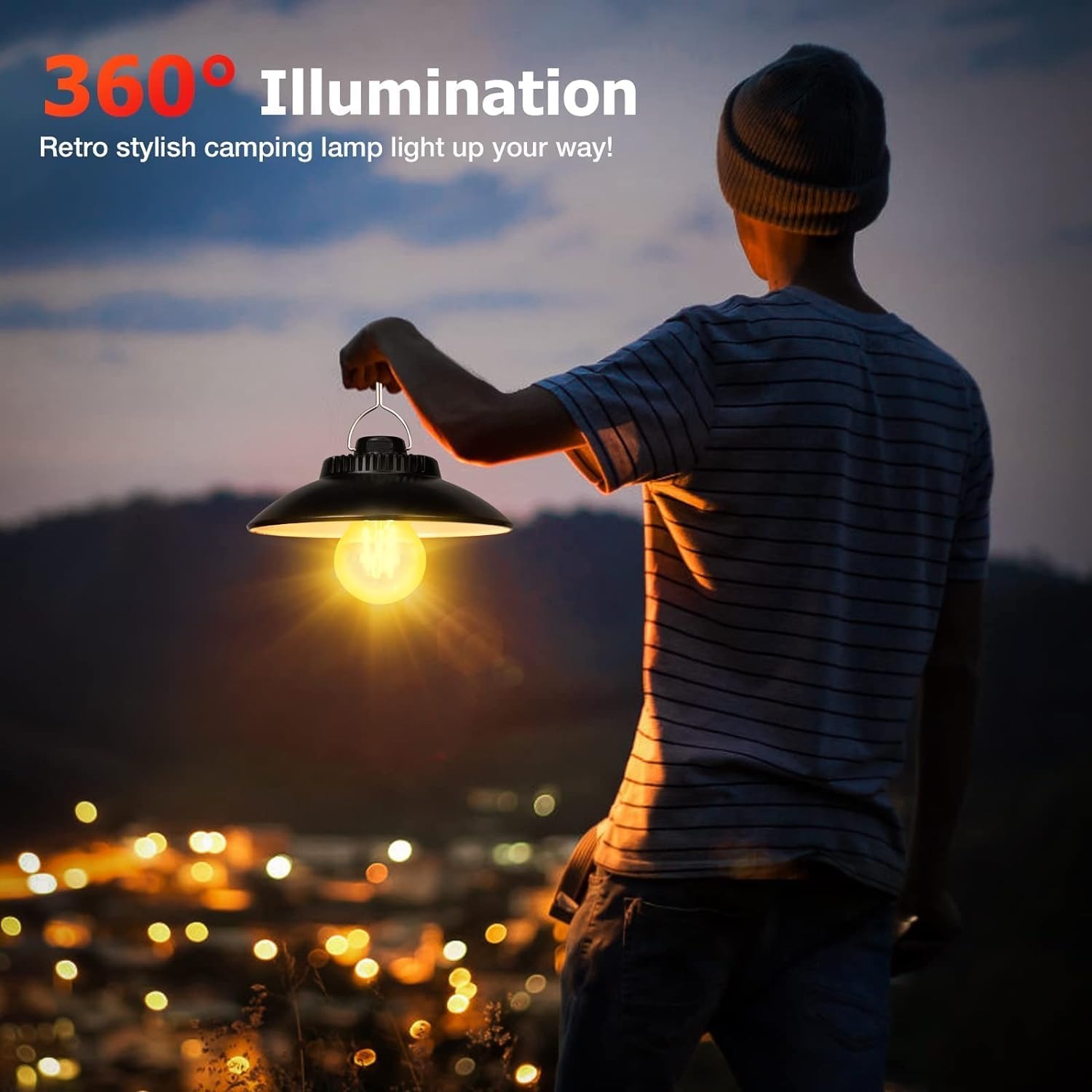
That is the gap a lantern fills. It sits in the middle of things and pushes light out in all directions, so the table, the stove, your hands and the person next to you are all visible at the same time. No one has to hold it. No one has to keep repointing it.
The old way to do this was a flame. Gas and liquid fuel lanterns gave a lovely warm light, but they came with fuel canisters, mantles that crumbled if you breathed on them, and heat you could not safely have inside a tent. LED lanterns replaced them for good reason. A rechargeable camping light gives you the same spread of light with no fuel, no fumes and nothing hot enough to burn a groundsheet.
How a rechargeable LED lantern works
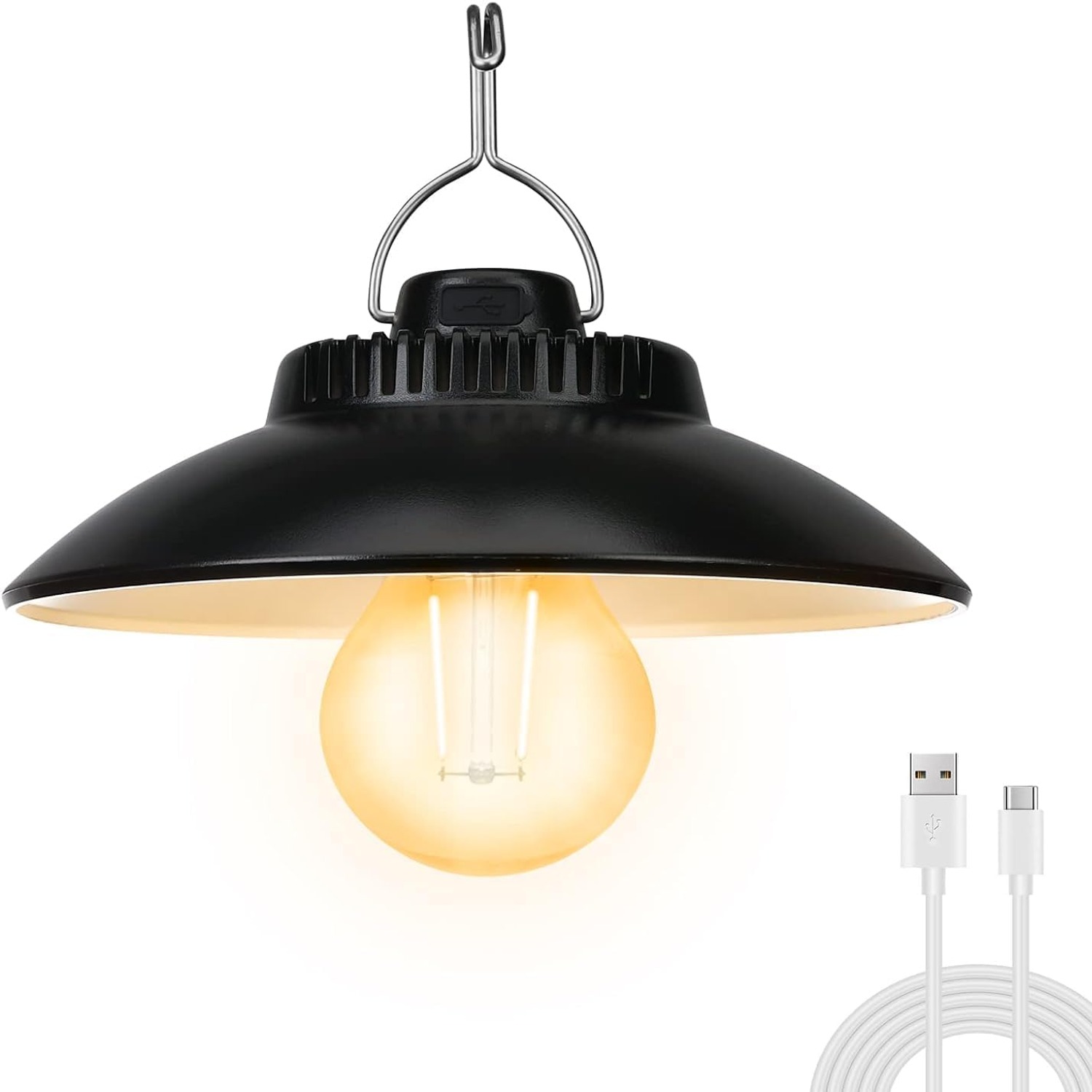
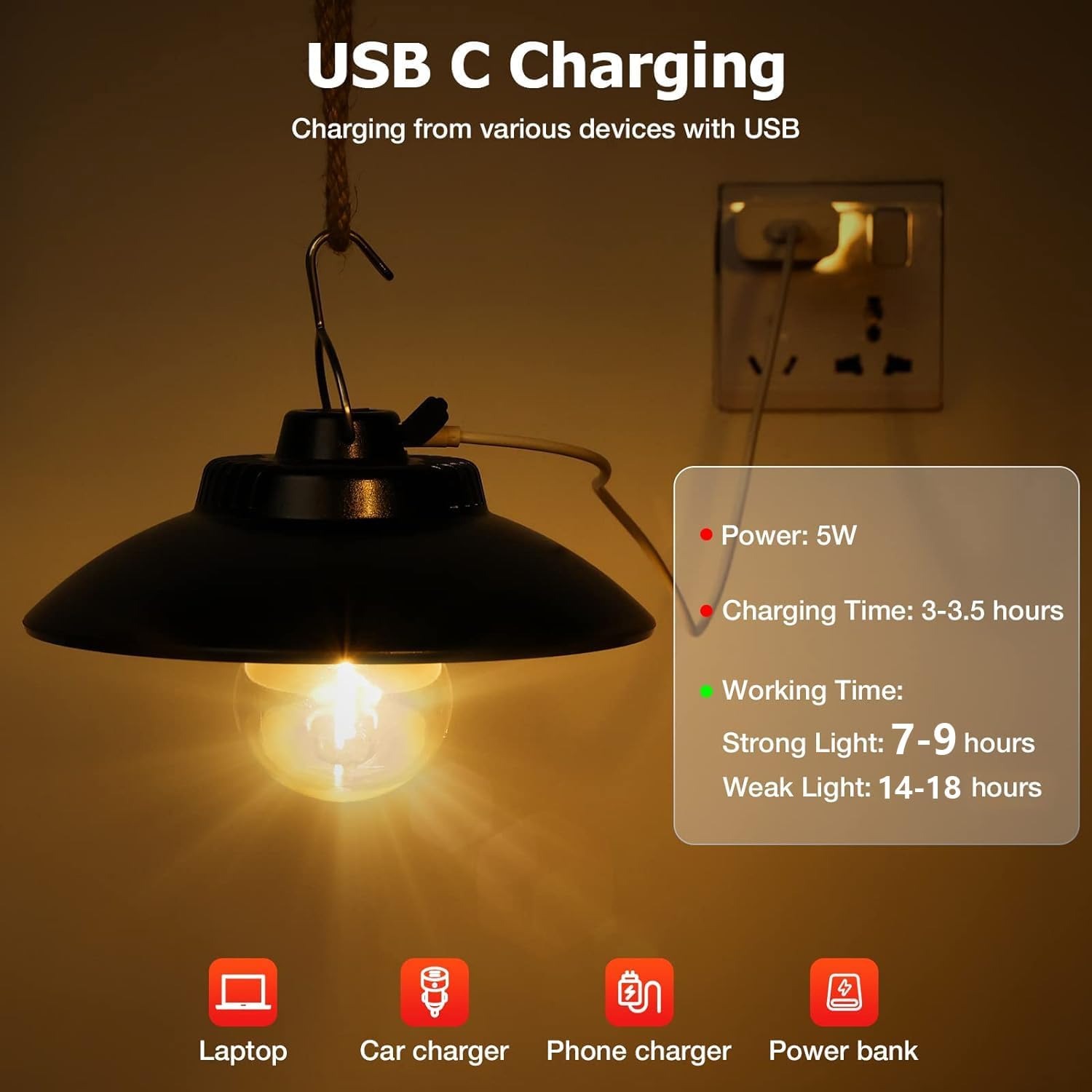
Inside this one is a single LED rated at 5 watts, running on 5 volts and 1 amp. Those are modest numbers, and that is the point. LEDs turn most of the power they draw into light rather than heat, so a small battery goes a long way.
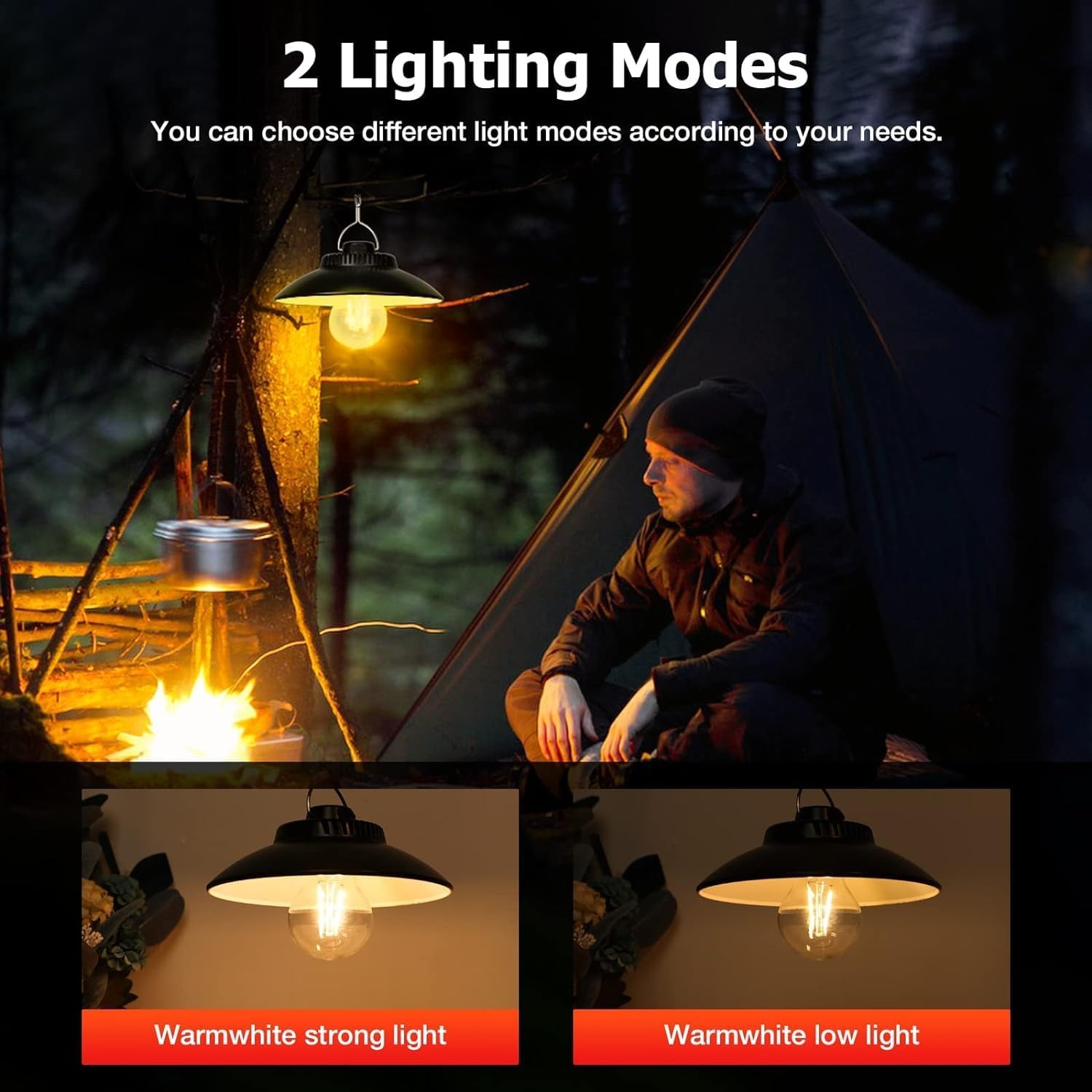
The battery here is a built-in 2600 mAh lithium cell. You do not open a hatch and feed it disposable batteries. You plug in a cable, let it fill up and unplug it. The stated battery life is 7.75 hours, which is a figure worth understanding properly. Runtime on any lantern depends on which setting you use, and this one has two.
Run it on full brightness continuously and you will be at the shorter end of the range. Run it on the lower setting, which is plenty for reading or eating, and you get noticeably more. Most people do a mix of both across an evening, which is why a single evening of normal use rarely drains a lantern like this.
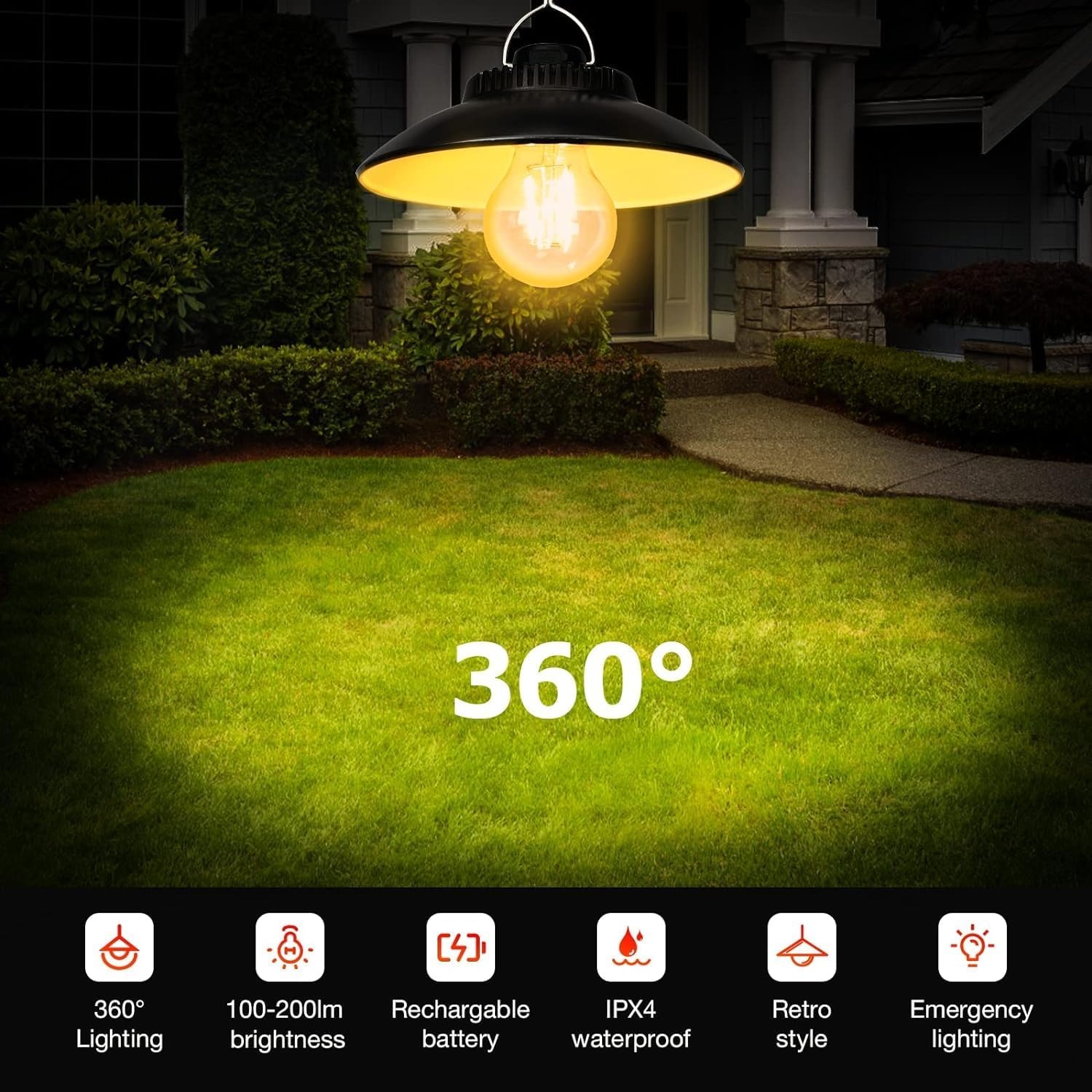
The 360 degree beam angle is the other half of the story. Light leaves the lantern evenly all the way around, so the quality of light in a tent is soft and even rather than a hard circle on one wall. Hang it from the ceiling loop and the whole inner glows.
Who this suits
Weekend campers get the most obvious use out of it. It is a tabletop size at 14.5 by 11 by 18.5 cm, so it packs into a camp box without a fight and still looks substantial on a picnic table.
Caravan and campervan owners tend to like a portable lantern because it is the one light that is not bolted to a wall. Carry it from the galley to the bed, hang it in the awning, charge it from the van's USB socket overnight.
It also earns its keep at home. A charged lantern on a shelf is one of the simplest things you can own for power cuts. When the lights go, you want something that lights a room, not a beam that lights one wall. People who keep a small emergency kit together usually have a battery camping lantern in it for that exact reason.
Then there is the ordinary domestic use. Garden tables, balconies, late barbecues, kids who want a light in the tent in the back yard. The retro look means it does not have to live in the shed between trips.
How to choose a camping lantern
Start with runtime, but read the number carefully. A lantern that claims a long life is almost always quoting its dimmest setting. Look at the brightness settings alongside the hours and think about how you will actually use it. Two settings, as on this lantern, cover most real scenarios without overcomplicating things.
Next, consider the charging method. A built-in rechargeable battery means no hunting for AA cells halfway through a trip, and no pile of dead batteries to dispose of. The trade-off is that you need power to refill it, so check that the charging method suits where you are going. If you can charge from a car socket or a power bank, you are fine almost anywhere.
Think about how it attaches to things. The integrated hook on this model matters more than it sounds. A lantern on a table lights the table. A lantern hanging above head height lights the whole area, casts fewer harsh shadows and stays out of the way of plates and elbows. If a lantern has no hook, you will find yourself balancing it on things.
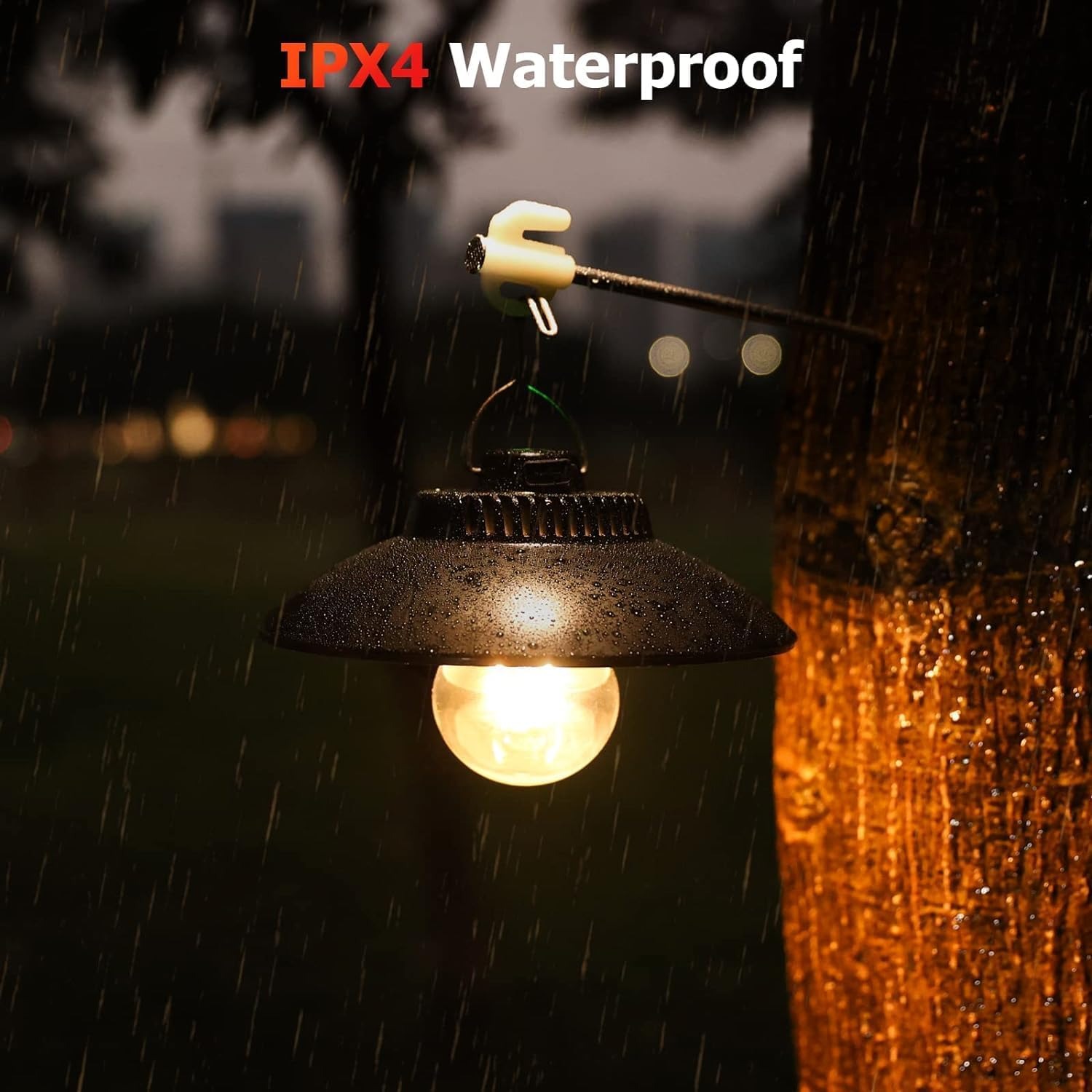
Water resistance is worth checking. This one is rated water resistant, which covers dew, drizzle and splashes. That is the right level for normal camping. It does not mean you can drop it in a river, and no sensible person would want to.
Size and build come last, but they matter for packing. ABS is a tough, light plastic used across outdoor gear because it takes knocks without cracking. The powder coated finish on this one looks the part and hides the inevitable scuffs from a crowded boot.
Getting the best from it in use
Charge it fully before you leave. It sounds obvious, and it is the single most common reason people end up disappointed with a lantern on the first night.
Use the lower setting as your default. Your eyes adapt to the dark surprisingly well, and full brightness is often more than you need once everyone is settled. Save the bright setting for cooking, packing and finding things.
Hang it where it does the most work. A tent ceiling loop, an awning pole, a low branch over the table. Light coming from above feels natural and does not dazzle people sitting opposite.
Keep a cable in the kit. Any cable that fits the port and supplies 5 V at 1 A will recharge it, so a spare in the glovebox means you are never stuck.
Looking after it
The care routine is short. Wipe the body with a soft damp cloth when it gets dusty or muddy and dry it before it goes away. Skip solvents and scouring pads, which will mark the finish.
Keep the charging port clean and dry. Grit in a port is the quiet killer of portable electronics, far more often than water is.
Battery care is simple too. Lithium cells do not like being stored flat for months on end. Top it up before you put it away for winter, and give it a charge every few months if it is sitting unused. Avoid leaving it in a hot car boot through summer, since heat ages a battery faster than use does.
The short version
A rechargeable LED lantern does one job well. It lights a space evenly, from the middle, without you having to hold anything. This one does it with a 2600 mAh battery, a stated 7.75 hours of runtime, two brightness settings, a 360 degree spread and a hook to hang it by.
It is a sensible size at 14.5 by 11 by 18.5 cm, made from ABS with a powder coated black finish, and rated water resistant for ordinary outdoor weather. No fuel, no flame, no spare batteries to buy.
If you camp a few times a year, keep a caravan, eat outside in summer or just want something reliable for power cuts, it covers all of those without needing a second thought. Charge it, hang it, use it.