
The complete guide
How To Choose A 6 Person Family Tent That Actually Fits Your Group
The problem with "sleeps six"
Tent capacity ratings are one of the more optimistic numbers in outdoor gear. When a tent says it sleeps six, that figure usually assumes six adults lying side by side with no gap between them and nothing else on the floor. No bags. No boots. No cooler. Nobody wanting to sit up and read.
In the real world, a family of four with two kids and a weekend's worth of gear will use every bit of a six person tent and be grateful for it. That is not a criticism of the rating system so much as a thing worth knowing before you buy. The useful question is not "how many people does it sleep" but "how much floor do I get, and how high are the walls".
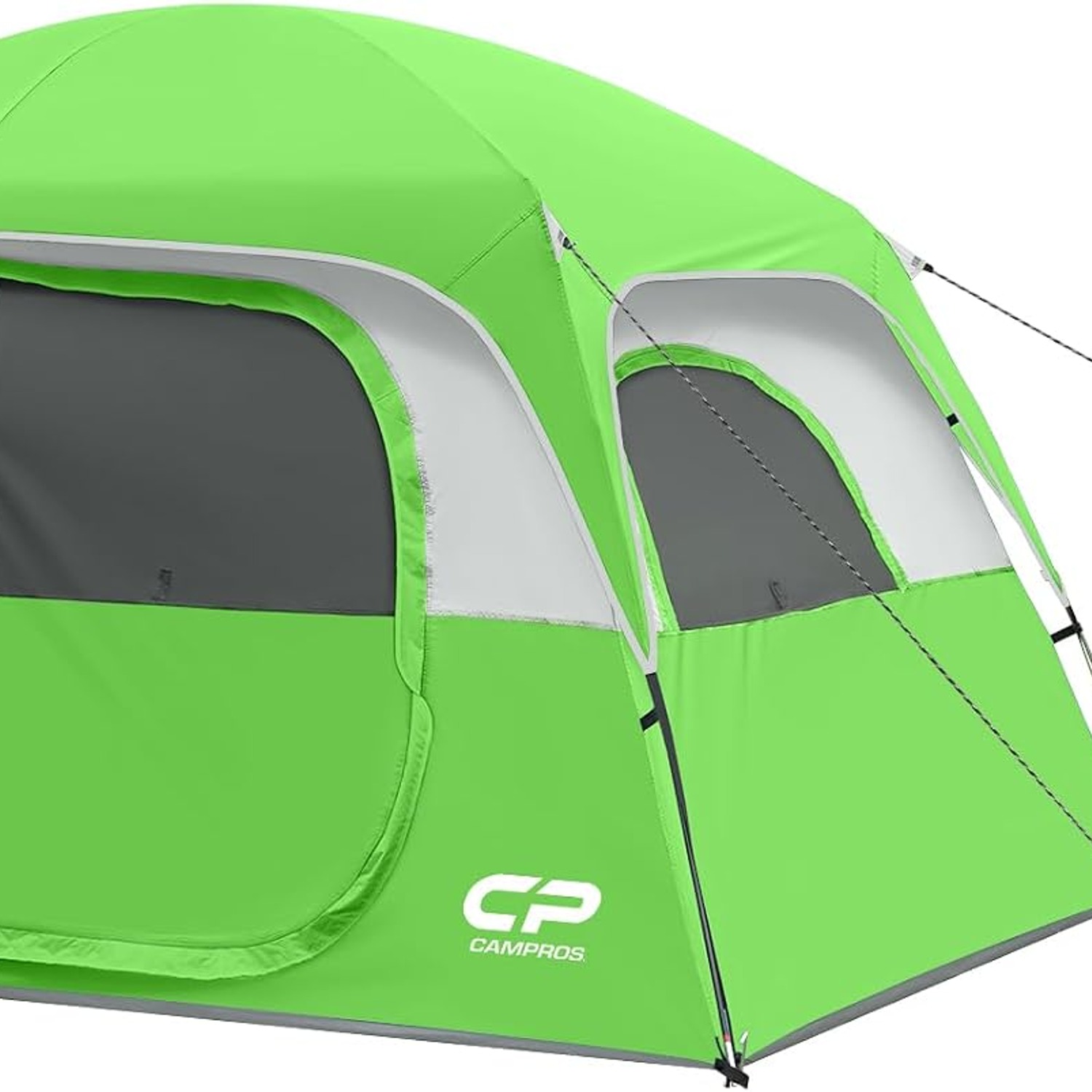
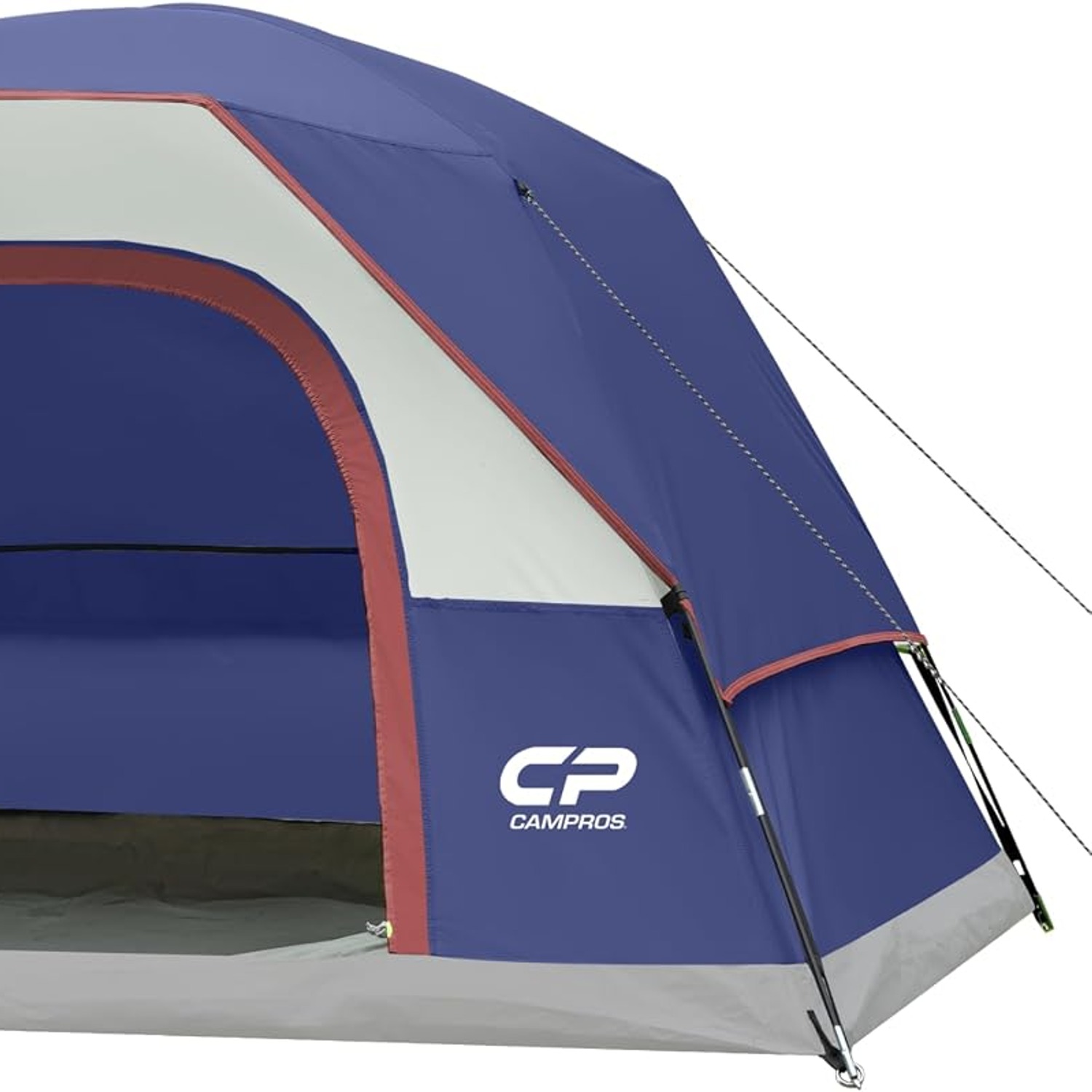
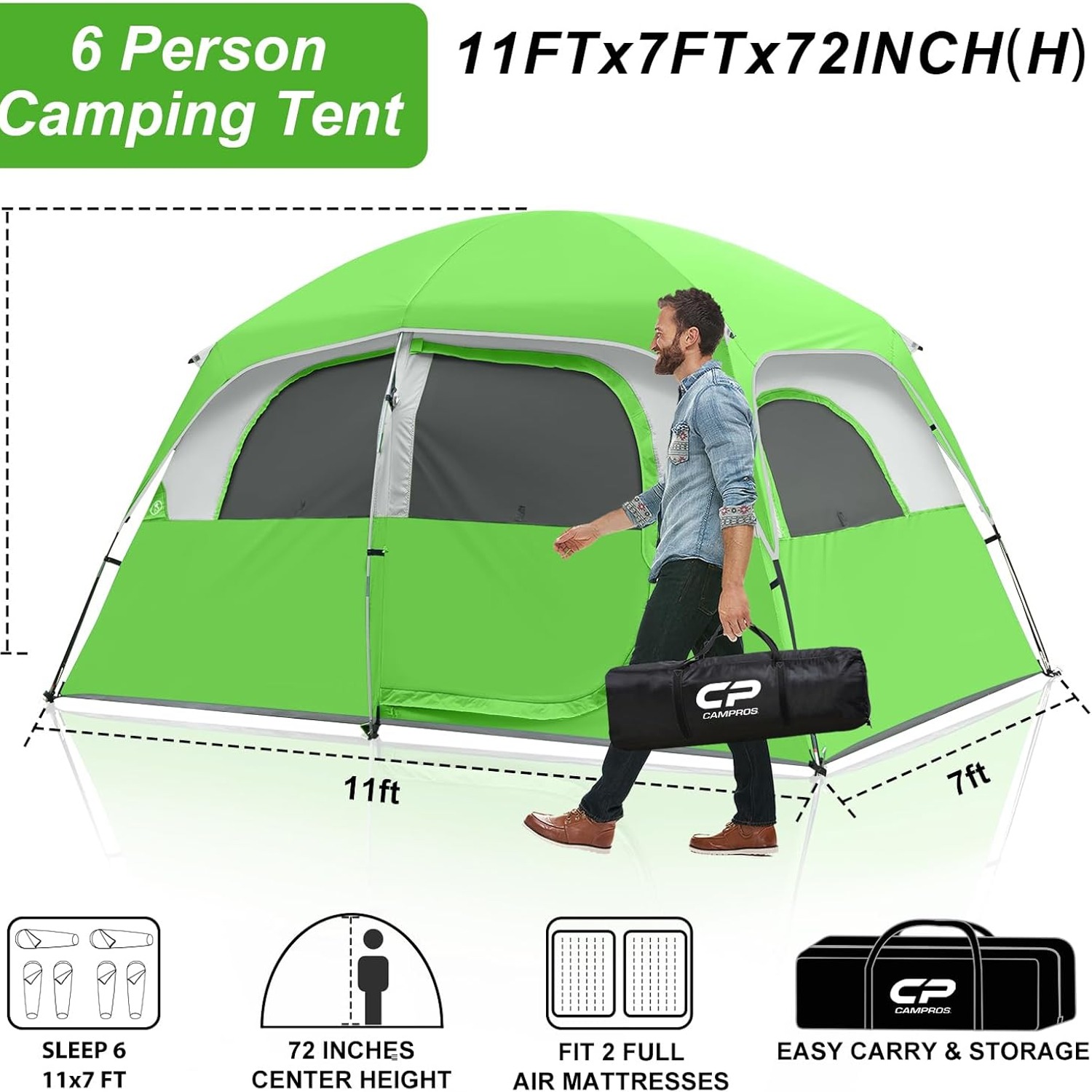
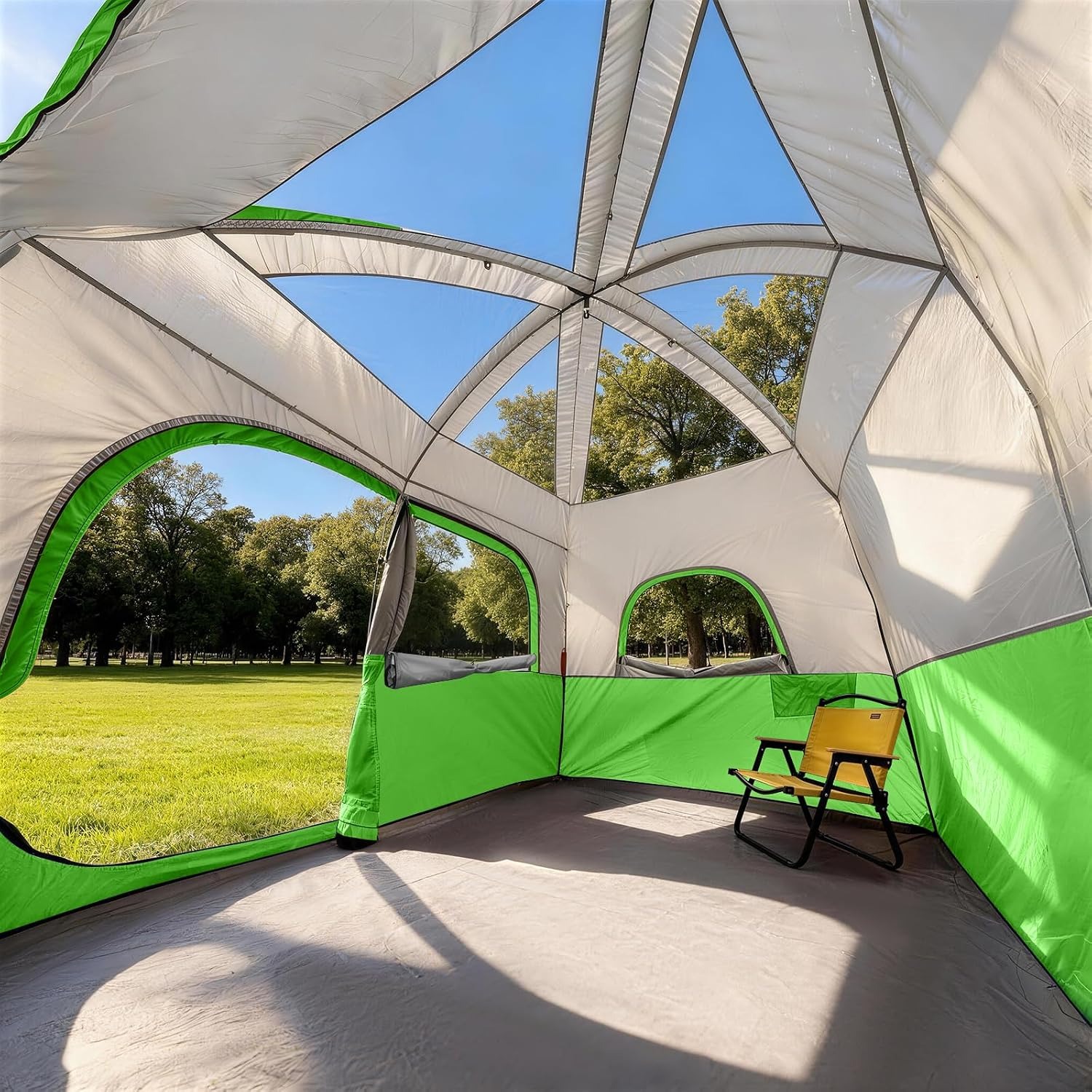
For this CAMPROS CP tent the answers are 3.35 m by 2.13 m of floor, roughly 77 square feet, and a 1.83 m centre height. That middle number is what makes the difference between a tent you crawl into and a tent you live in for a weekend.
Why cabin shape matters more than you think
There are two broad shapes in family camping. Dome tents have curved walls that lean inward from the ground up. Cabin tents have steeper, more vertical walls that go up before they go in.
The floor area on paper can be identical. The usable floor area is not. In a dome, the outer 30 cm or so of floor is under such a low ceiling that you can only really put a bag there. In a cabin, that same strip is still standing-height or close to it, so it becomes a place to keep boots, store a crate, or let someone kneel while they sort out a sleeping bag.
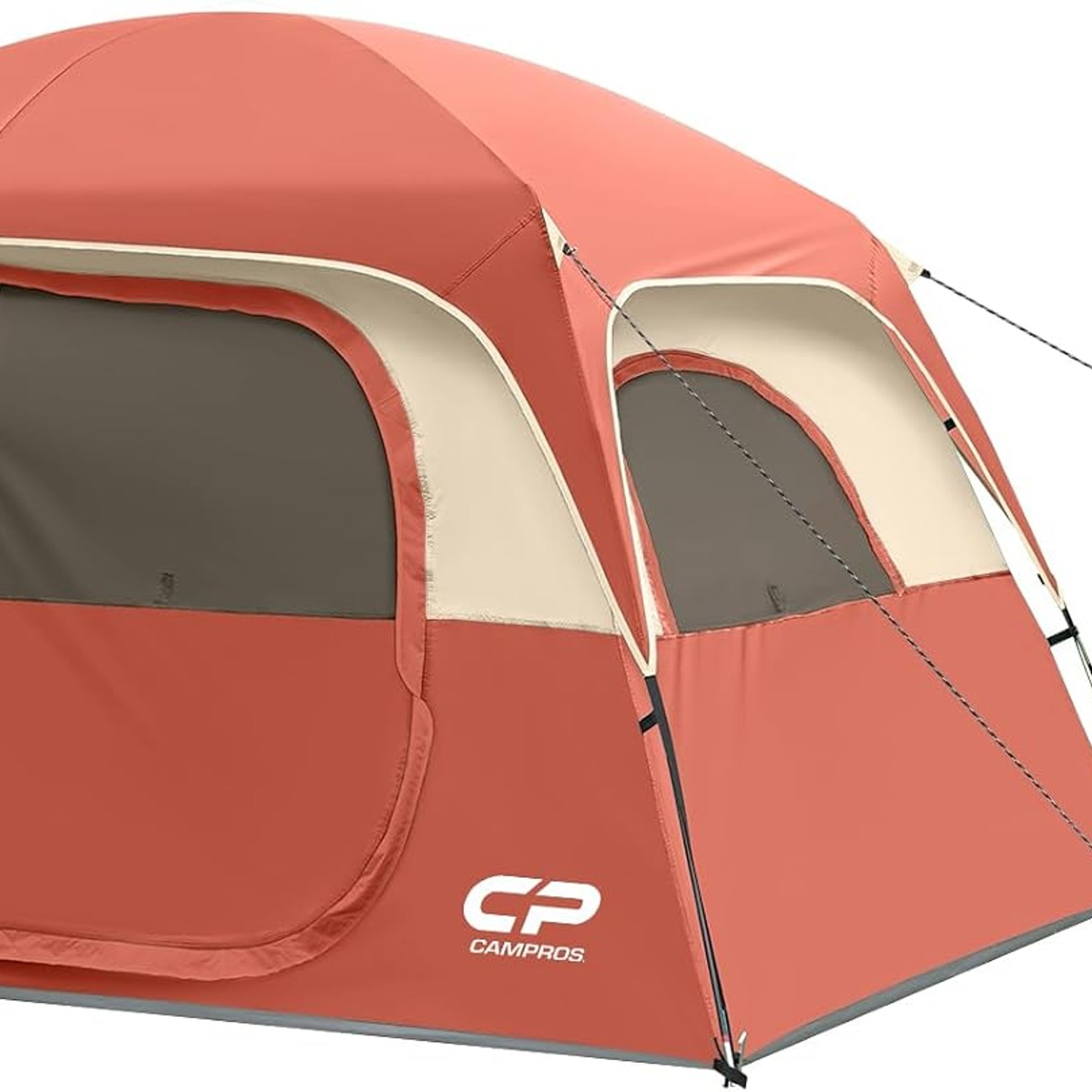
This tent is listed as a cabin form factor with a rectangular shape, and that is the main reason it feels bigger inside than its footprint suggests. A 1.83 m peak means most adults can stand up near the centre, which sounds trivial until you have spent four days crouched over trying to get dressed.
The trade-off is wind. Taller, flatter-sided tents catch more air than low domes. That is manageable with good pitching, which we will come to, but it is a reason to choose sheltered ground over an exposed ridge when you have the choice.
Air, damp, and why four windows help
Condensation is the thing nobody warns new campers about. You go to bed in a dry tent and wake up with the inner walls beaded with water, then assume the tent leaked. Usually it did not. Six people breathing overnight releases a lot of moisture, and if there is no path out of the tent, it settles on the coolest surface it can find.
The fix is airflow. This tent has four mesh windows plus a single zippered door, which is enough openings to set up a cross-breeze. The practical tip is simple. Open windows on opposite sides rather than two on the same wall, so air has somewhere to come in and somewhere to go. Mesh means you get the airflow without letting in insects.
The rainfly is removable, which gives you a second lever. On a clear, dry, still night, taking the fly off completely is the best ventilation you will get. On a damp or breezy night, leave it on and open the windows instead.
Reading the weather rating honestly
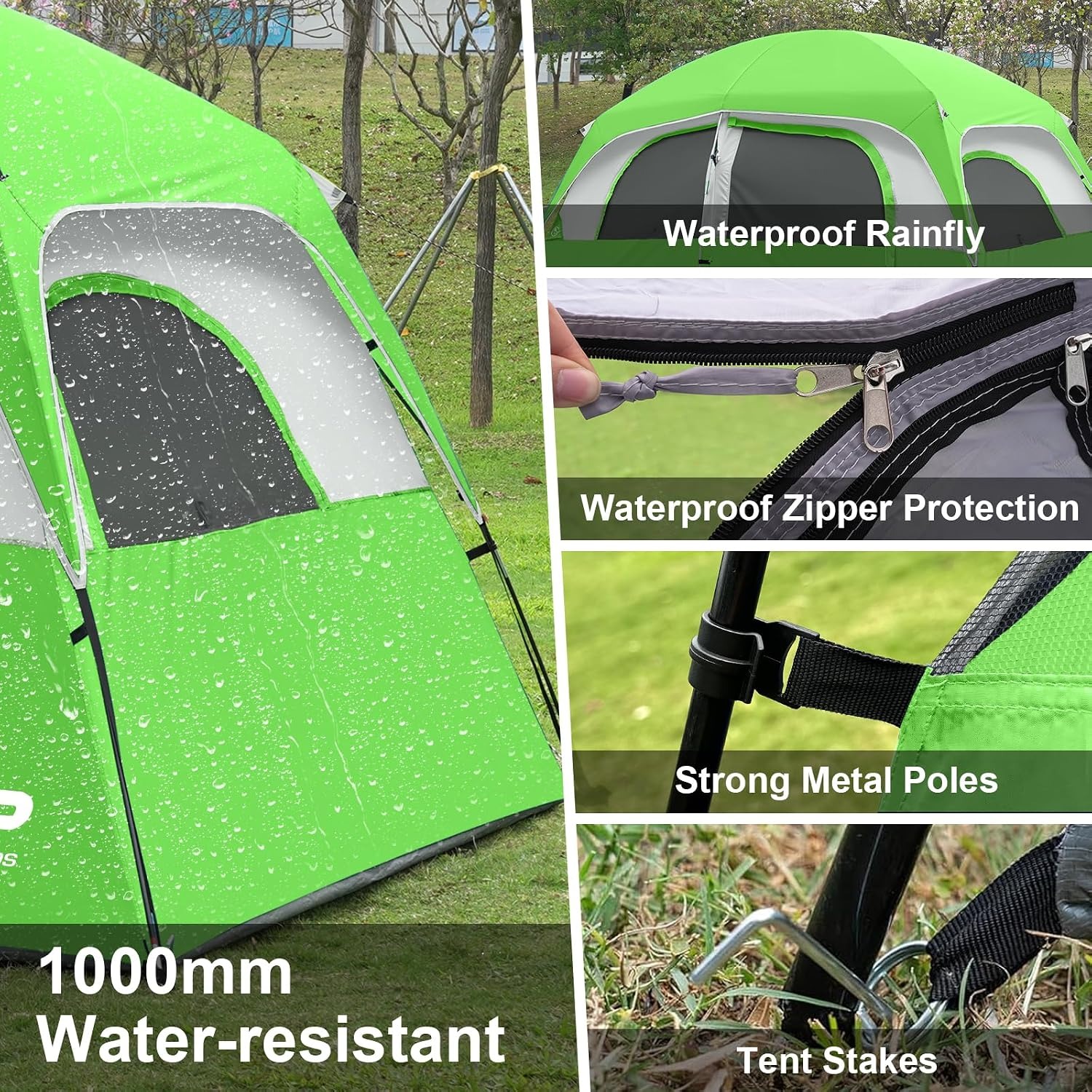
This tent is listed as water resistant with a 1000 mm rating. Here is what that number means. A hydrostatic head test measures how tall a column of water the fabric can hold back before it starts to seep. A 1000 mm rating handles ordinary rain and general camping weather. It is not a mountaineering specification, and sustained heavy rain over many hours will test it.
What makes a bigger difference than the raw number is how you pitch. Four things matter.
Get the rainfly taut so it does not touch the inner tent anywhere. Where the two fabrics press together, water can wick across and you get a damp spot that looks exactly like a leak.
Run all four guylines out and peg them at a wide angle. They hold the fly away from the body and stop the walls flexing in wind.
Pick ground that is slightly raised rather than a natural dip, so you are not sleeping in the spot where water collects.
Put something under the floor. A cheap tarp or footprint cut slightly smaller than the tent base protects the 185T polyester floor from stones and roots, and adds a moisture barrier.
Four metal stakes and four guylines come in the box. If you camp often, picking up a set of spare pegs is one of the cheapest upgrades in camping, because pegs bend and go missing.
Who this tent suits
It is a good fit for car camping families. You drive to a site, park near your pitch, and carry the 6.1 kg bag a short distance. That weight is easy to handle and the tent is sturdier than an ultralight shelter of the same floor size, because nothing has been shaved down to save grams.
It also works for festival camping, where you want standing room and a place to keep bags out of the mud. Bear in mind that 3.35 m by 2.13 m needs a reasonable patch of ground, which can be awkward in a packed field.
It is not a backpacking tent. If you are walking in with everything on your back, 6.1 kg of tent alone is too much. Look for a dedicated hiking shelter instead.
It is also not a dedicated winter tent in the alpine sense. It carries a 4 season description, but the single-layer polyester and large mesh panels mean it will not hold heat. For cold trips, the answer is the right sleeping bag and a good insulating mat under you, not the tent.
Pitching it without the arguments
Four alloy steel poles thread through sleeves rather than clipping to the outside. Sleeves are slightly slower to feed but spread the load more evenly across the fabric, which is kinder to the tent over time.
Because the design is free standing, the tent holds its shape before a single peg goes in. That is genuinely useful. Pitch it, stand back, and if you have picked a spot with a root under the sleeping area, just lift the whole thing and move it two metres. Then peg down and run the guylines.
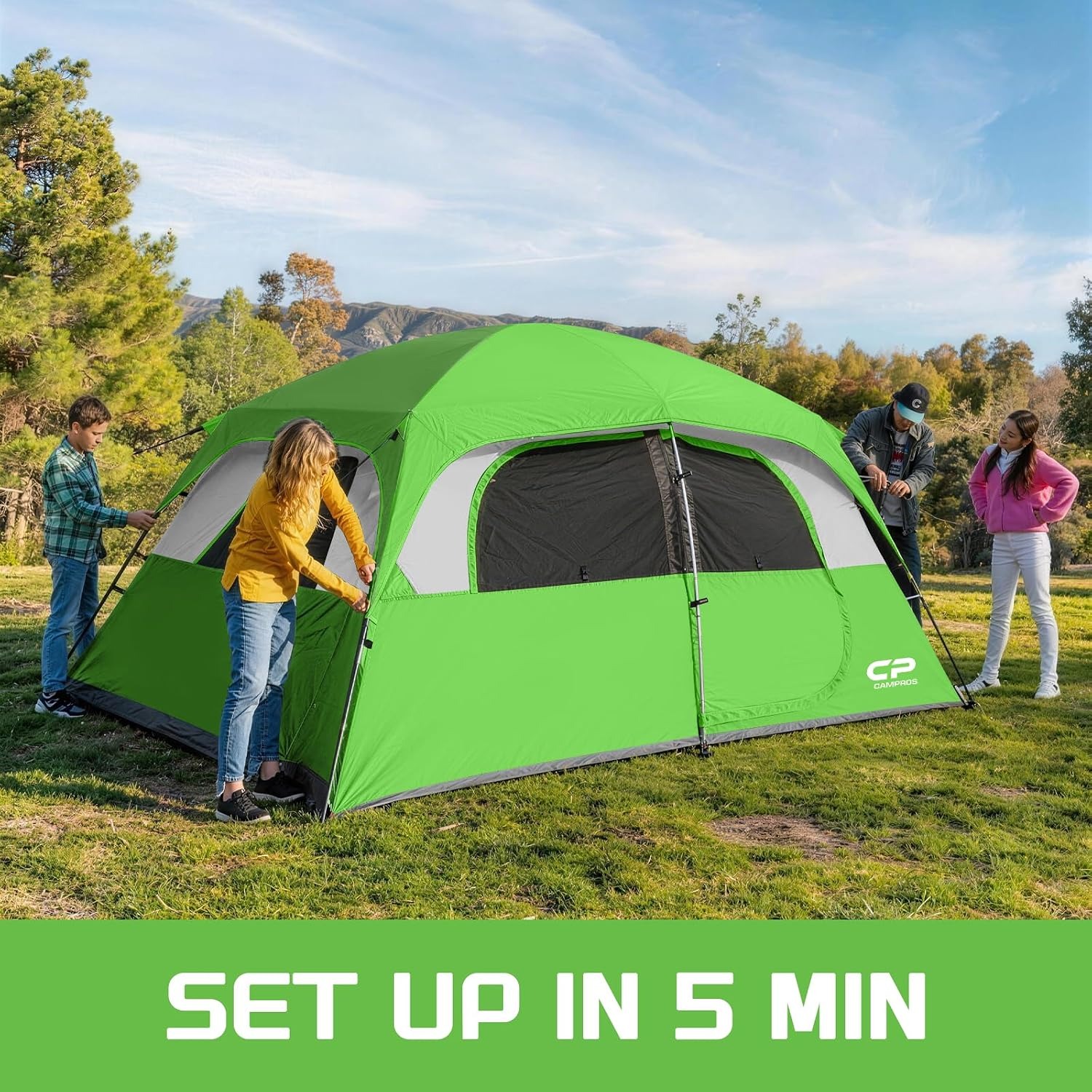
CAMPROS lists assembly at around 10 minutes. With two people who have done it once before, that is realistic. With one person doing it for the first time in the dark, it will take longer. Do a practice pitch in the garden before your first trip. It is five minutes well spent and it tells you if anything is missing from the bag.
Looking after it
Care is hand wash only. Wipe the fabric with cool water and a mild soap, rinse, and let it dry completely. No machine, no tumble dryer, no bleach.
The single most important habit is drying before storage. A tent packed away damp will grow mildew, and mildew both smells and eats at the coating. If you have to pack up wet because it is raining on departure day, unpack it at home as soon as you can and hang it somewhere airy until it is fully dry.
Beyond that, sweep grit off the floor before packing, brush sand out of the zips, and rinse and dry the stakes so they do not rust. Store the tent loose in a dry place rather than crushed into its bag for six months. Keep a strip of fabric repair tape with the poles for small tears.
The short version
This is a cabin-style 6 person family tent with a 3.35 m by 2.13 m floor, a 1.83 m peak, four mesh windows, one door and a removable rainfly. It is free standing, pitches in about 10 minutes with sleeve-fitted alloy steel poles, and packs to 6.1 kg with a carry bag.
Buy it if you drive to your campsite and want real standing room for a family or a small group. Pitch it with the guylines out and the fly taut, put a tarp underneath, and dry it fully before it goes away. Do those four things and it will see you through a lot of weekends.