
The complete guide
How to Choose an Ultralight Solid Fuel Stove
The problem with most camp stoves
Most cook systems are heavier than people realise. By the time you add a burner, a gas canister, a lighter, a windshield and a stuff sack, you are carrying several hundred grams of hardware before a single drop of water goes in the pot. For a weekend car camp that is fine. For a fast overnight push, an adventure race, or a bikepacking route where you are already fighting for frame bag space, it starts to feel silly.
There is also the fuel problem. A gas canister is an awkward shape, it does not get lighter in a useful way, and you cannot really tell how much is left without weighing it. Half used canisters pile up in the garage. Liquid fuel is worse for short trips because it leaks, smells and needs priming.
A solid fuel stove sidesteps all of that. The stove is a frame. The fuel is a dry tablet. You carry exactly the number of tablets you plan to burn, and when they are gone there is nothing left to pack out but a small frame that weighs almost nothing.
How a solid fuel stove actually works
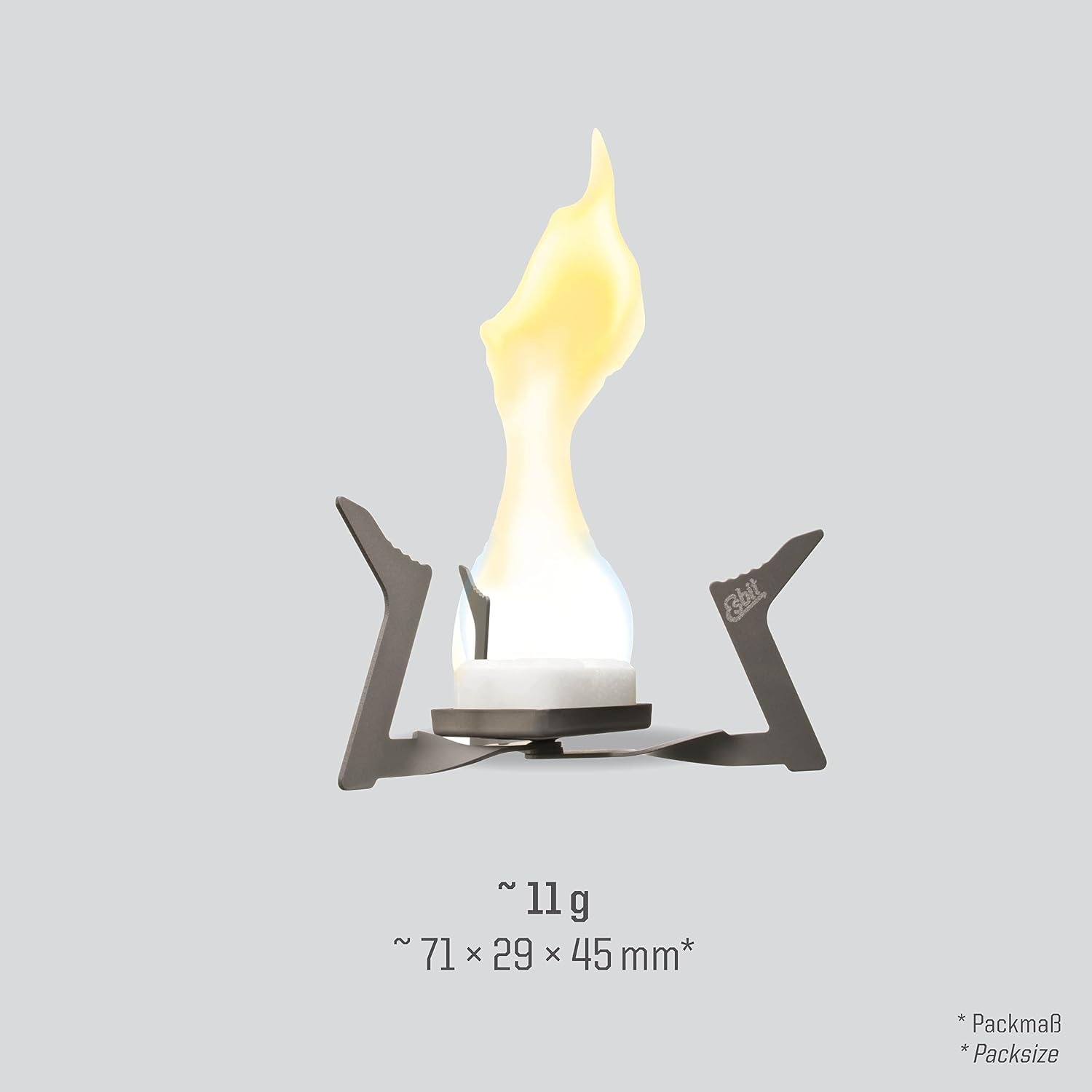
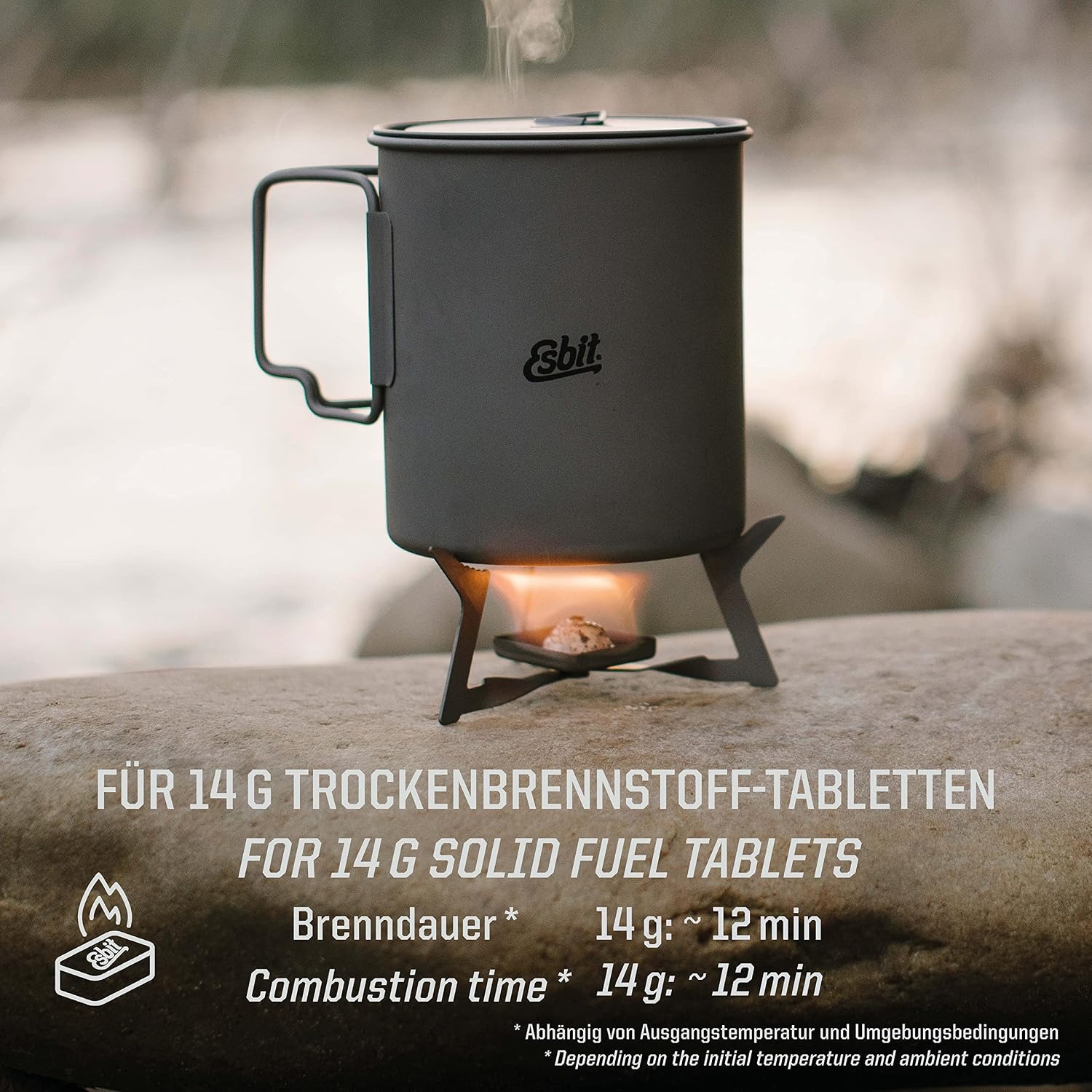
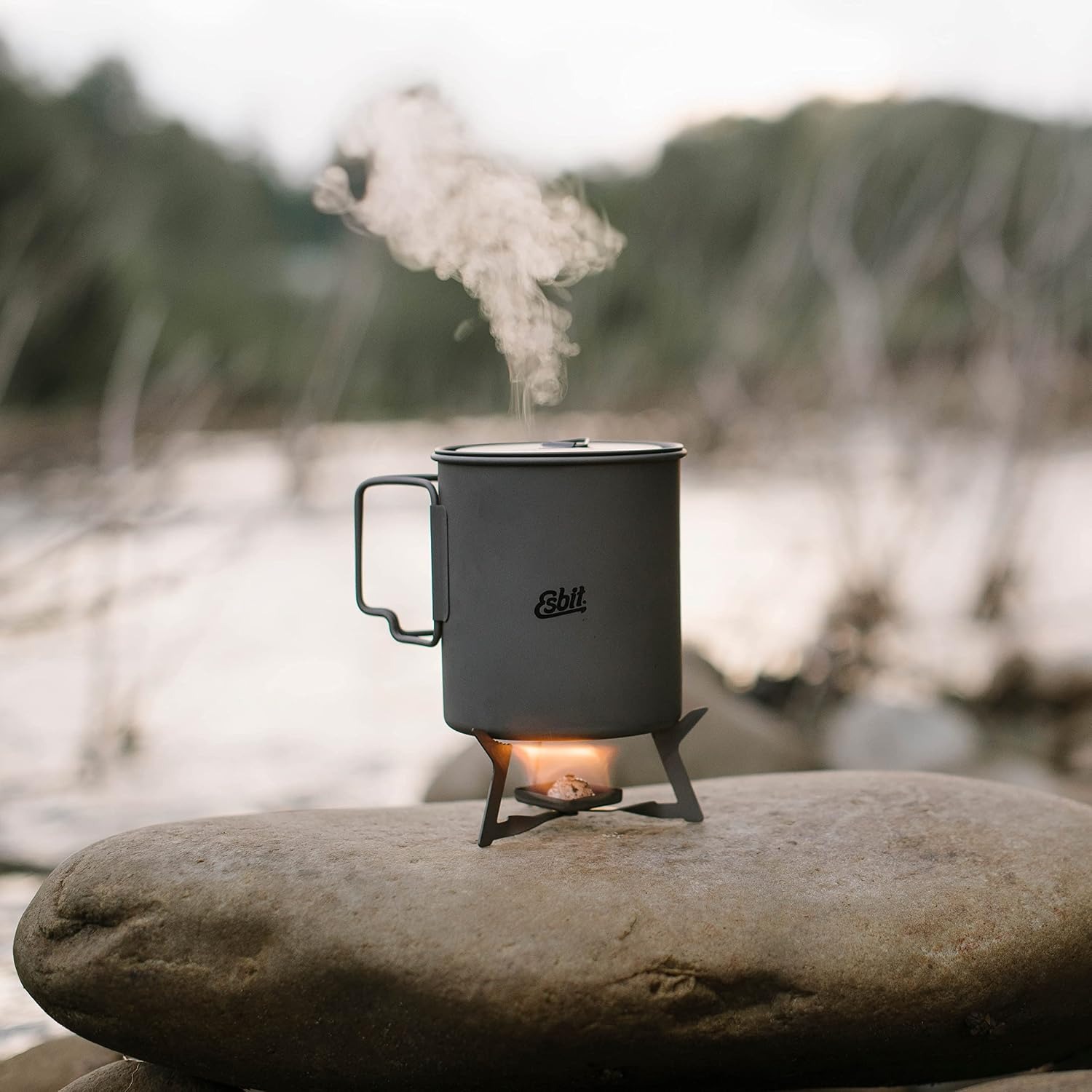
The mechanics are about as simple as cooking gets. You unfold the legs, set a fuel tablet in the cradle, light it with a match or lighter, and put your pot on top. The tablet burns with a steady flame for a set period, heats the base of your pot, and burns out. No valve, no pump, no priming, no regulator.
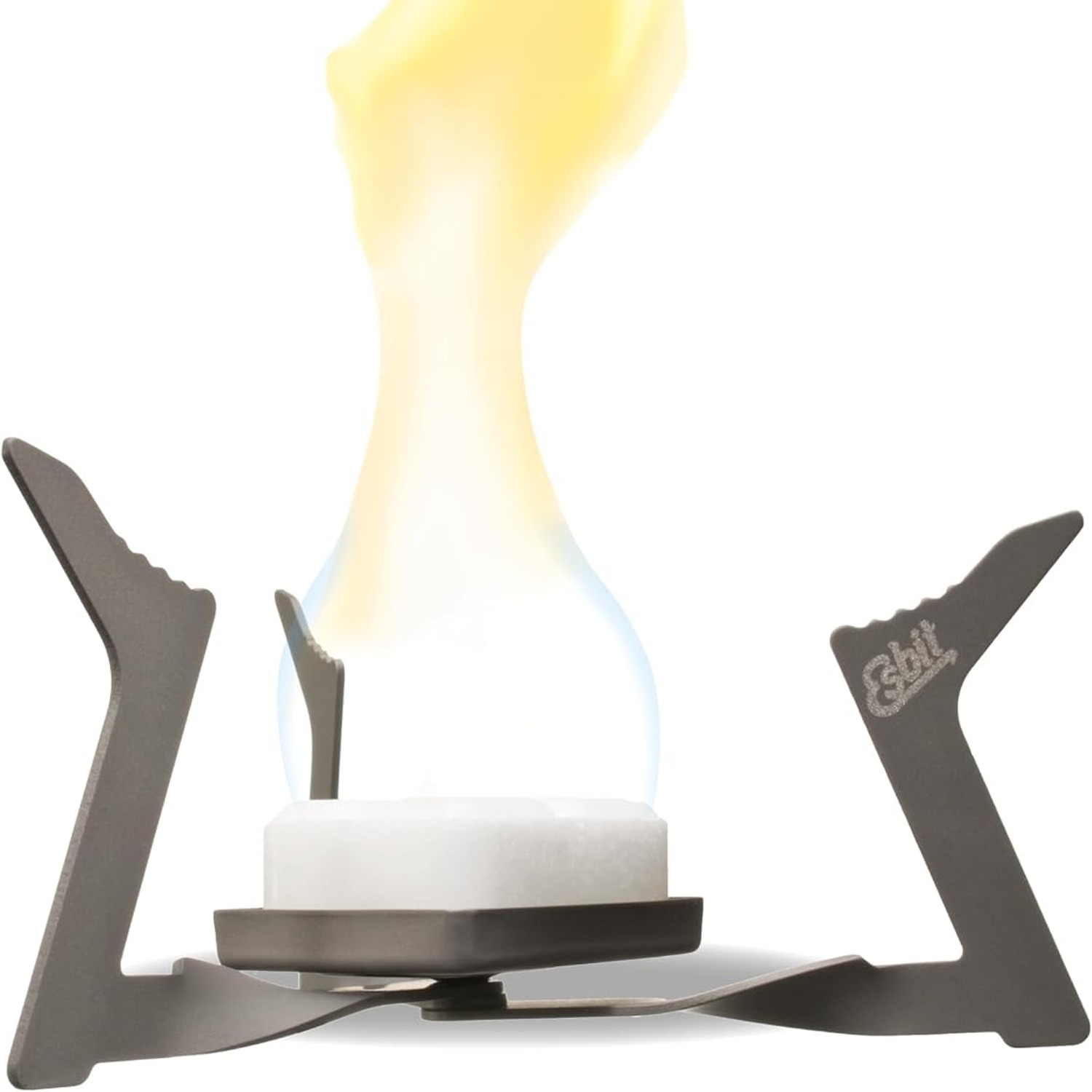
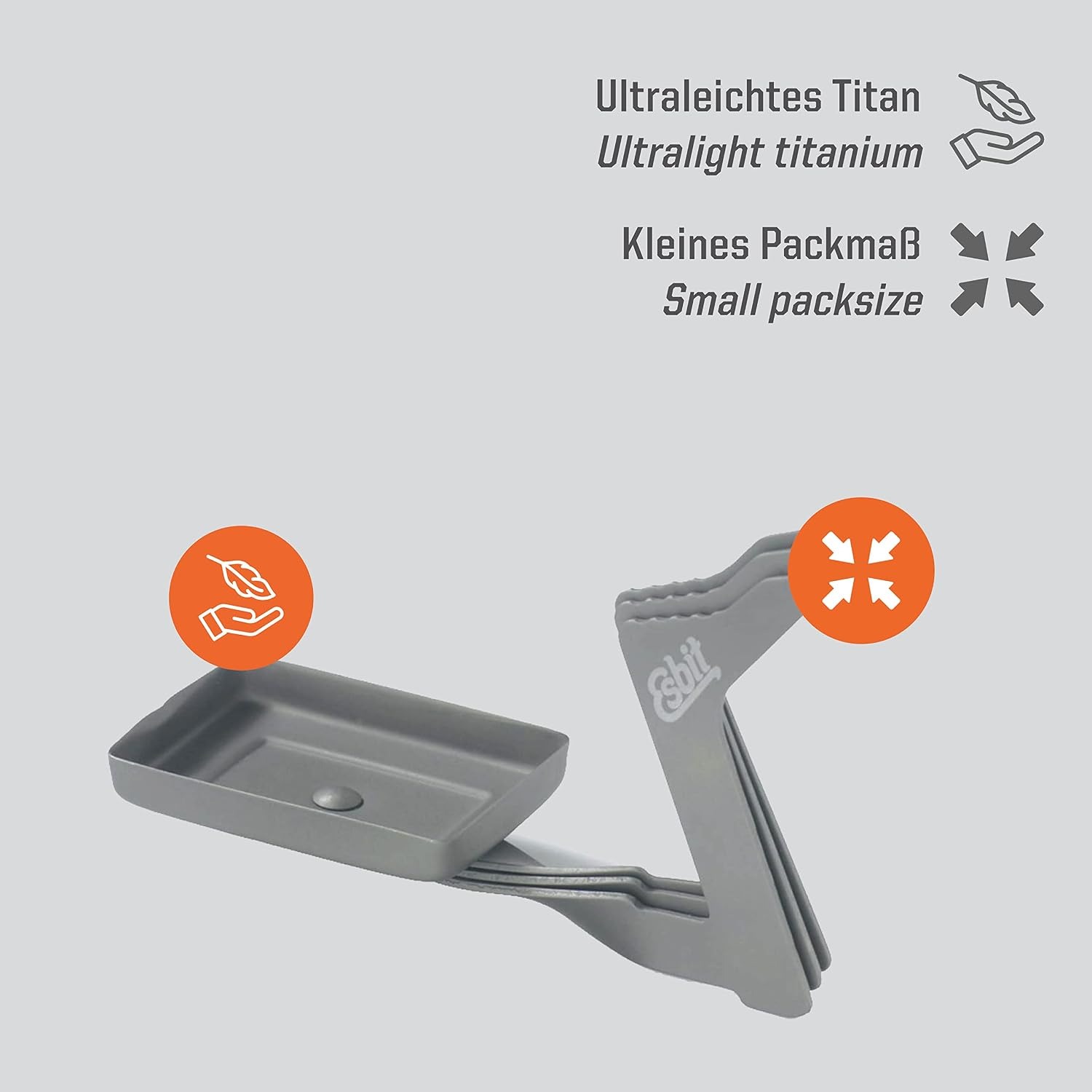
This Esbit model is made from titanium, which is the whole reason it can be this small. Titanium holds its shape under heat at thicknesses where other metals would warp. That is why the listed item weight is 0.02 kg and the packed size is only 28 x 28 x 84 millimetres. You are carrying a stove the size of a marker pen.
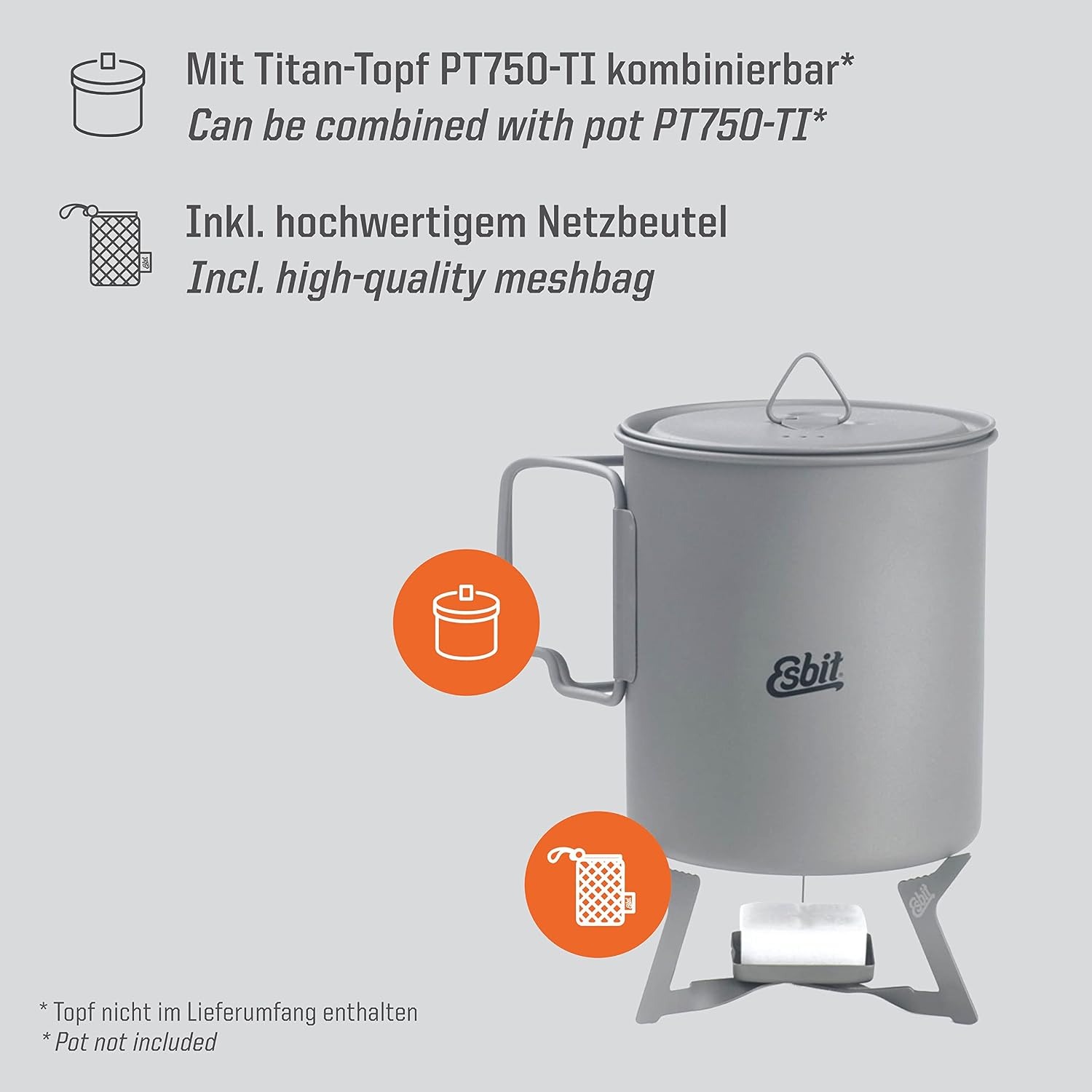
Three folding legs do the stabilising. Two points of contact leave a pot wobbling, but a tripod finds its own level on uneven ground. When you fold the legs in, the whole thing flattens out so it can slide inside a cook pot or a mug. That is a real advantage, because a stove that lives inside your pot takes up no extra space in the pack at all.
The stove comes with a mesh bag, which sounds like a throwaway detail until you have carried a sooty stove loose in a pack. Solid fuel leaves residue. The bag keeps that off your sleeping bag.
Who this suits
This is a stove for people whose main cooking job is boiling water. If your trip food is coffee, tea, instant noodles, couscous and dehydrated meals, you never need more than hot water, and this stove delivers that with a fraction of the gear.
It is a strong fit for fastpackers and anyone doing overnight adventure races, where the kit list is brutal and every gram is questioned. Bikepackers like it because it vibrates along happily in a small bag and does not need a stiff mount. Ultralight hikers building a sub one kilogram base weight system often land here, because there is simply nothing lighter that still gives you a controlled flame under a pot.
It is also one of the better choices for a backup or emergency kit. Fuel tablets do not leak, do not lose pressure and do not expire in the way a half used canister seems to. A stove and a few tablets can sit in a glovebox or a go bag for years and still work. People shopping for the best pocket stove for hiking often end up buying two, one for the pack and one for the car.
Who should look elsewhere
Honesty matters more than a sale here. If you cook properly on trail, meaning you fry, simmer, stir and want a pot of pasta for two, this is not your stove. Solid fuel gives you one heat setting, roughly described as "on". You cannot turn it down.
Large pots are also a poor match. The stove is compact by design, and a wide heavy pot perched on a small tripod is asking for a spill. Stick to mugs and small pots in the 400 ml to 900 ml range.
Group cooking is slow. You can boil water in rounds for two people, but you will burn through tablets and patience. Anyone feeding three or more should carry a canister stove with a proper burner head.
Getting good results from it
A small flame is sensitive to wind, so shelter matters more than with a big burner. Use a rock, your pack, or a foil windscreen, and leave an air gap so the flame still breathes. Cooking in a sheltered dip rather than on an exposed ridge makes a surprising difference to boil time.
Surface choice matters too. Solid fuel heats the ground under it and can leave marks, so use bare earth, stone, or a small square of foil. Never cook on a tent floor, in a vestibule, or on a wooden picnic table.
Have your water measured and your pot ready before you light the tablet. Once it is burning it is burning, and faffing around looking for your mug is a waste of fuel. Most people find a routine quickly: set up, light, pot on, lid on, wait.
Keep the lid on your pot. It is the cheapest speed upgrade in camp cooking and it costs no weight at all.
Fuel, and how much to carry
Fuel tablets are bought separately, which is actually part of the appeal. You take what you need. A single tablet is a typical single boil, though exactly how long it burns depends on the tablet size, the air temperature and the wind. Check the fuel packaging for the maker's stated burn time.
A sensible habit is to carry one tablet per hot drink or meal, then add one or two spare. They are light enough that the margin costs you almost nothing. Store them in a sealed bag, away from food, because the smell can transfer.
Partly burned tablets can be reused. Let them cool, bag them, and light them again next time. Nothing goes to waste.
Looking after it
Care is minimal. Let the stove cool completely before you touch it or pack it. Wipe soot and residue off with a dry cloth, and if something is stuck on, warm water with a bit of dish soap sorts it. Dry it fully before it goes back in the mesh bag.
The titanium will discolour with heat, usually taking on a bronze or faint blue tone. That is a surface change from heat and it does not affect strength or performance. Plenty of people treat it as a record of trips taken.
Fold the legs in for storage. Flat packing protects the legs from getting bent in a crowded pack and keeps the stove sliding easily into your pot.
The short version
This is a titanium frame with three folding legs that burns Esbit solid fuel tablets, weighs 0.02 kg, packs down to 28 x 28 x 84 millimetres, and arrives with a mesh bag. That is the entire product, and that simplicity is the point.
Buy it if you boil water, count grams, and want a cook system that disappears into your kit. Buy it as a backup if you already own a canister stove and want something that will still work after two years in a drawer. Skip it if you want to simmer, cook for a group, or use large pots.
For a solo hiker who mostly wants hot water at the end of a long day, it is hard to beat on weight, and almost impossible to beat on simplicity.