
The complete guide
Choosing a Camping Kettle That Actually Earns Its Space
The problem with boiling water outdoors
Most people start out boiling camp water in a saucepan. It works, technically. Then you try to pour it into a mug from a wide pan with a hot rim and no spout, in the dark, with a head torch wobbling about, and the problem becomes obvious. Water goes everywhere except the mug. The pan you needed for breakfast is now wet and lukewarm. Someone gets splashed.
A kettle fixes this because it was built for one task. It has a spout that aims the water, a lid that holds the heat in, and a handle positioned away from the hot body. Add a whistle and you also stop the other camp classic, which is forgetting the water entirely until it has boiled off into the sky and left you with a scorched base.
That is the whole argument for a dedicated camping kettle. It is not a luxury item. It is the piece of kit that makes morning coffee take four minutes instead of fifteen.
How a whistling camp kettle works
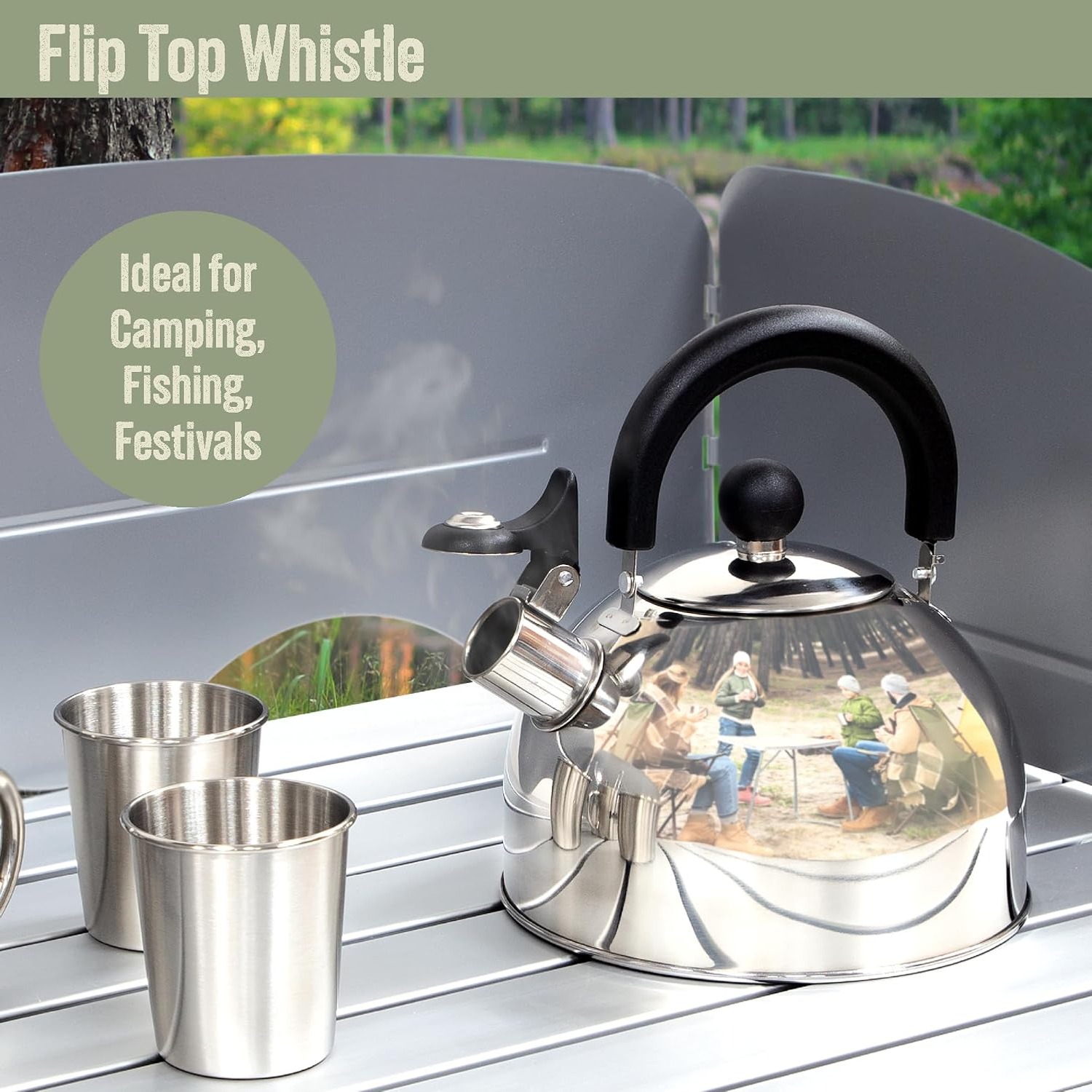
The mechanics are simple and have not changed much in a century. You fill the kettle, close the lid, close the spout cover and put it over heat. As the water heats, steam builds inside. When the water hits a rolling boil, that steam has to escape, and the only exit is the narrow shaped channel at the spout. Air forced through a small gap at speed makes a sound. That is your whistle.
The sound carries further than you expect, which is the point. You can be pitching a tent, sorting out a camp chair or rummaging in the boot for teabags, and you will still hear it. For anyone who has walked back to a dry, smoking pan, the appeal is immediate.
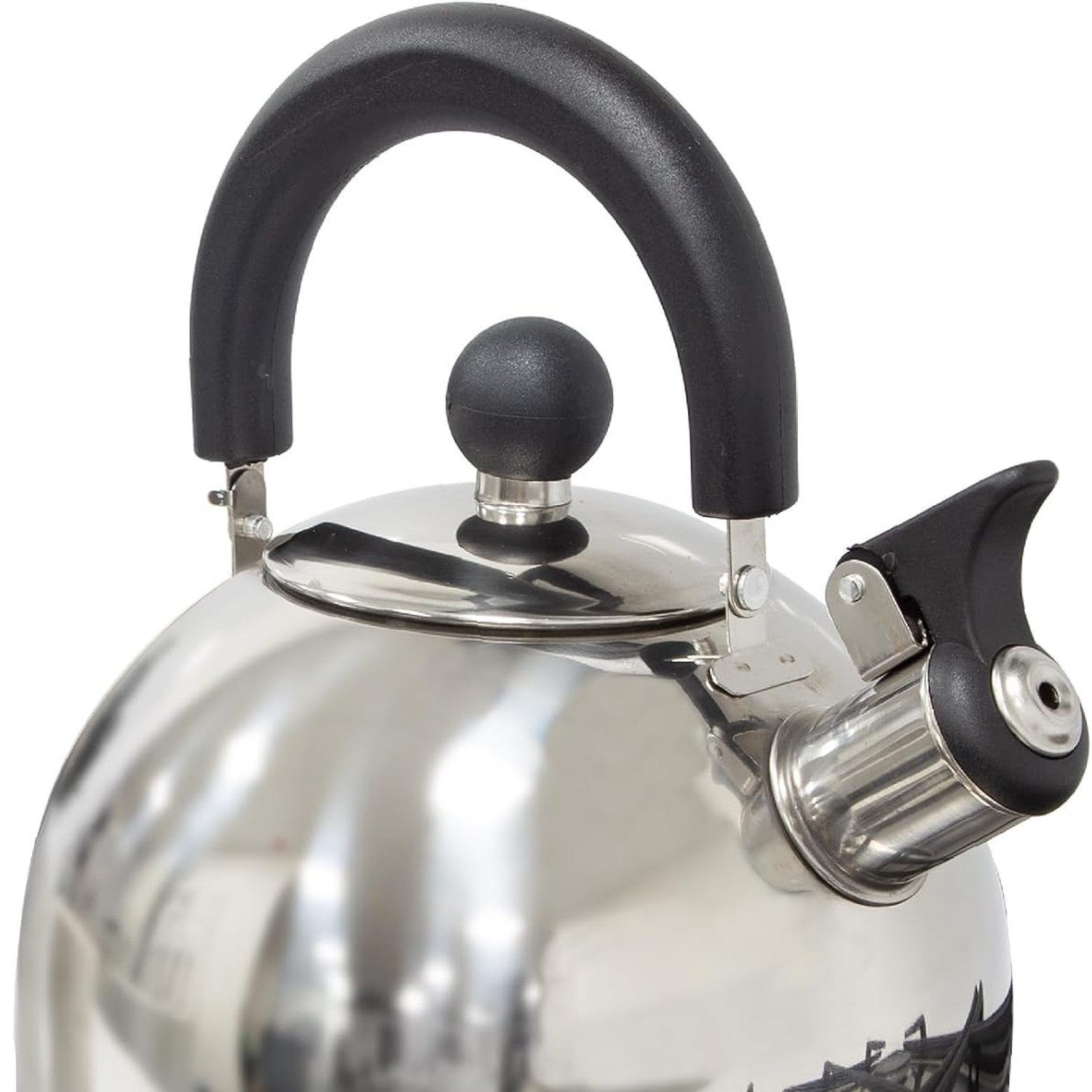
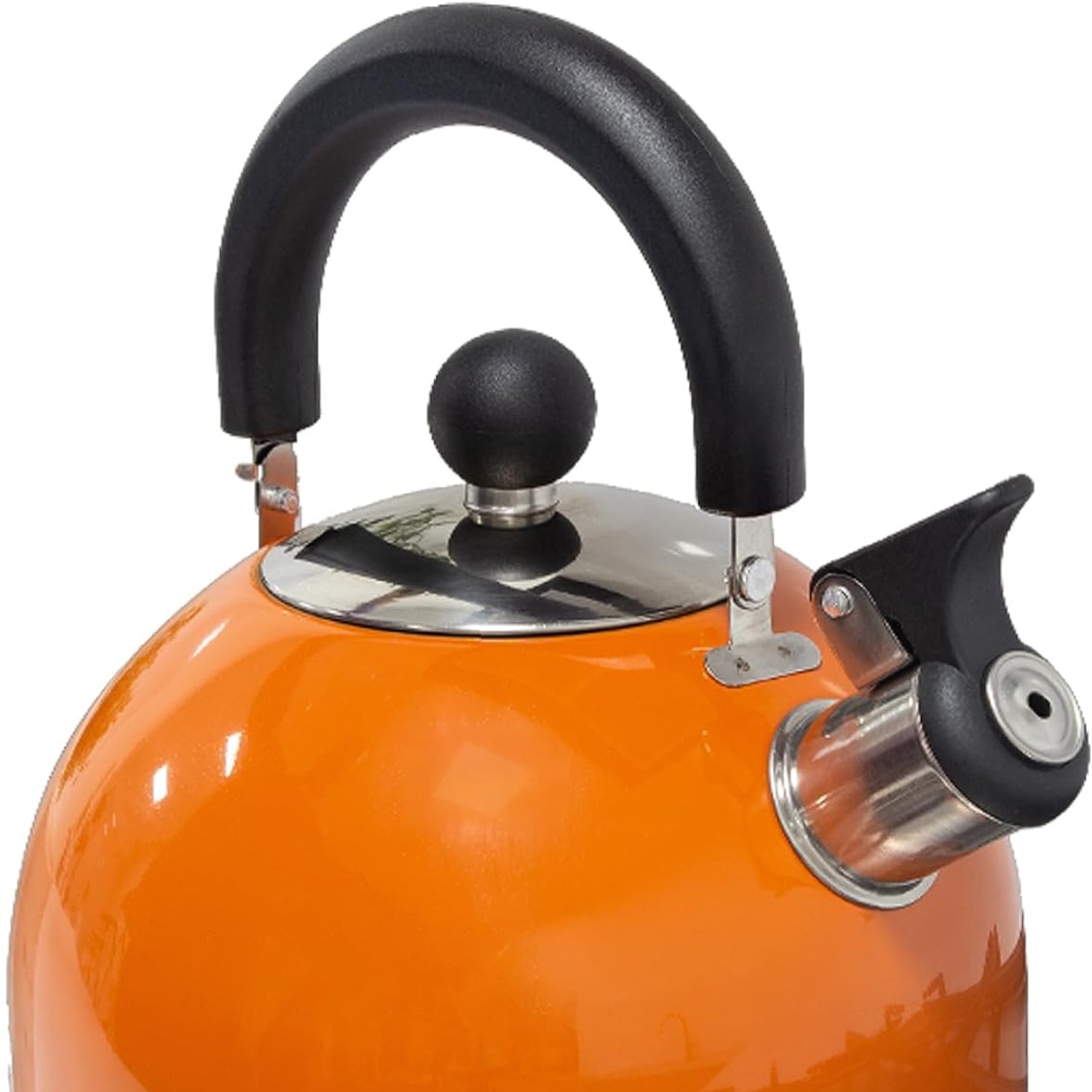
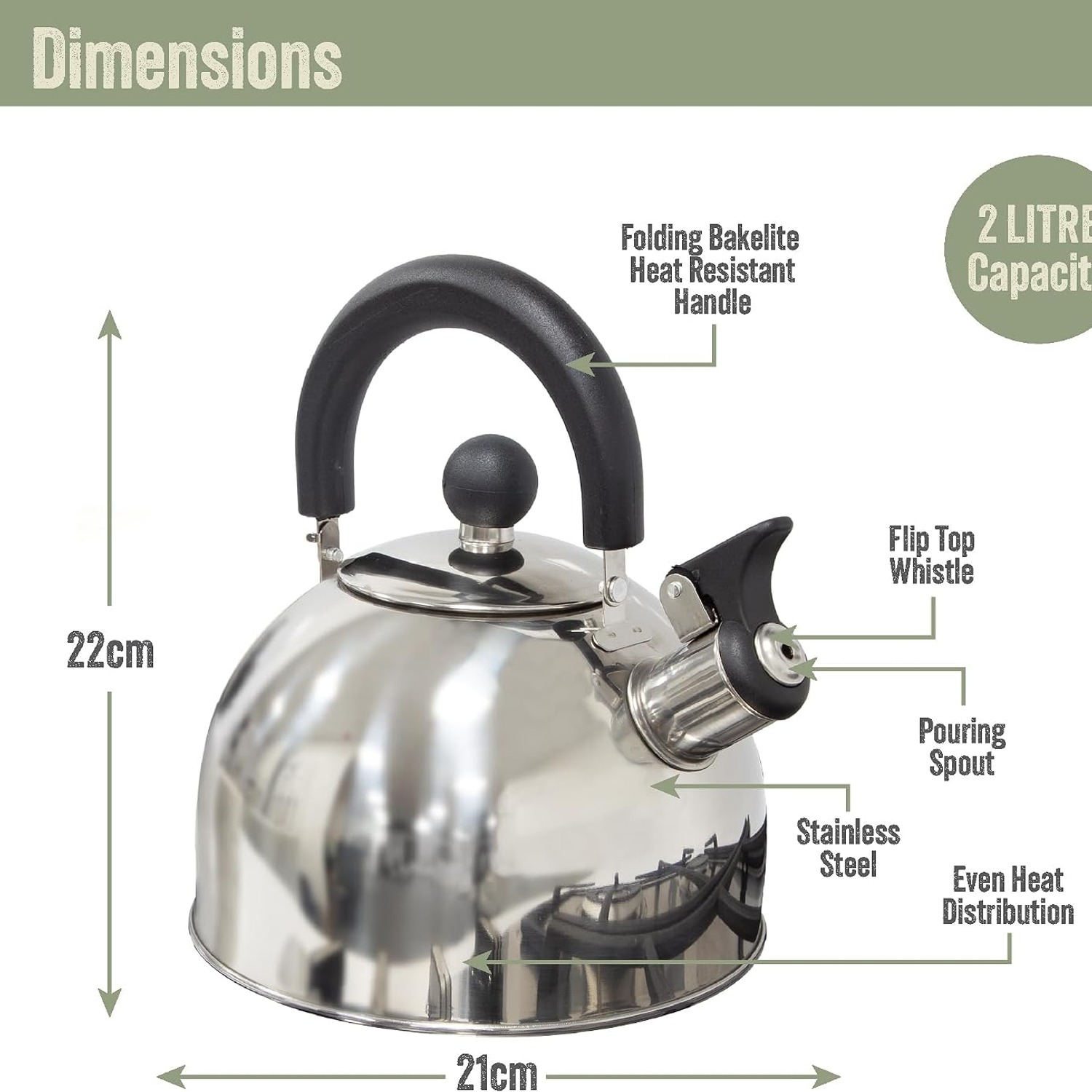
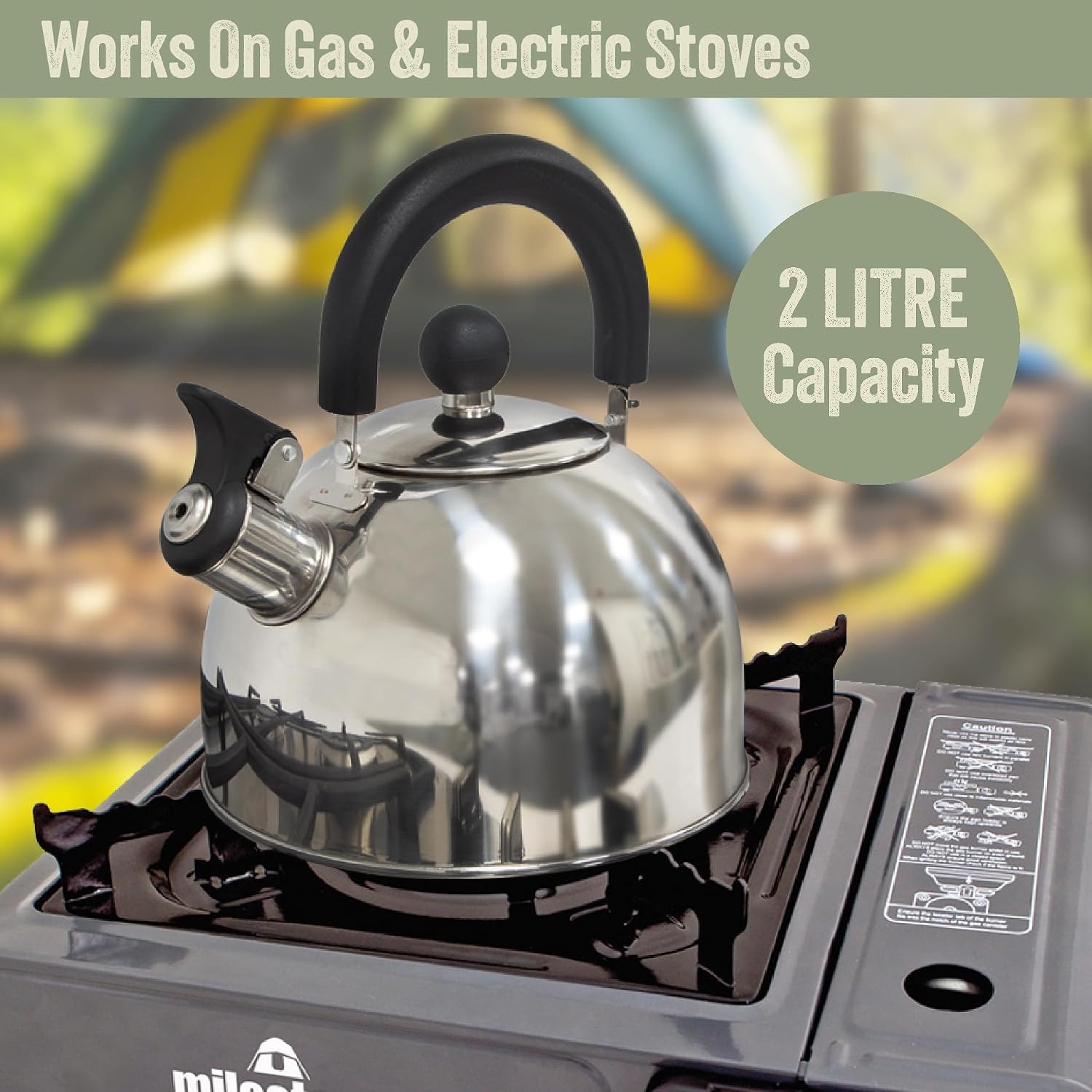
This model holds 2 litres and measures 18 cm deep by 18 cm wide by 15.5 cm high. The body combines stainless steel and aluminium, the lid is stainless steel, and the handle is Bakelite. Bakelite is a hard, heat resistant material that has been used on cookware handles for generations because it does not conduct heat the way bare metal does. The handle folds down, which saves packing space and stops it snagging on everything else in the crate.
Who this suits
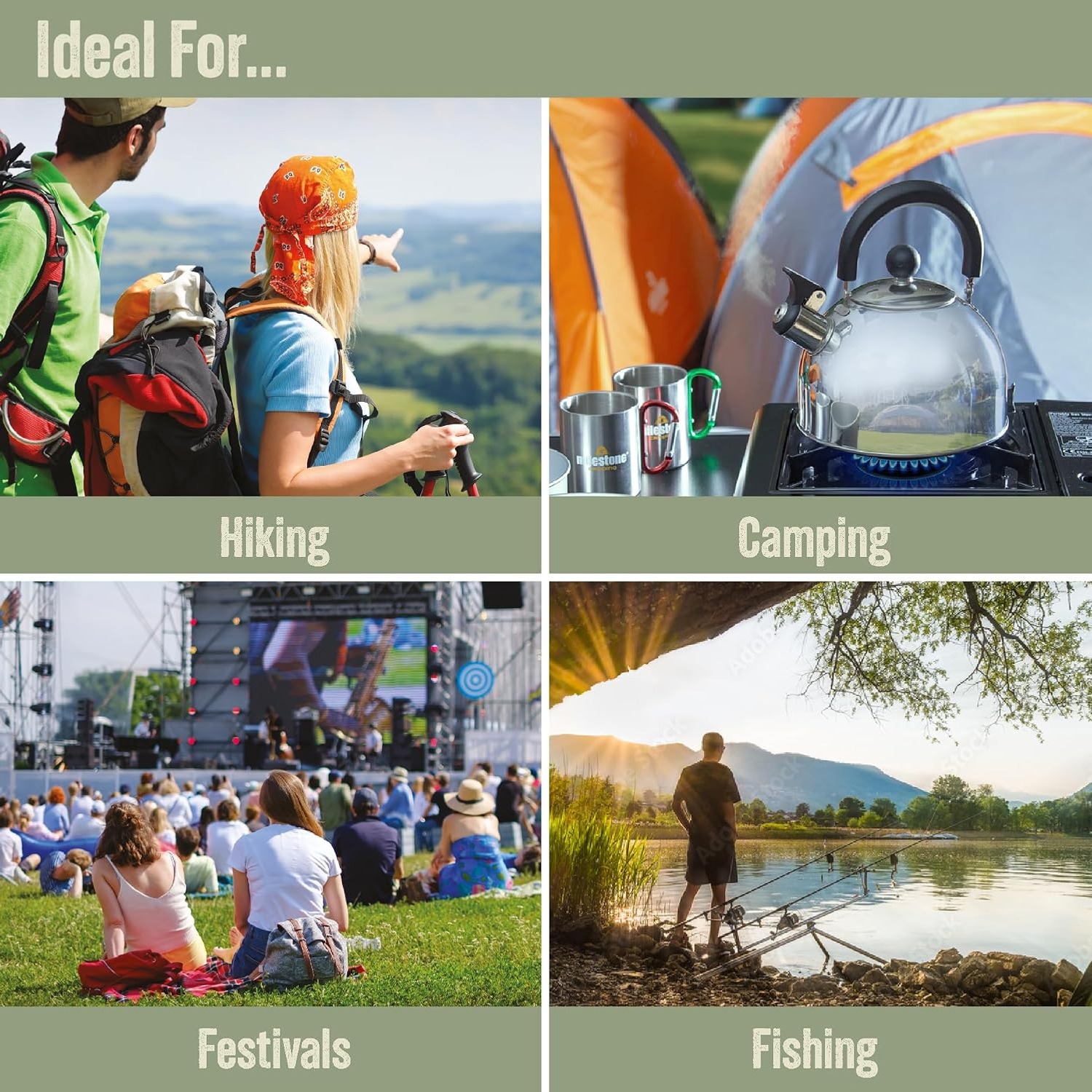
Car campers and caravanners get the most out of a 2 litre kettle. You have the space to carry it, you have a stove to put it on, and you usually have more than one person wanting a hot drink. A full boil fills several mugs, which beats boiling three times in a row.
Fishing trips are another natural fit. Long sits by the water with a small gas burner and a kettle is a classic setup, and the whistle means you can keep your eyes on the rod. Boat galleys work too, since the folding handle and modest footprint help where cupboard space is tight.
Then there is the less glamorous use. Workshops and garages. Plenty of people keep a burner and a kettle on a bench because running back to the house for tea breaks the flow of a job. A stainless steel camp kettle is better suited to that environment than a kitchen appliance with a cord, which is why the best camping kettle often ends up living somewhere other than a campsite.
Ultralight hikers are the one group who should look elsewhere. If you count grams and carry everything on your back, a 2 litre kettle is more capacity and bulk than you need. A small titanium pot will serve you better.
How to choose the right size and build
Capacity is the first decision. Under a litre suits solo trips and fast boils. One to one and a half litres covers a couple. Two litres, like this one, is the family and small group range. It also covers the jobs people forget about, such as filling a washing-up bowl with hot water after dinner or topping up a hot water bottle on a cold night. Boiling for washing up is a real time saver and a smaller kettle makes you do it twice.
Material matters next. Stainless steel is tough, resists rust and cleans up well. Aluminium conducts heat quickly and keeps weight down. A kettle that uses both is aiming for a balance between durability and practicality on the move. Heat spreading through the body rather than concentrating in one hot spot is part of why this design works on a camp burner.
The handle is worth more attention than people give it. A fixed metal handle gets hot and takes up space. A folding handle in a heat resistant material solves both. Fold it down and the kettle sits flat in a box with mugs stacked beside it.
Finally, check the whistle. Not every camp kettle has one, and the ones that do vary in how loud they are. A whistle only helps if you can hear it over a stove, wind and conversation.
Using it well at camp
A few habits make a stovetop kettle last. Match the flame to the base. If gas is curling up the sides of the kettle, you are wasting fuel and putting heat where the handle lives. Turn it down. The water will not boil any faster for a bigger flame once the base is fully covered.
Use a windshield if you have one. Outdoors, wind steals heat from the sides of the kettle faster than most people realise, and on a breezy day it can double your boil time. A simple foil shield around three sides of the burner makes a real difference.
Do not overfill. Leave a gap below the spout so boiling water does not spit out and dribble down the side. And never let it run dry. The whistle gives you fair warning, but if you are out of earshot, check in.
If you are using it over an open fire on a grate, expect the outside to blacken. That is cosmetic rather than damage, but it will transfer soot to anything it touches in your pack. A bag or an old pillowcase handles that.
Cleaning and keeping it in good shape
This kettle is not dishwasher safe, so hand washing is the routine. Wait for it to cool, then warm water, mild dish soap and a soft sponge or cloth will do the job. Keep steel wool and scouring powders away from it, since they scratch the finish and give grime somewhere to settle.
Hard water areas will see limescale build up inside. The fix is cheap. Fill with water, add white vinegar, bring it to the boil, then let it sit for a while before pouring it out. Rinse thoroughly, boil a batch of plain water and tip that away before you make drinks with it.
Drying is the part most people skip, and it is the part that matters for storage. A kettle packed away with water inside will smell stale and may mark. Tip it out, wipe it, leave the lid off until it is fully dry, then fold the handle and put it away.
The short version
A 2 litre whistling kettle covers the hot water needs of most camping trips without taking over your storage crate. Stainless steel and aluminium gives you a build that holds up to repeated use, the stainless lid keeps heat where you want it, and the folding Bakelite handle makes it easy to carry and easy to pack.
The whistle is the feature you will appreciate most, usually on the morning you forget the kettle is even on. Hand wash it, dry it properly, and it will keep doing this job for a very long time.