
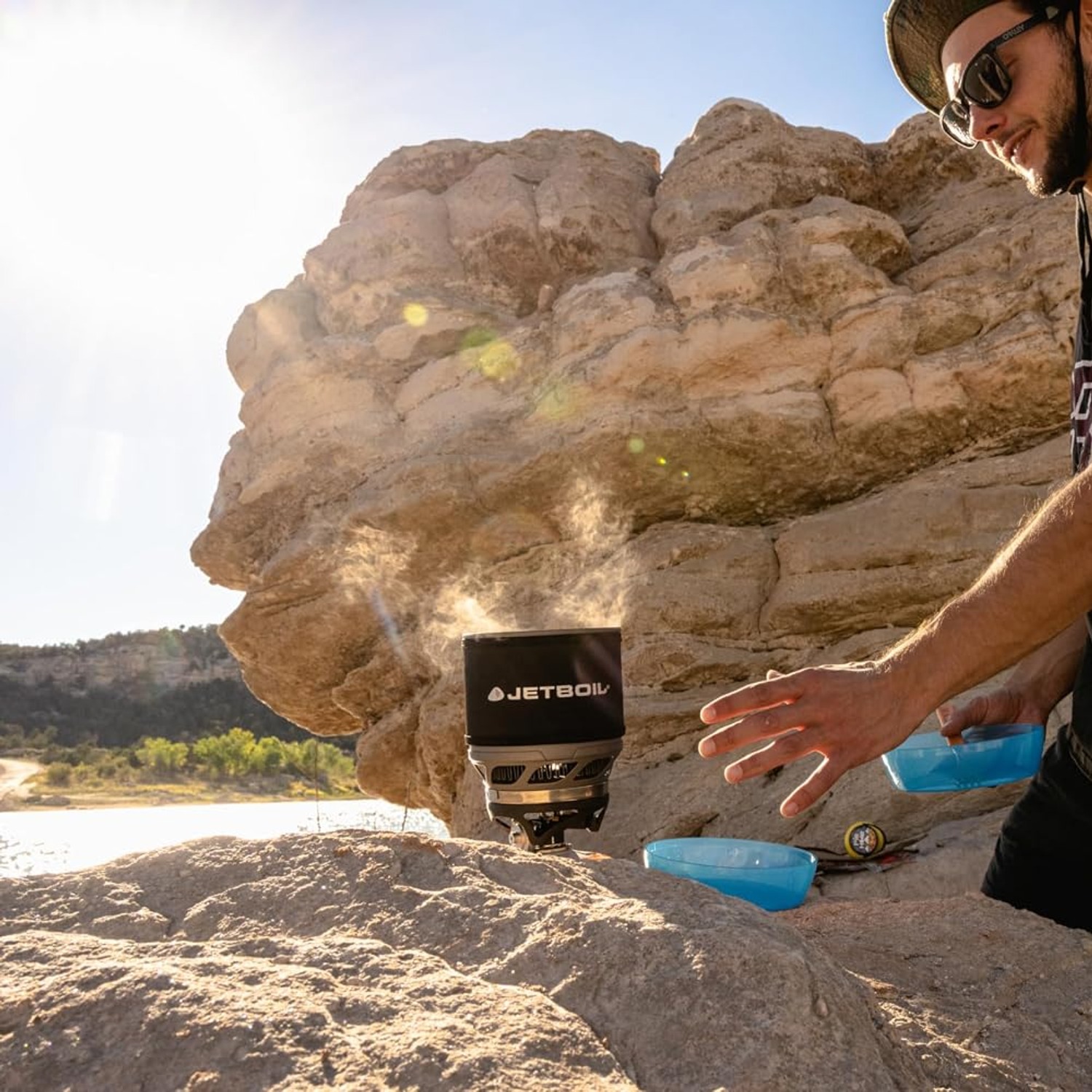
The complete guide
Choosing a Jetboil Camping Stove: What the MiniMo Does Well
The problem with small camp stoves
Nearly everyone who starts hiking buys a cheap burner that screws onto a gas canister, sets a thin pot on top, and calls it a kitchen. It works, after a fashion. Water boils eventually. Then you notice the problems. Half the flame curls up around the sides of the pot and disappears into the breeze. A light wind turns a three minute boil into eight. The pot wobbles on a narrow support. And when you turn the gas down to warm something gently, the flame either goes out or sits in one hot spot and scorches whatever is in contact with the base.
The result is that a lot of hikers quietly give up on cooking. They eat cold food, or they stick to boil-and-pour meals forever because that is all the stove can really do.
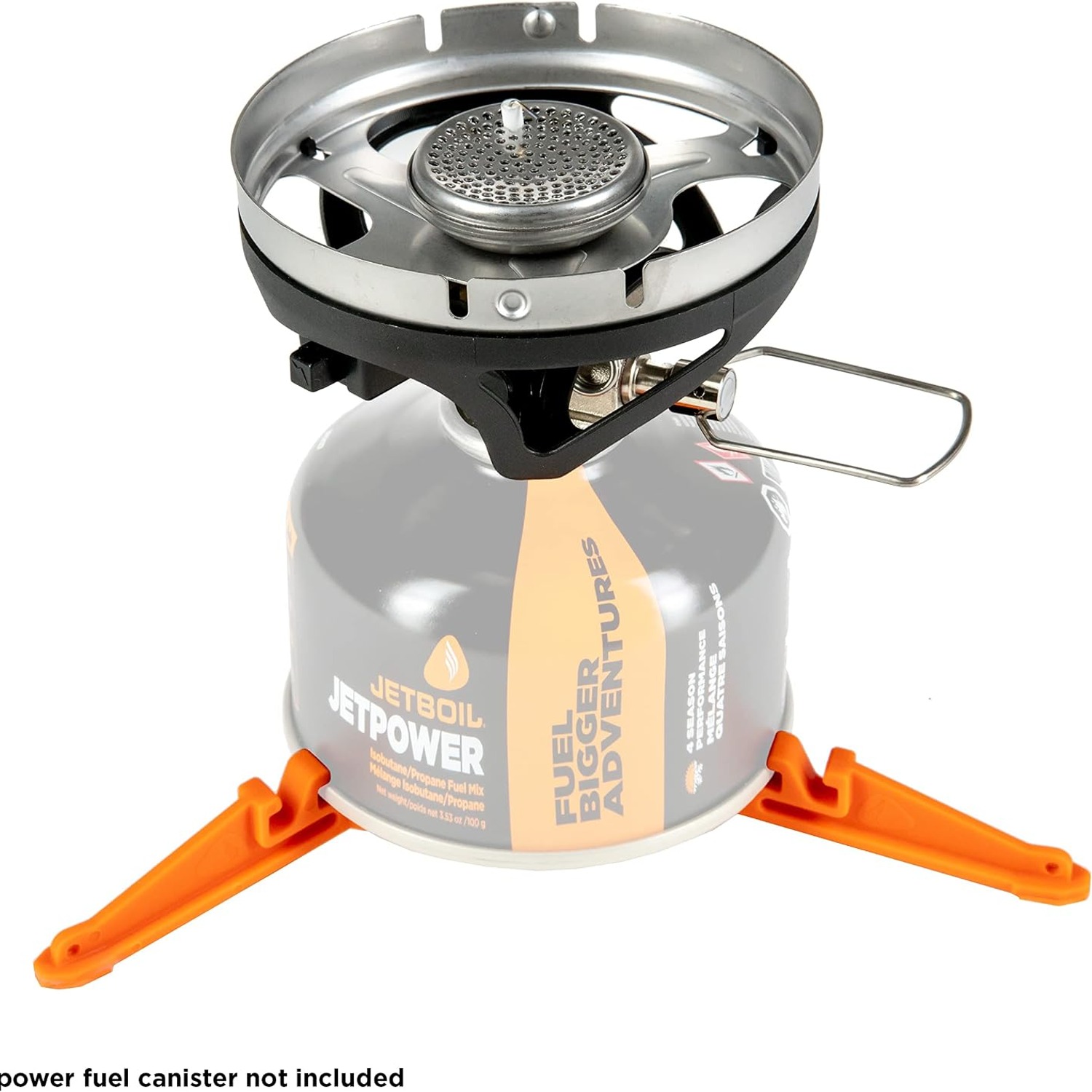
Integrated systems were the answer to the first half of that problem. Attach the pot to the burner, add a heat exchanger to the base, and suddenly the boil times drop and the gas lasts longer. The Jetboil MiniMo goes after the second half as well, by adding a regulator valve that holds a genuine low flame.
How the MiniMo works
Three things do the heavy lifting here.
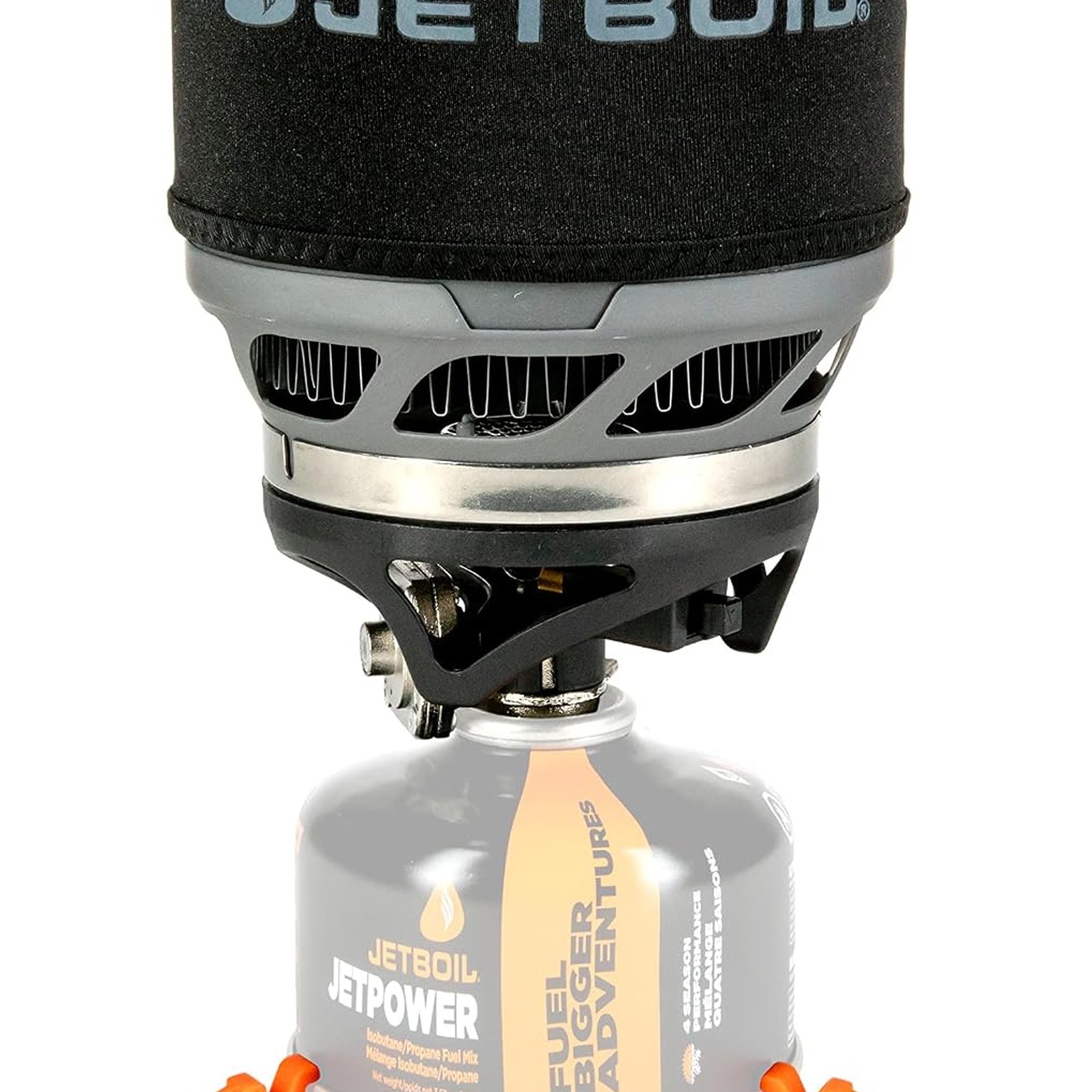
The first is the FluxRing. Look under the cooking cup and you will see a ring of thin metal fins bonded to the base. Those fins massively increase the amount of metal the flame touches. Heat that would otherwise slip past the pot gets captured and pushed up into the cup. The practical effect is a faster boil for less gas, which matters most on longer trips where every gram of fuel is weight you carry.
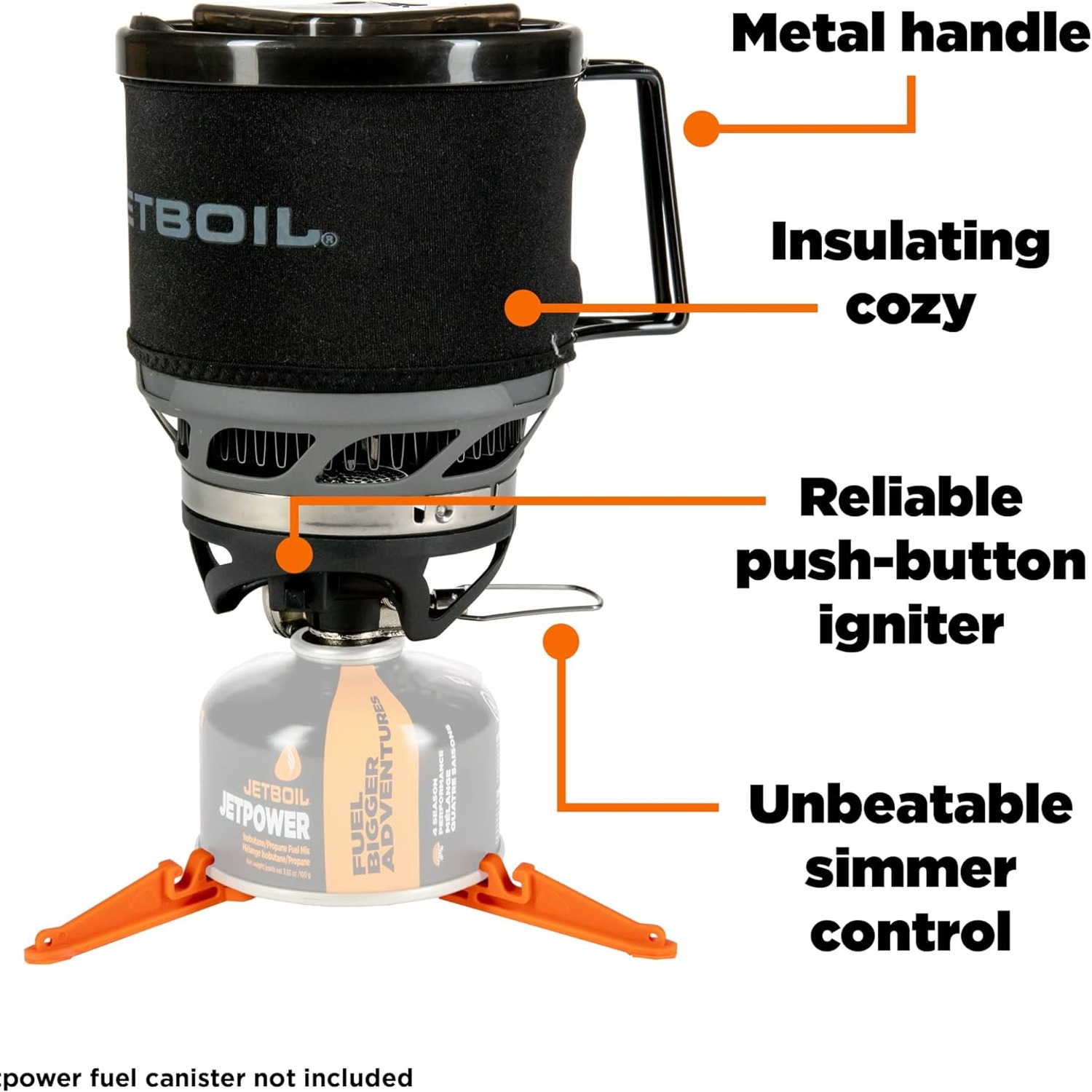
The second is the regulator. Plenty of canister stoves have a simple needle valve, which is fine at full throttle but twitchy at low settings. A regulator evens out the gas pressure, so a low flame stays low and steady rather than fading as the canister cools or drops in pressure. That is what turns this from a water boiler into something you can cook on. Sauces reduce. Eggs scramble instead of welding. Porridge stays porridge.
The third is the shape of the cup. The MiniMo is deliberately wider and shorter than the tall mug-style Jetboils. It is less elegant in the pack, but much better to eat from. Your spoon goes in at a normal angle, you can reach the bottom corner without tipping the whole thing toward your face, and stirring is actually possible. Metal handles fold out and give you a firm grip.
Add the push-button igniter and you have a stove that lights in the rain without you hunting for a lighter with cold fingers.
What is in the kit
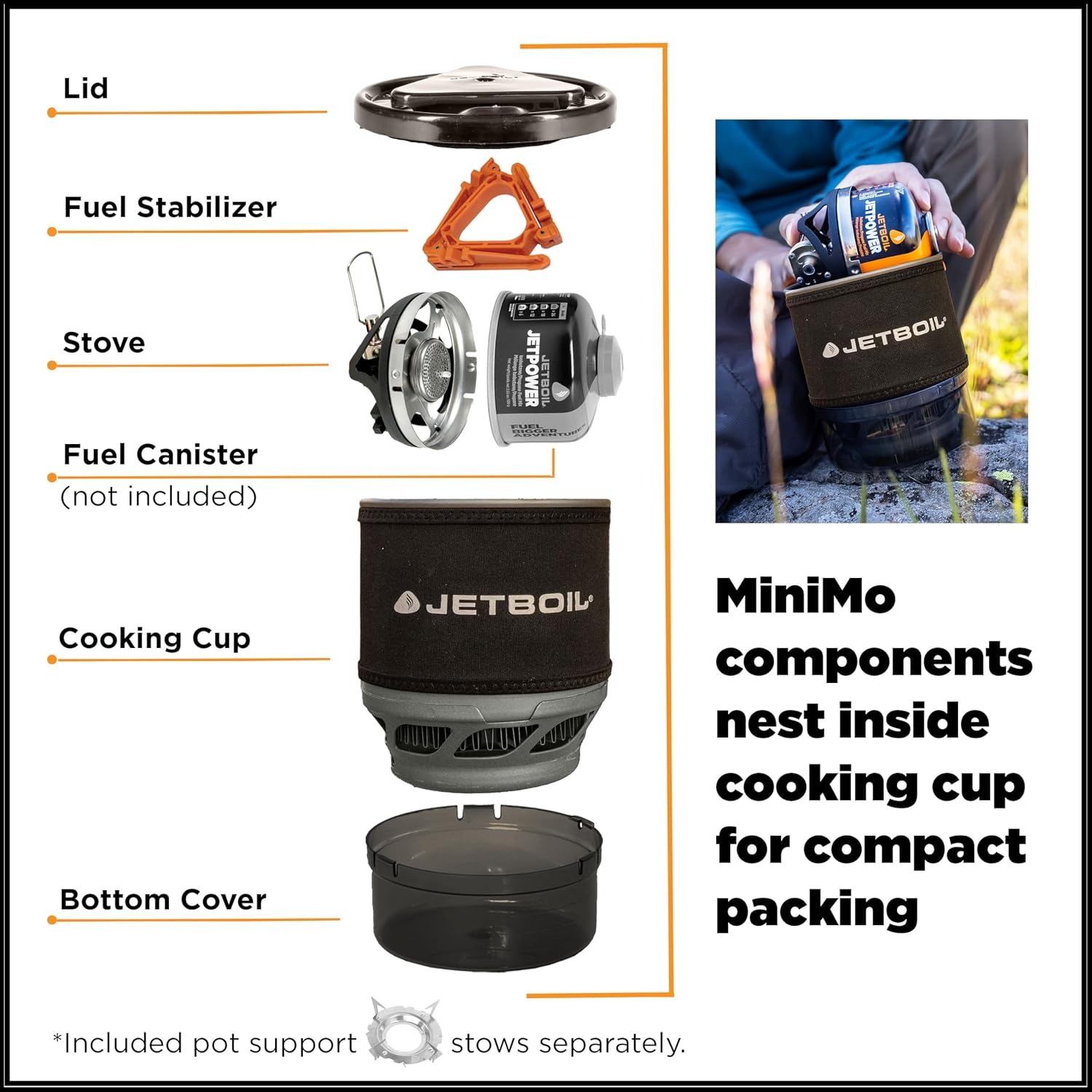
The system includes the burner, the FluxRing cooking cup, a lid, a bottom cover, a fuel can stabiliser and a pot support. The stabiliser is the piece most people underrate. It is a small plastic tripod that clips to the base of the gas canister and spreads the footprint. Once you have knocked over a full cup of boiling water on a slope, you never camp without one again.
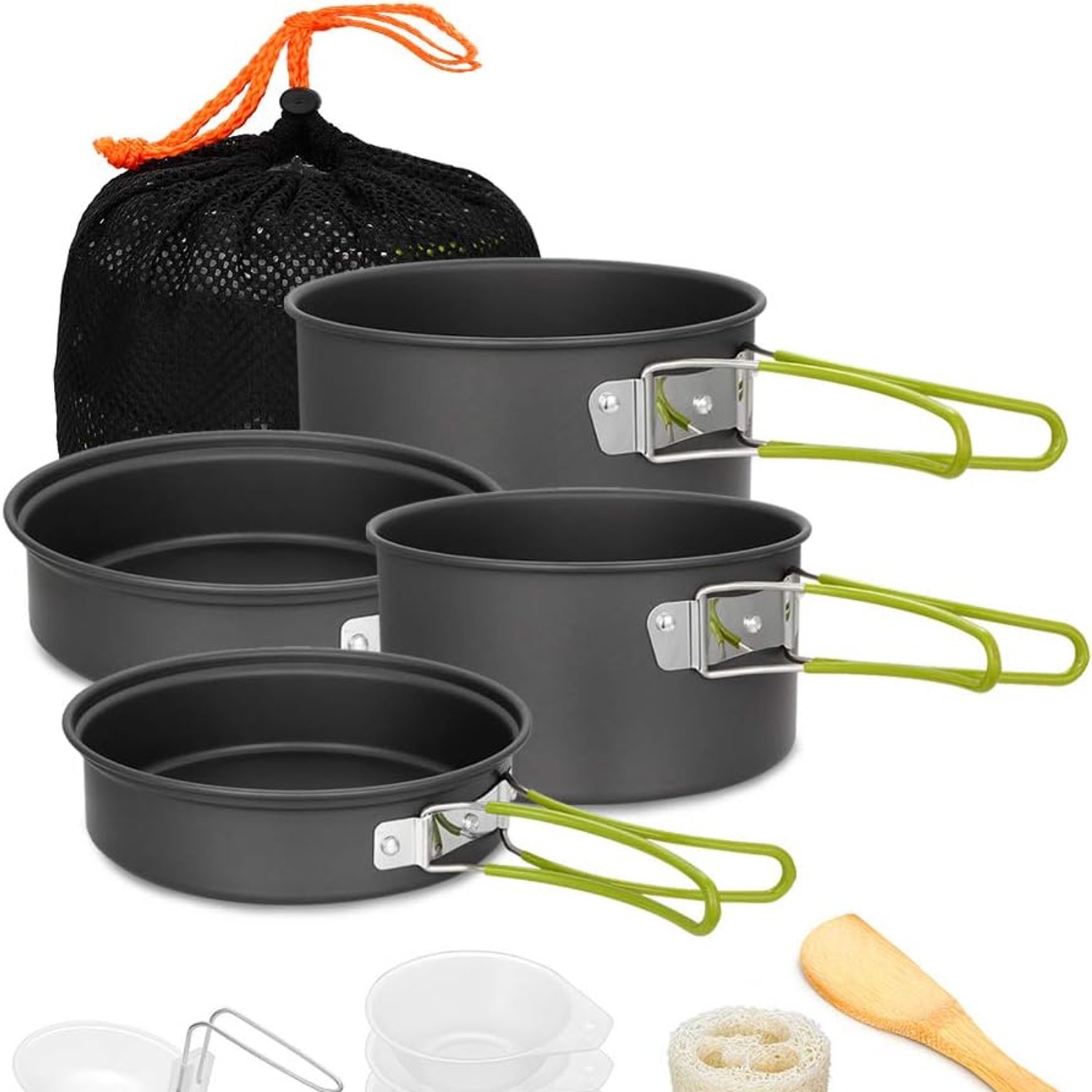
The pot support lets you put other cookware on the burner. You lose the efficiency benefit of the fins when you do, but it means you can carry a small fry pan for a weekend trip and still use the same burner.
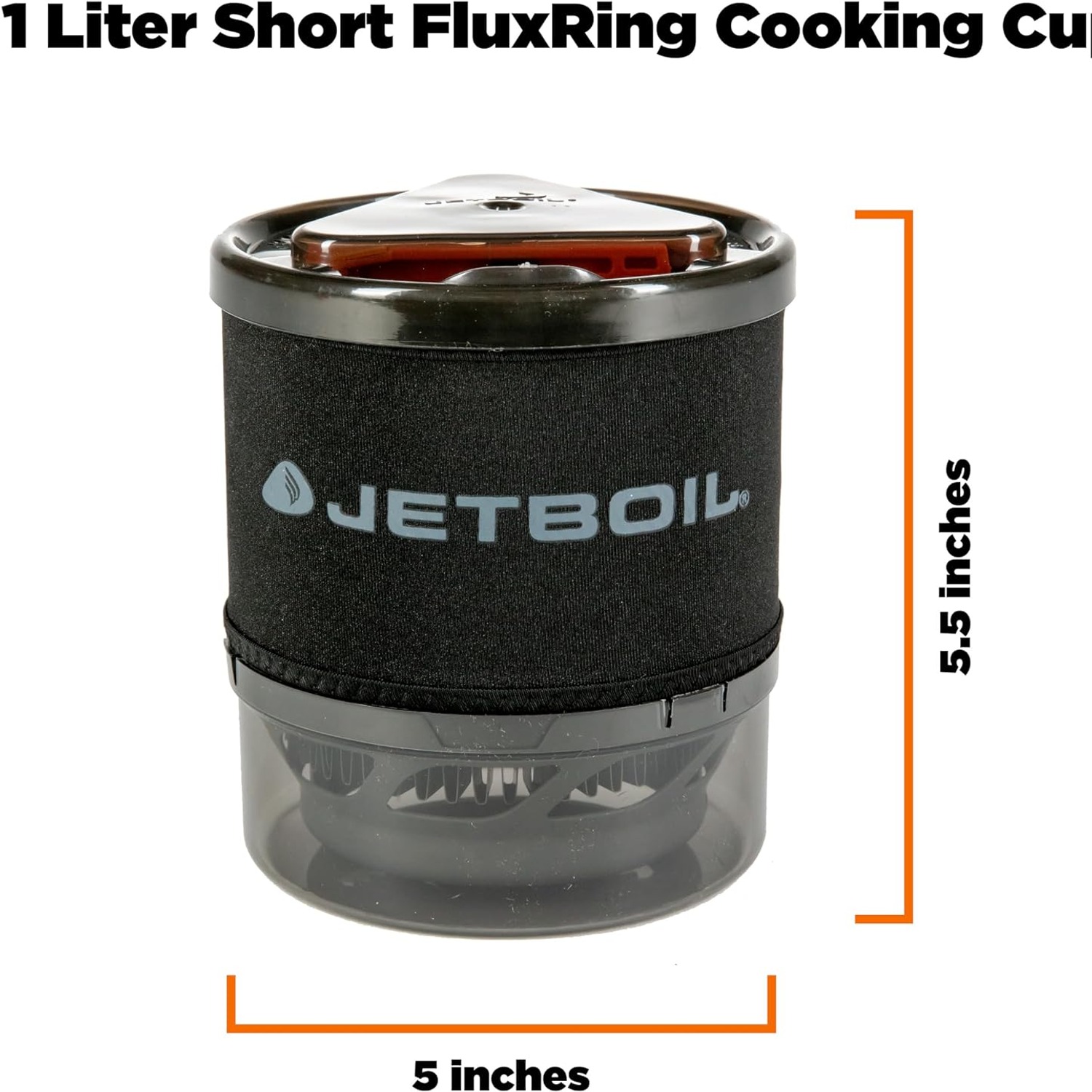
The whole thing packs into itself. The burner stores sideways inside the cup, which was a specific design decision to save space, and the accessories fit around it. Packed, it is 12.7 cm across and 14 cm tall, and the system weighs 414 g.
Who it suits
This is a personal cooking system, and that word personal is doing real work. It is sized for one person, or two people cooking simple meals in turns.
It suits overnight and multi-day hikers who want hot food rather than just hot water. It suits climbers and alpine walkers who need something quick and wind-tolerant. It suits anglers and hunters who want to brew up without unpacking a full camp kitchen. It works well for four-wheel-drive touring as the quick-coffee stove that lives in the console, separate from the bigger two-burner setup. And a lot of people keep one in an emergency box at home, because it lights with a button and makes hot water in minutes.
It is not the right tool for a family of four. If you are cooking for a group, you want a larger pot and a wider burner. It is also not a liquid-fuel expedition stove for extreme cold or places where canisters are hard to buy. It runs on threaded LPG canisters, and those need to be available where you are going.
How to choose between stove types
If you only ever eat dehydrated meals and instant noodles, a boil-only integrated system is cheaper and slightly lighter. You give up simmer control, which you may never miss.
If you want to actually cook, the simmer control is the whole argument. Among the best simmer control camp stove options, an integrated system with a regulator is the one that also boils fast, which is a combination you do not get from a bare burner.
If you cook for a group or want to use your own pots most of the time, a standalone burner with a wide support and a separate pot set makes more sense. You trade efficiency for flexibility.
If you walk very long distances and count grams obsessively, there are lighter options. They are usually less efficient per gram of fuel, so on trips longer than a few days the maths can swing back toward the heavier, thriftier system.
Think about where you camp too. Exposed ridgelines and beaches reward a stove where the pot sits down onto the burner. Sheltered forest sites are more forgiving.
Using it well
Screw the burner onto the canister by hand until it is snug, never with tools. Clip the stabiliser on before you add the cup. Press the igniter with the valve barely open, then build the flame up. Keep the lid on while boiling, because an uncovered cup loses a surprising amount of heat.
In the cold, keep the canister in your sleeping bag overnight or inside your jacket for ten minutes before cooking. Cold gas means low pressure and a weak flame. If the flame starts sputtering mid-meal, that is usually the cause rather than a fault.
Never run it inside a tent, vestibule or vehicle. Carbon monoxide is odourless and the fire risk with nylon is real.
Looking after it
Let everything cool before you pack up. Wash the cup by hand with warm water and a soft sponge, and keep steel wool away from it. The fins under the cup need the most attention, since burnt-on food and soot sitting between them reduce the efficiency you paid for. A soft brush clears them out in under a minute.
Dry everything properly before storage, pack the burner back inside the cup, and store the canister separately somewhere cool. Before each trip, give the burner head, the threads and the igniter a quick look for grit, bends or corrosion.
The short version
The MiniMo is a complete one-person camp kitchen at 414 g. It boils quickly thanks to the FluxRing heat exchanger, it simmers properly thanks to the regulator valve, it lights with a button, and it packs into its own cup along with the stabiliser and pot support. Maximum output is 2600 W and it runs on standard threaded gas canisters, which are sold separately.
If you want hot water fast and nothing else, cheaper options exist. If you want to cook real food on the trail without carrying a second stove, this is the kit that covers both.