

The complete guide
How To Choose A Solar Camping Lantern That Actually Lasts The Night
The problem with camp lighting
Most people buy their first camping lantern in a hurry, the week before a trip. It is cheap, it takes three AA batteries, and it works beautifully for about four nights. Then the batteries flatten somewhere between the second and third day of a long weekend, and you spend the rest of the trip rationing phone torch light and tripping over tent pegs.
The second lantern people buy is usually rechargeable. That solves the battery-buying problem but creates a new one. A rechargeable lantern with a single USB port is only as good as your last access to a power point. Three days into a trip with no mains power, a dead USB lantern is a brick with a handle.
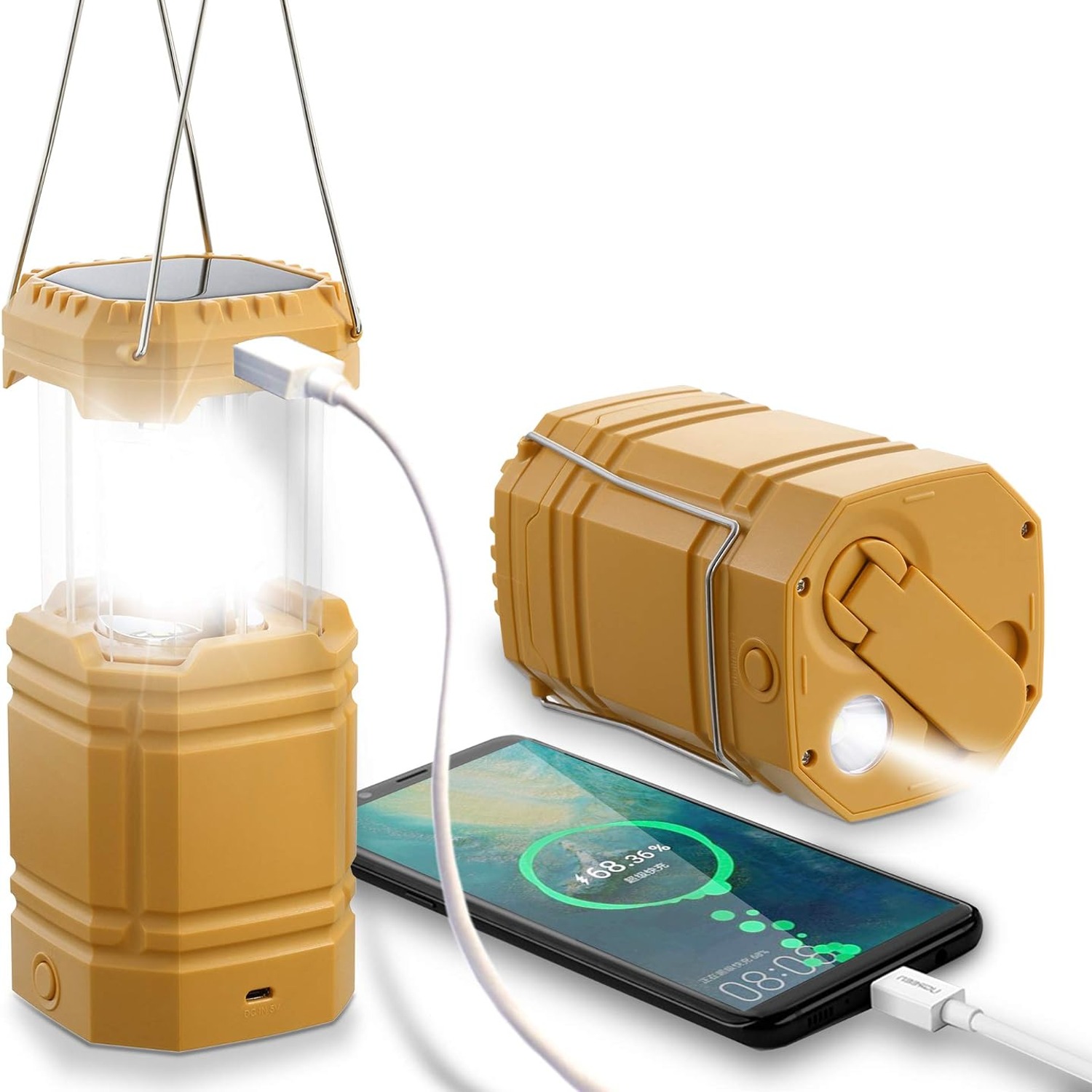
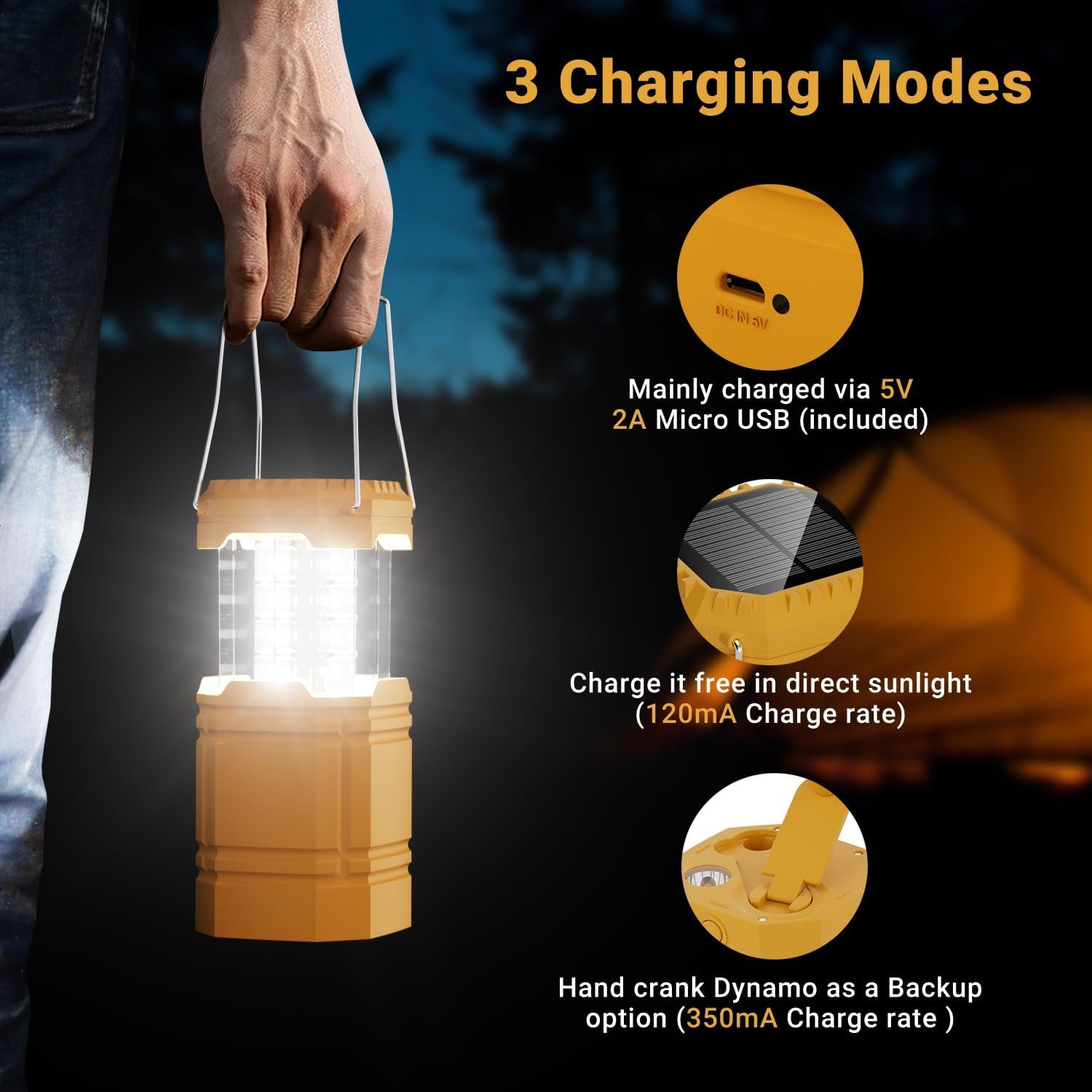
What makes this lantern different is that it carries three separate ways of putting energy back into the battery. There is a solar panel on top, a fold-out hand crank, and a USB cable in the box. If one option is unavailable, the other two are still there. That redundancy is the whole point, and it is why this style of light ends up in emergency kits as often as camping boxes.
How it works
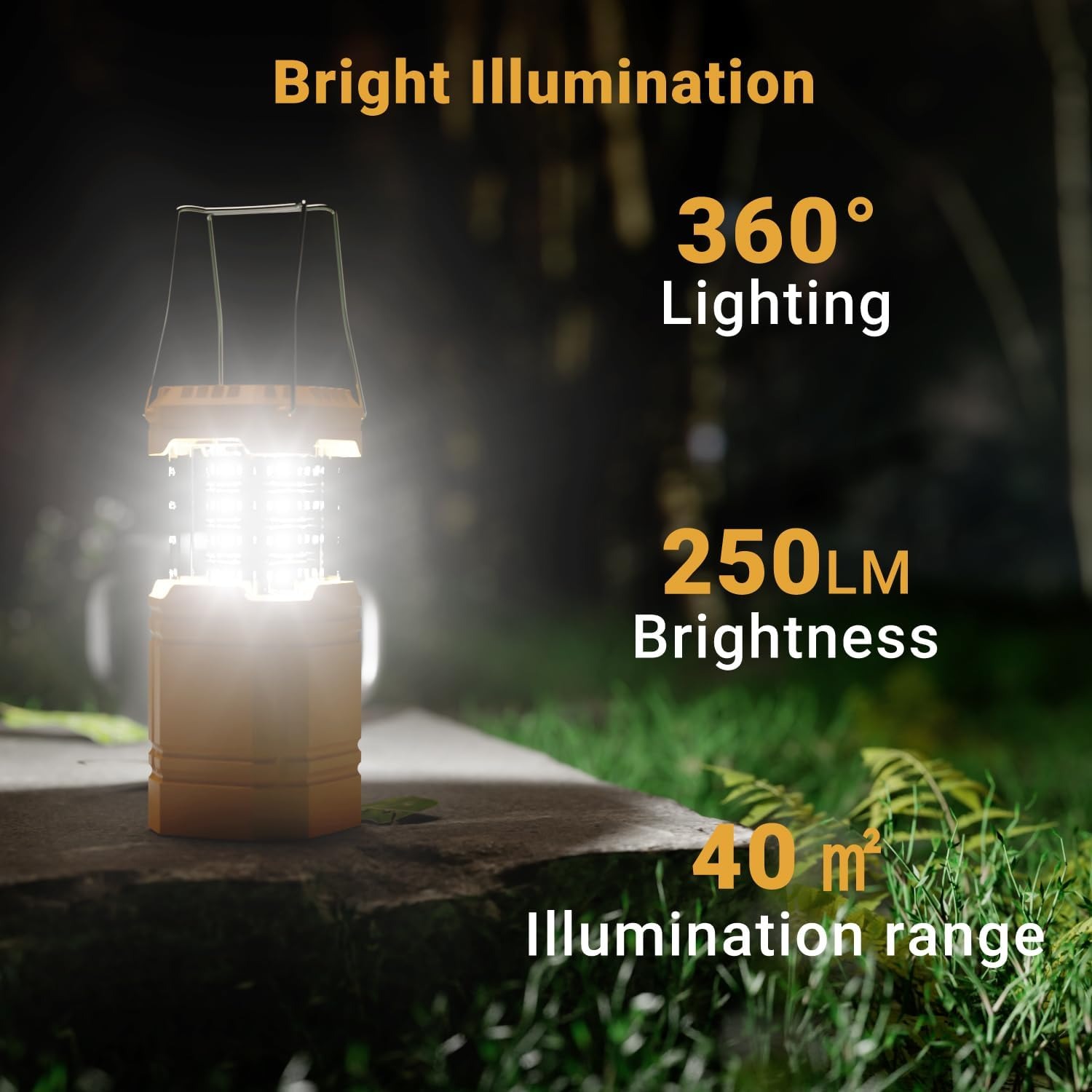
Inside the body there are twelve LEDs. At full output they produce 200 lumens, spread across a full 360 degree circle rather than fired in one direction. That matters more than the raw number. A 200 lumen spot beam lights a narrow cone and leaves everything else dark. A 200 lumen diffused lantern makes a whole tent interior usable.
At the base there is a separate LED torch. This is the one you reach for when you are walking somewhere, because a directed beam shows you the ground in front of you. There is also an SOS flashing mode, which exists for the day you genuinely need to be found.
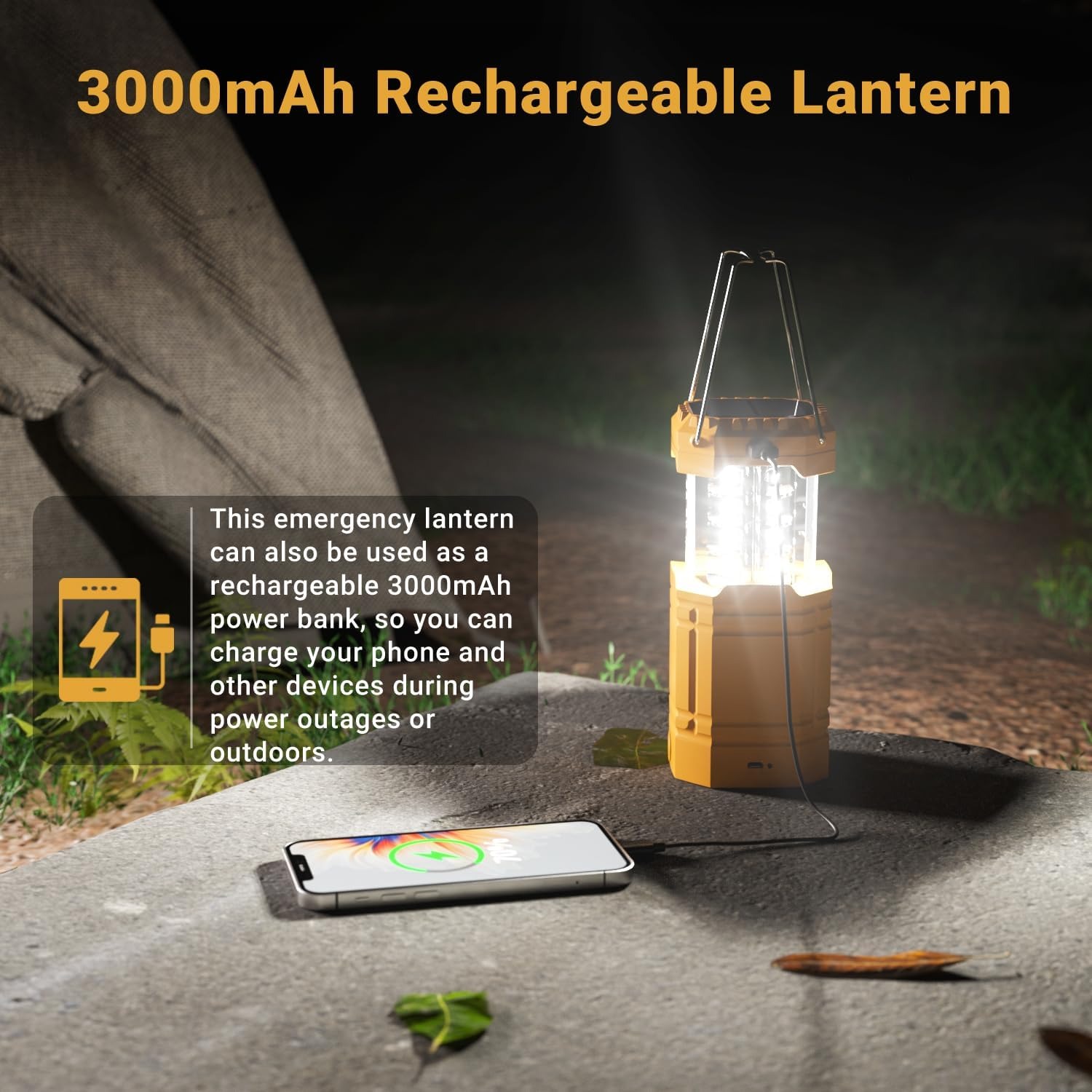
Power comes from a built-in 5V lithium polymer cell rated at 3000mAh. Fully charged, the lantern is rated to run for at least 30 hours. How close you get to that depends on how hard you run it. Sitting at lower brightness most of the evening stretches it out a long way. Running flat out every night, plus charging a phone off it, will obviously pull the number down.
The solar panel uses polycrystalline silicon. It is not going to charge the unit in an hour, and no panel that size would. What it does well is trickle energy back in across a whole day. Clipped to the outside of a pack while you walk, or left on a picnic table in the sun, it quietly recovers a meaningful part of what you used the previous night.
The hand crank is your last line of defence. Fold the handle out, turn it steadily, and you generate enough charge for a useful burst of light. Nobody enjoys cranking a lantern for twenty minutes, and you should not have to. Think of it the way you think of a spare tyre.
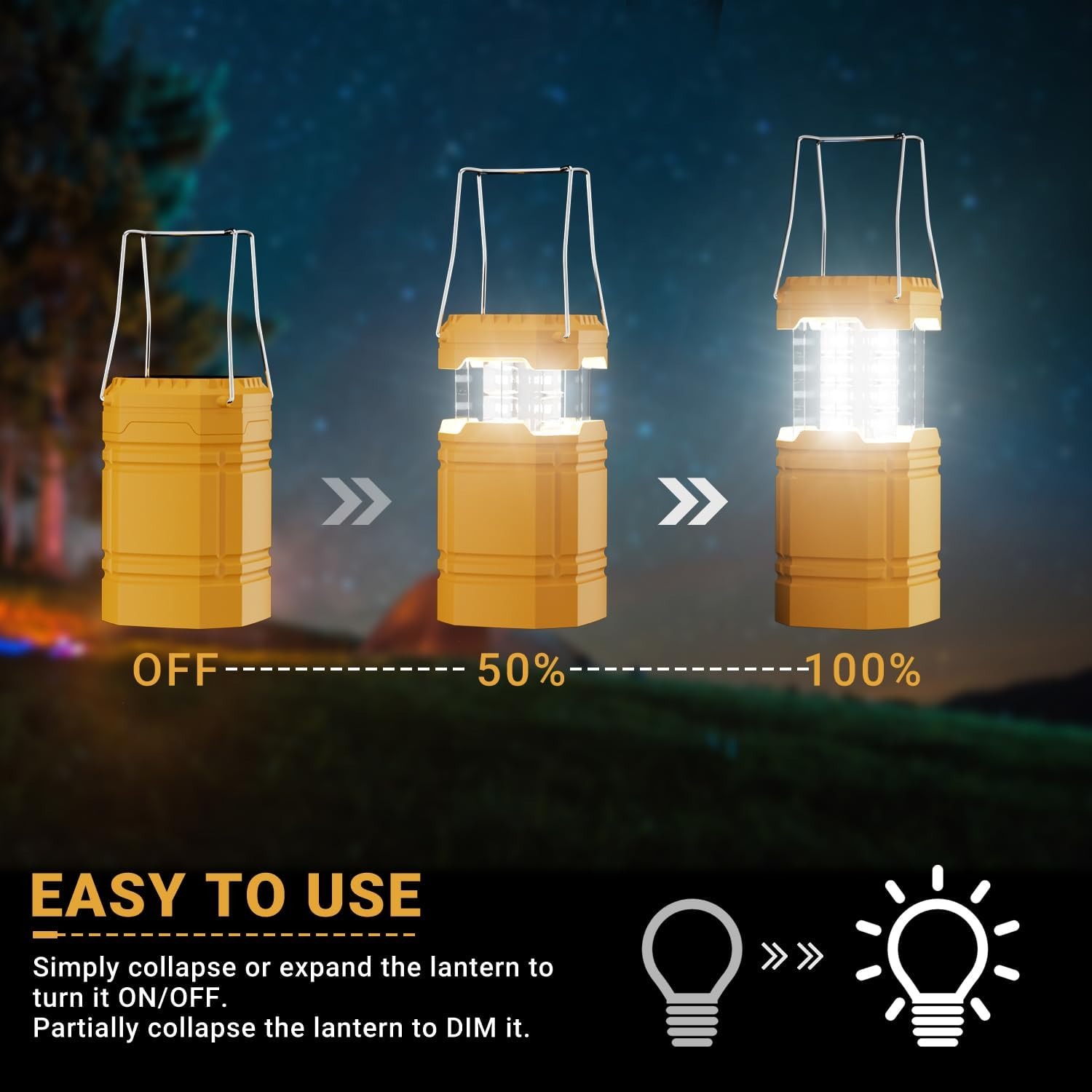
The switch design deserves a mention. There is no button. You pull the body upwards to switch the light on and press it down to switch off, which also collapses it for packing. In the dark, with cold hands, a mechanism you can operate by feel beats a tiny rubber button every time.
Who it suits
Campers are the obvious group, particularly people who camp for more than two nights at a stretch and do not have powered sites. Car campers, tent campers, caravanners who want a backup light that does not depend on the house battery.
Hikers get value from the 278 gram weight. That is light enough to carry without resenting it, and the collapsible body means it is not fighting your sleeping mat for space.
Then there is the group that never takes it outdoors at all. If you live somewhere with storms, bushfires, flooding or just an ageing grid, a lantern that charges three ways is sensible household equipment. It sits in the hall cupboard next to the first aid kit, gets topped up twice a year, and earns its cost the first time the street goes dark for six hours.
Night fishers, dog walkers on winter evenings, people who work on cars in a driveway, anyone with a shed that never got wired properly. The use cases spread out quickly once you own one.
How to choose
Start with how many people you are lighting for. For one or two people in a small tent, 200 lumens is plenty and anything brighter is a waste of battery. For a group of six around a table, plan on two lanterns rather than one brighter unit. Spreading light from two points reduces shadows and looks far better than a single harsh source.
Think about your charging reality. If every trip you take ends at a powered site, the solar panel and crank are nice extras you will rarely use, and a plain USB lantern would serve. If you go bush for four days at a time, those backup methods are the reason to buy.
Water resistance is worth understanding properly. IPX4 means protection against splashing water from any direction. Rain, spray, a wet table, condensation inside a tent. It does not mean you can drop it in a river. If you specifically need a submersible light, this is not the one.
Weight and pack size matter in direct proportion to how far you carry your gear. At 278 grams this sits comfortably between ultralight hiking gear and heavy car camping kit. For most people that is the right compromise.
Finally, consider the power bank function. A 3000mAh cell is not going to keep a family of phones alive all weekend. What it will do is give you one meaningful top-up, enough for navigation, a weather check or an emergency call. Judge it on that basis and it looks genuinely useful. Judge it as a replacement for a dedicated power bank and it will disappoint.
Looking after it
The single most important maintenance job is keeping the solar panel clean. Dust, pollen, salt spray and fingerprints all cut charging speed, and panels this size do not have much performance to spare. A wipe with a damp cloth before each trip is enough.
Dry the lantern before you pack it away. IPX4 handles rain while you are using it, but sealing a damp unit into a plastic tub for six months invites corrosion around the port.
Lithium batteries do not like extremes. Storing the lantern in a car boot through summer will shorten its working life. A cupboard indoors is better. Top the charge up every few months during storage, because lithium cells left completely flat for long stretches can lose capacity permanently.
Close the charging port cover before you take it outside. It is the one part of the housing where water can find a way in, and it takes two seconds to check.
Treat the crank handle gently. It is a small mechanism doing a mechanical job, and it responds better to steady turning than to frantic effort.
The short version
This is a folding LED lantern that solves the problem of running out of light somewhere with no power point. Twelve LEDs, 200 lumens, 360 degree spread, a torch at the base and an SOS mode. Three charging methods so you are never completely stuck, a 3000mAh battery that also feeds your phone, IPX4 water resistance, and a body that collapses flat and weighs 278 grams.
It is not the brightest lantern you can buy, and it is not a replacement for a proper power bank. What it is, is a reliable light that keeps working when the convenient options have run out, which is exactly when you need light most.