
The complete guide
How To Choose A Soft Sided Cool Bag That Actually Keeps Things Cold
The problem with warm drinks and soggy lunches
Everyone has had this day. You pack the car in the morning, drive two hours, open the bag at the picnic spot and find lukewarm cans sitting in cloudy water. Or you get home from the beach and discover a wet patch on the back seat that was not there when you left.
Both problems come from the same place. Cheap cool bags use thin insulation and a fabric lining that lets water through at the seams. They keep things cool for about an hour, then stop working, and the mess they make is on you.
A properly built soft cool bag fixes this with two things. First, a thicker insulated wall that slows how fast outside heat gets in. Second, a sealed liner that holds meltwater rather than letting it escape. Get both right and you have a bag that works for a whole day out instead of a quick trip to the park.
How an insulated cooler bag actually works
Insulation does not create cold. It slows the movement of heat. Your ice is doing the cooling, and the bag's job is simply to stop the warmth of the day reaching it for as long as possible.
That means three things matter. The thickness of the insulated wall, how well the bag seals when it is closed, and how much cold mass you put inside. The last one surprises people. A half empty cooler warms up much faster than a full one, because air transfers heat quickly and a full bag has less of it.
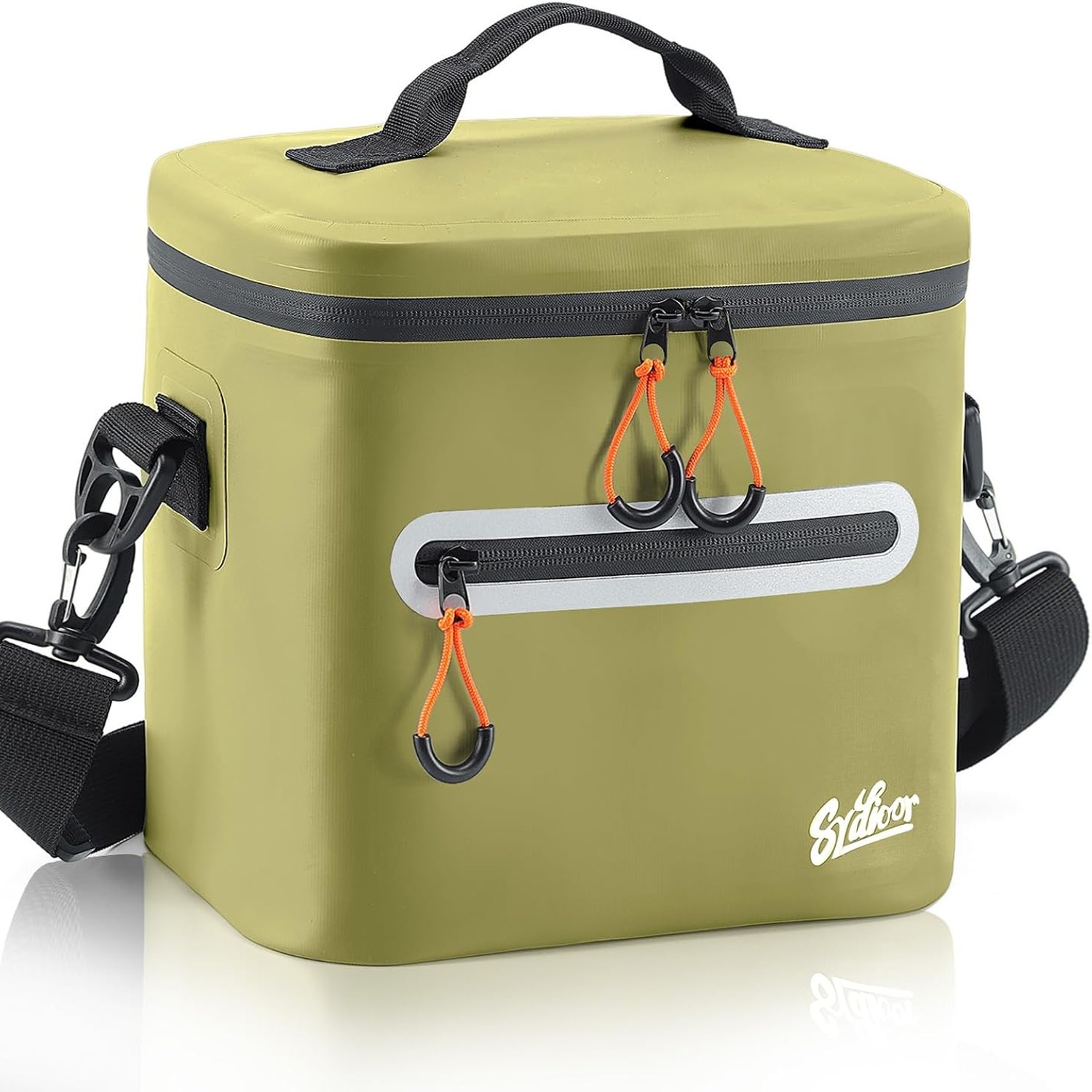
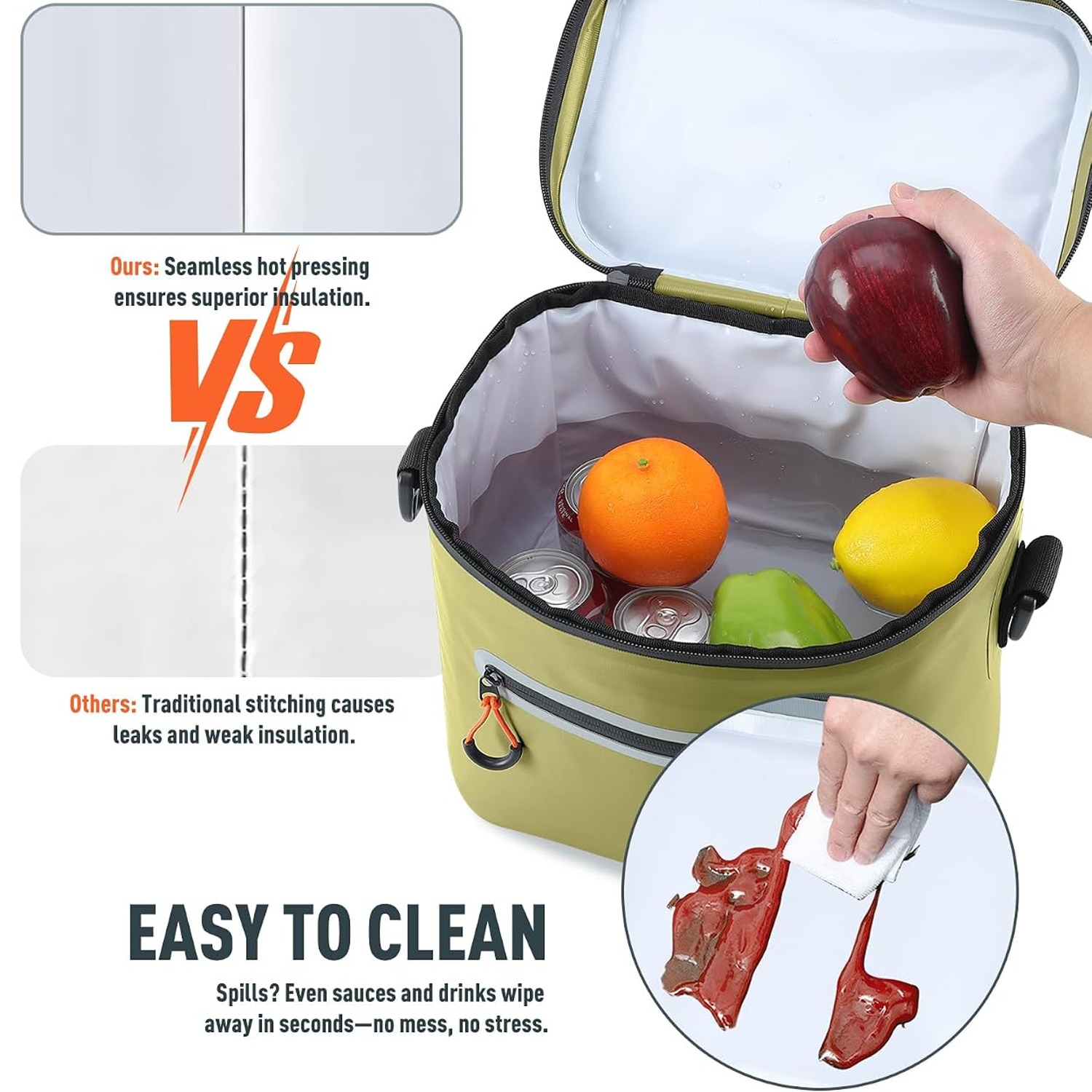
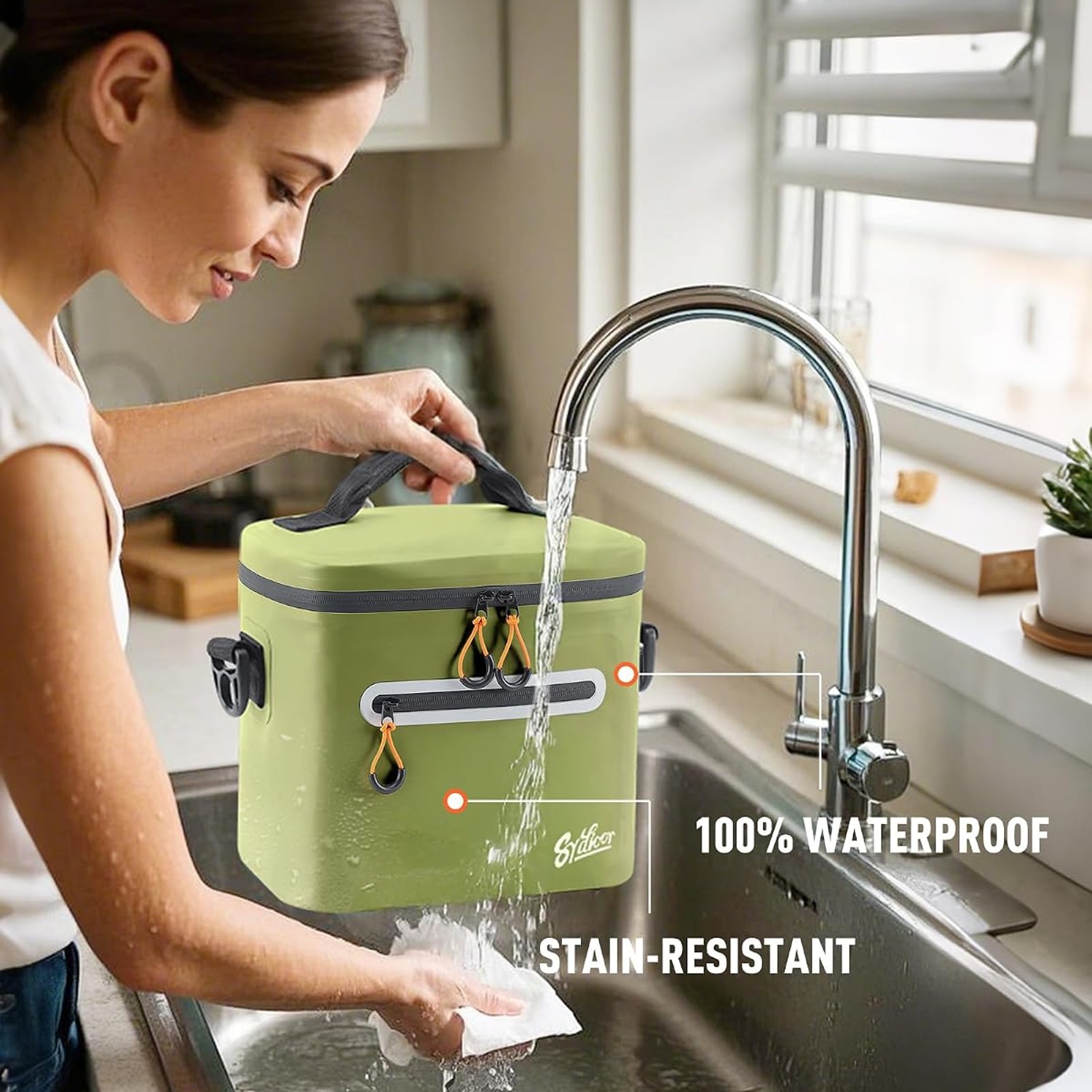
This particular bag uses a PEVA liner for the insulated section and a TPU outer shell. PEVA is the food-safe plastic you often see used for leak-proof cooler linings, and it is the reason melted ice stays put. TPU on the outside is a step up from the usual Oxford cloth. It is smooth, waterproof, and it does not hold sand or absorb spills.
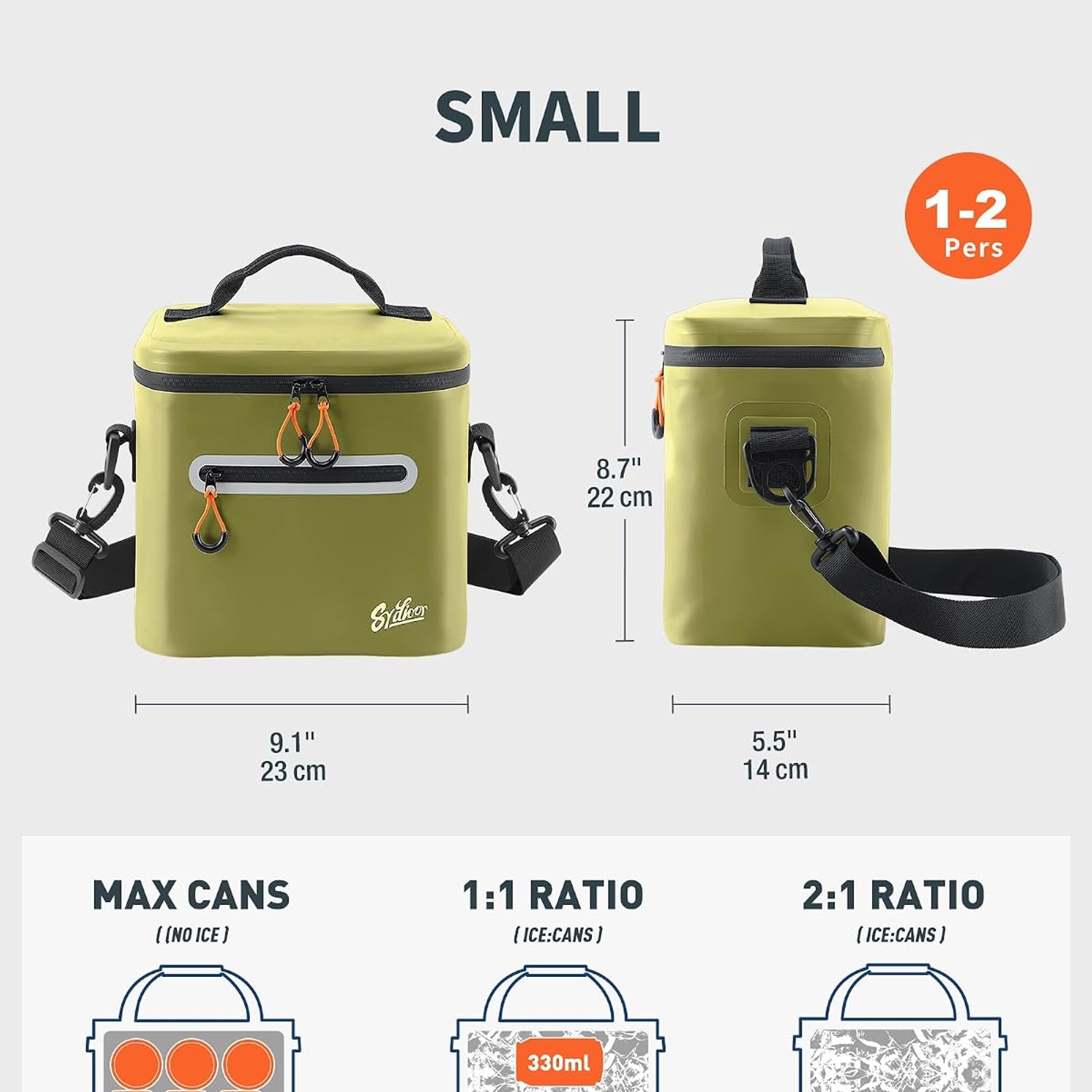
The capacity is 14 litres, which the maker lists as a 16 can size. The bag measures 19 cm deep, 30 cm wide and 25 cm high. For most people that is a day bag for two to four, or a solid week of lunches for one.
Soft or hard, which one suits your trips
Hard coolers hold temperature longer. That is just physics, because the walls are thicker and the lid seals against a rigid body. If you are going away for four days with no power and no ice refills, a hard cooler is the right tool.
Soft cool bags win on everything else. They weigh less, which matters when you are walking from a car park to the sand. They carry on a shoulder strap instead of needing two hands. They store flat when empty, so they are not taking up a whole corner of the garage all winter. And they fit into odd spaces in a packed boot in a way a hard box never will.
Most people, honestly, are doing day trips. A beach afternoon, a picnic, a fishing morning, a drive with the kids. For that pattern, a soft sided cooler bag is the better everyday choice and the hard cooler sits unused most of the year.
Working out what size you need
The quickest way to size a cooler is to count drinks, then add space for ice. A 16 can rating assumes cans only, with no ice at all. In real use you will want roughly a third of the space for ice or frozen packs.
So a 14 litre bag realistically carries about 10 to 12 cans plus ice, or a mix of food containers and a few drinks. For two adults on a day out, that is comfortable. For a family of four at the beach for six hours, it covers drinks but you may want a second bag for food.
If you are shopping for the best camping cooler bag for a couple, this size is about right. If you regularly feed a crowd, look at the larger options in the range rather than trying to overfill a smaller bag, because an overstuffed cooler that will not zip shut loses cold fast.
Packing it so it actually performs
A few habits make a big difference, and none of them cost anything.
Chill everything first. Putting room-temperature cans into a cooler means the ice spends its energy cooling the drinks rather than keeping already cold drinks cold. Fridge-cold cans and pre-chilled food will double your useful time.
Fill the gaps. Air is the enemy. If there is space left, add more ice, a frozen water bottle, or a rolled tea towel. A tightly packed bag holds temperature far longer than a loose one.
Keep the lid closed. Every time you open it, the cold air falls out and warm air replaces it. If kids will be grabbing drinks all afternoon, consider keeping a few in a separate small bag so the main cooler stays shut.
Park it in the shade. Sitting in direct sun on hot sand will beat any insulation eventually. Put it under a chair, a towel or the car's shadow.
Cleaning and looking after it
This is where the materials really pay off. A TPU shell wipes clean with a damp cloth, so sunscreen, sauce and sticky drink rings come off in seconds. The PEVA liner can be wiped the same way with a bit of mild detergent.
Do not put it in a washing machine or a dryer. Heat and agitation damage insulated layers and can crack a liner. Hand wiping is the correct method for this style of bag.
The one rule people break is storage. Emptying the water and leaving the bag to dry fully before you put it away prevents nearly every odour problem a cooler can develop. Leave it open overnight, then store it somewhere dry and not crushed under heavy gear.
Where this bag fits in your life
The maker suggests fishing, boating, camping, picnics and hiking, and those are all sensible. But the uses that come up most often are quieter.
The weekly shop on a hot day, so the dairy and frozen items survive the drive home. Long commutes where lunch needs to last until two. Sport on a Saturday, with drinks for a team. Road trips where stopping for food every few hours gets expensive.
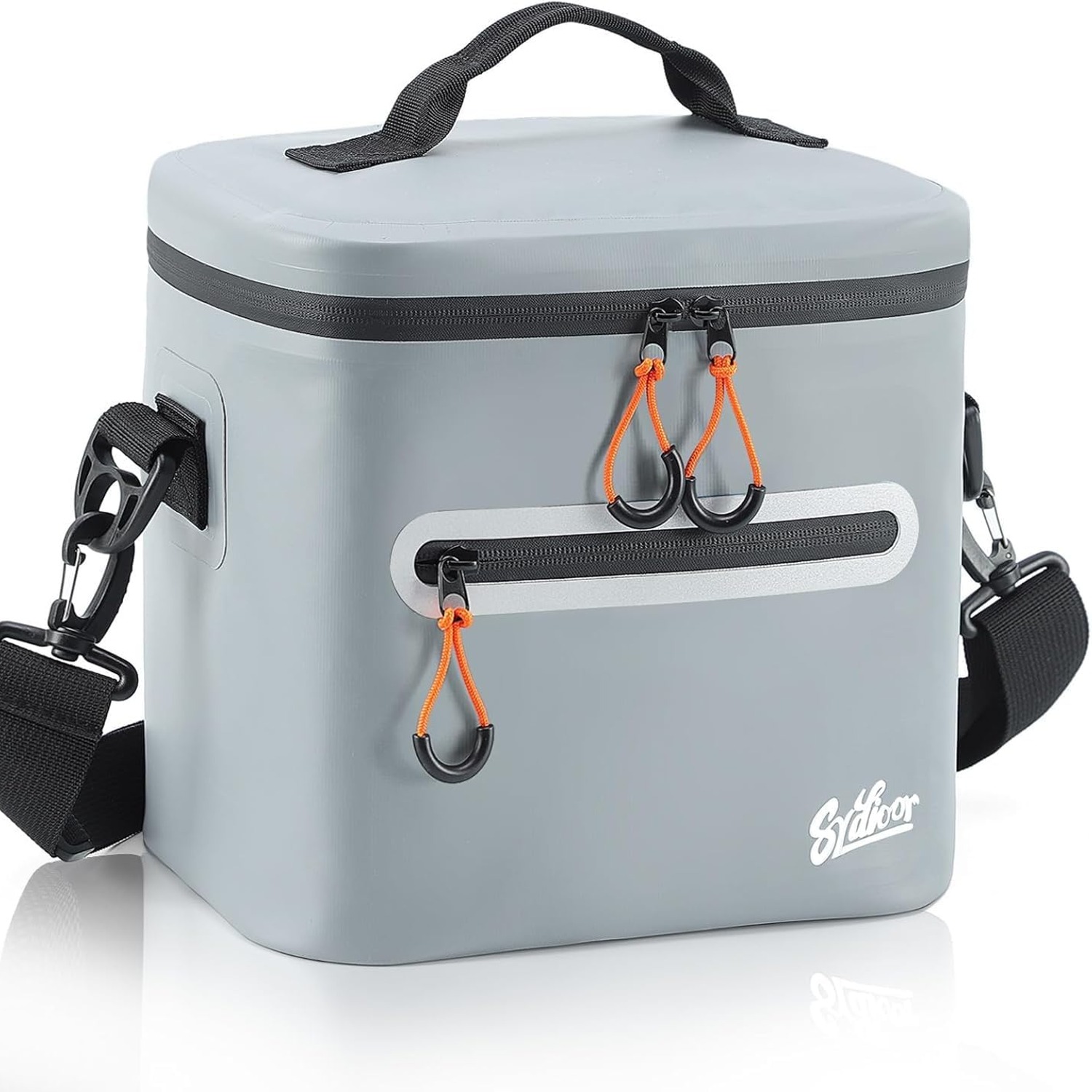
The detachable strap and front zip pocket help with all of these. The strap frees up your hands when you are carrying chairs or a toddler. The pocket keeps a bottle opener, cutlery and keys dry and findable instead of lost at the bottom under the ice.
A note on expectations
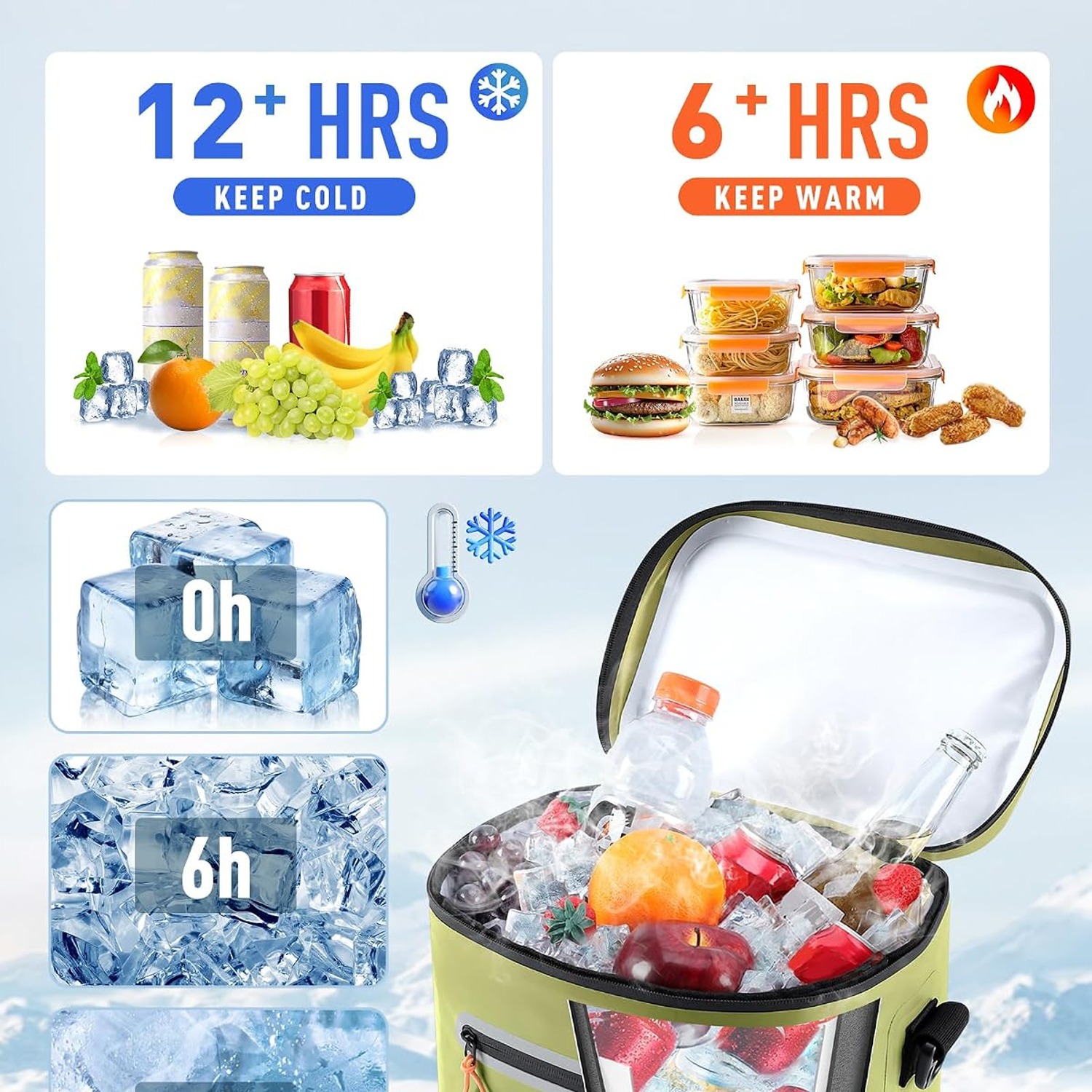
No cooler bag is magic. Cold retention claims you see on any product depend heavily on conditions, and a 40 degree day with the bag in full sun is a different world to a mild morning in the shade.
What you can rely on from the specs here is the build. A leak-proof food-grade liner, a waterproof shell that cleans easily, 14 litres of usable space and a strap that makes it portable. Those are the features that determine whether you reach for a bag or leave it in the cupboard.
The short version
If your days out are measured in hours rather than days, a soft sided cool bag is the practical choice. This one gives you 14 litres, a sealed PEVA liner so meltwater stays inside, a wipe-clean TPU shell that handles sand and rain, a detachable shoulder strap and a front pocket for the small stuff.
Pre-chill your contents, pack it full, keep it shut and out of the sun, and dry it properly before storing. Do that, and it will do the job trip after trip without any drama.