
The complete guide
How to Anchor a Tent in Sand and Snow Without It Pulling Loose
The problem with normal pegs
Every tent comes with pegs, and nearly all of them are thin pins. That design works because of friction. You push the pin into firm earth, the soil squeezes against the shaft, and the resulting grip holds against the pull of your guy line. It is simple and it works well on a grass campsite.
Now take that same pin to a beach. Dry sand does not squeeze. It flows around the shaft and offers almost nothing to grip. The first proper gust lifts a corner, the pin slides straight up, and your shade canopy starts travelling. Fresh snow behaves in much the same way. Plenty of people have learned this the hard way on a windy afternoon, chasing fabric across a dune while holding a useless pin in one hand.
The fix is not a longer pin. It is a different shape altogether.
How wide-blade stakes actually hold
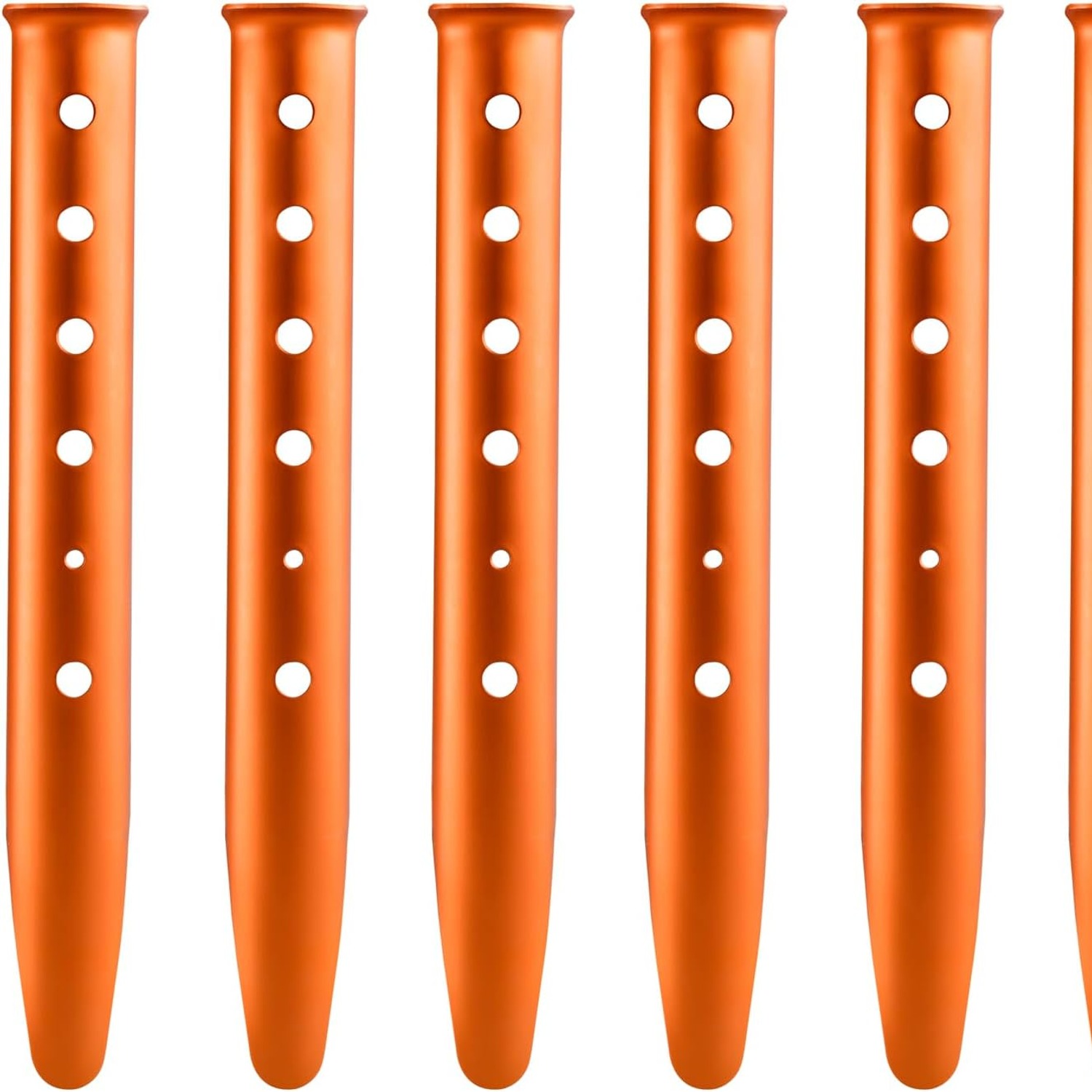
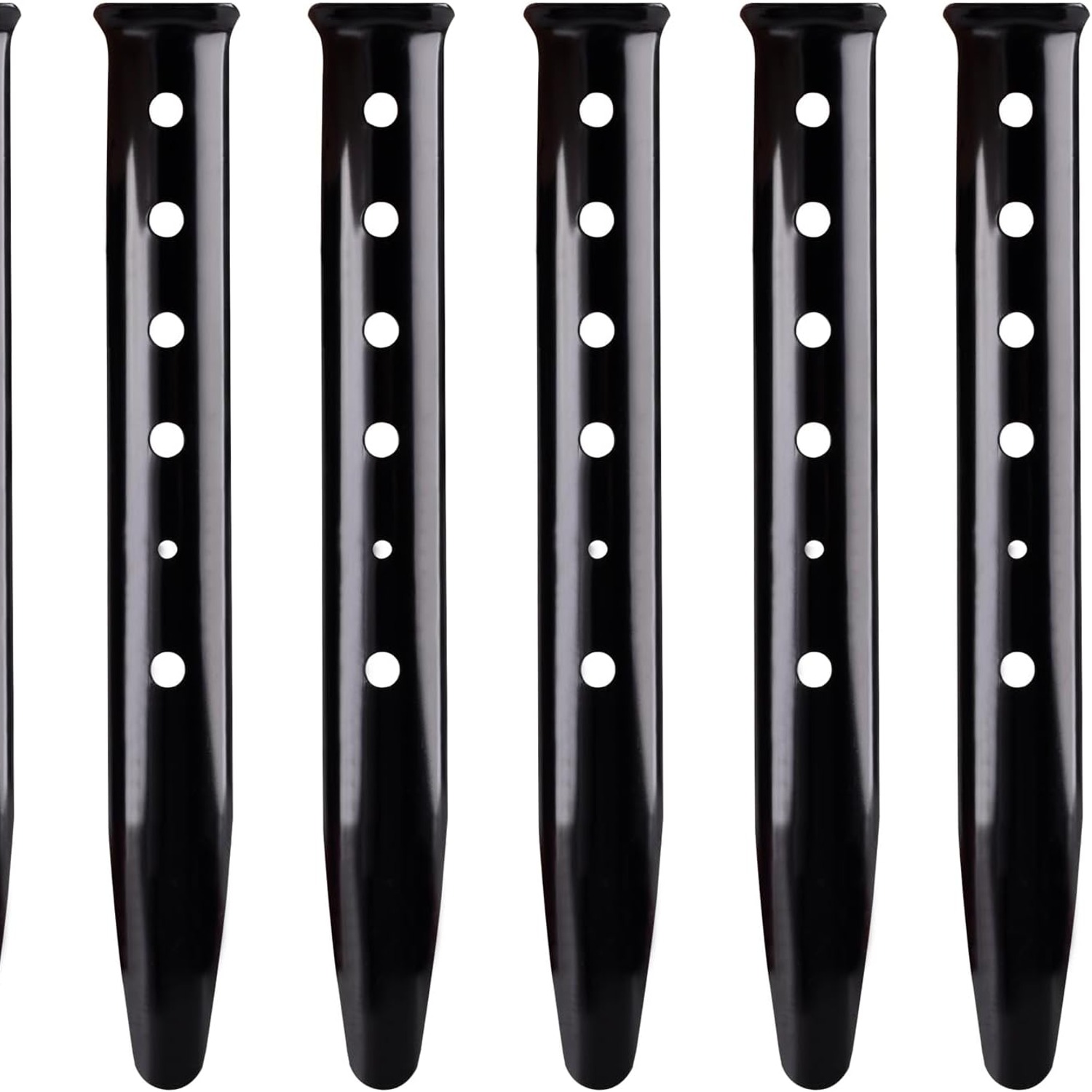
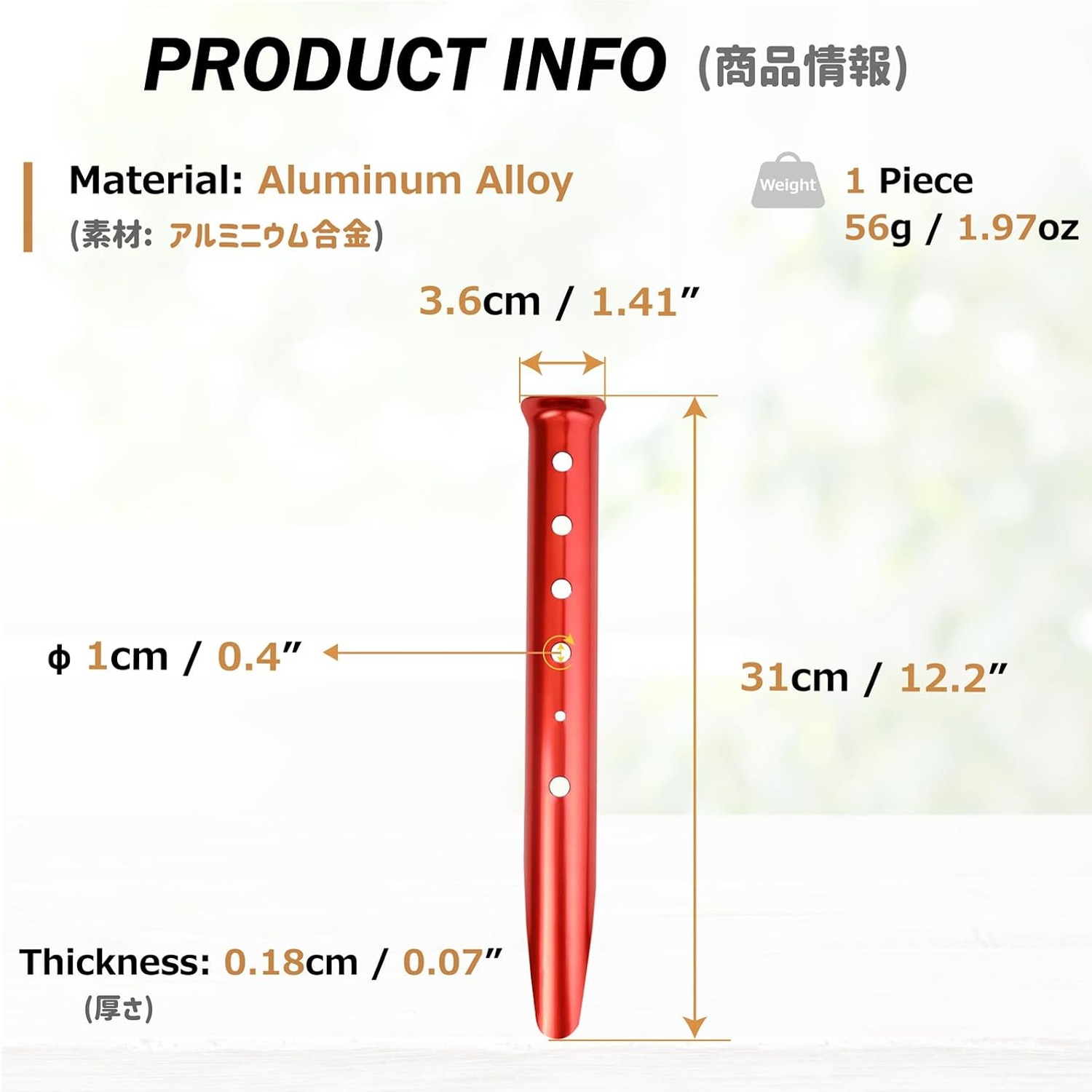
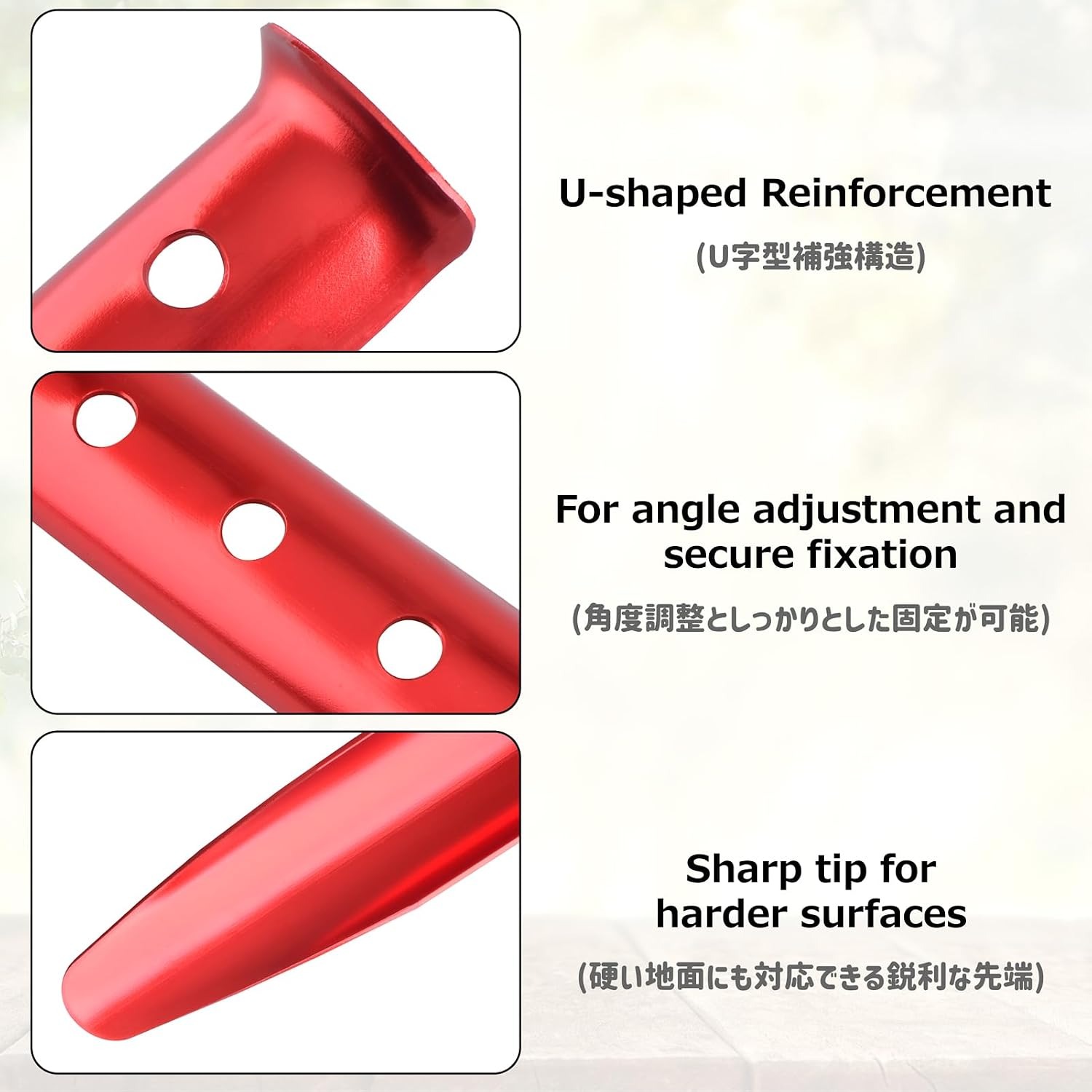
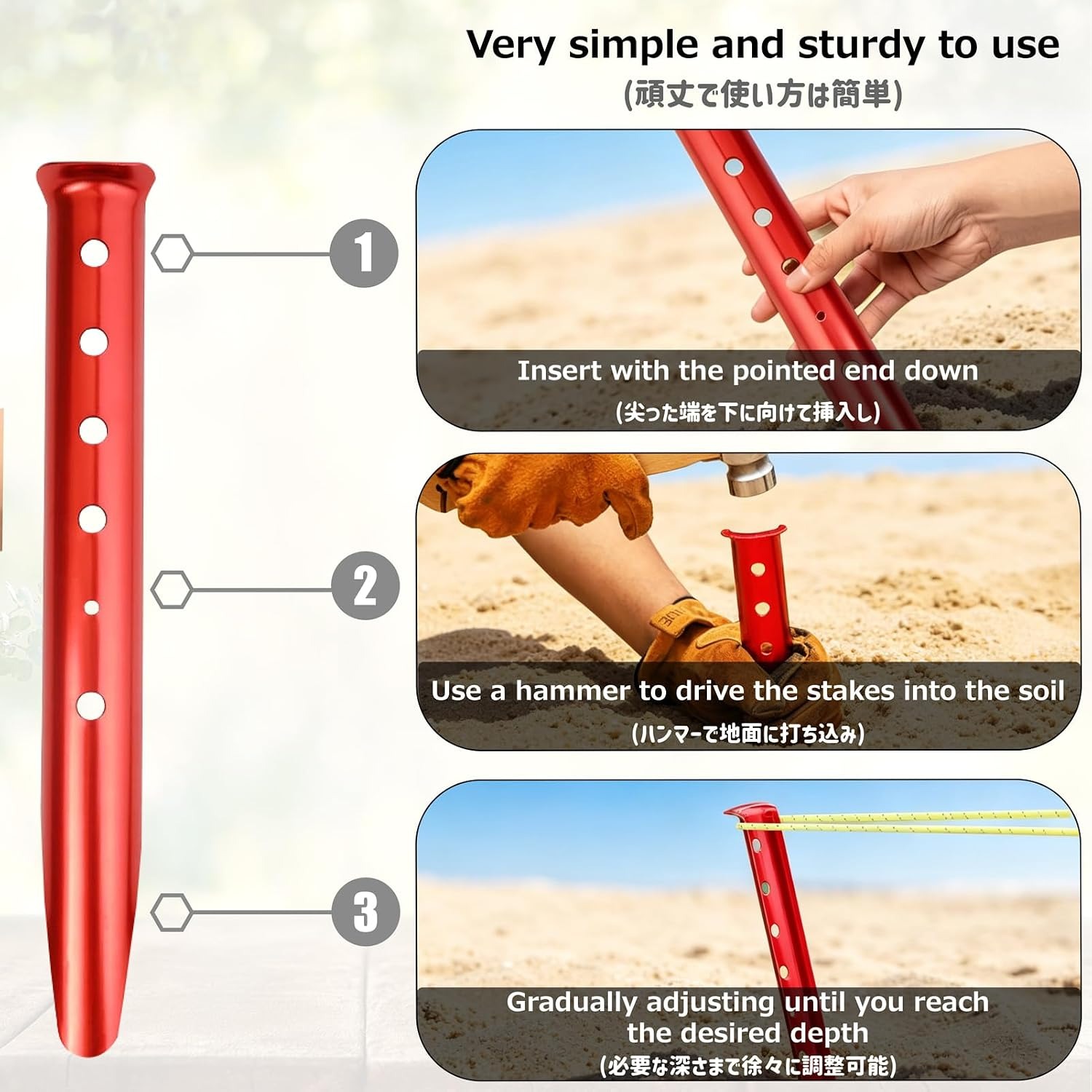
A snow and sand stake is wide and flat rather than narrow and round. These ones are 31cm long and 3.6cm across. You do not push them in from above and hope. You bury them, usually flat or at a shallow angle, under a layer of the same loose material that defeated your normal pegs.
Once buried, the stake stops relying on side friction. Instead it relies on the weight and mass of everything sitting on top of it. To pull the stake out, the guy line has to lift a whole wedge of sand or snow with it. That is a far bigger job than sliding a pin out of a hole, which is why this approach works where the conventional one fails.
The technique is sometimes called a deadman anchor, and climbers and mountaineers have used variations of it for a very long time. The principle has not changed. Bigger surface area, more material on top, better hold.
Burying them properly
Technique matters more than hardware here, so it is worth getting right.
Scrape out a short trench where you want the anchor, roughly a hand's depth to start with. Lay the stake across the bottom of the trench, running sideways to the direction of pull. Loop your guy line or tent cord around the stake and run the line up out of the trench at an angle. Then fill the trench back in and press the material down with your foot or a flat hand.
In dry sand, deeper is better. In wet sand near the tide line, you will get a solid hold at a shallower depth because the sand packs together. In snow, stamp the fill down firmly, and if the temperature is below freezing it will often set harder over an hour or two, which improves the hold further.
If you pitch and the anchor still feels soft, the answer is almost always the same. Bury it deeper and pack the top harder.
Who these suit
Beach campers and day-trippers get the most obvious benefit. A shade canopy on an open beach catches wind like a sail, and anchoring it with pins is a waste of time. The same applies to windbreaks, picnic shelters and beach tents.
Winter campers are the other main group. Anyone pitching on snow needs something that works in a medium with no structural grip. These weigh around 52g each, so the whole set of six adds about 310 grams to a pack. For hikers walking in to a snowline camp, that is a reasonable trade for a tent that stays where you left it.
Dune and soft-soil campers sit somewhere in between. Loose sandy soil, riverbank sand and soft ground after heavy rain all behave more like sand than like firm earth, and wide stakes handle all of them better than pins do.
Who these do not suit
Be honest about where you camp. These are not general-purpose pegs. On grass, packed dirt or stony ground, a wide aluminium blade is the wrong tool. You cannot drive it in easily, and trying to force it with a mallet risks bending the metal. The manufacturer is specific on this point, and it is good advice rather than a disclaimer.
If your trips mix terrain, carry both types. Keep your usual pegs for firm sites and bring the wide stakes for the soft ones. Six wide stakes and a handful of pins covers almost every campsite you are likely to pitch on.
There is one more compatibility note. If your tent corners use small needle loops rather than webbing loops or cord, a wide stake head will not thread through them cleanly. Check your tent before you buy, or plan to add short cord loops at the pegging points, which is a five-minute job with some spare guyline.
Why the colour matters
Orange seems like a styling choice until you have packed up on a snowfield. You buried the stakes deliberately, the fill has smoothed over, and now you are patting the snow trying to find six small pieces of metal before you walk away.
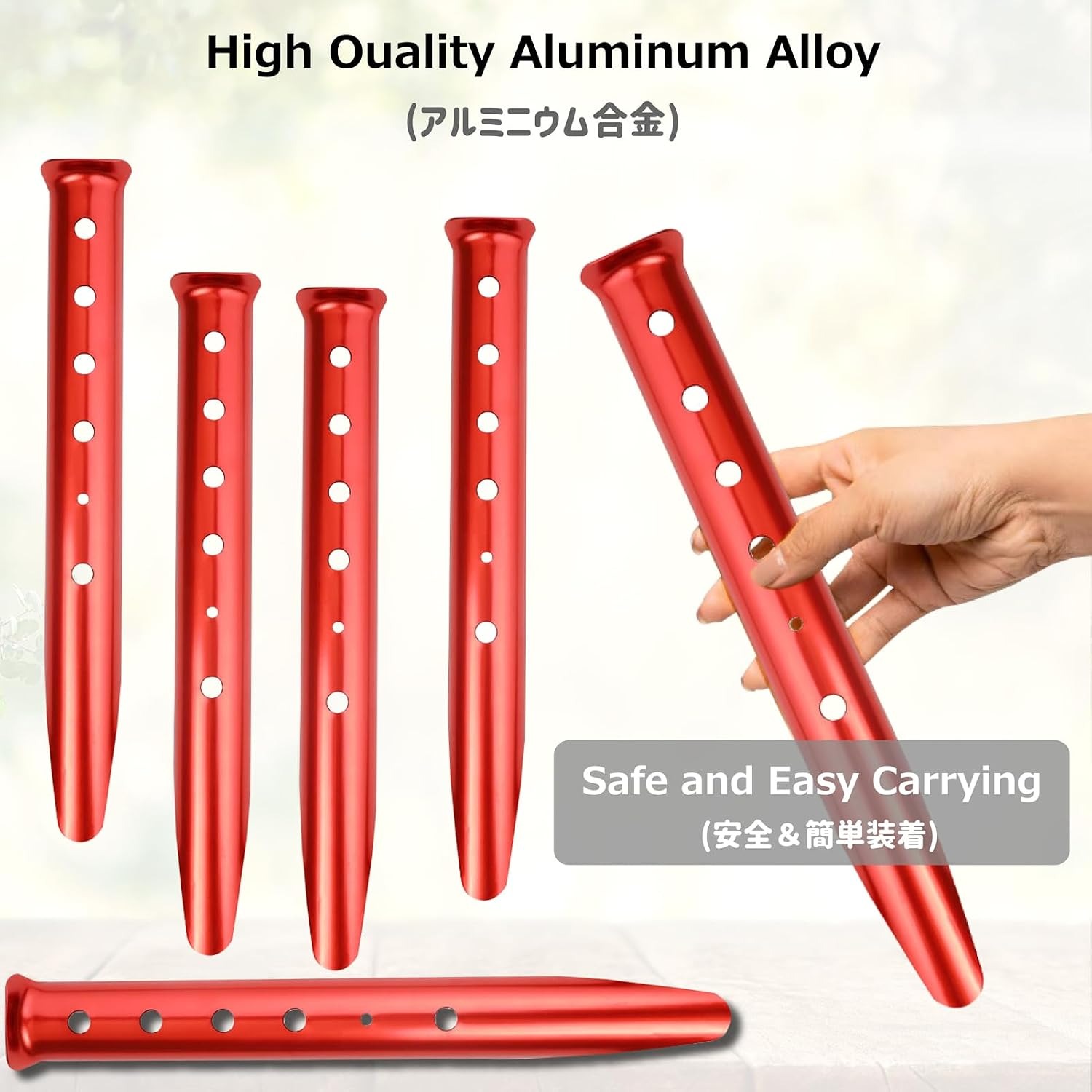
A bright anodised finish gives you a visual marker. Leave a short tail of cord above the surface, note the colour, and pack-up stops being a search. The anodising does a second job too, hardening the outer surface so the stakes handle repeated use and scraping against grit without wearing through quickly. High visibility tent pegs are not a gimmick, they are just a way of keeping your kit complete.
Looking after them
This is light-duty maintenance, but it makes a difference.
After a beach trip, rinse the stakes in fresh water. Salt sitting on metal is never a good idea, even on aluminium with a protective finish. Dry them before packing so you are not sealing moisture into a bag with the rest of your gear.
Brush off caked sand or mud with a cloth or a soft brush. Avoid scraping with anything metal, since gouging the anodised layer removes the protection it provides. Keep the six stakes together in a small pouch rather than loose in your pack, where they will scratch other items and go missing one at a time.
Before each trip, run your hand along each stake. A slight bend can usually be eased straight. A sharp crease in aluminium is a fold line, and the stake will give way there again under load, so retire it rather than trusting it in weather.
Choosing how many you need
Six is a sensible starting set. It covers four tent corners and two guy lines, or the main anchor points of a shade canopy. If you pitch a larger shelter, camp regularly in exposed coastal spots, or run a tent with multiple guy lines, a second pack is a cheap upgrade. Anchors are one of the few bits of camping gear where having spares genuinely changes your experience in bad weather.
Think about the wind at your usual sites, not the average day. The anchoring you need on a calm morning is not the anchoring you need when a sea breeze builds in the afternoon.
The short version
Thin pegs do not work in sand or snow because there is nothing for them to grip. Wide-blade stakes work because you bury them and let the weight of the material above do the holding.
This set gives you six anodised aluminium stakes, 31cm long and 3.6cm wide, at about 52g each, in bright orange so you can find them again. Use them on beaches, dunes, soft soil and snow. Keep your standard pegs for firm ground, check that your tent's pegging points will accept a wide stake head, and bury them deep with the fill packed down hard.
Do that and your shelter stays put, which is the only thing you want from a peg.